
Alaska feels built for supersized wildlife, where mountains, ice, and cold seas seem to encourage creatures to grow bigger, tougher, and wilder. Some of these animals are famous, but others can still surprise you with just how massive they really are.
From island bears and towering moose to ancient whales and white mountain sheep, this lineup shows Alaska at its most dramatic. If you love animals that make you stop and stare, you are in the right place.
Kodiak Bear
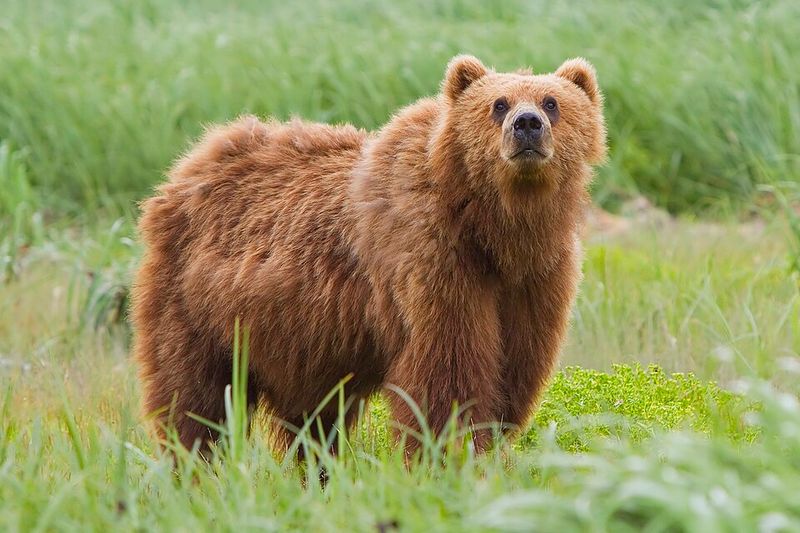
Image Credit: Yathin S Krishnappa.
If you want an animal that instantly defines Alaska-sized wilderness, the Kodiak bear is hard to beat. Found only on the Kodiak Archipelago, this giant brown bear can weigh from about 800 to 1,200 pounds, and exceptional males push well past 1,500.
The biggest wild male ever recorded reached a staggering 1,656 pounds, which almost sounds made up until you picture the rich habitat supporting him.
Salmon are a huge reason these bears get so enormous, with fish making up much of their diet during peak runs. They also feast on sedges, berries, and other vegetation, proving that sheer size in Alaska often comes from abundance, not just aggression.
Seeing one in your mind, broad as a truck hood and perfectly at home in rain, brush, and river spray, makes the landscape itself feel bigger.
Moose
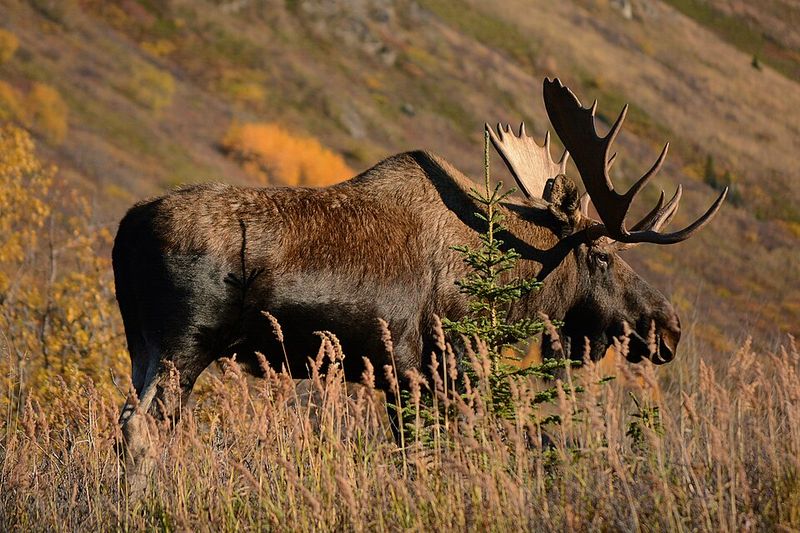
Image Credit: Paxson Woelber.
Alaska’s moose make moose elsewhere look almost modest, which is saying something for an animal already famous for size. The Alaska or Yukon moose is the largest moose subspecies on Earth, with mature bulls commonly weighing 1,200 to 1,600 pounds and standing over 6.5 feet at the shoulder.
Some giants rise even higher, and the record holders sound more like moving walls than deer relatives.
Their antlers add even more drama, often spreading close to 6 feet and sometimes beyond, like giant wooden paddles attached to a long-faced tank. I think what makes them especially impressive is that they do not need to roar or chase attention because their height does all the work.
In willow flats, marshes, and snowy forests, a bull moose can seem less like an animal you spot and more like a piece of the landscape suddenly deciding to move.
American Bison
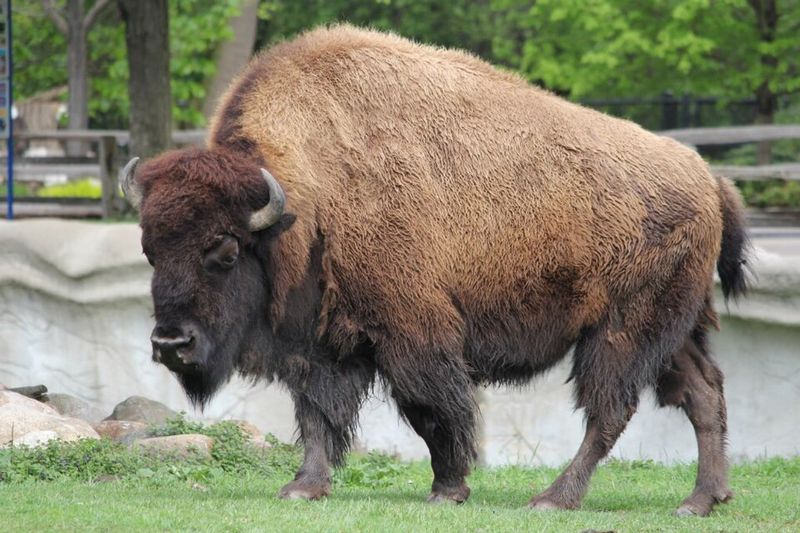
Image Credit: RedGazelle123.
Bison are not usually the first animals people associate with Alaska, which is exactly why they feel like such a striking addition to this list. The free-ranging herds living there today descend from animals introduced in 1928, yet mature bulls still fit Alaska’s oversized reputation perfectly.
Many weigh 1,000 to 2,000 pounds, and the heaviest wild bull on record reached about 2,800 pounds, an absurd amount of muscle and hump.
When you picture one crossing a frosty plain near Delta Junction or the Copper River country, it feels both unexpected and completely right. Their shaggy forequarters, blunt horns, and deliberate walk give them a prehistoric presence that matches Alaska’s open spaces.
Even though they are not native in the modern sense, these huge grazers have carved out a place in the state’s wildlife story, bringing grassland power to a land better known for forests, ice, and sea.
Steller Sea Lion
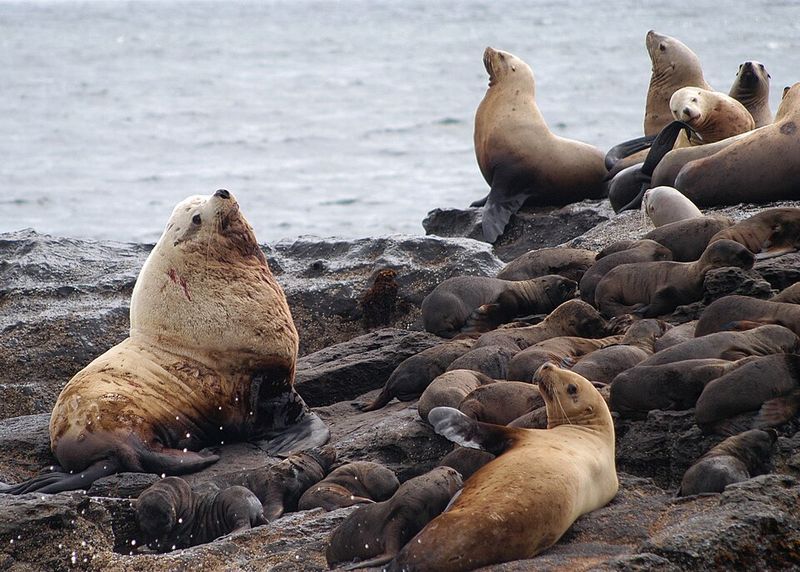
Image Credit: Oregon Department of Fish & Wildlife.
The Steller sea lion looks like the ocean decided to invent a creature part lion, part boulder, and then make it noisy. It is the largest sea lion species in the world, with adult males stretching up to about 11 feet long and weighing as much as 2,500 pounds.
Along Alaska’s rocky coasts, these giants gather in rookeries where their bulk, barking, and jostling turn quiet shoreline into total commotion.
What gets me is the contrast between their shape and their agility, because something that massive still slips into cold water with surprising grace. Around 70 percent of the global population lives in Alaska, making the state a stronghold for an animal that truly belongs to wave-battered cliffs and cold marine air.
If you have ever wondered what coastal dominance looks like without needing teeth the size of a shark’s, a mature male Steller sea lion answers that question immediately.
Bowhead Whale
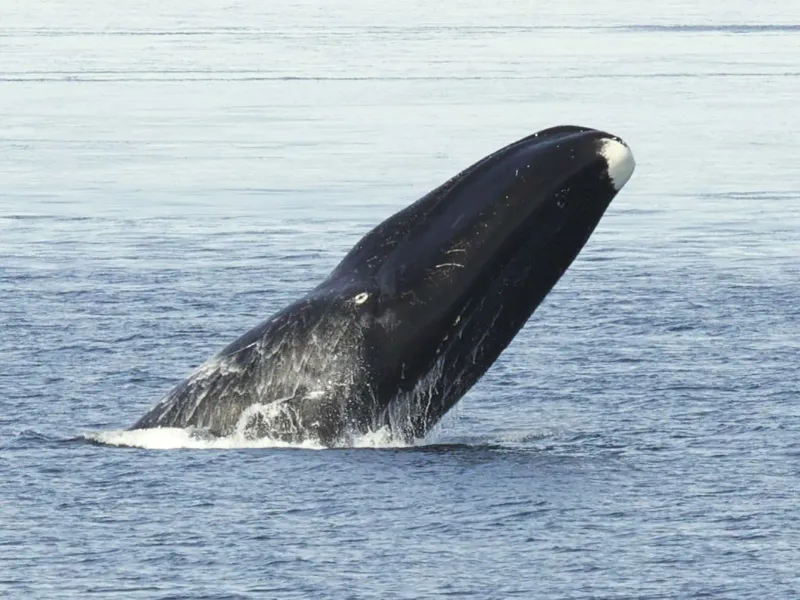
Image Credit: Bering Land Bridge National Preserve
The bowhead whale is the kind of animal that makes normal ideas about age and size feel completely inadequate. Growing up to around 60 to 62 feet long and weighing as much as 100 tons, it is one of the true giants of Arctic waters.
Some individuals are believed to live more than 200 years, which means a single whale could outlast generations of people, storms, and shifting ice.
Its giant bowed skull is not just for looks, either, because this whale can break through sea ice to breathe when necessary. A blubber layer more than a foot thick helps it thrive in brutally cold seas where most animals would have no chance at all.
I love how the bowhead seems built by Alaska’s harshest elements themselves, ancient, heavy, and calm, moving through a frozen world with the confidence of something that has been surviving there longer than nearly anyone can imagine.
Humpback Whale
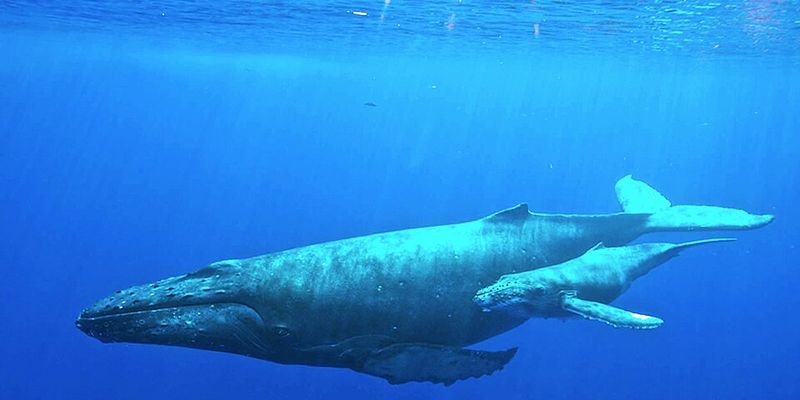
Image Credit: National Marine Sanctuaries.
Every summer, humpback whales return to Alaska’s cold, food-rich waters and put on one of the most unforgettable wildlife shows anywhere. Adults usually measure about 49 to 52 feet long and weigh roughly 30 to 40 tons, so even before they leap, they are already astonishing.
Then one breaches, and suddenly something the size of a bus seems to ignore gravity just long enough to leave you grinning like a kid.
These whales come north to feast on krill and schooling fish, building energy after long migrations. Their blows, tail slaps, and acrobatic launches make them feel theatrical, but each movement also serves a purpose, from communication to parasite removal and play.
If Alaska has a giant that combines brute scale with pure spectacle, humpbacks may be the best example, because they do not just survive in these waters, they transform them into a stage.
Pacific Walrus
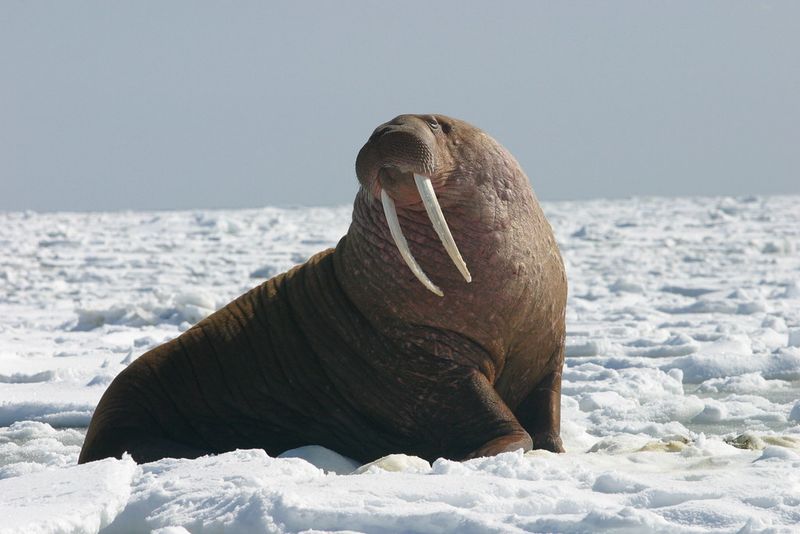
Image Credit: Alaska Region U.S. Fish & Wildlife Service
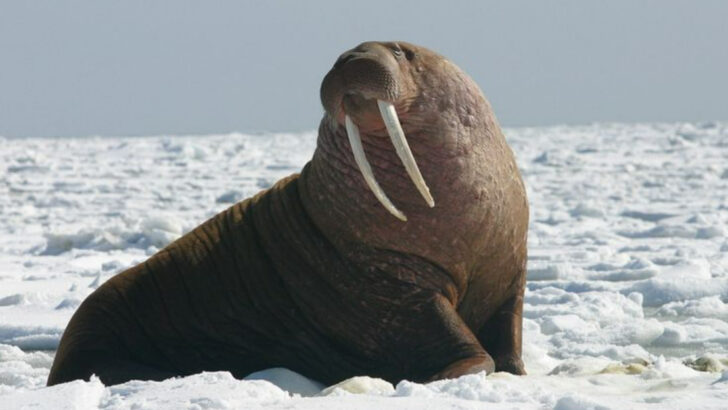
The Pacific walrus has the kind of face you never forget, mostly because it looks both wise and slightly annoyed. Adult males can weigh 2,000 to 4,000 pounds, and their tusks may grow longer than 3 feet, giving them a look that is part old-world monarch and part armored bulldozer.
In Alaska’s Arctic seas, they depend on sea ice and shallow coastal waters where huge bodies can rest between feeding dives.
Those whiskers are not just decoration, either, since walruses use their sensitive vibrissae to detect prey on the seafloor. Clams, mollusks, crabs, shrimp, and other bottom dwellers fuel these massive marine mammals, proving that giants do not always need dramatic hunts to stay giant.
I find that especially fascinating because a creature this imposing lives largely by vacuuming up hidden food from mud and sand, all while carrying tusks that make it look ready for legend.
Musk Ox
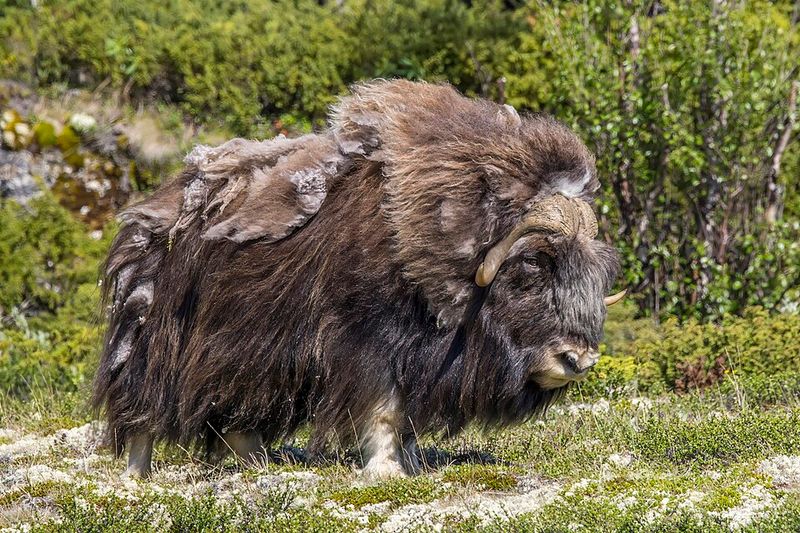
Image Credit: Charles J. Sharp.
Musk oxen look like they walked out of the Ice Age and simply never saw a reason to leave. Adult bulls generally weigh about 600 to 800 pounds, with some reaching 900, and their heavy build is wrapped in one of the most cold-proof coats on Earth.
That shaggy outer layer hides qiviut, an extraordinarily warm underwool that helps them handle brutal Arctic temperatures and relentless wind.
What I admire most is how their entire body seems designed to conserve heat, from short legs to compact proportions. Reintroduced to Alaska in the 1930s after disappearing from the state, they are now one of the tundra’s most unforgettable sights.
When a herd bunches together on open ground, heads out and horns ready, you can almost feel the ancient logic in their posture, as if survival in a frozen world has been practiced there for thousands upon thousands of winters.
Beluga Whale
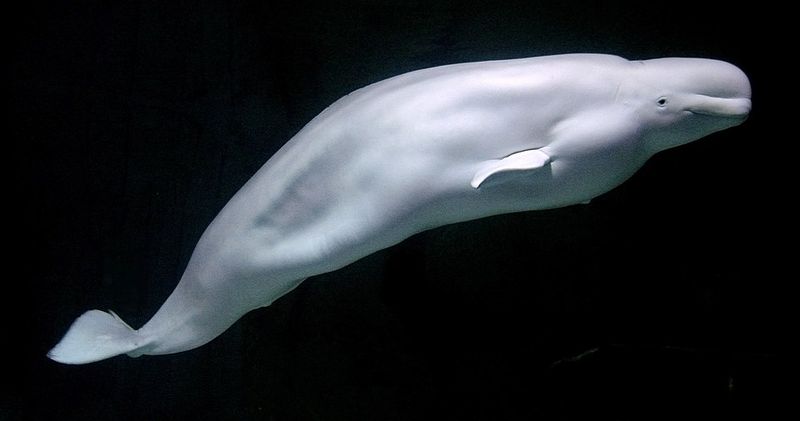
Beluga whales may not match the biggest animals here in raw tonnage, but they still reach an impressive scale and carry a personality that makes them stand out. Adults in Alaska typically grow around 11 to 15 feet long and can weigh up to roughly 3,300 pounds, with some populations inhabiting places like Cook Inlet and the Arctic coast.
Their smooth white bodies are striking against dark northern water, almost glowing when they surface.
People call them sea canaries because of their wide range of chirps, whistles, and other vocal sounds, and that nickname fits beautifully. Unlike many whales, belugas also have flexible necks, which gives them an unusually expressive, almost curious appearance when they turn toward you.
I think that blend of heft and charm is what makes them unforgettable in Alaska, because they are large enough to command respect while still seeming playful, social, and strangely conversational in an icy world.
Gray Wolf
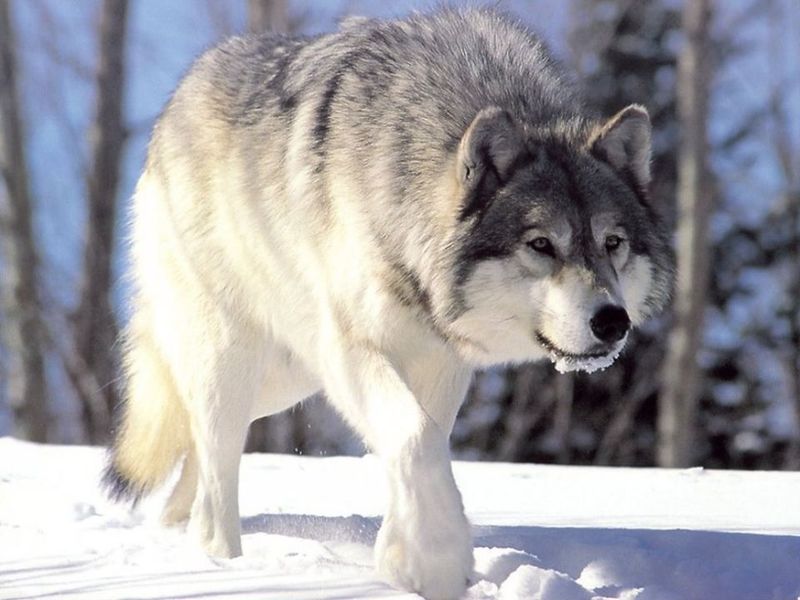
Image Credit: Chris Muiden.
Alaska’s gray wolves bring a different kind of enormity to this list, because their size is matched by the scale of the country they roam. Adult males in Interior Alaska often weigh about 85 to 115 pounds, with some individuals exceeding 145 pounds, making them among the largest wolves in North America.
They range across huge territories in pursuit of moose, caribou, deer, and whatever else the land offers.
What makes them feel truly outsized, though, is not just body weight but presence. A single wolf standing in snow seems alert and athletic, yet a pack moving with purpose can make an entire valley feel tense, organized, and suddenly alive.
You do not need a creature to weigh a ton for it to dominate your imagination, and Alaska’s wolves prove that perfectly. They are leaner giants, built from distance, endurance, intelligence, and the kind of wilderness confidence few animals project so naturally.
Dall Sheep
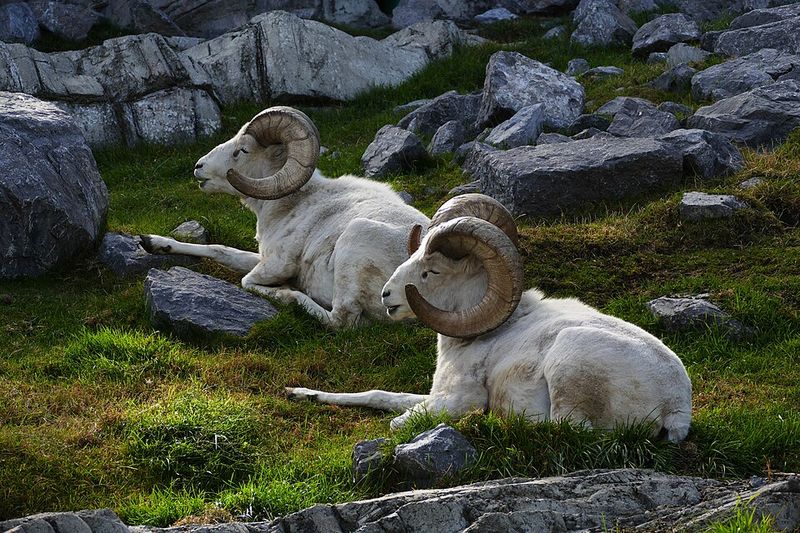
Image Credit: Wikimedia Commons, CC0.
Dall sheep are a reminder that enormous wildlife does not always mean enormous body weight alone. Mature rams usually weigh around 160 to 180 pounds, though some can reach 300, and their true visual impact comes from those thick, beautifully curled horns.
Set against Alaska’s steep mountain ridges, a white ram looks both elegant and rugged, like a piece of snow that somehow learned balance and attitude.
The horns keep growing through much of life and are never shed, which means an older ram carries years of survival right on his head. You can even estimate age by counting annual growth rings, turning those curls into a kind of living record.
I love that these animals thrive where footing looks impossible, hopping across cliffs and narrow ledges with total assurance. In a state full of oversized beasts, Dall sheep stand out by making harsh height itself feel like their natural kingdom.
Bald Eagle
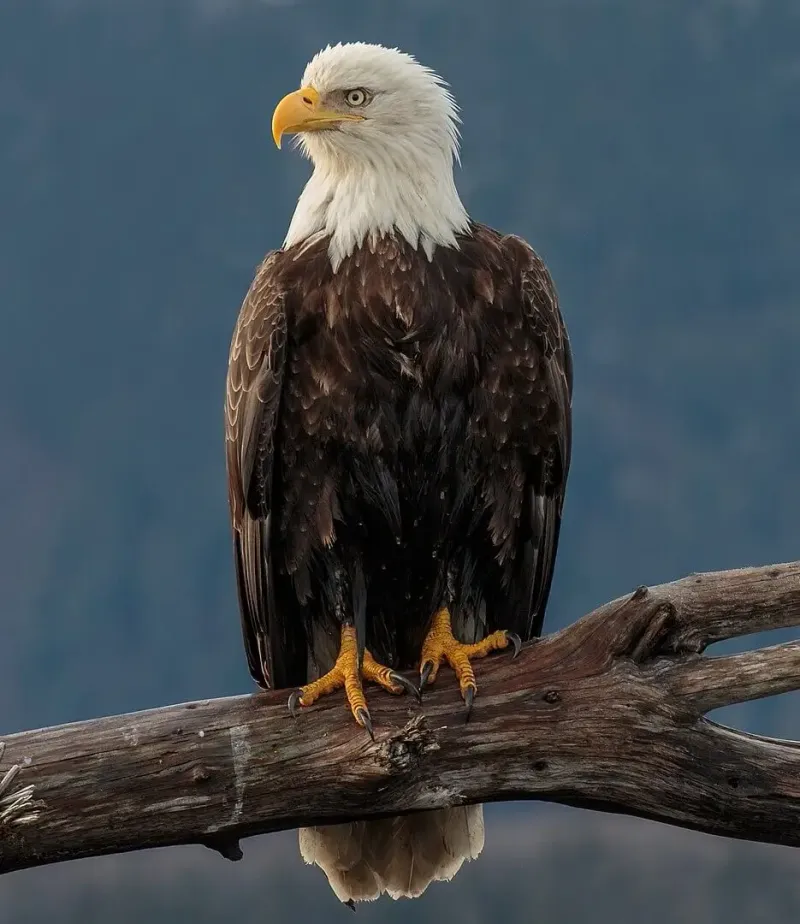
Image Credit: Andy Morffew
Bald eagles close this list with feathers instead of fur, but in Alaska they still qualify as genuinely enormous. The state supports the largest bald eagle population in the United States, with tens of thousands of birds, and big Alaskan females can weigh over 15 pounds with wingspans around 8 feet.
Near rivers, coastlines, and open water, they look less like ordinary birds and more like flying emblems of wild abundance.
Fish are their staple, so places with salmon runs can turn into eagle theaters where one huge raptor after another drops from the trees. What gets me every time is the scale of the wings once they open, broad enough to cast a shadow that feels larger than the bird should reasonably own.
Alaska gives them exactly what they need, tall nesting sites, rich waters, and room to soar, which is probably why they seem so completely at home there.