California is famous for sunshine and giant landscapes, but some of its most remarkable animals are hanging on by a thread. A few survive in remote mountains, hidden wetlands, battered deserts, and even heavily altered waterways most people pass without noticing.
Their stories are dramatic, strange, and urgently relevant to anyone who cares about the future of the state. If you want a sharper look at what conservation really means, these 12 species make it impossible to look away.
California Condor
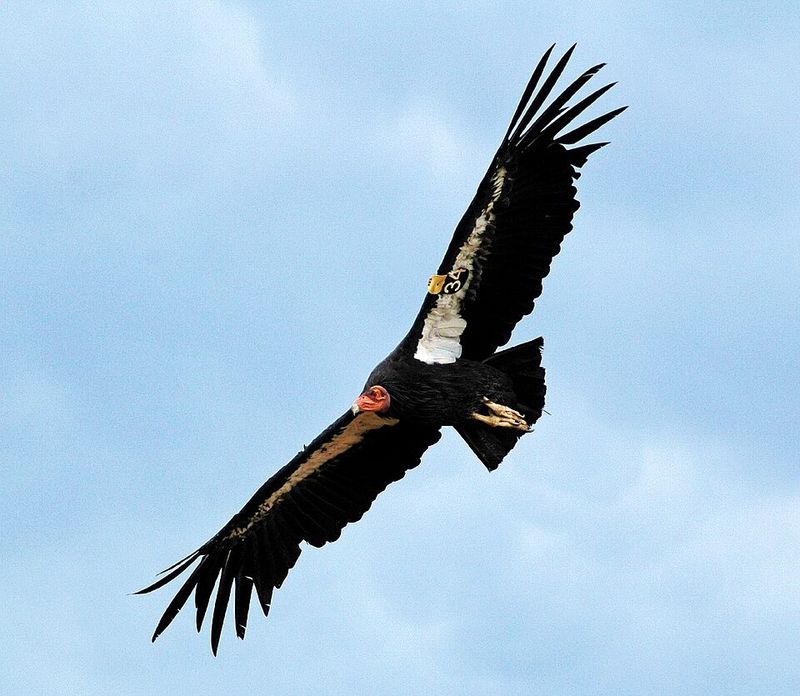
Image Credit: Don Graham.
When you see a California condor in flight, it feels almost prehistoric, like the sky briefly opened a window into another age. This is North America’s largest land bird, with a wingspan that can stretch close to 10 feet.
That size has not protected it from disaster.
By the 1980s, only 22 condors remained in the wild, a collapse so severe that captive breeding became the last real option. Recovery work has pushed the total population to more than 600 birds by late 2025, but the species is still far from safe.
Lead poisoning from spent ammunition remains the top killer of adults.
Condors also face habitat loss, wildfires, microtrash, oil and gas disturbance, and deadly collisions with power lines. Protecting them means cleaner habitats, safer food sources, and stronger public support.
If you care about second chances in nature, this bird is the ultimate test case.
San Joaquin Kit Fox
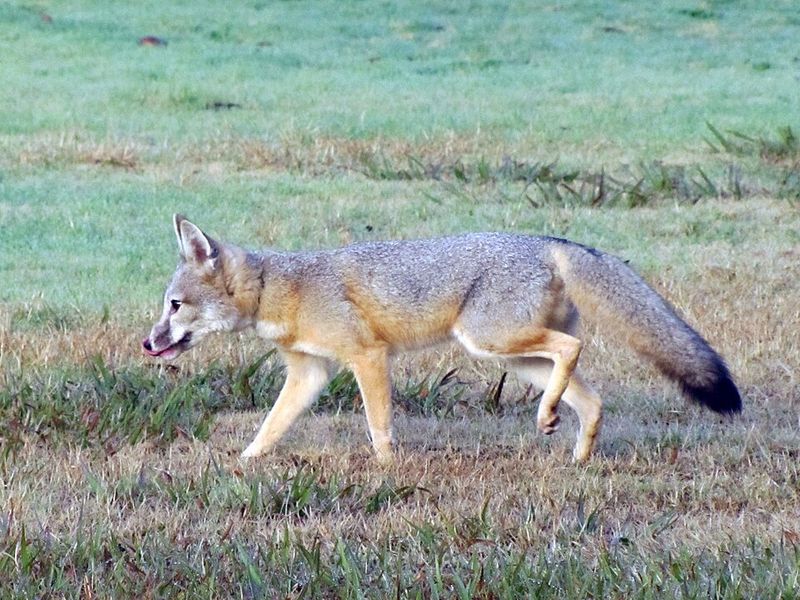
Image Credit: California Department of Fish and Wildlife.
The San Joaquin kit fox looks delicate, almost too small for the hard, sunbaked landscapes it calls home. With its huge ears, narrow face, and light step, it seems built from equal parts charm and survival instinct.
Yet this is one of California’s most vulnerable mammals.
Found only in the San Joaquin Valley and nearby arid areas, the fox depends on open grasslands and scrublands that have been steadily carved up by farms, roads, housing, solar development, and oil operations. Fewer than 3,000 are believed to remain worldwide.
Fragmented habitat leaves them exposed to vehicle strikes, poison, disease, and pressure from coyotes, dogs, and red foxes.
What makes this animal especially heartbreaking is how quietly it disappears. There is no dramatic crash you can easily witness, just a shrinking map and fewer nighttime movements across the valley.
Protecting connected habitat is the simplest and most urgent lifeline it has.
Sierra Nevada Bighorn Sheep
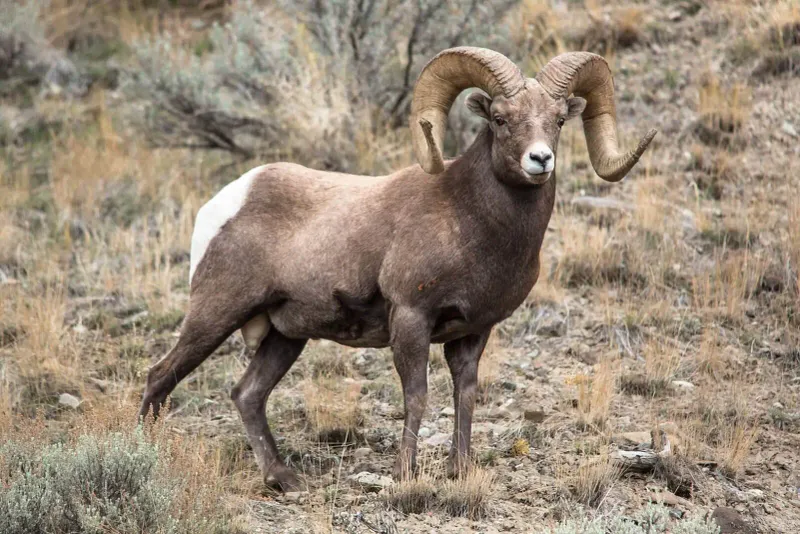
Image Credit: Yellowstone National Park.
Sierra Nevada bighorn sheep belong to some of California’s most unforgiving terrain, where rock, snow, and altitude shape every movement. Watching them on steep slopes makes danger look effortless.
Their balance is stunning, but their survival has been anything but secure.
After numbers fell to roughly 100 to 125 animals in the 1990s, recovery efforts helped the population rise above 600 for a time. Recent extreme winters and increased mountain lion predation pushed that progress backward, and estimates now hover around 380 to 400 animals.
Disease from domestic sheep and goats remains a serious threat, especially where wild and domestic ranges overlap.
Habitat fragmentation adds another layer of pressure, limiting how these herds move and recover. This species shows how conservation is never a straight line upward.
You can celebrate gains and still lose ground fast when weather, predators, and human impacts collide in the same mountain system.
Delta Smelt
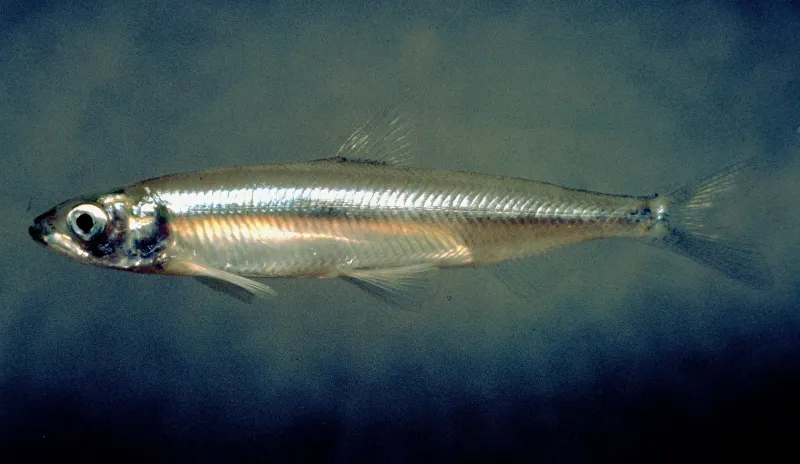
Image Credit: Pacific Souhwest Region USFWS.
The Delta smelt is tiny enough to be overlooked, which may be why its crisis feels so easy for the public to ignore. This silvery fish, usually just 2 to 3 inches long, lives only in the Sacramento-San Joaquin River Delta.
Its fate is tied to the health of one of California’s most stressed ecosystems.
Water diversions, pollution, habitat alteration, invasive species, and rising water temperatures have driven the species into a near-vanishing act. State surveys from 2018 through 2023 found no Delta smelt in the wild, and emergency hatchery efforts may be all that keep it from disappearing completely.
Because most live only about a year, sudden environmental changes hit them fast and hard.
If the Delta smelt sounds obscure, that is exactly why it matters. It is an indicator species, a living warning light for the wider estuary.
Ignoring this fish means ignoring bigger water problems that affect farms, cities, and countless other native species too.
California Red-Legged Frog
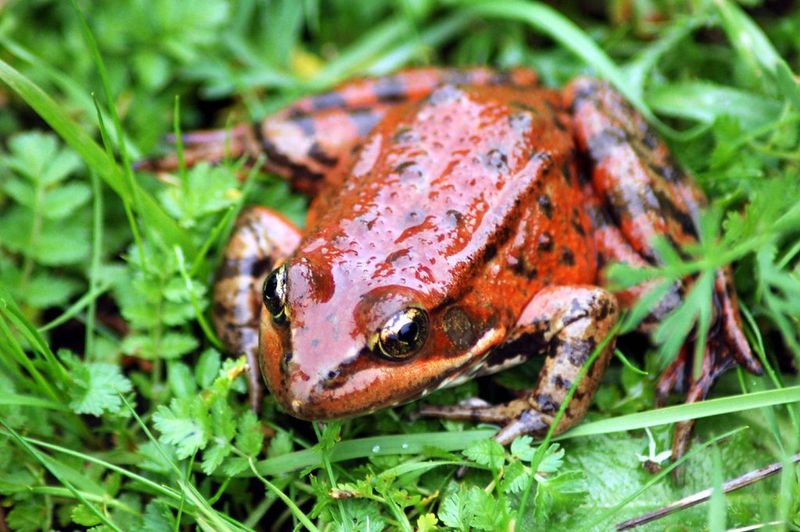
Image Credit: kqedquest.
The California red-legged frog carries a literary echo, thanks to its connection with Mark Twain, but its real story is less playful than famous. It is the largest native frog in the western United States, and it once ranged broadly across California.
Today, much of that historic territory is gone.
This frog has disappeared from more than 70 percent of its former range because wetlands were drained, streams altered, and water overused. Invasive bullfrogs prey on it and outcompete it, while disease and drought push struggling populations even closer to collapse.
Roads, livestock impacts, and recreational disturbance can further degrade the habitats it needs to breed and shelter.
What I find striking is how this species depends on landscapes that seem ordinary until they vanish. A pond edge, a shaded creek, a patch of riparian cover – these are not small details to a frog trying to persist.
Protecting wetlands here protects far more than one amphibian.
Mojave Desert Tortoise
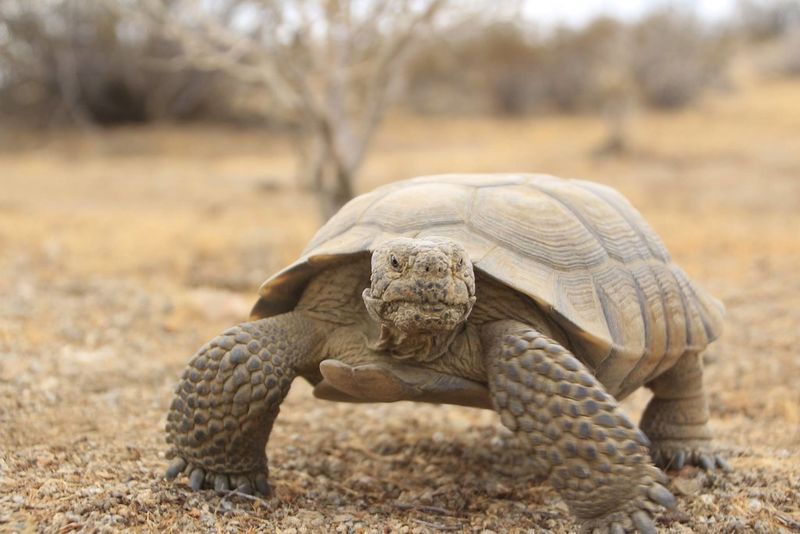
Image Credit: Bureau of Land Management California
The Mojave desert tortoise moves with a patience that feels almost defiant in a state obsessed with speed. It can live for more than 50 years, sometimes much longer, yet it takes well over a decade to reach maturity.
That slow life history makes every loss much harder to replace.
California uplisted this species to endangered in 2024, reflecting how severe its decline has become. Populations have dropped by roughly 90 to 95 percent over the past 40 years, driven by habitat fragmentation, off-road vehicle damage, roads, urban growth, renewable energy development, disease, and hotter conditions that reduce spring wildflowers.
Ravens, subsidized by human-altered landscapes, also prey heavily on eggs and hatchlings.
The tragedy here is that desert destruction often looks empty from a distance. Tire ruts, scattered trash, fencing, and fragmented habitat can seem minor unless you think like a tortoise.
Protection means preserving space, limiting disturbance, and treating the Mojave as a living system rather than vacant land.
Tidewater Goby
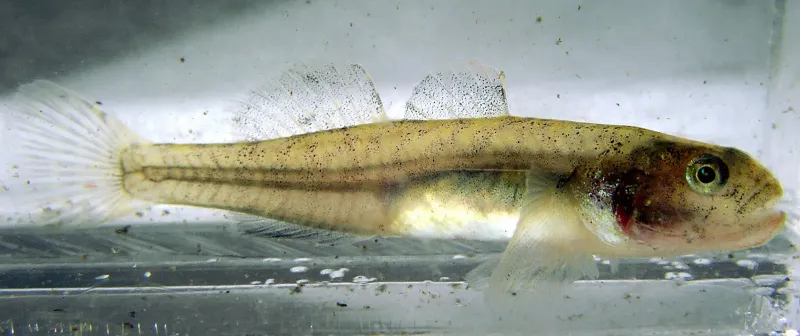
Image Credit: Pacific Southwest Region U.S. Fish and Wildlife Service
The tidewater goby is the kind of fish most people would never recognize, even if it lived a short walk from the beach. Rarely longer than two inches, it survives in coastal lagoons and estuaries where freshwater and saltwater create delicate, shifting conditions.
Small does not mean simple.
This species once declined sharply as coastal development drained, altered, and isolated the habitats it depends on. Dikes, levees, altered water flows, degraded water quality, and introduced predators have left many populations stranded in separated pockets along the coast.
Even though the goby can tolerate a remarkable range of salinity, resilience has limits when habitat keeps shrinking.
I like thinking of the tidewater goby as a reminder that estuaries are not leftovers between land and sea. They are living transition zones packed with specialized life.
Protecting this fish means restoring lagoon function, safeguarding coastal wetlands, and resisting the idea that every shoreline must be engineered for human convenience.
Central California Coast Coho Salmon
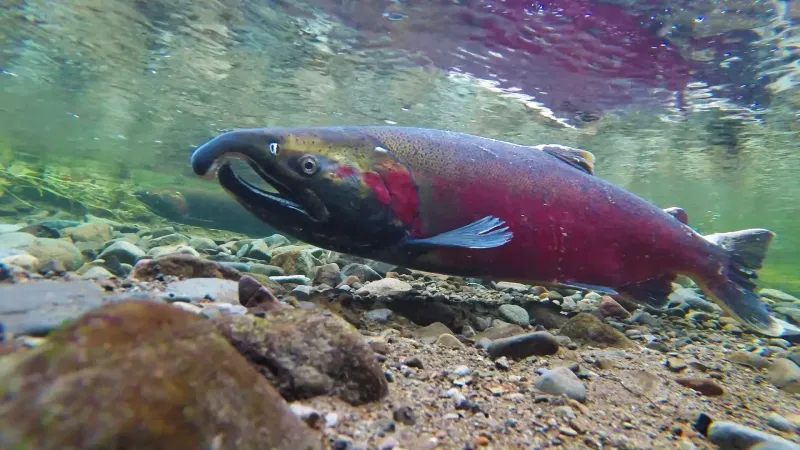
Image Credit: A. Hoen and Co.
Coho salmon once returned to California’s coastal rivers in numbers so large they seemed woven into the rhythm of the landscape itself. Today, the Central California Coast population sits at roughly 1 percent of historic abundance.
In many small streams, fewer than 100 adults spawn each year without hatchery support.
Dams, water withdrawals, poor stream conditions, sediment, warming waterways, and development tied to agriculture, forestry, gravel mining, and urban growth have all damaged the cold, complex habitat salmon need. Spawning and juvenile survival both suffer when rivers run low, heat up, or lose sheltering wood and deep pools.
A fish that migrates between ocean and stream cannot thrive if either end of that journey is broken.
What makes coho especially compelling is their role as ecosystem connectors. They carry ocean nutrients inland and signal watershed health in a visible way.
Saving them is not nostalgic wildlife work – it is a practical commitment to functioning rivers that benefit entire coastal communities.
Least Bell’s Vireo
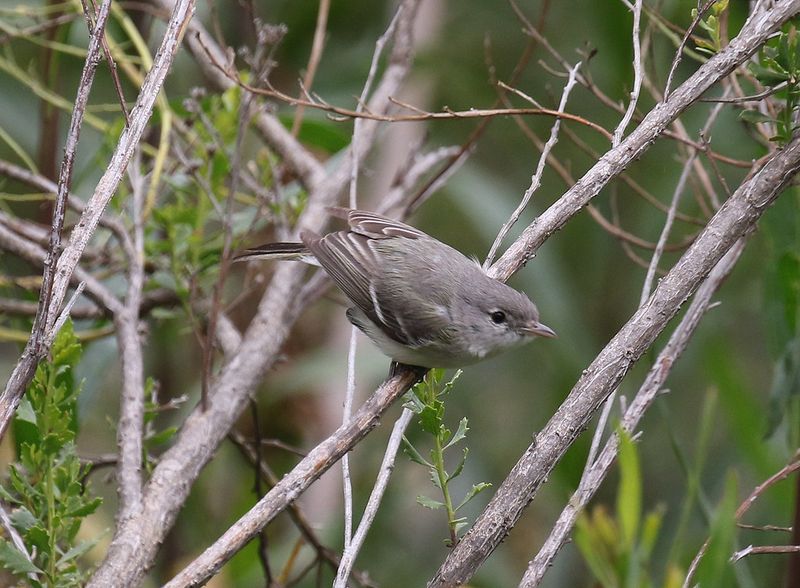
Image Credit: Robin Gwen Agarwal
The Least Bell’s vireo does not rely on dramatic size or bold color to stand out. It is a small migratory songbird, modest in appearance, hidden in dense riparian vegetation where streams still support tangled green corridors.
That subtle life strategy worked until those habitats were heavily destroyed and degraded.
Urban expansion, agriculture, infrastructure, grazing, recreation, water diversion, and invasive plants all chipped away at the streamside habitat this bird needs for nesting. Brown-headed cowbirds added another brutal pressure by laying eggs in vireo nests, pushing the species toward collapse.
Intensive management, including habitat work and cowbird control, has helped Southern California populations rebound to nearly 3,000 pairs.
Even with that improvement, the species remains a lesson in how fragile riparian systems are in a dry state. A healthy riverbank can sound ordinary until you realize how many species depend on that narrow strip of shade and cover.
Protecting the vireo means defending living ribbons of water across the region.
Mountain Yellow-Legged Frog
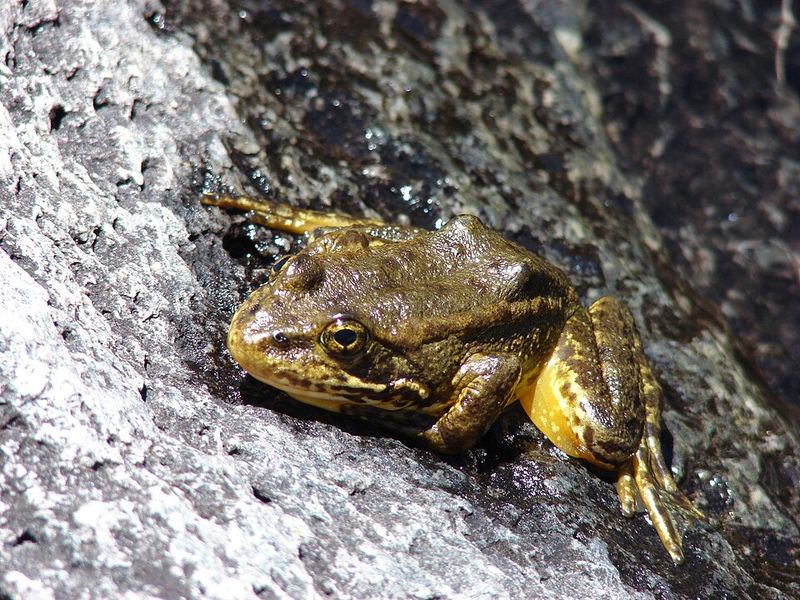
Image Credit: USFWS/Rick Kuyper.
The mountain yellow-legged frog lives in places many people imagine as pristine by default: alpine lakes, cold streams, and high mountain basins. That image makes its decline feel especially jarring.
Even remote habitats can unravel when enough pressures arrive at once.
Historical populations have fallen by roughly 93 to 95 percent, and some estimates suggest fewer than 200 individuals remain in the wild in the most imperiled groups. Introduced trout eat tadpoles and frogs, while chytrid fungus has devastated populations across the mountains.
Climate-related changes, including drought, wildfire, and landslides, further destabilize already fragmented habitats.
This species matters because it reveals how human choices travel far beyond cities and roads. Stocking fish decades ago, shifting climate patterns, and pollution can reshape lakes that look untouched from a postcard viewpoint.
Protecting this frog takes active restoration, disease management, and the humility to admit that wildness still depends on deliberate care from people who value it.
El Segundo Blue Butterfly
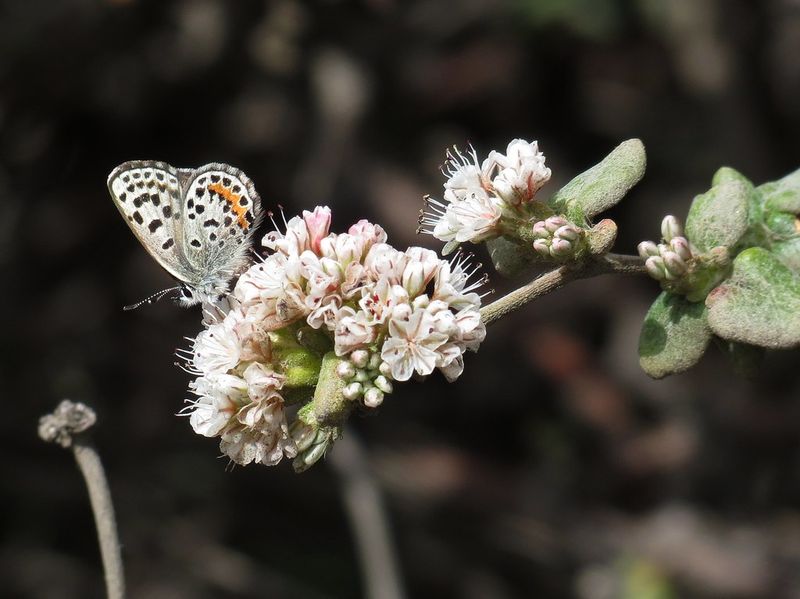
Image Credit: Jonathan Coffin
The El Segundo blue butterfly is so small and local that its survival can feel almost improbable. Restricted to coastal dunes near Los Angeles, it depends heavily on seacliff buckwheat for nearly every stage of its one-year life cycle.
If that plant disappears, the butterfly’s future disappears with it.
Urban development, airport construction, oil refining, housing, sand mining, habitat fragmentation, invasive plants, and off-road disturbance all helped erase most of its original dune habitat. By the late 1970s, the population hit a dangerous low.
Restoration efforts have improved the picture, and the butterfly is now found at more sites than before, with some protected populations stable or increasing.
What I love about this species is how it makes conservation feel intimate rather than abstract. Saving it is not about one giant wilderness reserve but about protecting a specific plant in a specific windblown landscape.
It proves that tiny creatures can demand sophisticated, place-based care every bit as much as famous large animals.
Southern Sea Otter
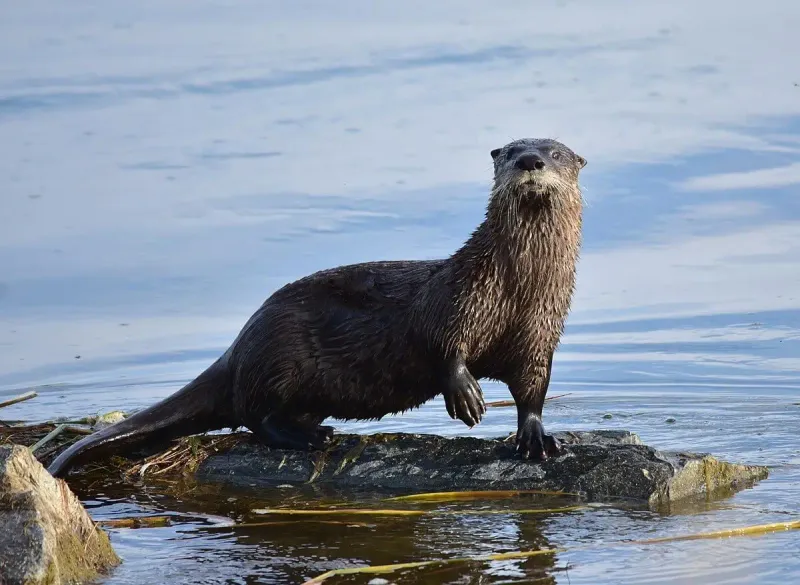
Image Credit: USFWS Mountain-Prairie
The southern sea otter is one of California’s most beloved animals, but affection alone has not guaranteed recovery. This otter helps maintain healthy kelp forests by eating sea urchins and other prey that can overwhelm underwater ecosystems.
In other words, it is adorable and ecologically essential.
After fur hunting reduced the population from an estimated 16,000 to 18,000 animals to roughly 50 by the early 1900s, protections helped numbers rise again. Today the California population is around 3,000, yet growth has largely stalled.
Oil spills, disease linked to polluted runoff, shark bites, fishing gear entanglement, food limitation, and climate impacts continue to block broader recovery.
Sea otters are especially vulnerable because their dense fur, not blubber, keeps them warm, so oil contamination can be catastrophic. Their struggle also connects offshore health to what happens on land.
Cleaner water, stronger habitat protection, and careful coastal management are not extras if you want kelp forests and otters to endure.