
Utah state parks can feel like open-air wildlife theaters, where the next bend in the trail might reveal something unforgettable. From desert cliffs to alpine meadows, animals here seem to match the scenery in dramatic style.
Some are easy regulars near campgrounds, while others appear like quick, lucky cameos. If you know what to watch for, these 13 species can turn an ordinary park day into a story you will keep retelling.
Mule Deer
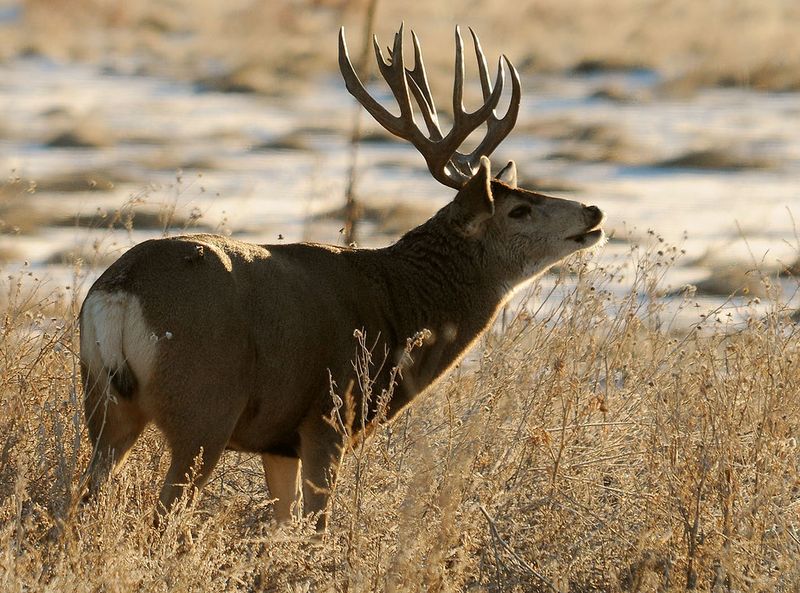
Image Credit: USFWS Mountain-Prairie
If you spend enough time in Utah state parks, mule deer start to feel like quiet locals who know every shortcut before sunrise. You will often spot them near open meadows, campground edges, or trail corridors where shrubs, grasses, and tender wildflowers are easy to browse.
Their oversized ears and springy gait make them instantly recognizable, even when the light is still soft.
Dawn and dusk are prime viewing times, though winter can make them active longer through the day. Their diet shifts with the season, moving from green growth in warmer months to woody browse like sagebrush when cold weather tightens the menu.
That flexibility helps them thrive from desert country to mountain forests.
I think the best encounters happen when you slow down and let the landscape settle around you. Watch from a respectful distance, keep your food secured, and enjoy the moment without pushing closer.
Mule deer reward patience far more than pursuit.
Desert Bighorn Sheep
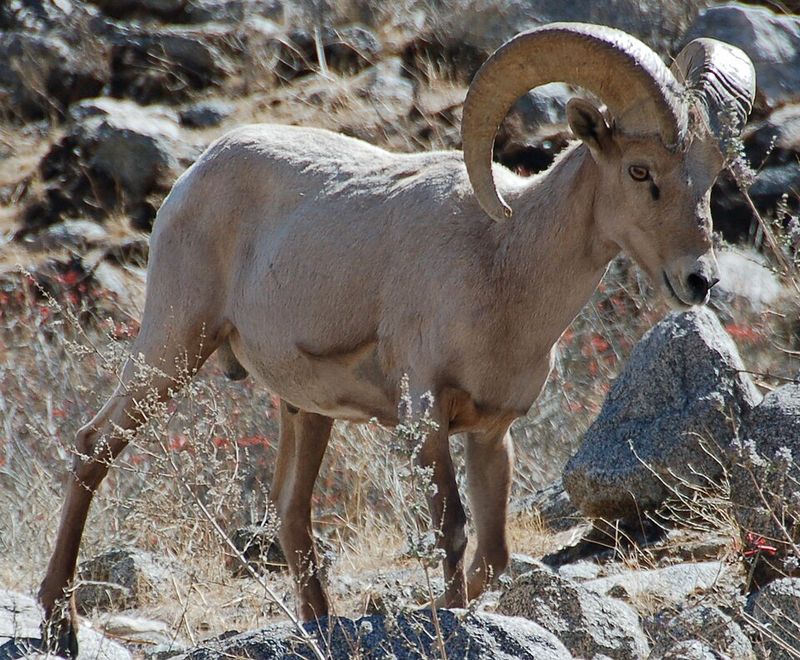
Image Credit: Andrew Barna.
Desert bighorn sheep look like they were designed by the canyon itself, all balance, muscle, and nerve. In southern Utah state parks, they cling to rocky slopes, slickrock benches, and sheer canyon walls that seem impossible to cross on foot.
Then you watch one step across a narrow ledge like it is strolling a sidewalk.
These sheep prefer open, rugged terrain where visibility is good and escape routes are vertical. Their lighter coats and long-legged build suit hot, dry country, and their hooves grip uneven stone with impressive precision.
When the sun hits red cliffs and a small band appears high above, it feels less like a sighting and more like a well-timed miracle.
You will have the best luck scanning ridgelines, especially in quieter morning hours. Bring binoculars, move slowly, and let your eyes adjust to the rock patterns.
Once you notice one sheep, you often realize several others were hidden in plain sight.
Rocky Mountain Elk
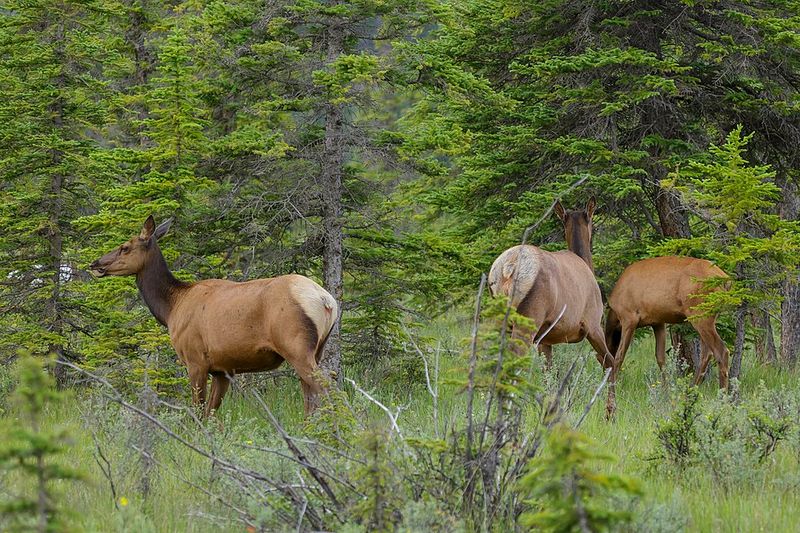
Image Credit: Thomas Fuhrmann.
Rocky Mountain elk bring serious drama to Utah state parks, especially when autumn turns the air sharp and the aspen leaves bright. In forested parks and mountain valleys, these massive animals can appear almost silently, despite their size, as they move through timber or graze open clearings.
Seeing one up close makes every deer you have ever watched seem suddenly modest.
Summer usually keeps elk at higher elevations, often in cool aspen stands between roughly 6,000 and 10,000 feet. As snow deepens, many shift lower, making foothills and valleys better places to watch in fall and winter.
During the rut, bull elk bugle across the landscape, advertising strength and challenging rivals with a sound that feels ancient and slightly unreal.
If you hear bugling, stop and listen before you move another step. Keep a long distance, especially from bulls and cows with calves, because elk can react fast when pressured.
The safest view is also the most memorable one.
Pronghorn
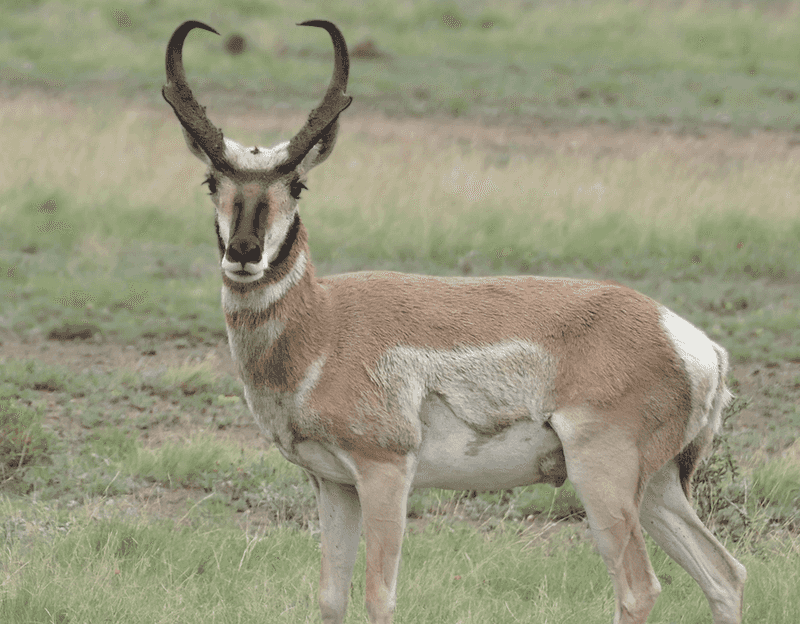
Pronghorn seem built from motion, even when they are standing still in Utah’s wide sagebrush country. In open grasslands and shrub steppe near some state parks, you may first notice them as pale shapes far off on the horizon, watching everything before you even lift binoculars.
Their eyesight is exceptional, and that constant awareness is part of their survival style.
These animals are North America’s fastest land mammals, capable of explosive speed that can leave predators behind in a hurry. Unlike species that rely on hiding, pronghorn trust distance, visibility, and endurance in open country.
They favor landscapes where they can detect danger early and sprint long before anything gets close.
I love how they make the emptiest-looking places feel suddenly alive and strategic. If you want a good view, scan broad flats and gentle rises rather than canyons or dense brush.
Early morning light helps, and patience matters, because once you spot one, a whole loose group often emerges from the scenery.
Coyote
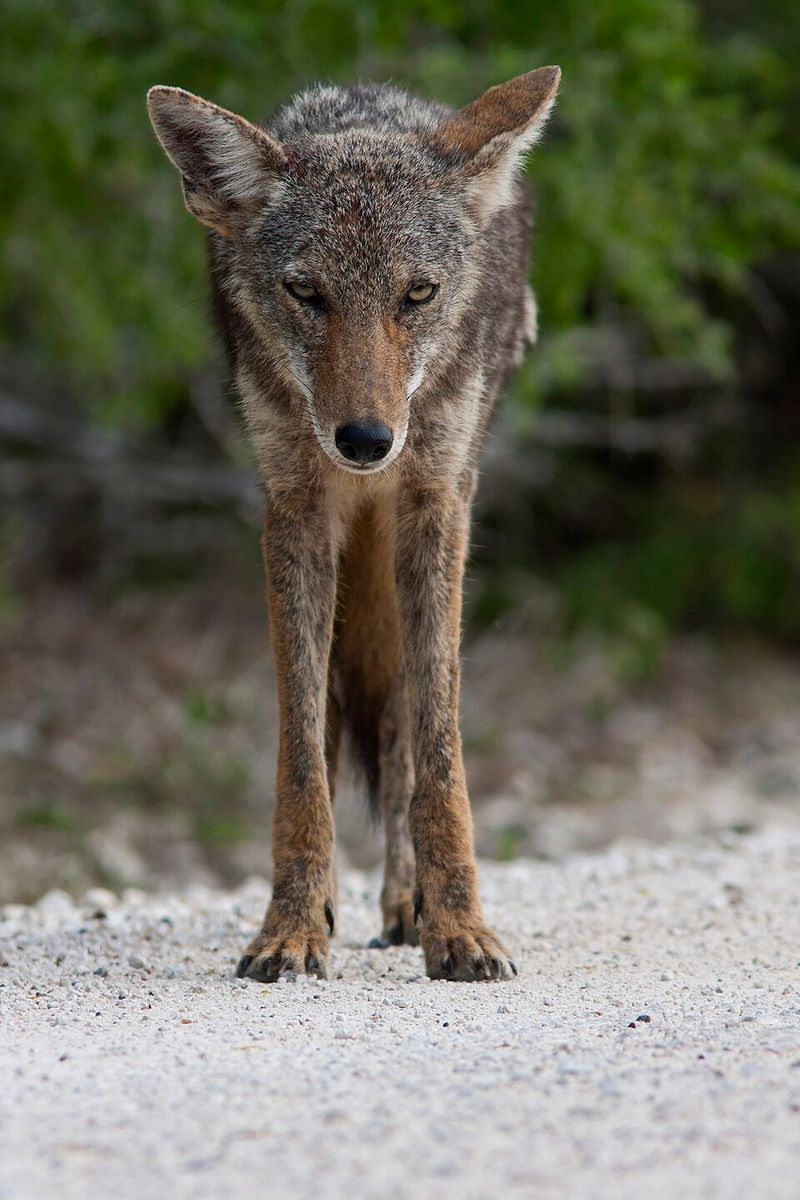
Image Credit: Stephen J Pollard (Loud Music Nature Lover).
Coyotes are the adaptable opportunists of Utah state parks, equally believable in desert flats, sagebrush hills, forest edges, or places surprisingly close to people. You might catch one trotting across a road at dawn, pausing in a meadow at dusk, or slipping through camp perimeters with a look that suggests it has already read the room.
They are common, clever, and usually gone before most visitors notice.
Their diet is as flexible as their schedule, including rodents, rabbits, insects, reptiles, birds, and carrion. Although many are most active around dawn, dusk, and nighttime, daytime sightings do happen, especially when food is available or seasons shift behavior.
That adaptability explains why coyotes succeed in such a wide range of Utah habitats.
If you see one, enjoy the wildness of the encounter without making it personal. Never feed coyotes or leave pet food and trash accessible, because familiarity with humans can create serious problems.
A respectful sighting keeps them wary, healthy, and truly wild.
Golden Eagle
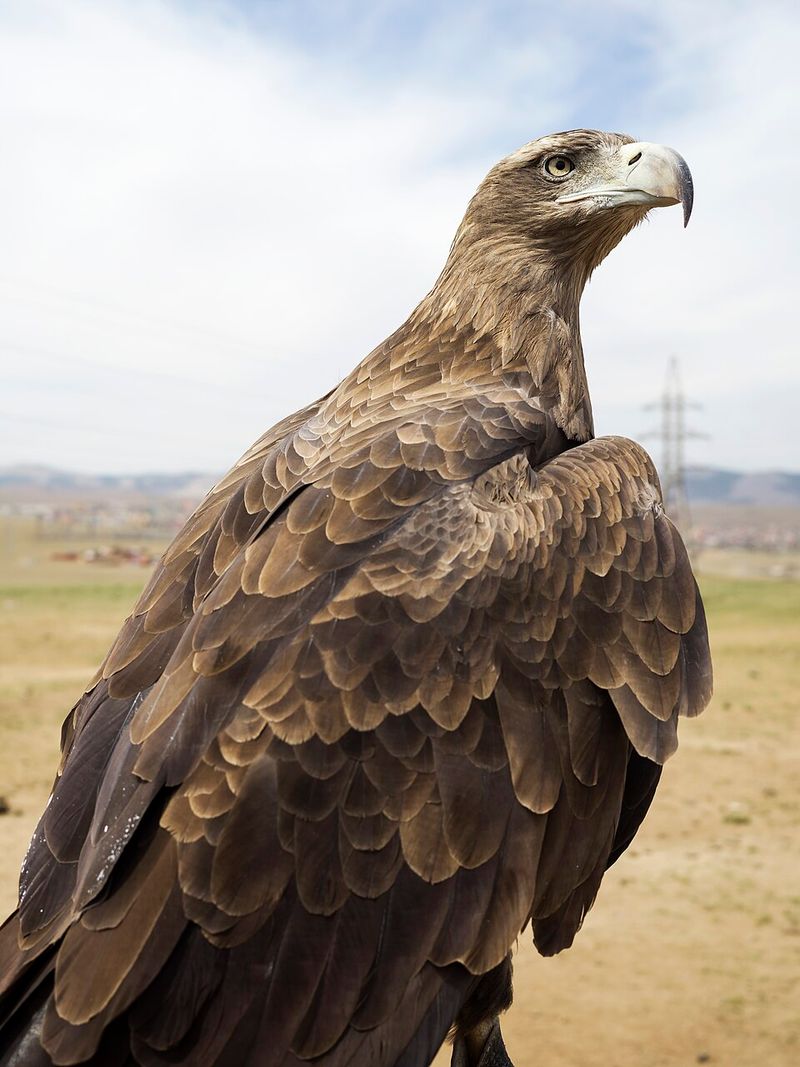
Image Credit: Christopher Michel.
Golden eagles give Utah state parks a sky-level sense of grandeur that is hard to match. When one circles above cliffs or mesas, the whole landscape seems to organize itself around that slow, commanding glide.
You may not hear anything at all, but the sight alone can stop a hike mid-step.
These powerful raptors use extraordinary eyesight to locate prey such as rabbits, marmots, and ground squirrels far below. They often hunt in morning or evening, riding thermals and contouring along ridges with effortless precision.
Many remain in Utah year-round, and they commonly nest on cliffs or large trees where views are wide and disturbance is low.
Your best strategy is to watch the skyline, especially near escarpments, open basins, and sunlit canyon country. A soaring bird with broad wings and steady, confident movement is worth studying before you assume it is just another hawk.
In a place already full of scale, golden eagles somehow make everything feel even bigger.
California Quail
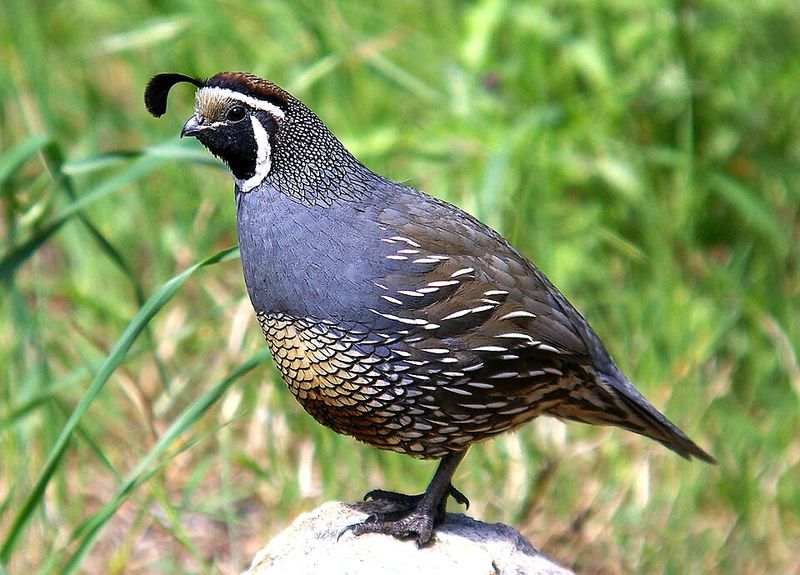
Image Credit: ALAN SCHMIERER.
California quail add a little comic charm to Utah state parks, though they are more elegant than goofy once you really watch them. Their forward-curving topknot makes them instantly recognizable, and their quick, ground-hugging movements often send them skittering from brush to brush like wind-up toys with good instincts.
In campgrounds and brushy park corners, they can appear suddenly and then vanish just as fast.
Quail usually travel in social groups called coveys, especially outside the breeding season. Those family-centered flocks scratch through leaf litter and soil for seeds, greens, berries, and small invertebrates, staying close to cover whenever possible.
If one bird darts across the path, keep watching, because a whole procession may follow in staggered, nervous bursts.
I think they are easiest to appreciate when you stop trying to photograph them perfectly and just enjoy the bustle. Look near shrubs, trail edges, and quiet campground margins in the cooler parts of the day.
Their small drama is easy to miss if you rush.
Great Blue Heron
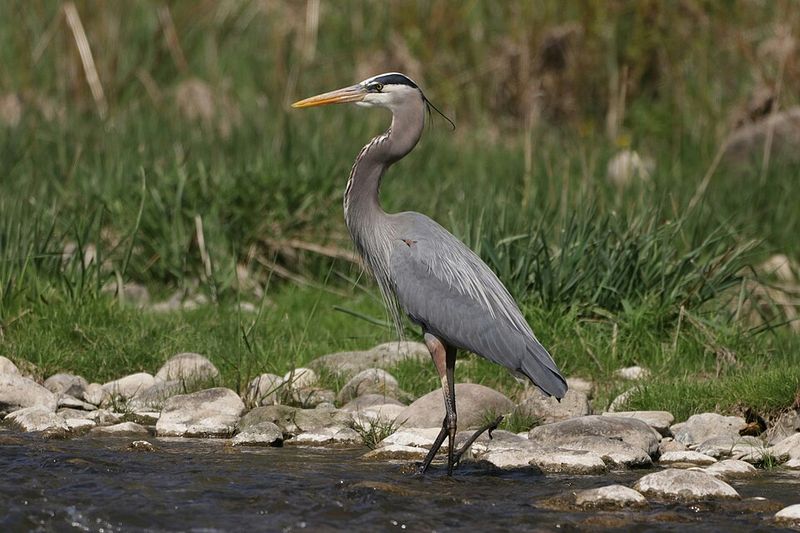
Image Credit: DallasPenner.
Great blue herons bring a different kind of energy to Utah state parks, the kind that feels more like meditation than action. Along lakes, reservoirs, slow rivers, and marshy edges, they stand so still that you may mistake them for weathered driftwood until the neck tightens and the bill strikes.
Then the whole illusion breaks in one precise movement.
These tall hunters feed mostly on fish, but they are famously adaptable and will also take frogs, salamanders, snakes, insects, rodents, and other small prey. Calm freshwater habitat suits them best, though they can hunt during both day and night when conditions are right.
Their patience is the real spectacle, especially when the surrounding water reflects every tiny ripple.
If you want to watch one well, choose a shoreline with a broad view and avoid crowding the edge. A little stillness on your part helps, because herons notice more than most people realize.
They make quiet places feel even quieter, which is part of the appeal.
American White Pelican
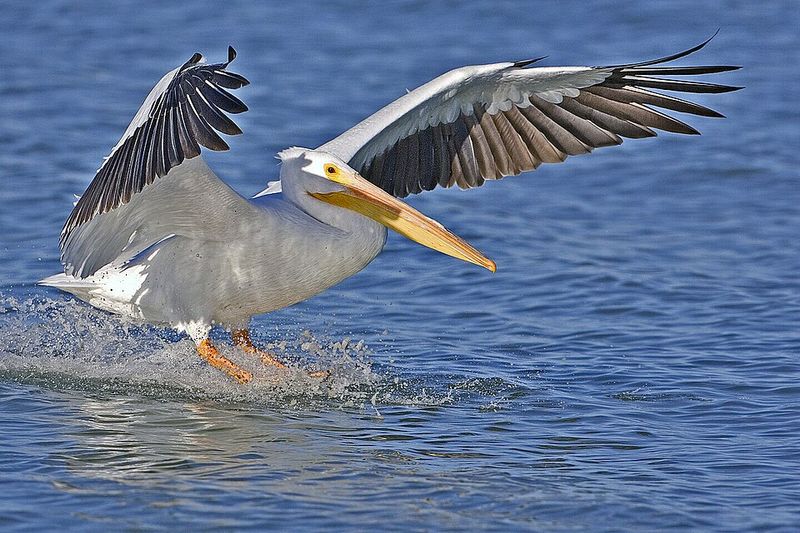
Image Credit: Alan D. Wilson.
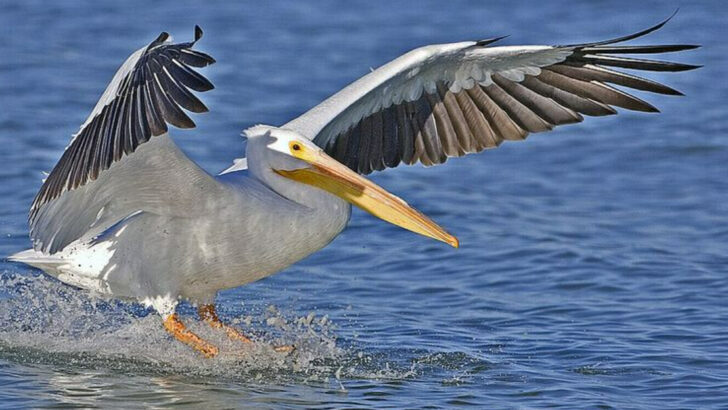
American white pelicans look almost unreal at first glance, as if someone placed oversized paper birds onto Utah water and somehow made them move. On the Great Salt Lake and other large water bodies near state parks, they gather in striking flocks that are impossible to ignore once those huge wings catch the light.
Their size alone makes every sighting feel theatrical.
What fascinates me most is their teamwork. Rather than fishing strictly alone, pelicans often coordinate in groups, herding fish into shallow water with synchronized movement before scooping them up.
Utah’s breeding birds, especially those tied to Gunnison Island, may travel long distances to freshwater foraging areas because the hyper-saline northern lake waters do not support fish.
Look for them on broad lakes, reservoirs, and wetland edges where open views make scanning easy. Even at rest, they have a stately presence, but takeoff is the real show, all running feet, rising spray, and enormous wings finally lifting cleanly into the air.
Yellow-Bellied Marmot
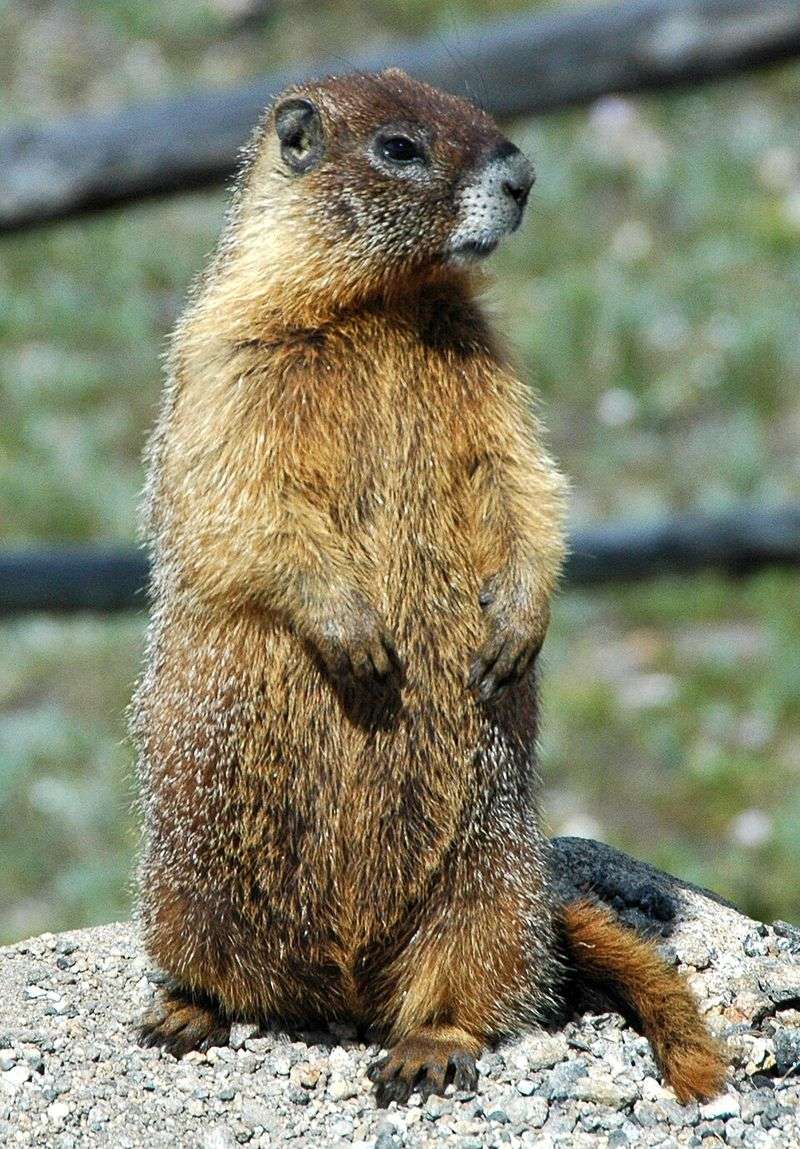
Image Credit: James St. John.
Yellow-bellied marmots are the chunky sunbathers of Utah’s higher country, and they somehow make alpine landscapes feel more playful. On rocky slopes and mountain meadows, you will often see one stretched across a warm boulder as if it booked the best seat hours before you arrived.
Then, at the first sign of trouble, it bolts for cover with surprising speed.
These stout rodents live in burrow systems that matter more than most visitors realize. Burrows provide shelter from predators, nursery space for young, and hibernation quarters during the long cold stretch when marmots may remain underground for many months.
In fact, they spend a huge part of their lives below the surface, making those brief aboveground moments feel like a seasonal privilege.
Your ears can help before your eyes do, because marmots often whistle sharp alarm calls from rocky areas. Scan boulder piles, meadow edges, and sunny talus slopes at mid to high elevations.
Once you find one, another usually pops up nearby like a lookout.
Desert Cottontail
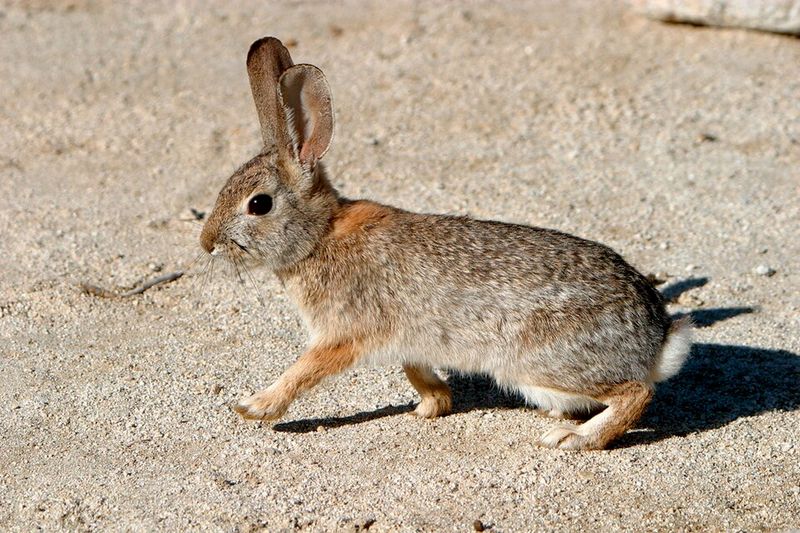
Image Credit: Alan Vernon.
Desert cottontails are easy to overlook until one suddenly springs from a patch of sage or scrub and turns stillness into a blur. In Utah’s arid state park landscapes, these rabbits rely on camouflage first, blending into pale soil, dry grasses, and brushy cover so effectively that your eyes can pass right over them.
Their big ears usually give them away a second too late.
When danger gets close, they have two main strategies: freeze and vanish, or explode into motion. Those quick bursts can include sharp zigzags toward thickets, burrows, or any protective cover within reach.
Good hearing, alert vision, and a tendency to stay near shelter help them survive in dry country filled with watchful predators.
I like spotting them in the calmer edges of the day, when light softens and movement stands out against the ground. Search low valleys, foothills, pinyon-juniper areas, and desert shrublands below higher elevations.
If you think you saw one twitch, you probably did.
Common Collared Lizard
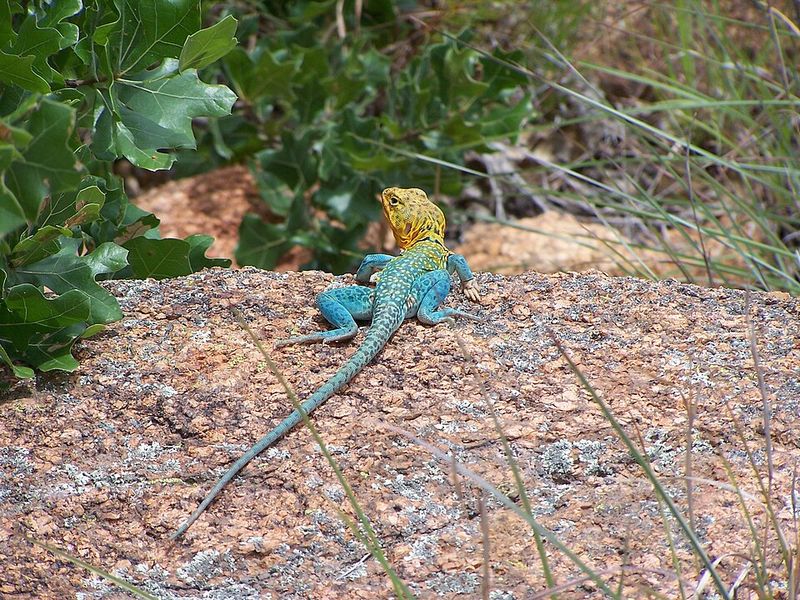
Image Credit: Jsouth001.
The common collared lizard looks like southern Utah decided one reptile should match the scenery’s confidence level. Perched on sunlit red rocks, especially in dry open country with sparse vegetation, it often seems to pose for visitors while keeping a sharp eye on everything that moves.
The males can be especially striking, with vivid blues, greens, yellows, and warm orange tones that stand out against sandstone.
These lizards favor rocky hillsides and exposed basking sites that double as lookout posts. From those sunny platforms, they watch for insects, spiders, and even smaller lizards, then burst into action with impressive speed.
One of their coolest tricks is the ability to run on their hind legs, which gives them an almost cartoonishly athletic style in motion.
Look carefully before assuming a bright patch on a rock is just reflected color. Midmorning often offers good basking activity, especially after a cool night.
If you stay still, you may get a long, surprisingly charismatic view.
North American Beaver
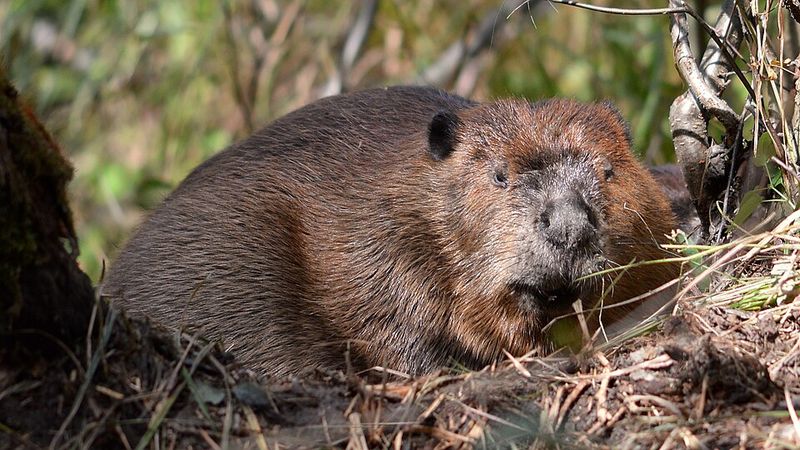
Image Credit: Ryan Hodnett.
North American beavers are not always easy to spot directly, but their handiwork can announce them long before the animal appears. In Utah state parks, look along streams, ponds, and slow rivers for gnawed trunks, muddy lodges, stick piles, and dams that transform ordinary water into thriving wetland habitat.
Few animals leave such obvious evidence that they have been busy.
Beavers are famous ecosystem engineers for good reason. By slowing water and creating ponds, they produce habitat that benefits fish, waterfowl, amphibians, insects, plants, and many other mammals.
Their lodges and bank dens provide shelter and food storage, while the wetlands they help create can reshape an entire area in ways that ripple far beyond one species.
Direct sightings usually come with patience and a little luck, often around evening when the water surface turns glassy. Watch quietly from a distance and listen for tail slaps, chewing, or gentle movement near shore.
Even without seeing one, the beaver’s signature is everywhere.