
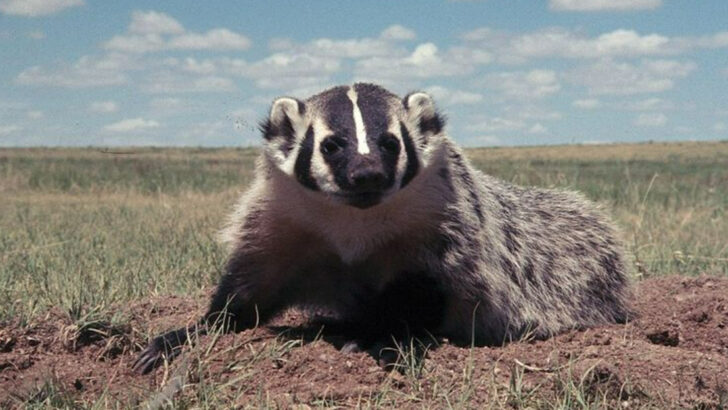
New Mexico’s deserts look quiet at first glance, but they hide some of the Southwest’s most surprising survivors. From secretive mammals to nectar-drinking bats and fish living in salty springs, these rare animals turn harsh landscapes into living drama.
If you love wildlife with strange adaptations and comeback stories, this list is going to pull you in. Keep reading and you may never look at desert country the same way again.
Mexican Gray Wolf
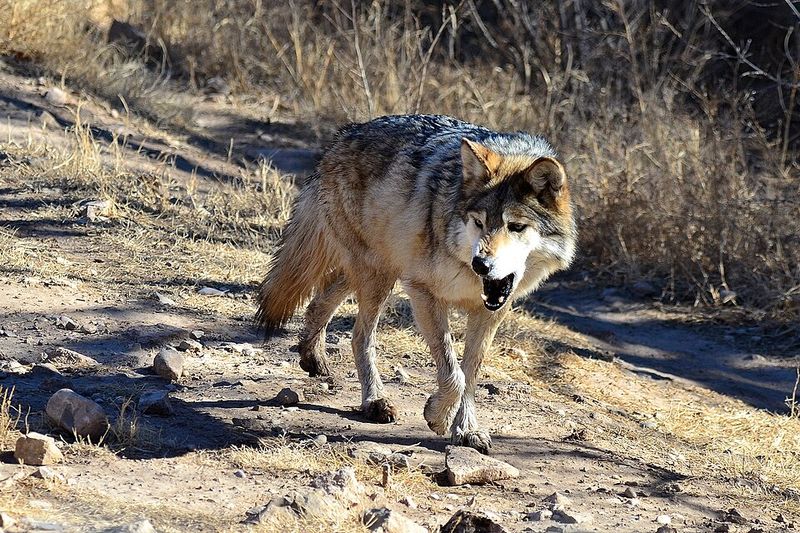
Image Credit: Larry Lamsa.
If you ever want proof that the desert still has room for big drama, the Mexican gray wolf delivers it. This is the rarest gray wolf subspecies in North America, and its return to southwestern New Mexico feels almost unbelievable.
After nearly vanishing, these wolves were reintroduced beginning in 1998 and are slowly reclaiming remote mountain woodlands and rugged desert ranges.
Recent counts show at least 319 wild Mexican wolves in the United States, with 176 in New Mexico, which makes every sighting feel even more meaningful. I find that number hopeful, but also fragile, because their genetic diversity remains a serious challenge.
As apex predators, they help balance prey populations and support healthier landscapes, which means their comeback matters far beyond the wolf itself.
Lesser Long-Nosed Bat
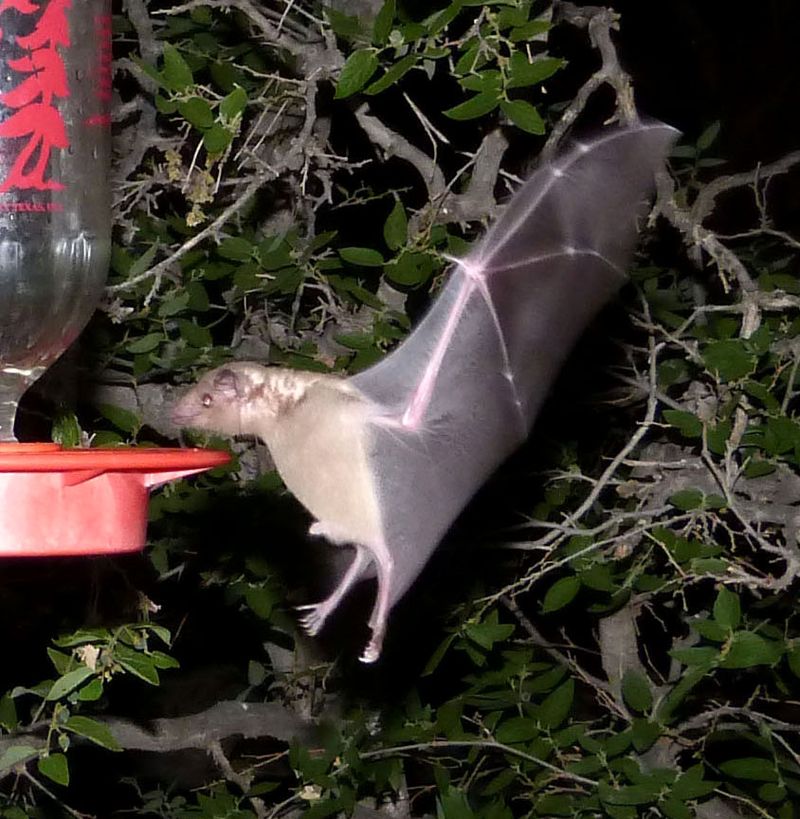
Image Credit: gailhampshire.
The lesser long-nosed bat feels like one of New Mexico’s most underrated desert specialists. Instead of stalking prey, it follows blooming agaves and cacti, drinking nectar and carrying pollen across the night sky.
In southern New Mexico, especially around Hidalgo County and nearby mountain ranges, this migratory bat arrives during warmer months and quietly keeps desert plants reproducing.
I love how this animal turns a harsh landscape into a pollination highway. Females migrate north from Mexico in spring, gather in maternity colonies in caves or old mines, and raise pups while feeding on flowering desert plants.
Once listed as endangered, the species recovered enough to be delisted in the United States in 2017, but seeing one still feels rare because its life is tied so tightly to healthy flowering habitat and seasonal movement.
Desert Bighorn Sheep
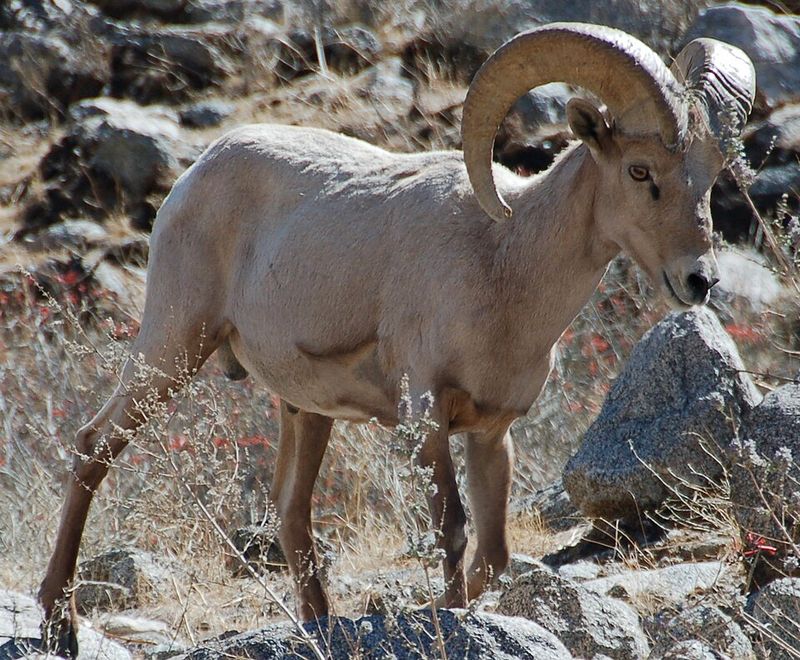
Image Credit: Andrew Barna.
Desert bighorn sheep look like they were built by the cliffs themselves. In New Mexico, they cling to rocky canyons and mountain ranges where loose stone, heat, and elevation would challenge almost anything else.
Their concave, flexible hooves give them incredible traction, and that climbing skill is often the difference between escape and becoming a mountain lion’s next meal.
These sheep once declined badly from hunting, habitat loss, and disease linked to domestic livestock, which pushed New Mexico to list them as endangered in 1980. Conservation work, including captive breeding at Red Rock Wildlife Area and many reintroductions, helped populations rebound enough for a downlisting to threatened in 2008.
I think their recovery is especially satisfying because it did not happen by accident. It took constant monitoring, habitat management, and persistence to return these sure-footed icons to places like the Peloncillo, Caballo, and San Andres Mountains.
Black-Footed Ferret
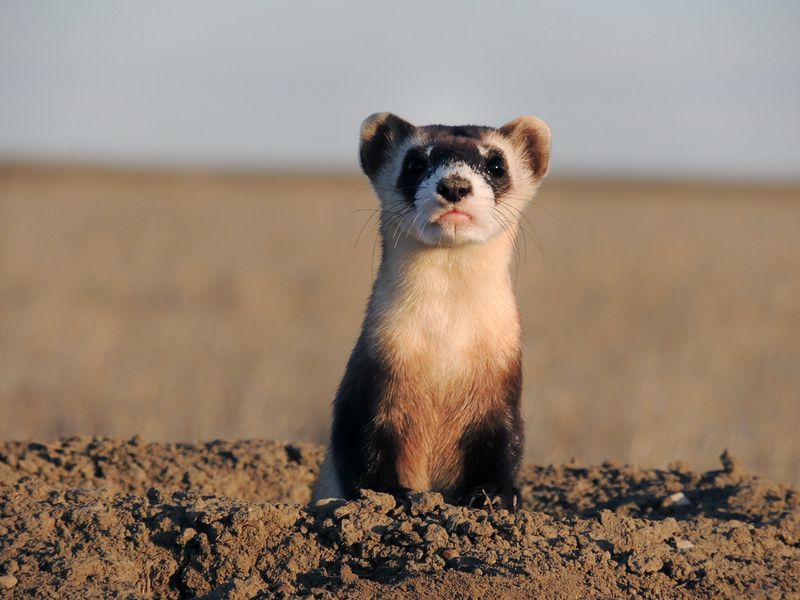
Image Credit: U.S. Department of Agriculture
The black-footed ferret has the kind of story that sounds made up until you learn it is real. Once thought extinct, it survived through a tiny rediscovered population, and every ferret alive today traces back to only seven founders.
That alone makes this sleek predator one of the most extraordinary rare animals connected to New Mexico’s desert grasslands.
What makes it even more specialized is its near total dependence on prairie dogs. Ferrets eat them, sleep in their burrows, and raise young in the same underground neighborhoods, so when prairie dog colonies disappear, ferrets collapse too.
Reintroduction efforts have returned captive-bred animals to places in New Mexico, including Vermejo Park Ranch and areas near Wagon Mound. I cannot help rooting for a species this close to the edge, especially when only about 300 remain in the wild across reintroduction sites and plague still threatens their future.
Western Burrowing Owl
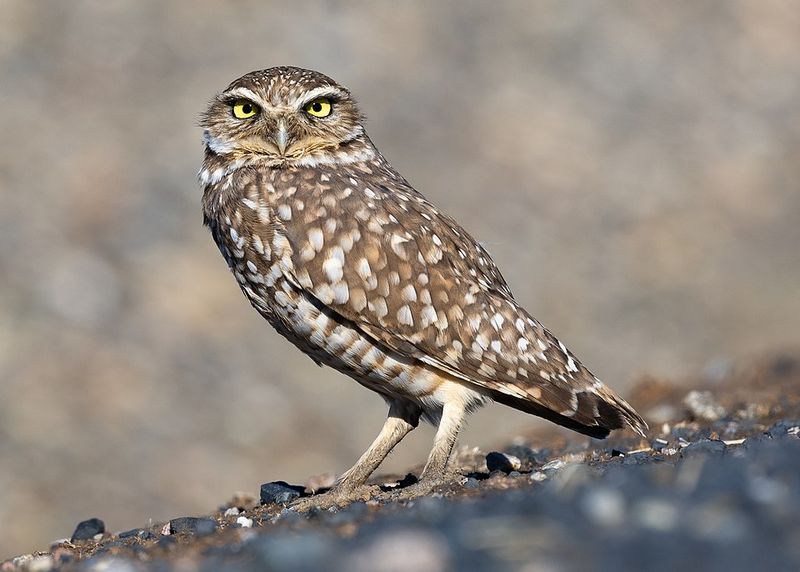
Image Credit: Frank Schulenburg.
The western burrowing owl is the kind of bird that completely changes what you expect an owl to be. Instead of hiding in trees, it nests underground, often in abandoned prairie dog or ground squirrel burrows scattered across open desert and grassland.
It can also appear in culverts, pipes, and other odd places, which gives it a scrappy, inventive feel I really admire.
Another surprise is its schedule. This owl can be active by day, at dusk, and at night, hunting insects, reptiles, and small mammals across bare ground with quick, watchful movements.
In New Mexico, some populations are stable or increasing, while others are slipping because suitable nesting habitat keeps disappearing with development and the loss of prairie dog towns. You do not need a giant raptor to find something memorable here.
A small owl standing outside a dirt tunnel can be just as wild, and much rarer than people realize.
Texas Horned Lizard
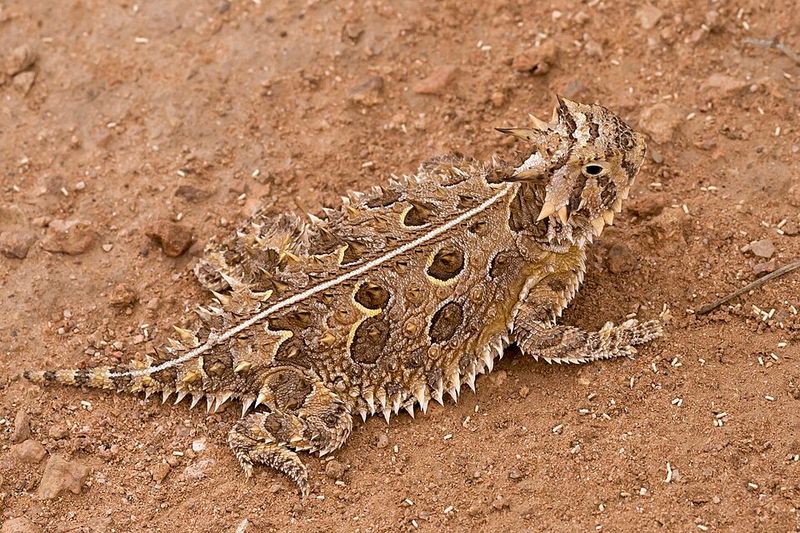
Image Credit: Patrick Alexander.
The Texas horned lizard looks like a creature designed by the desert itself, all spikes, armor, and perfect camouflage. In eastern New Mexico, it blends so well with sandy and loamy ground that you could walk right past one without noticing.
That disappearing act is part of its survival strategy, and honestly, it makes every encounter feel like finding a living fossil.
Despite the nickname horned toad, this is very much a lizard, and a highly specialized one at that. Harvester ants make up most of its diet, sometimes 70 to 90 percent, which means any disruption to native ant populations can hit the species hard.
Habitat loss, pesticides, and invasive fire ants have driven serious declines across parts of its range. New Mexico protects the species, and captive breeding with releases in places like Socorro County offers real hope.
Still, it remains one of the desert’s easiest animals to miss and hardest to replace.
Gila Monster
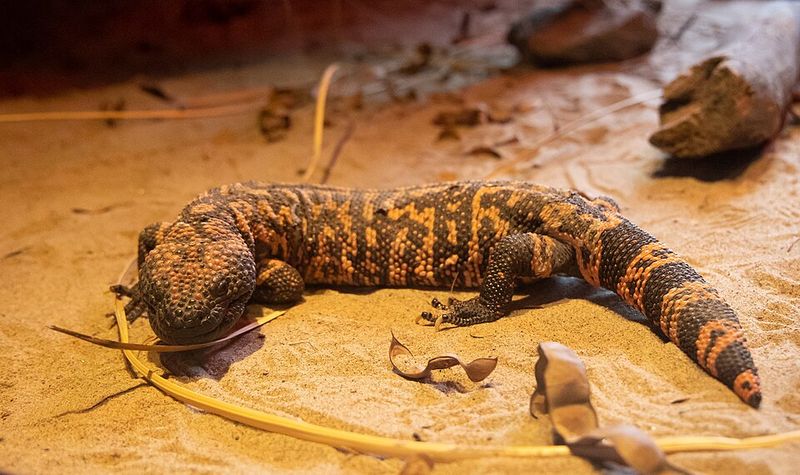
Image Credit: Theo Kruse / Burgers’ Zoo.
If any New Mexico desert animal looks like it belongs in a myth, it is the Gila monster. With its thick body and orange-and-black warning pattern, this venomous lizard makes an immediate impression, yet most people never see one because it spends roughly 95 to 98 percent of its life underground.
That contrast makes it feel both famous and strangely hidden.
In southwestern New Mexico, Gila monsters live where rocky desert scrub meets grassland, usually below about 5,700 feet. They are most active in spring and early summer, with another burst during summer monsoon storms, and they feed on eggs and young animals while storing fat in their tails for lean times.
I think their rarity comes less from low numbers and more from a talent for invisibility. Protected by state law, they remain one of the Southwest’s most unforgettable reptiles, but you are far more likely to imagine one than actually watch one crossing an arroyo.
Aplomado Falcon
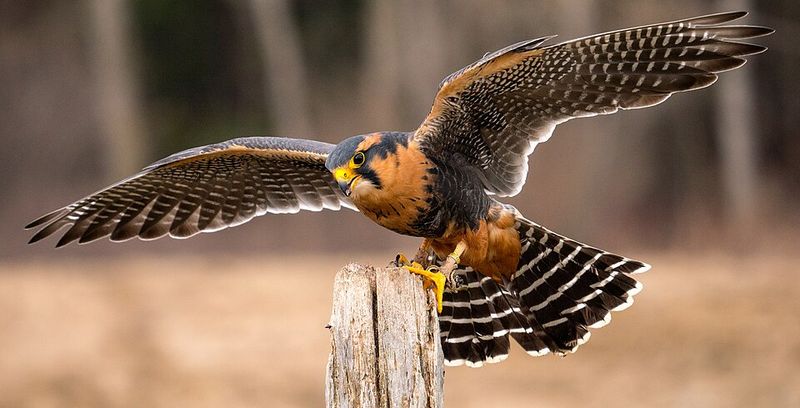
Image Credit: Peter K Burian.
The Aplomado falcon has a sleek, almost hand-drawn elegance that feels different from bulkier desert raptors. Slender, fast, and sharply marked, it once disappeared from the American Southwest, making its return to New Mexico one of the region’s most compelling bird stories.
The last documented U.S. nest in New Mexico was recorded in 1952, which gives its modern presence real emotional weight.
Reintroduction work began in New Mexico in 2006, with captive-bred birds released in south-central parts of the state, while natural recolonization from Chihuahua also helped. These falcons favor open grasslands with scattered yuccas, mesquite, and old nests built by other birds, since they do not construct their own.
I like how their comeback feels unfinished, not polished. They remain endangered in New Mexico, and drought has complicated recovery by reducing prey, but every sighting still hints that lost desert rhythms can return if enough habitat survives.
Chiricahua Leopard Frog
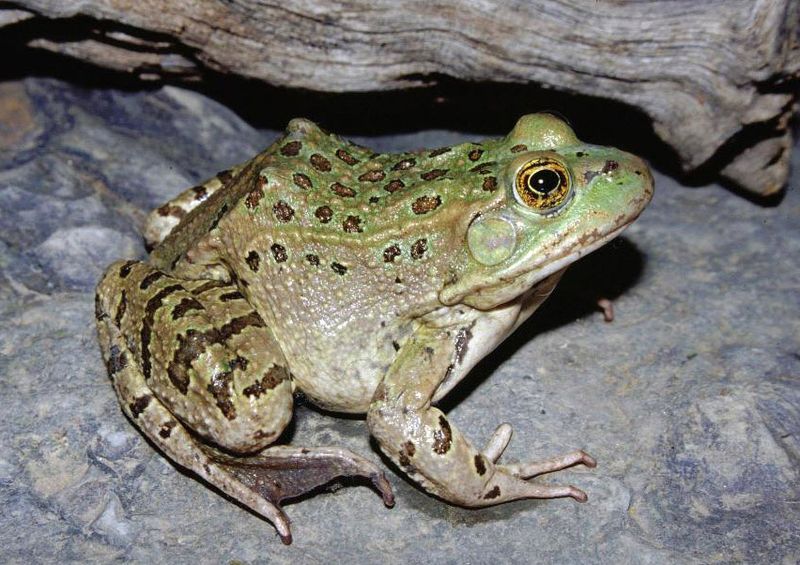
Image Credit: Jim Rorabaugh/USFWS.
The Chiricahua leopard frog survives in one of the most fragile places in the desert, isolated water. Springs, ponds, streams, and stock tanks may not sound dramatic, but for this threatened amphibian they are everything.
When you picture rare desert wildlife, a frog may not be your first thought, yet this one might be among New Mexico’s most vulnerable.
By the 1980s, more than 80 percent of populations in Arizona and New Mexico had disappeared, and fewer than 80 U.S. locations remained by 2011. Habitat loss, drought, invasive predators, and the deadly chytrid fungus have all pushed it toward the edge.
I find its story especially sobering because water habitats can look small on a map but hold entire worlds together. Conservation groups have used captive breeding, tadpole head-starting, habitat restoration, and invasive species removal to rebuild populations in places like Ladder Ranch, but the species still depends on every protected pocket of reliable water.
White Sands Pupfish
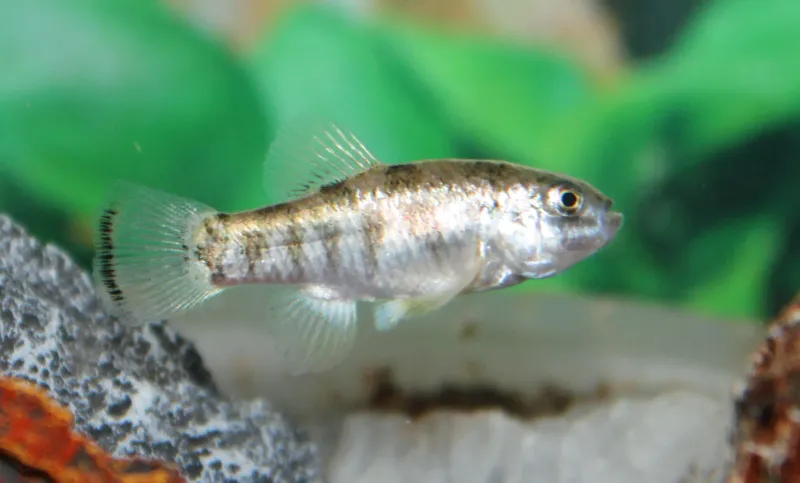
Image Credit: Mexicankillis / Mauricio De la Maza-Benignos
The White Sands pupfish may be the most surprising animal on this list because it proves rare desert life is not limited to fur, feathers, or scales on land. This tiny fish lives in the Tularosa Basin, surviving in warm, shallow waters where salinity can exceed that of seawater.
I think that alone earns it instant respect.
It is the only fish native to this basin and exists in just four known populations, including native groups in Salt Creek and Malpais Spring. Those habitats lie on military lands, which adds an unusual twist to its conservation story, and recent genetic work suggests the Malpais Spring population may even represent a distinct species.
Groundwater withdrawal, pollution, and invasive species remain serious threats despite long-standing protection plans. What makes the pupfish so memorable is its scale.
It is small enough to overlook, yet biologically it tells a huge story about isolation, adaptation, and the strange resilience hidden in New Mexico’s desert waters.
Kit Fox
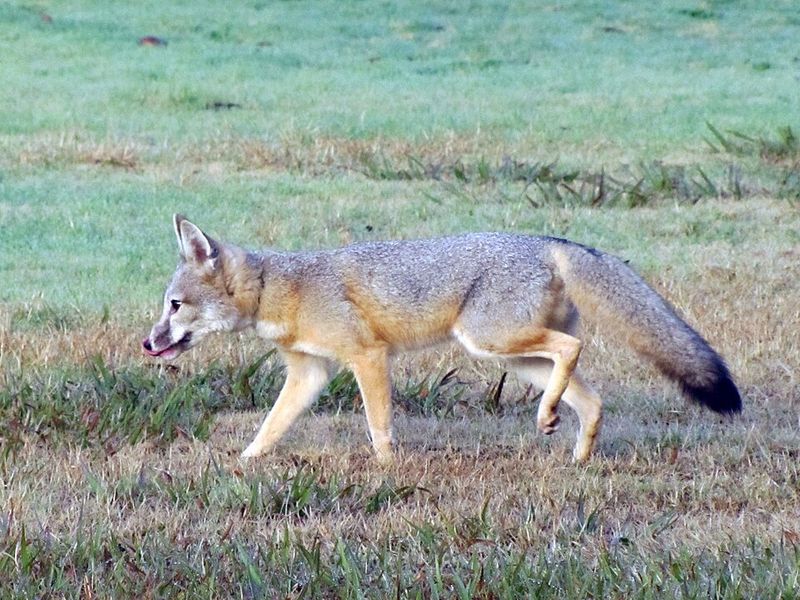
Image Credit: California Department of Fish and Wildlife from Sacramento, CA, USA.
The kit fox looks delicate at first, almost too fine-boned for the desert, but that impression disappears once you notice how perfectly built it is for heat and silence. Its oversized ears help shed body heat and detect tiny movements underground, while furred paws soften its steps across sand.
In New Mexico, it mostly lives west of the Pecos River in desert shrub and grassland habitat.
This fox is mostly nocturnal, spending the hottest hours in underground dens and slipping out after dark to hunt rodents, rabbits, insects, and reptiles. It can meet much of its water need through prey alone, which feels like an elegant desert trick.
I like that it survives through efficiency rather than force. Although not globally rare, it is easy to overlook and faces real pressure from habitat fragmentation, roads, and development.
Spotting one in the open usually feels brief and unreal, like the desert showing you a secret and then quickly taking it back.
American Badger
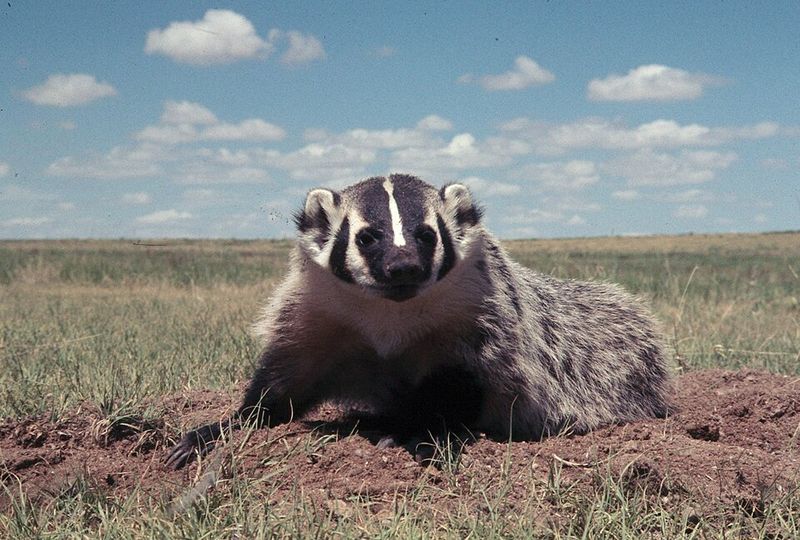
Image Credit: Garst, Warren.
The American badger is not always listed among rare animals, but in New Mexico it can feel almost ghostly because so much of its life happens underground. Stocky, muscular, and armed with long front claws, it is one of the desert’s great excavators.
If you have ever seen a fresh burrow in open scrub and wondered who made it, a badger is a strong suspect.
These hunters favor friable soils in grasslands and desert scrub, where they dig after ground squirrels, prairie dogs, kangaroo rats, and other burrowing prey. They are mostly solitary and often nocturnal, which helps explain why they remain seldom seen even where they are present.
I think what makes them especially interesting is their indirect impact. Abandoned badger burrows become shelter for owls, foxes, rabbits, and skunks, so one hidden predator can quietly shape an entire neighborhood.
That underground influence gives the species a bigger role in New Mexico’s desert ecology than most people ever realize.
Collared Peccary
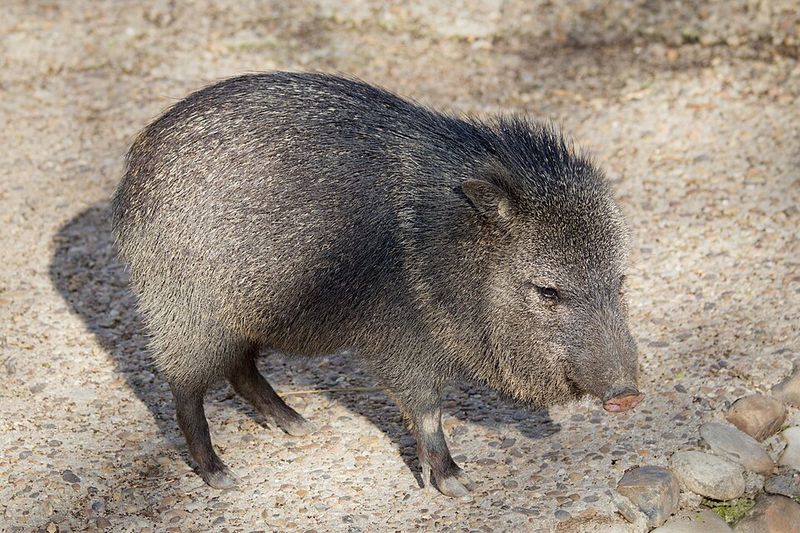
Image Credit: Carlos Delgado.
The collared peccary, better known as the javelina, brings a rowdy social energy to New Mexico’s southern deserts. It is not a pig, even though people often assume that, and once you watch a small herd moving through cactus and brush, it becomes clear this animal follows its own rules.
In New Mexico, it reaches the northern edge of its range, which makes its presence feel especially tied to climate and habitat.
Javelinas travel in sounders, communicating with grunts, woofs, and scent from a gland near the rump. Prickly pear cactus is one of their most important foods and water sources, though they also eat roots, fruits, beans, and occasional animal matter.
I like how practical their desert lifestyle is. They rest in shade during the hottest hours, conserve water efficiently, and move through thick scrub and rocky washes with surprising confidence.
While not currently threatened overall, habitat loss and expansion pressures make them a species worth watching closely in New Mexico.