

In New Mexico, survival often comes down to catching danger before it appears. Some of the state’s most fascinating animals do that with ears so oversized they look almost exaggerated, yet every inch serves a purpose.
From blistering desert heat to moonlit hunts and split-second escapes, these ears work like cooling systems, motion detectors, and radar all at once. Once you start noticing them, you will never look at the state’s wildlife the same way again.
Black-Tailed Jackrabbit

Image Credit: Chuck Homler d/b/a Focus On Wildlife.
If you spot a black-tailed jackrabbit in New Mexico, the ears are the first thing that steal the scene. They look almost oversized enough to belong to a different animal, but that dramatic scale is exactly the point.
Those long ears are packed with blood vessels that help dump body heat into the dry air, giving this desert runner a built-in cooling system.
That matters when summer temperatures turn the ground into a griddle and shade is hard to find. Instead of hiding all day, the jackrabbit can stay more active because its ears help prevent overheating.
You are basically looking at a pair of biological radiators attached to a sprinter.
They also work like hyper-sensitive listening dishes. A faint scrape from a coyote, hawk, or bobcat can trigger an instant burst of speed.
In open country where cover is thin, hearing trouble early is often the difference between a clean escape and becoming dinner.
Kit Fox

Image Credit: Bureau of Land Management.
The kit fox looks like it was designed by the desert itself, right down to its oversized ears. Relative to its small body, those ears are among the biggest of any North American fox, and they do much more than make it look charming.
They release excess heat and help the fox stay cool while crossing warm sand and sparse scrub after sunset.
Cooling is only half the trick. Those ears also give the kit fox remarkable hearing, sharp enough to notice tiny rodents moving across the ground or even beneath it.
In the desert dark, where visibility is limited and every meal takes effort, sound becomes the map.
I love how this animal turns stillness into strategy. It can pause, angle those ears, and locate prey with incredible precision before making a quick pounce.
In a harsh landscape with little room for mistakes, oversized ears help the kit fox conserve energy, find food, and avoid becoming food itself.
Mule Deer

Image Credit: USFWS Mountain-Prairie.
Mule deer wear their survival tool right on top of their heads. Their huge mule-like ears are impossible to miss, and they are not just decorative features that gave the species its name.
Each ear can swivel independently, letting the deer sample sounds from different directions at the same time like a living surround-sound system.
That advantage matters in New Mexico’s open country, where predators can approach from far away but still use brush, arroyos, or terrain folds for cover. Before you ever see the threat, the deer may already have heard it and fixed its location.
Those ears constantly rotate, pause, and adjust, collecting information with almost restless precision.
They also help mule deer stay cautious without wasting energy on panic. Instead of bolting at every random noise, they can better judge where a sound comes from and how serious it seems.
In a landscape where exposure is constant, oversized ears give mule deer time, direction, and one crucial head start.
Desert Cottontail

Image Credit: Alan Vernon.
The desert cottontail may look familiar at first glance, but in New Mexico its ears tell a tougher story. Compared with cottontails from wetter places, these rabbits often have noticeably larger ears that are better suited to open, sunbaked terrain.
They act as cooling panels, helping release heat during the day when the desert feels relentless.
That is a huge advantage for an animal that often has to forage in exposed areas with limited cover. The ears’ network of blood vessels helps manage body temperature, reducing the danger of overheating during routine movement.
You can think of them as thin, highly efficient windows where excess warmth escapes.
Just as important, those ears stay on predator duty every second. Hawks, coyotes, and snakes all threaten a rabbit that spends time near sparse vegetation, so hearing the smallest clue matters.
With better cooling and better listening built into the same body part, the desert cottontail gets a simple but powerful edge in a difficult home.
Coyote

Image Credit: Rebecca Richardson (Red~Star).
A New Mexico coyote survives by paying attention, and its large upright ears are central to that skill. They are highly mobile, always adjusting to catch faint rustles that most animals, and probably you, would completely miss.
In open country, precise hearing can reveal prey long before scent or sight does.
That is especially useful during mousing, the hunting behavior where a coyote listens for rodents moving under grass, brush, or even thin snow. Once it locks onto the sound, it can leap and strike with surprising accuracy.
The whole move depends on hearing direction and distance correctly, often within seconds.
Those ears also serve as an early warning system against larger dangers and human disturbance. Coyotes live in changing environments, from remote desert basins to edges of towns, so flexibility matters.
Big, sensitive ears help them read the landscape in real time, save energy by hunting efficiently, and stay one step ahead in a state where survival favors the alert.
Ord’s Kangaroo Rat

Image Credit: Andy Teucher.
Ord’s kangaroo rat looks tiny and vulnerable, but its oversized ears help turn it into a nighttime escape artist. In the dark desert, hearing is often the first and only warning that danger is close.
Those ears are sensitive enough to pick up low-frequency sounds and sudden movements that might signal a snake, owl, or stalking mammal nearby.
One of the most dramatic examples involves rattlesnakes. A fraction of a second can decide everything, and the kangaroo rat’s hearing may catch the telltale sound of a strike just in time.
That warning pairs with powerful hind legs, allowing an explosive leap that can carry the animal clear of the attack.
I think that combination is one of New Mexico’s best hidden survival stories. The ears do not fight the predator directly, but they buy the instant needed for the body to respond.
In a harsh nocturnal world where hesitation is fatal, oversized ears give this pocket-sized rodent a very real chance.
Ringtail
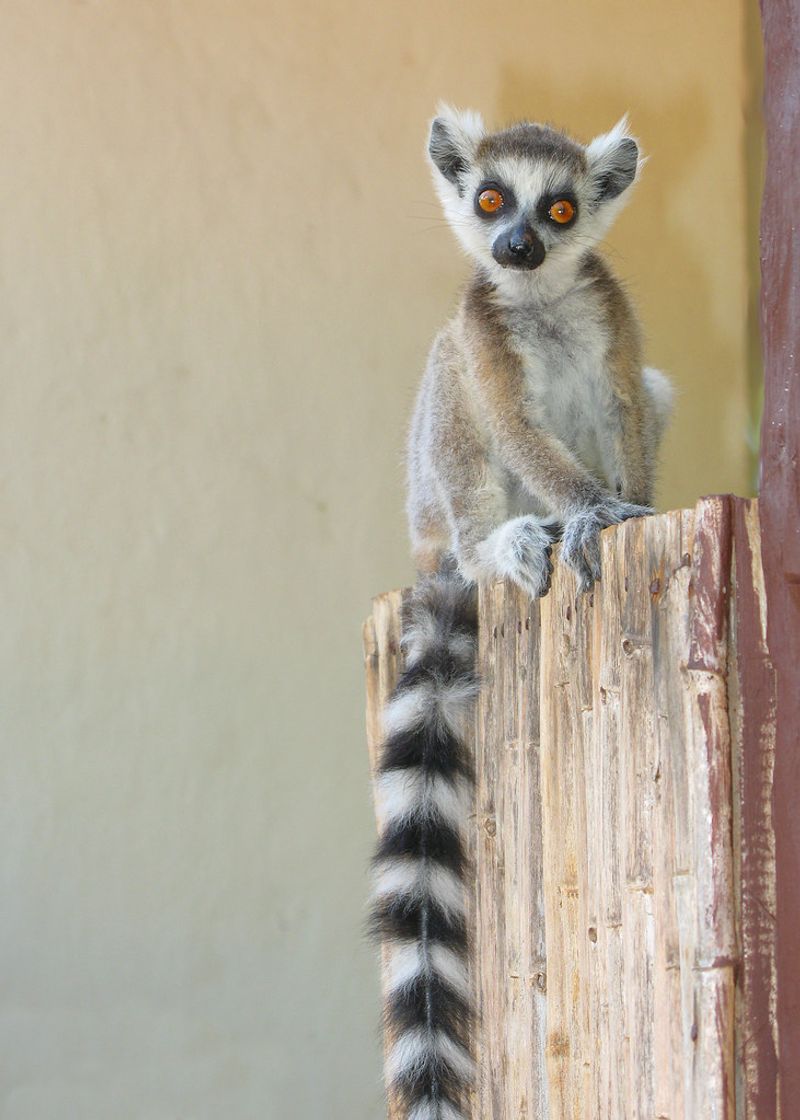
Image Credit: David Dennis.
The ringtail is one of New Mexico’s most charismatic night creatures, and its large ears are a major reason it succeeds after dark. In rocky canyons and rugged desert slopes, vision only goes so far, especially when shadows swallow every crevice.
Keen hearing helps this agile predator move through the darkness with far more confidence than its size suggests.
Those ears pick up the tiny sounds of insects, rodents, and other prey rustling among stones, ledges, and brush. Because ringtails often hunt in complex terrain, sound can reveal what is hidden behind rock faces or tucked into narrow spaces.
The animal’s oversized ears basically extend its awareness into places its eyes cannot fully read.
They also support safer travel. A ringtail scrambling across cliffs or slipping through canyon walls needs early warning if something larger is approaching.
You might think the famous tail gets all the attention, but the ears deserve equal credit. In New Mexico’s nocturnal maze, they help this state mammal hunt efficiently and avoid serious trouble.
Spotted Bat
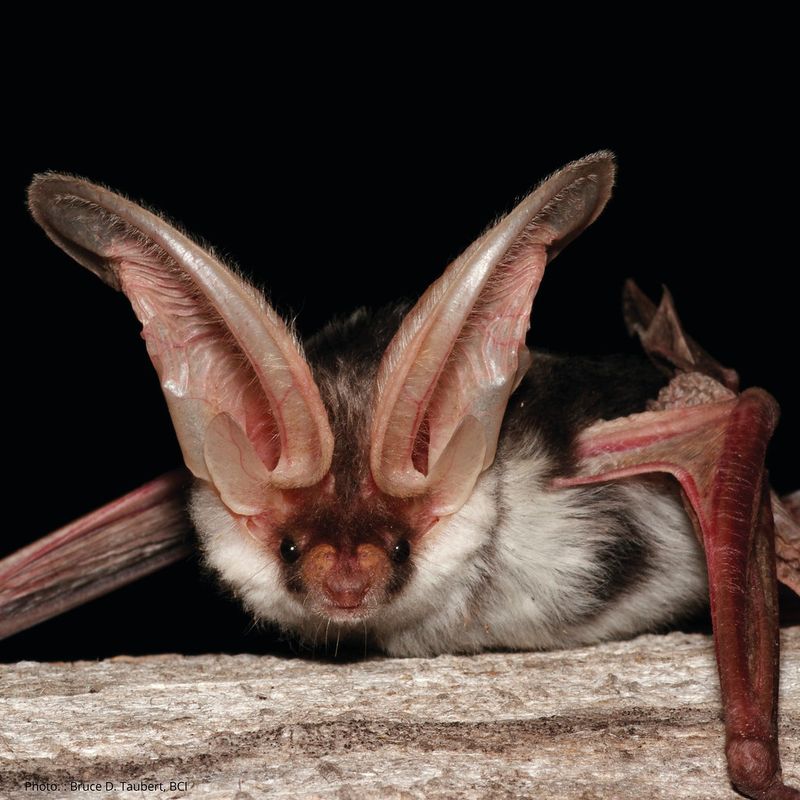
Image Credit: Bureau of Land Management.
The spotted bat looks almost unreal, with bold white spots and giant pink ears that seem oversized even by bat standards. In New Mexico, those ears are not a visual gimmick.
They are essential tools for detecting the bat’s unusually low-frequency echolocation calls, some of the few bat sounds humans may actually hear without special equipment.
That low call strategy works differently from the higher-pitched signals many bats use. The ears are tuned to help the bat process those sounds as it moves through canyon country and open night skies.
With nearly body-length ears collecting information, it can track prey and navigate while keeping tabs on an acoustic world most of us never notice.
There is something wonderfully dramatic about an animal surviving by being both flamboyant and precise. The giant ears help make sense of space, distance, and motion in darkness where sight is limited.
For the spotted bat, oversized hearing is not excess. It is the reason this remarkable flyer can hunt and orient itself so effectively.
Pallid Bat
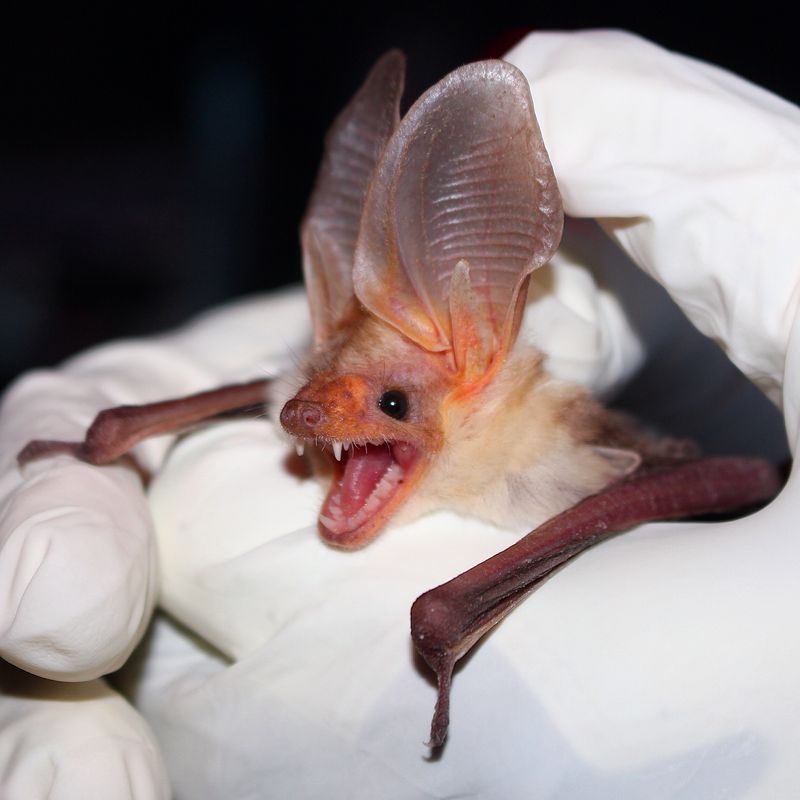
Image Credit: Connor Long
The pallid bat breaks the usual bat stereotype in one very cool way. Instead of depending only on echolocation in flight, it often uses its oversized ears to listen for prey moving on the ground.
In New Mexico’s desert habitats, that means crickets, beetles, and even scorpions can betray themselves with the faintest rustle.
Those ears are incredibly sensitive to footsteps and scraping sounds coming from below. By combining passive listening with short flights and ground-level attacks, the pallid bat can hunt where other bats might miss opportunities.
It is a reminder that survival is not always about doing the obvious thing better. Sometimes it is about using the same body part in a smarter, more flexible way.
This gives the bat an advantage in sparse desert landscapes where prey may be scattered and quick to hide. Listening directly to the desert floor expands its menu and improves efficiency.
Oversized ears let the pallid bat turn tiny noises into meals, which is a powerful trick in an unforgiving environment.
Townsend’s Big-Eared Bat
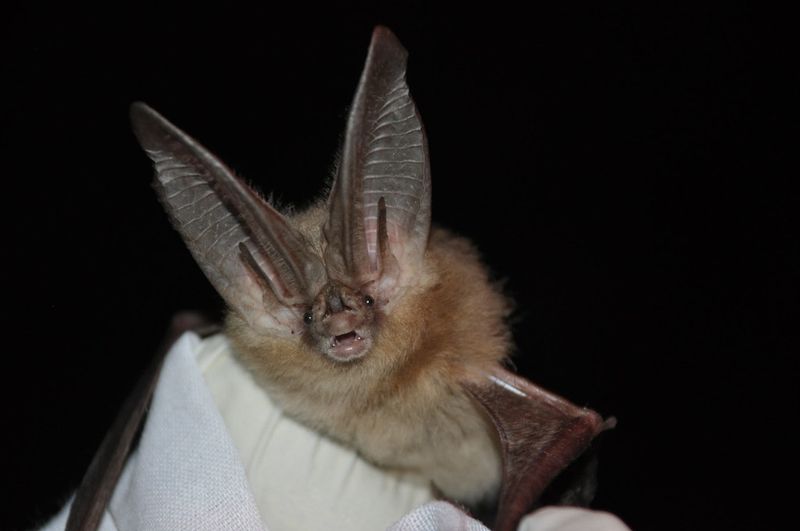
Image Credit: Ann Froschauer/USFWS.
Townsend’s big-eared bat sounds like it was named by someone who gave up trying to be subtle, and honestly that feels fair. Its ears can be nearly as long as its body, often curled back while resting and unfurling when it becomes active.
In New Mexico’s caves, mines, and canyon spaces, that extreme hearing equipment helps it detect delicate sounds made by moths and other insects.
This species is often called a whisper bat because its echolocation calls are relatively quiet. Oversized ears help compensate by capturing and interpreting faint returning signals with impressive accuracy.
That is especially useful in cluttered environments, where the bat has to separate prey from cave walls, rock edges, and shifting airspace without making costly mistakes.
I like that these ears seem theatrical but are really about precision. They allow the bat to hunt efficiently while staying acoustically subtle.
In a world of darkness, narrow spaces, and tiny airborne targets, big ears help this species turn low-volume information into a reliable survival system.
Gray Fox
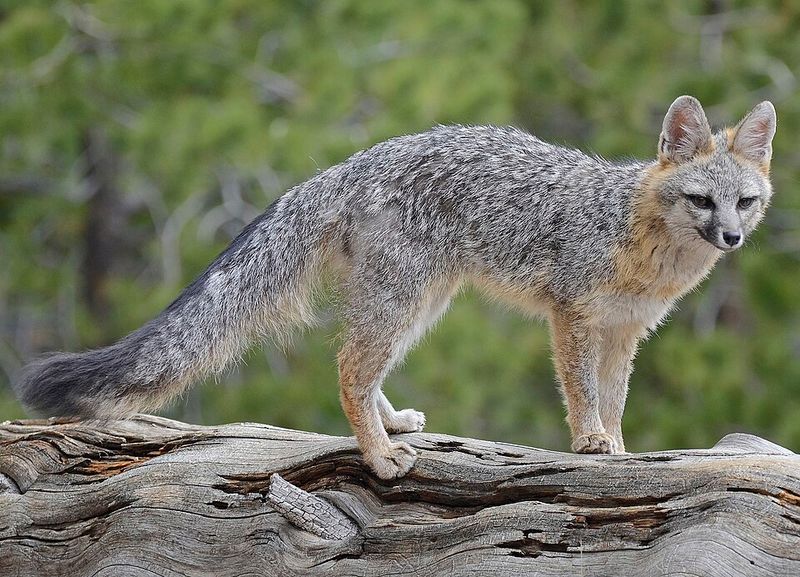
Image Credit: VJAnderson.
The gray fox is easy to overlook because it prefers thicker cover than many of New Mexico’s more visible predators. But inside scrub, woodland edges, and brushy habitat, its large upright ears are doing a huge amount of work.
They help the fox detect tiny movements in leaf litter and dense vegetation where sight lines are short and sudden opportunities vanish fast.
That hearing advantage fits the gray fox’s stealthy style. Rather than racing openly across bare ground, it often slips through cover and listens for rodents, birds, and other small prey concealed by plants or debris.
The ears gather directional clues that let it pause, adjust, and strike with much better odds than random searching would allow.
Those ears also increase safety in the same tangled habitat. Thick brush can hide threats just as easily as it hides prey, so early sound detection matters.
You could say the gray fox hunts by reading whispers in the landscape. In places where visibility is limited, oversized ears turn uncertainty into useful information.
Swift Fox

Image Credit: Abujoy.
On New Mexico’s eastern plains, the swift fox lives in a landscape that offers almost nowhere to hide. That is why its notably large ears are such an important survival feature.
They help release heat in exposed grassland and also sharpen the fox’s ability to detect prey and danger across broad, open space.
In country with little cover, hearing often beats sight because the first clue may be a faint movement in grass or a distant sound carried by wind. The swift fox’s ears help it pick out those signals while conserving energy that would otherwise be wasted on constant running and scanning.
For a small predator, efficiency can be just as important as speed.
The ears also support a more balanced relationship with the harsh plains climate. Sun exposure is intense, shade is limited, and temperatures can swing dramatically, so dumping extra heat matters.
I think that makes the swift fox a perfect example of multifunctional design. In one pair of ears, it gets cooling, detection, and a better chance to stay alive.
Long-Eared Myotis
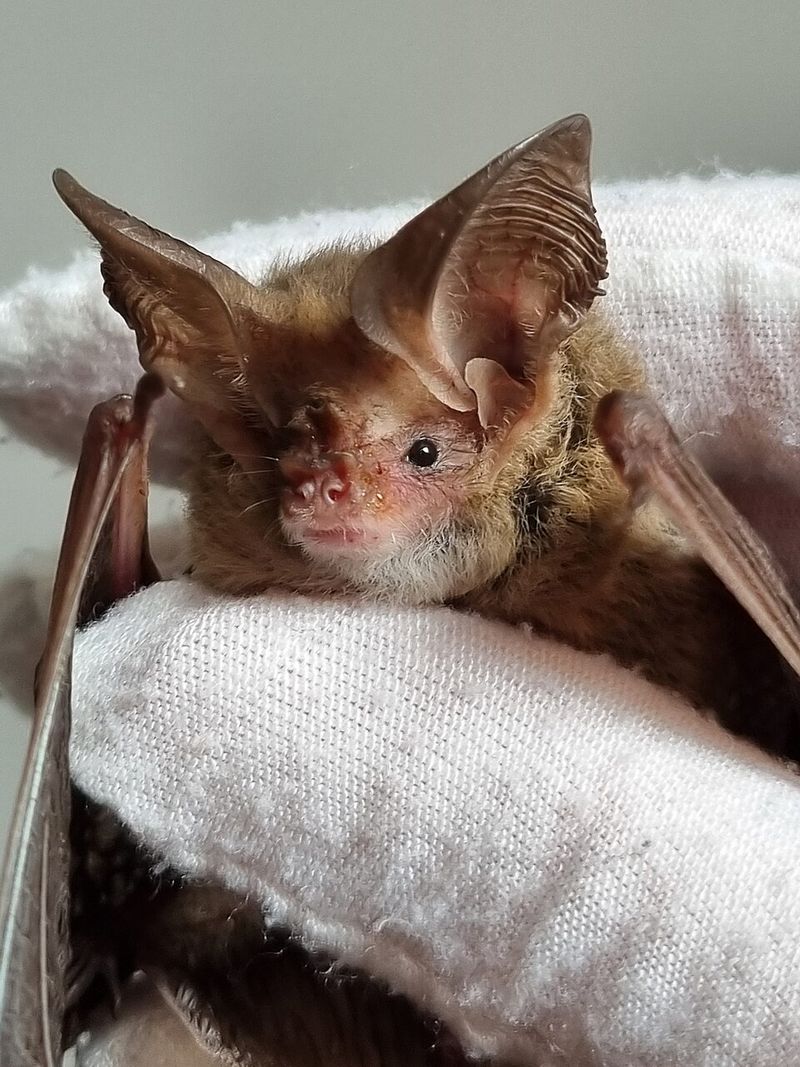
Image Credit: Chloe Johnson.
The long-eared myotis is built for a trickier kind of bat life than open-sky hunters face. In New Mexico’s forested canyons and branch-filled habitats, flying after insects means dealing with clutter everywhere.
Its unusually long ears help it process echolocation with exceptional sensitivity, allowing it to separate prey from leaves, trunks, and tight airspace.
That may sound technical, but the advantage is simple. Better hearing means the bat can make sense of a messy acoustic environment where echoes bounce back from every direction.
Instead of being overwhelmed by noise, it can focus on the subtle signatures of insects moving through complex surroundings.
You can imagine how valuable that becomes in twilight and darkness, when a missed signal could mean a missed meal or a collision. Oversized ears make the long-eared myotis more precise, more adaptable, and better suited to habitats that would challenge less specialized bats.
In a state known for deserts, this species shows that giant ears are just as useful in shaded canyon forests.