
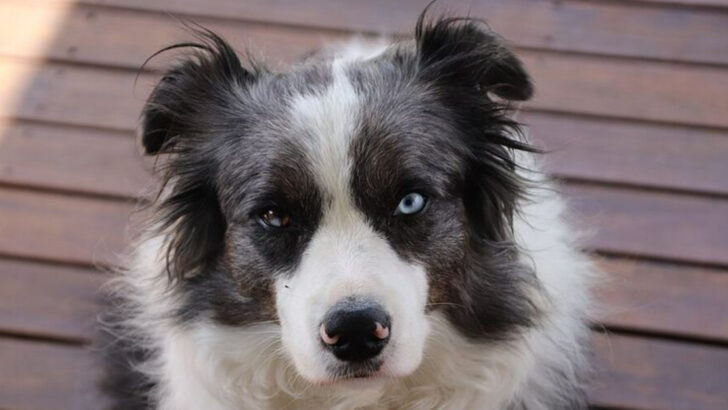
Montana is full of animals that stop you in your tracks, but blue-eyed ones have a special kind of magic. Some are familiar ranch companions, while others are rare pets or seasonal visitors that make the landscape feel even more memorable.
A few are also surrounded by myths, which makes looking closer even more interesting. If you love eye-catching wildlife and beautiful domestic animals, this list is going to pull you right in.
Mountain Goat (Oreamnos americanus)
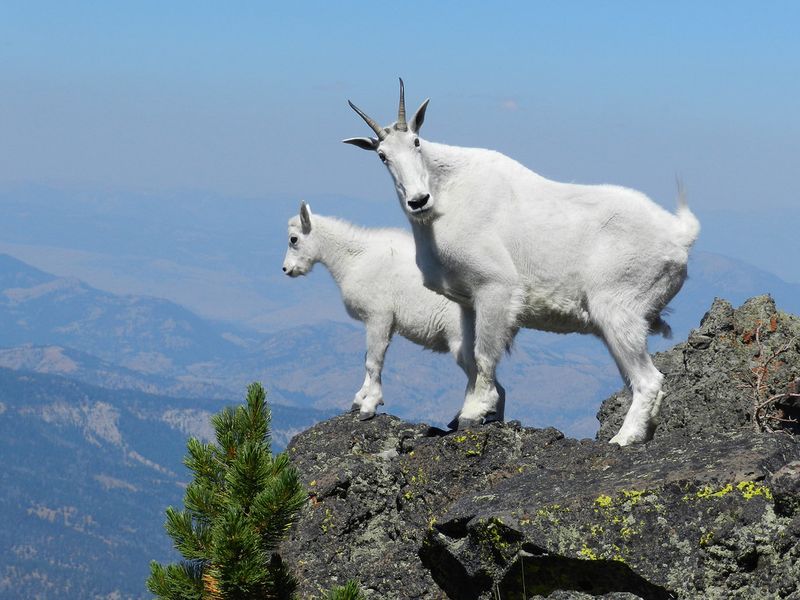
Image Credit: National Park Service
If you picture a mountain goat in Montana, it is easy to imagine icy blue eyes matching all that snow and stone. These agile climbers live in rugged country west of the Continental Divide, including Glacier National Park, where every ledge looks impossible until a goat casually walks across it.
Their heavy white coats, black horns, and sure-footed stance already make them look almost unreal against alpine cliffs.
Still, this is one of those cases where the myth is prettier than the biology. Mountain goats do not actually have blue eyes – their eyes are typically dark brown, which creates a strong contrast with their pale fur and can appear lighter in certain photos.
Even without true blue irises, they are absolutely stunning in Montana’s high country, and seeing one balanced above a valley makes you feel like you have stumbled into a postcard with a pulse.
Siberian Husky
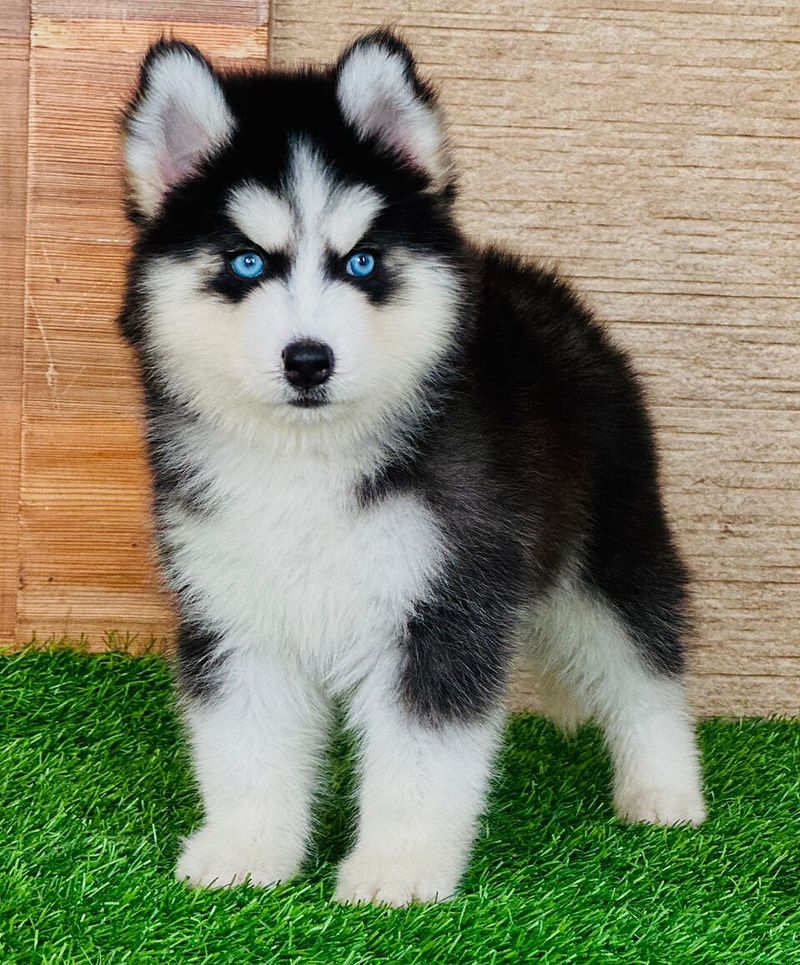
Image Credit: Puppydekho.
A Siberian Husky in Montana looks completely at home, especially when the ground is bright with snow and the air has that sharp winter bite. Their thick double coats, athletic build, and wolfish profile already turn heads, but the blue eyes are what really lock your attention in place.
When you see one staring back at you, the color can feel almost electric against all that fur.
Blue eyes in Huskies are real, common, and tied to a genetic mutation associated with reduced pigment in the iris. Around forty percent of Siberian Huskies have blue eyes, and some even carry heterochromia, which gives them one blue eye and one brown eye for an even more striking look.
In a cold-weather state like Montana, that dramatic face feels perfectly matched to the landscape, and whether the dog is pulling, hiking, or just trotting through town, you cannot help giving it a second look.
Snow Goose (Anser caerulescens)
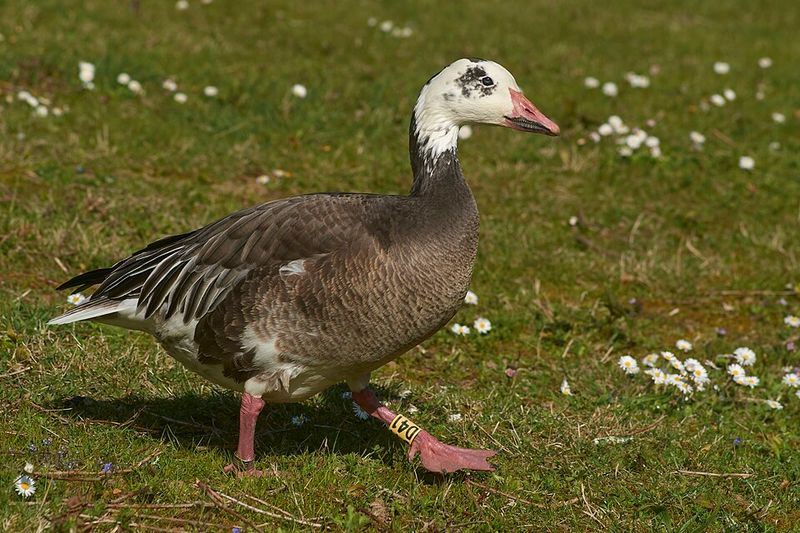
Image Credit: Hobbyfotowiki.
Few migration spectacles in Montana feel as dramatic as a huge wave of Snow Geese settling onto wetlands and fields. Their crisp white plumage, dark wing tips, and constant motion make them look almost luminous, especially at famous stopover spots like Freezeout Lake.
When thousands gather at once, the whole scene feels alive with sound, light, and movement.
Snow Geese are sometimes described as blue-eyed in casual writeups, but that detail does not hold up well under closer observation. Their eyes are generally dark brown, while the bill is pinky-brown and the legs are pink, so the real visual drama comes from contrast rather than iris color.
Even so, I would never call them anything but stunning, because a mass of white birds lifting off over Montana marshes creates the kind of moment you remember for years, whether or not the eyes match the myth that first drew you to them.
Blue-Eyed Leucistic White-Tailed Deer
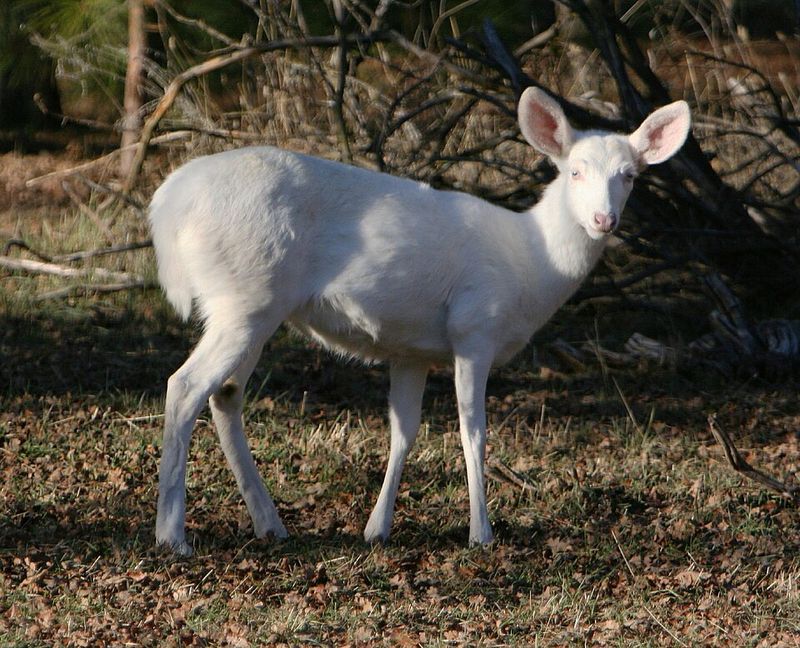
Image Credit: Steve Ryan.
A leucistic white-tailed deer would be one of those Montana sightings you would talk about for the rest of your life. With a pale cream or white coat glowing in early light, it can look almost dreamlike stepping through grass, timber, or a frosty field.
It is the kind of animal that instantly feels rare, even before you know anything about the genetics behind it.
Leucism reduces pigmentation in the hair and skin, but it usually does not change the eyes the way albinism can. Most leucistic deer still have normal brown eyes, noses, and hooves, which is one of the key differences that separates them from true albino deer.
Blue-eyed individuals may be possible in rare cases, but they are not the norm, and documented examples in Montana are exceptionally hard to pin down. That uncertainty honestly adds to the fascination, because if you ever did spot one, it would feel less like a routine wildlife encounter and more like witnessing a rumor come to life.
Australian Shepherd
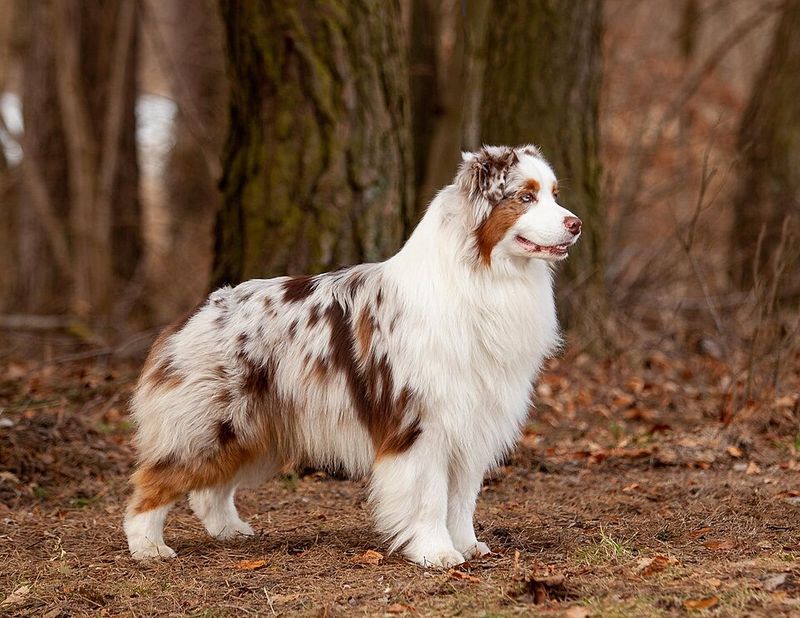
Image Credit: Justina747.
Australian Shepherds fit Montana so well that seeing one race across a ranch feels completely natural. They are quick, smart, and intensely expressive, and when a merle-coated Aussie has bright blue eyes, the whole dog looks almost painted for dramatic effect.
That combination of beauty and focus makes them unforgettable whether they are working cattle or just keeping pace on a trail.
Blue eyes are especially common in blue merle and red merle Australian Shepherds, although this breed can also have brown, amber, marbled, or split-colored eyes. That variety is part of the charm, because you never quite know whether the dog watching you will have one icy iris, two, or a mesmerizing mix.
On Montana ranches, the stare is not just decorative – it matches a mind built for movement, timing, and precision around livestock. I think that is what makes blue-eyed Aussies so compelling here: they are not simply pretty dogs in a scenic state, they are beautiful working partners that look as sharp as they think.
Border Collie
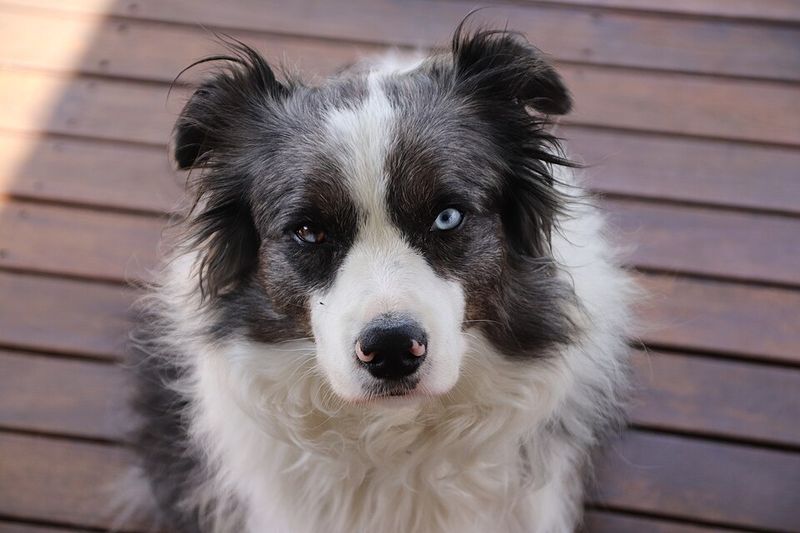
Image Credit: 7575u.
A Border Collie already has one of the most intense looks in the dog world, so when blue eyes enter the mix, the effect is almost hypnotic. In Montana, where herding dogs are part of daily life on many farms and ranches, that piercing stare feels especially right at home.
You can practically see the calculations happening behind those eyes as the dog tracks livestock across an open field.
Blue eyes are most often seen in Border Collies with merle coloring, and some dogs may have partially blue eyes or mismatched eyes instead of a matched pair. The color comes from genetics, but the impact is pure drama, especially when it is paired with the breed’s famous
Blue-Eyed Paint Horses
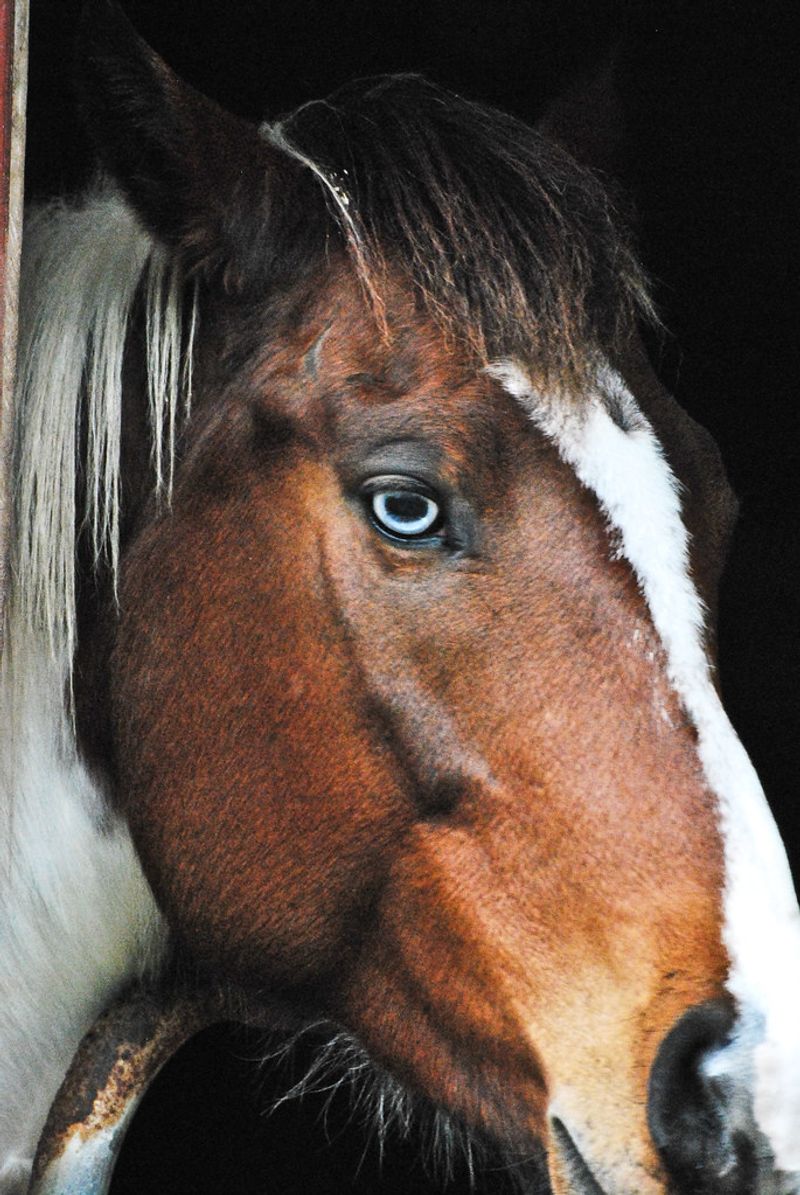
Image Credit: Josh Henderson
A blue-eyed Paint Horse in Montana looks like it was designed to stand out against big sky country. The bold patches of color, the broad face markings, and those glassy blue eyes create a combination that feels both rugged and refined.
When one turns its head in a pasture and catches the light just right, it is hard not to stop and stare.
Blue eyes in Paints and Pintos are often linked to white facial markings and patterns such as frame overo. Horse people sometimes call them glass eyes or walleyes, and while the nickname sounds old-fashioned, the effect is still genuinely striking in person.
In a state shaped by ranching culture, horses are woven into the scenery, but a blue-eyed Paint still manages to feel special. I love that these horses can look flashy without losing any of the grounded, practical energy you expect from a Montana ranch horse.
They are eye-catching, yes, but they also belong completely to the landscape, which somehow makes the blue stand out even more.
Ragdoll Cat
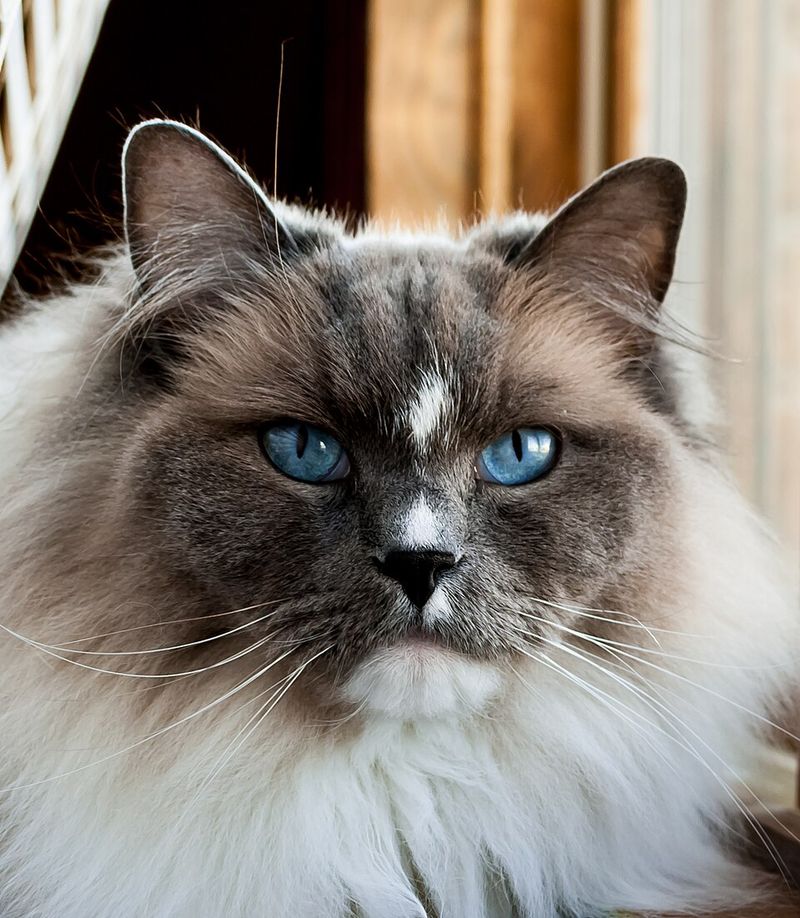
Image Credit: Shadowmeld Photography.
Ragdoll cats have the kind of face that makes people immediately lower their voice and say wow. Their plush coats, color-point pattern, and famously vivid blue eyes give them a soft, almost storybook look that stands out beautifully in a cozy Montana home.
If you want an animal that looks elegant without seeming distant, this breed really delivers.
Unlike some animals on this list, blue eyes are not a maybe with a purebred Ragdoll – they are part of the breed standard. Shades can range from pale ice blue to rich navy, and the color is linked to the same color-point genetics that shape the coat.
That consistency is part of what makes Ragdolls so visually memorable, because every well-bred cat carries that striking gaze. In colder places where indoor companionship matters, their calm and affectionate nature only adds to the appeal.
You get an animal that looks dramatic in photos but feels sweet and relaxed in real life, which is honestly a hard combination to resist.
Siamese Cat
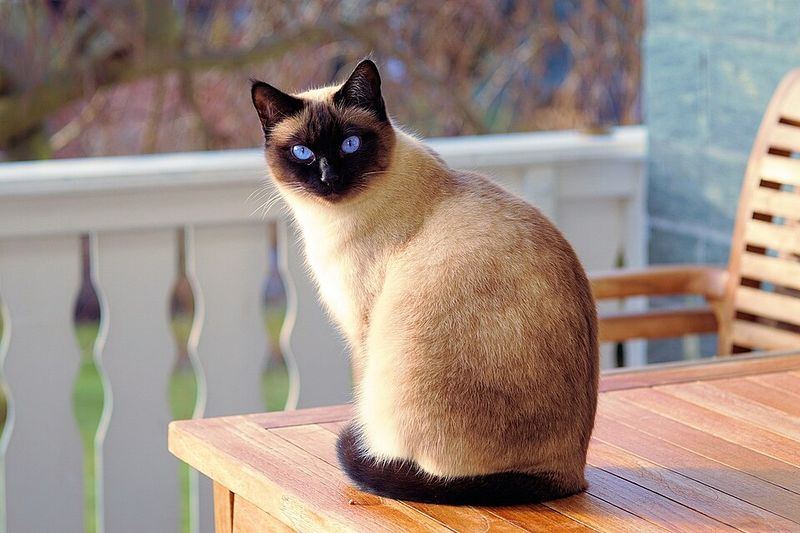
Image Credit: webandi.
Siamese cats bring a very different kind of beauty to Montana’s blue-eyed animal scene. Instead of fluffy softness, you get sleek lines, sharp contrast, and those famous sapphire-blue eyes that seem almost too vivid to belong to a real cat.
A Siamese does not just sit in a room – it somehow becomes the most visually important thing in it.
Those blue eyes are a hallmark of the breed and are required in purebred Siamese cats. The color comes from the colorpoint gene, a mutation that affects melanin production and creates the signature contrast between the pale body and darker ears, face, paws, and tail.
That genetic recipe gives Siamese cats an appearance that feels polished, dramatic, and instantly recognizable. In Montana, where many people keep cats indoors through long cold spells, a Siamese can add both personality and visual flair to daily life.
I think that is why they remain so iconic: even curled on a couch, they still look like they are carrying themselves through a much grander scene.
Blue-Eyed Domestic Rabbit
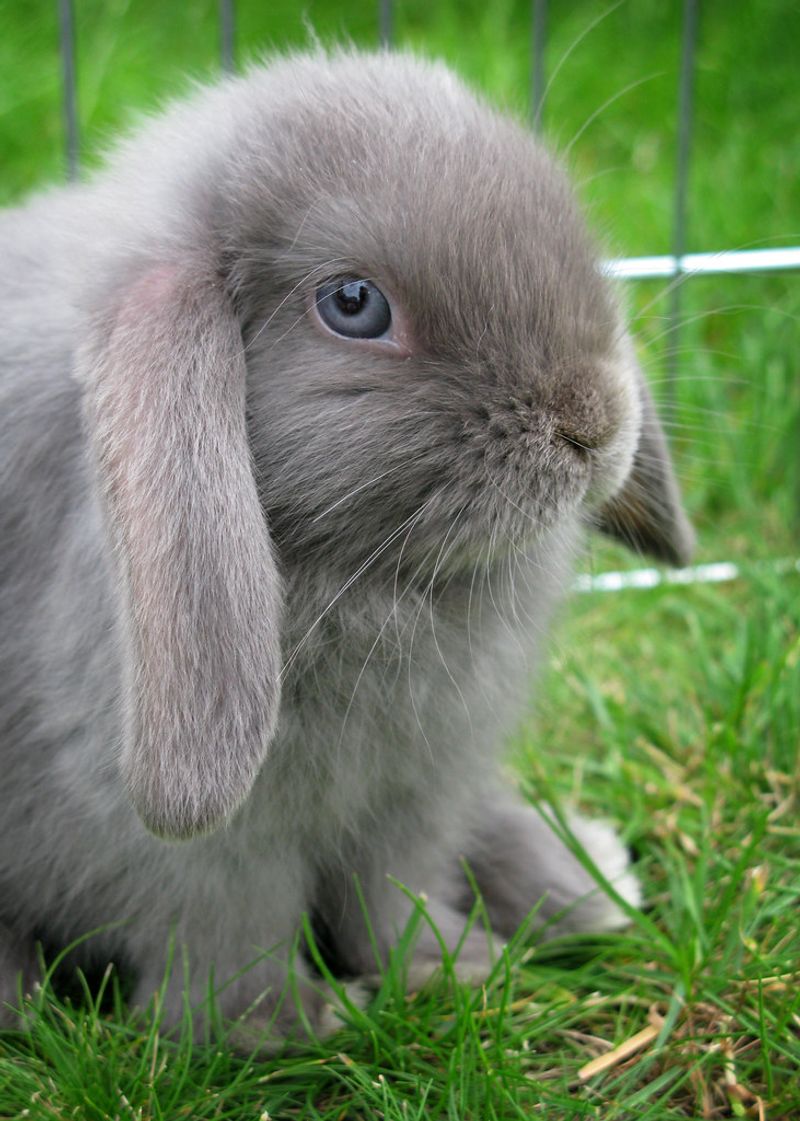
Image Credit: Jlhinton
Blue-eyed domestic rabbits might be the most unexpectedly enchanting animals on this list. People often associate rabbits with soft fur and quiet personalities, but when you see one with bright blue eyes, the whole look becomes unusually striking and a little magical.
In Montana homes, barns, and hobby farms, these rabbits can feel like tiny showstoppers hiding in plain sight.
The most famous version is the Blue-Eyed White rabbit, often produced by the recessive Vienna gene. Rabbits carrying a single copy of that gene can also show blue eyes, marbling, or distinctive white markings, which means the look can vary in really interesting ways from one pet to another.
That variety makes them fun to learn about, especially if you enjoy animals with uncommon color genetics. I like that they combine delicacy with surprise – one moment you notice the gentle posture, and the next you are completely caught by the eyes.
They may be small, but visually they hold their own against far larger animals in Montana’s blue-eyed lineup.