
Georgia’s swamps look quiet at first glance, but they are packed with specialists built for mud, murky water, and sudden movement. Every ripple, croak, and flash of feathers hints at an animal that has solved the swamp in its own brilliant way.
Some of these creatures are famous, while others feel like hidden locals that only reveal themselves if you slow down and watch. If you want to see evolution at its most practical and dramatic, this lineup is worth wading into.
American Alligator
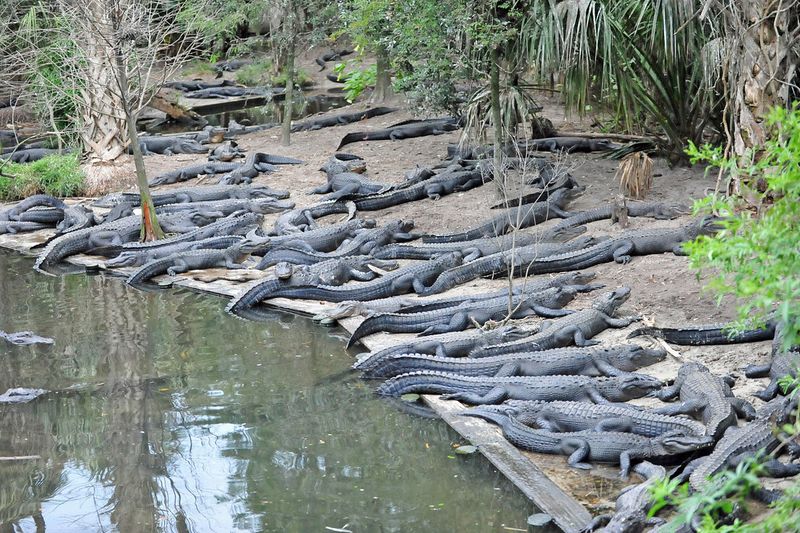
Image Credit: Heather Paul.
If Georgia’s swamps had an undisputed heavyweight, this would be it. The American alligator looks almost custom built for still water, with a muscular tail that drives it forward and a low profile that keeps it hidden.
You can miss one completely until the water seems to grow eyes.
Its nostrils and eyes sit high on the head, letting it breathe and watch while most of the body stays submerged. A clear third eyelid helps protect the eye underwater, and special valves close off the ears, nostrils, and throat during a dive.
That means it can lunge, twist, and hold prey in places where other predators would struggle.
It also reshapes the swamp itself. By digging gator holes, alligators create watery refuges during dry spells, and other animals depend on them more than you might expect.
In a landscape of heat, mud, and uncertainty, this reptile is not just surviving – it is engineering the whole neighborhood.
Cottonmouth
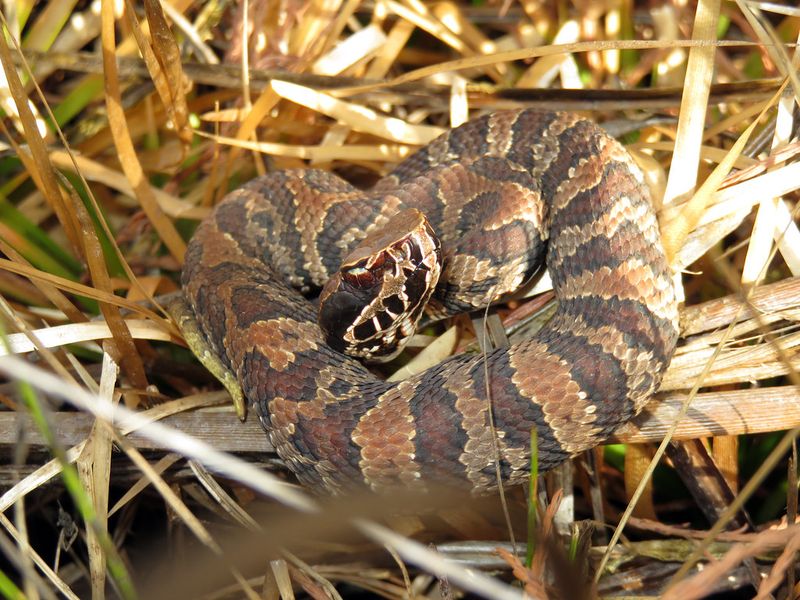
Image Credit: Bradley O’Hanlon.
The cottonmouth gives swamp life a sharper edge. This heavy-bodied pit viper is at home along slow creeks, blackwater channels, marshy edges, and flooded woods, where it can swim with surprising ease.
In the water it often rides high, almost corklike, which makes it look both calm and unmistakably confident.
That confidence comes from useful tools. Heat-sensing pits help it detect warm prey, especially in dim light, while its swimming ability lets it hunt fish, frogs, and small animals where land and water blur together.
It also spends plenty of time out of the water, stretched across logs or banks, ready to slip back into cover fast.
People tend to focus on the dramatic white mouth display, but what really makes this snake a swamp success is versatility. It can patrol shorelines, cruise channels, and wait in ambush without wasting movement.
In a habitat full of murk and surprise, the cottonmouth is built to read both.
Great Blue Heron
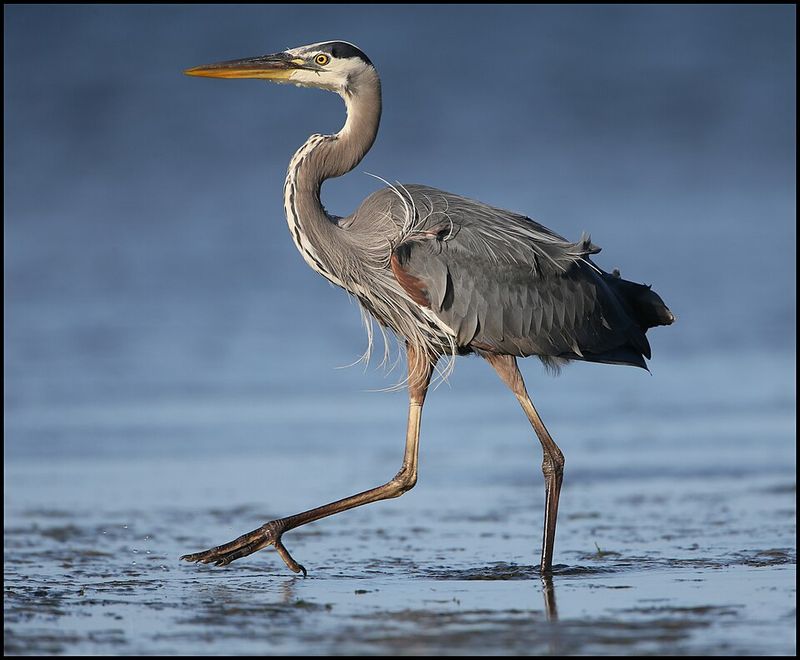
Image Credit: nigel.
The great blue heron brings a kind of swamp elegance that feels almost theatrical. It moves slowly through shallow water on long legs, then freezes so completely that you start wondering whether it is part of the scenery.
A second later, that dagger bill shoots forward and the stillness is over.
Everything about this bird fits wetland hunting. Its long neck coils into a powerful S shape for rapid strikes, and its wide toes spread weight across mud that would bog down clumsier animals.
Even in dim conditions, specialized vision helps it keep hunting when the swamp turns shadowy and quiet.
I like that it succeeds by patience rather than noise. Fish, frogs, salamanders, insects, and even small reptiles can all end up on the menu, because the heron is not picky when opportunity appears.
In Georgia’s swamps, where motion is often subtle and timing matters most, this bird turns waiting into a weapon.
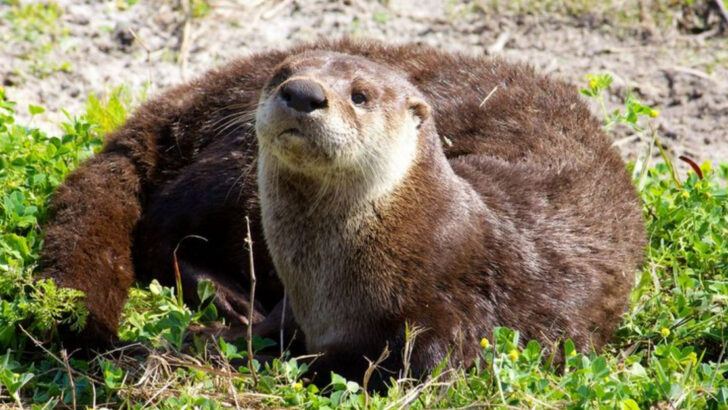
River Otter
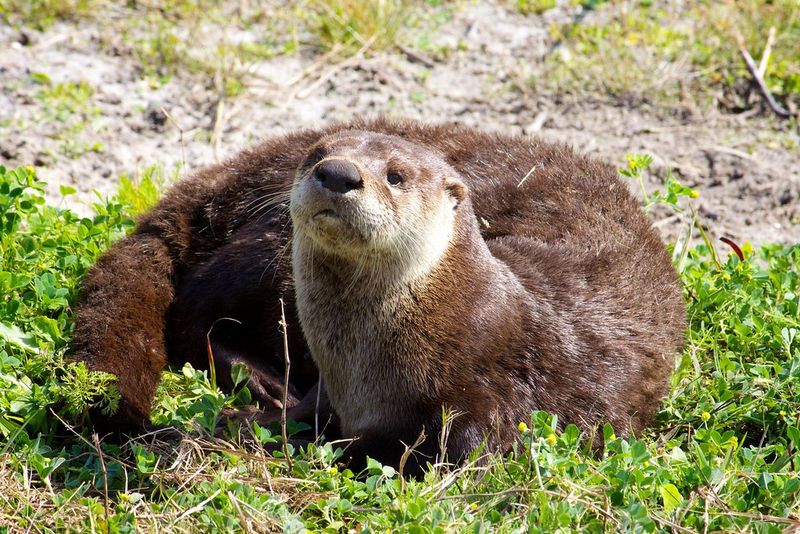
Image Credit: Keenan Adams (USFWS).
River otters make swamp life look like a game, but their playfulness hides serious design. Their bodies are long, streamlined, and almost torpedo shaped, which lets them slip through winding channels with hardly a splash.
Watching one move through dark water, you get the sense it belongs there more naturally than on land.
Dense waterproof fur keeps the body insulated, webbed hind feet add propulsion, and sensitive whiskers help detect prey in murky conditions. They can close their ears and nostrils underwater and stay submerged for several minutes while chasing fish, crayfish, and amphibians.
In a place where visibility is often terrible, that tactile hunting ability matters.
What makes otters especially suited to Georgia’s wetlands is their range of moods and methods. They hunt efficiently, travel quickly, and still find time to slide, wrestle, and investigate everything around them.
The swamp can seem heavy and still, but an otter cuts through it with speed, curiosity, and the kind of confidence only a true native shows.
American Bullfrog
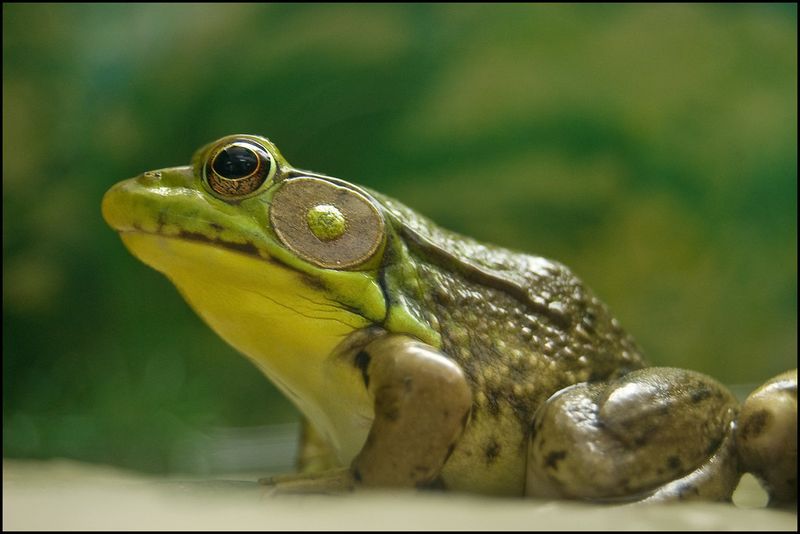
Image Credit: Tom Gill.
The American bullfrog feels like the voice of the swamp before it becomes one of its ambush hunters. Its deep call can roll across still water, but its body is just as impressive as its soundtrack.
Broad, powerful, and well camouflaged, it can vanish among floating plants until something edible wanders too close.
Its strong hind legs deliver explosive jumps and excellent swimming power, helping it escape danger or rush prey. Bullfrogs also absorb water through their skin, which suits a life spent around ponds, marshes, and swampy edges.
That green-brown coloration blends beautifully with emergent vegetation, making the frog harder to spot than its size suggests.
What really defines this species is appetite. Insects are only the beginning, because bullfrogs will also take other amphibians, reptiles, small mammals, and even birds when the chance appears.
You might think of frogs as delicate, but this one is a thick-bodied opportunist built for wet places where patience, camouflage, and sudden force can decide everything.
Prothonotary Warbler
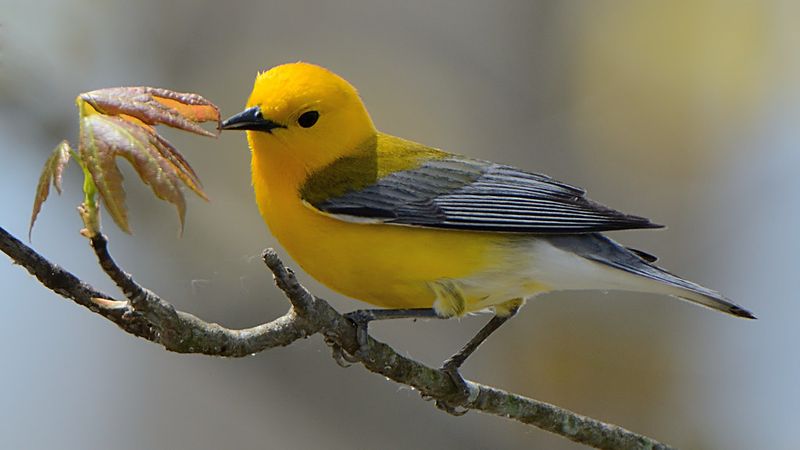
Image Credit: Dave Inman.
The prothonotary warbler looks almost too bright for the swamp, like a drop of sunlight that somehow learned to sing. Yet this golden bird is deeply tied to flooded forests, where standing water and old trees create the nesting setup it needs.
In Georgia’s wet woods, its color feels less out of place than surprisingly perfect.
Unlike many songbirds, it nests in tree cavities, often in holes above water. That choice offers protection from some ground predators and keeps the bird anchored to swampy habitat during breeding season.
Its diet also fits the setting, since it feeds heavily on insects and larvae linked to wet, wooded ecosystems.
I love how this species proves that swamp adaptation is not always about armor, teeth, or stealth. Sometimes success means using a narrow niche brilliantly and returning to the same watery forest pattern year after year.
The prothonotary warbler does exactly that, turning tree hollows, flooded timber, and insect-rich shallows into a highly specialized home.
Red-Bellied Turtle
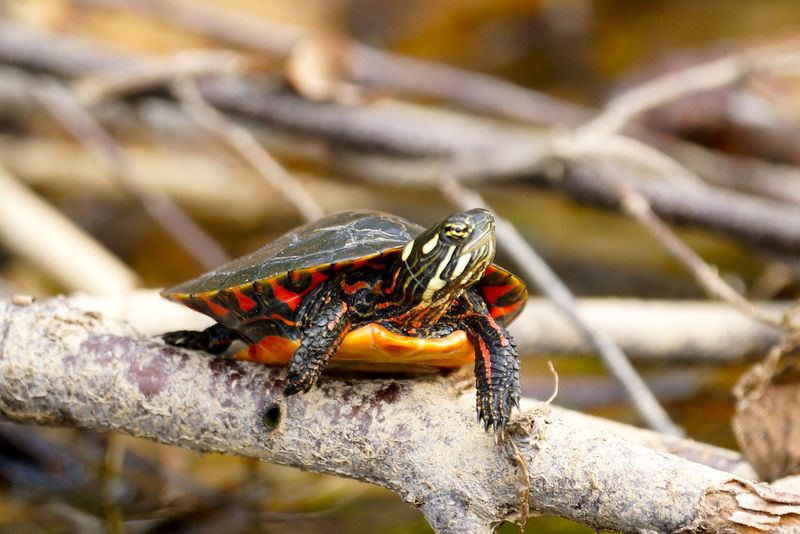
Image Credit: Domingo Mora.
The red-bellied turtle is one of those swamp residents that rewards a patient eye. It spends much of its life in calm, plant-rich water, where a streamlined shell and webbed feet make cruising through weedy channels surprisingly efficient.
In Georgia wetlands, it fits right into the quiet rhythm of sun, mud, and floating green cover.
This turtle thrives where vegetation is abundant, because aquatic plants make up much of its diet. Its body shape helps it move cleanly through slow water, and basking behavior lets it regulate temperature in a habitat that shifts constantly between shade and heat.
What seems like laziness on a log is actually part of a well-tuned survival routine.
The most unconventional detail may be its nesting connection to alligators. In some places, females lay eggs in alligator nests, taking advantage of the protection that a dangerous neighbor unintentionally provides.
That is classic swamp logic – use the landscape, use the plants, and when possible, let the biggest reptile around guard your future.
Wood Duck
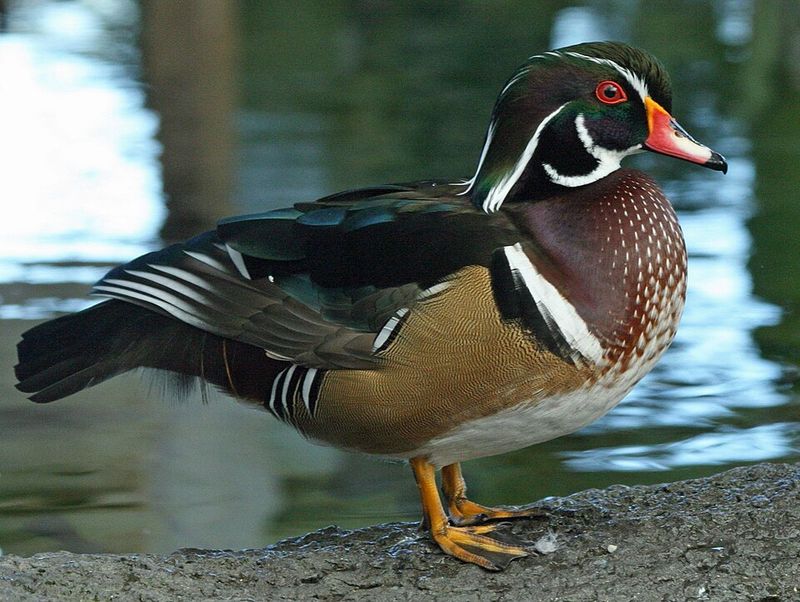
Image Credit: Dick Daniels.
The wood duck looks like it belongs in a painting, but its beauty comes with serious swamp credentials. This species thrives in wooded wetlands where flooded timber, tree cavities, and sheltered water create perfect living space.
It is one of those birds that seems to understand both the sky and the forest equally well.
Unlike most ducks, wood ducks regularly nest in hollow trees. Strong claws help them perch on branches and navigate trunks, which is an unusual but valuable skill in swamp forests.
Soon after hatching, ducklings make astonishing jumps from the cavity to the ground or water below, beginning life with a dramatic trust fall into habitat they are built to use.
Georgia’s swamps suit them because those wetlands provide both cover and food while keeping nesting sites elevated. I always think that combination is what makes the species memorable: it is delicate looking yet surprisingly rugged.
In tangled bottomland woods, the wood duck turns tree holes, flooded shade, and quick movement into a strategy that works beautifully.
Banded Watersnake
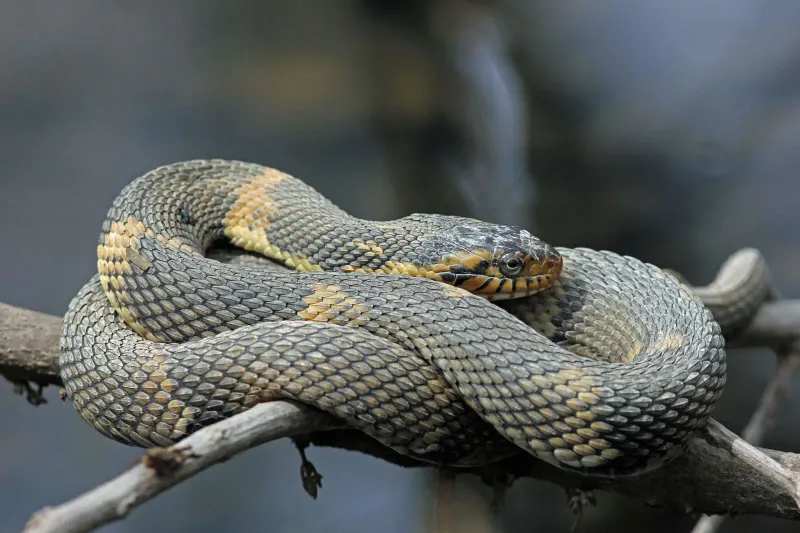
Image Credit: Dan Mooney.
The banded watersnake is the swamp’s underappreciated specialist, often mistaken for something more dangerous and therefore rarely appreciated for what it is. This nonvenomous snake is strongly tied to aquatic habitats and moves through ponds, marshes, canals, and swamps with easy control.
In Georgia’s coastal plain especially, it is right at home.
Its body pattern breaks up the outline against muddy water and vegetation, while its swimming ability lets it pursue fish, frogs, and salamanders where they are hardest to corner. When threatened, it may flatten its head and body to appear larger, a bluff that probably causes much of the confusion with cottonmouths.
That defensive theater is useful in a place where hesitation can buy survival.
What makes this snake such a good swamp animal is its balance of aggression and practicality. It does not need venom to thrive because stealth, speed, and habitat familiarity already do plenty of work.
In murky water full of roots and reeds, the banded watersnake is exactly the kind of efficient predator you would expect evolution to produce.
White Ibis
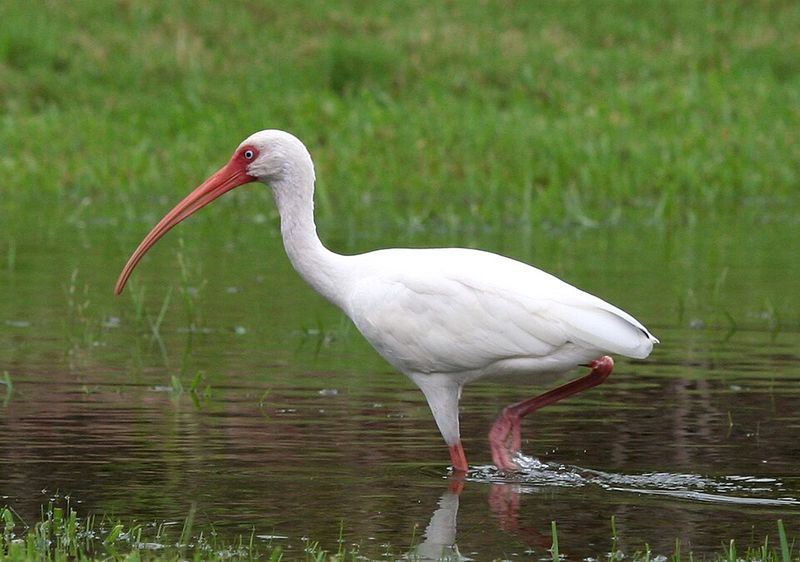
Image Credit: Terry Foote.
The white ibis brings a different kind of swamp intelligence, one centered on touch rather than dramatic strikes. These bright birds sweep through shallow wetlands with long, curved bills, probing mud and water for hidden prey you would never spot from above.
Their movement feels methodical, almost like they are reading the swamp with their faces.
That is not far from the truth. Sensitive bill tips help them detect insects, crustaceans, snails, frogs, and small fish beneath the surface, even when the water is cloudy.
Because feeding conditions change with water levels, white ibises are also flexible travelers, shifting among wetlands to find the right depth and prey mix.
I like them because they make swamp life seem collaborative and restless rather than solitary. You often see groups moving together, each bird probing, stepping, and adjusting in a coordinated search pattern.
In Georgia’s wetter landscapes, where food can be hidden just inches under muck, the white ibis succeeds by combining specialized equipment with a willingness to keep moving until the swamp gives something up.
Southern Leopard Frog
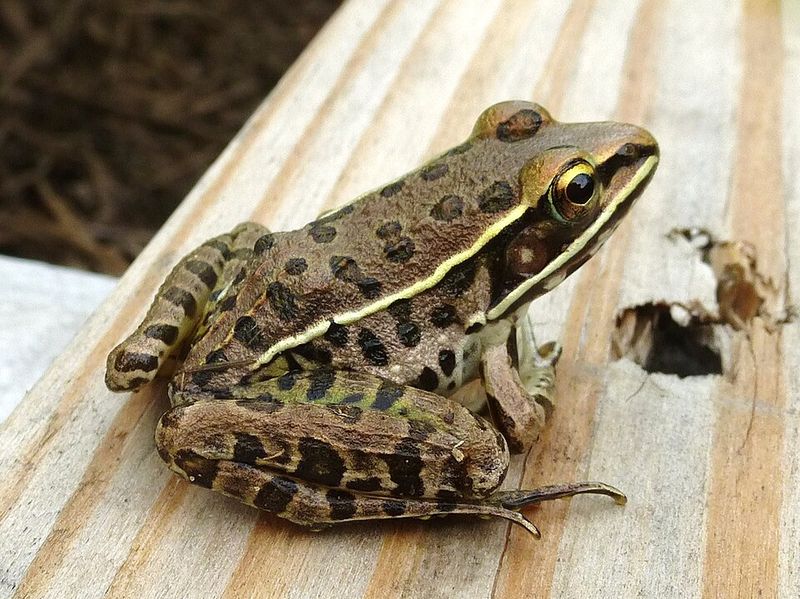
Image Credit: Bob Warrick.
The southern leopard frog is one of those swamp animals you often hear before you really notice. By day or night, it blends beautifully into grassy edges and floating plants, its spotted pattern breaking up the body against wet vegetation.
In a habitat where being seen can be risky, camouflage is a serious advantage.
Its long, powerful hind legs are just as important. They launch the frog in quick, impressive leaps and help it dive into shallow water with sharp turns that can confuse predators.
Because it is often active at night, that combination of camouflage and sudden escape works especially well in the low light of swamps and marshes.
What makes this frog memorable is how ordinary it can seem until you look closer. It is not huge, flashy, or intimidating, yet it is perfectly equipped for Georgia’s wetlands.
Every spot, jump, and pause among the reeds reflects the same swamp lesson repeated by larger animals too – survive by matching the water, the plants, and the moment exactly.