
North Dakota turns into a living flyway when migration season hits, and the skies, wetlands, and prairies suddenly feel electric. One day you might hear rattling crane calls overhead, and the next you could spot butterflies drifting through roadside flowers.
These travelers are not just passing by – they are depending on this landscape to rest, feed, and survive. If you want a fresh look at how wild and important this state really is, these 14 migrants deliver it.
Sandhill Crane
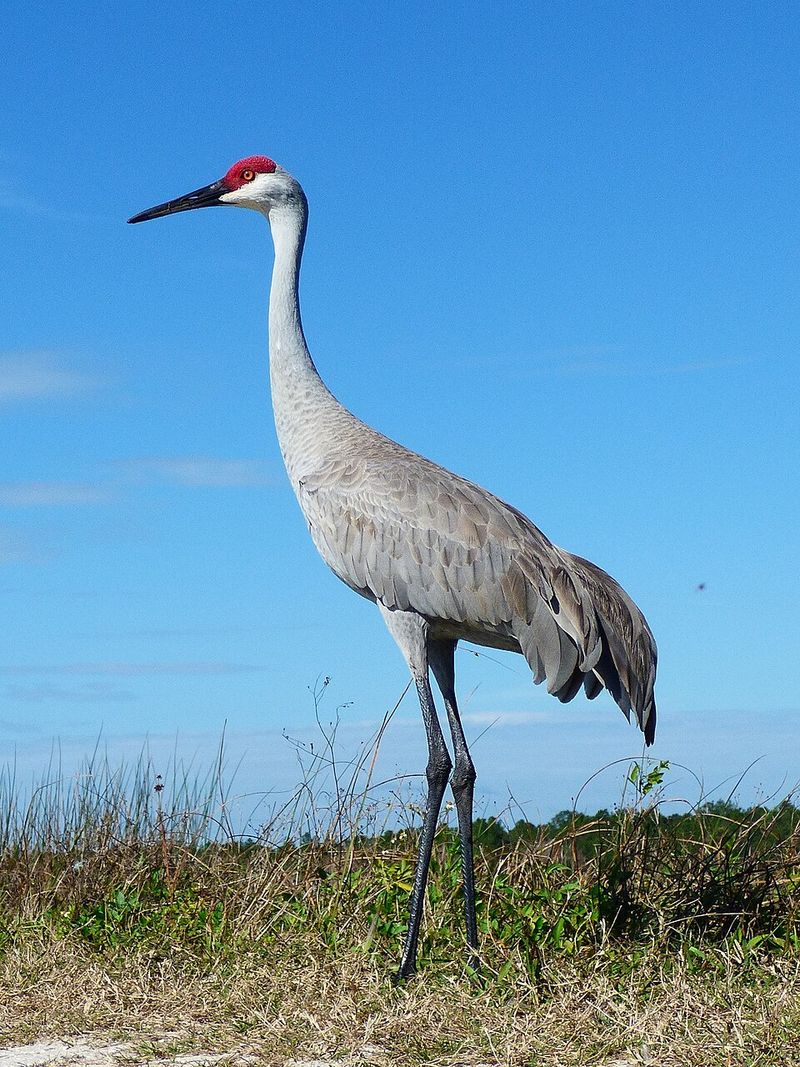
Image Credit: JeffreyGammon.
If you ever hear a rolling, prehistoric bugle drifting over a North Dakota marsh, there is a good chance sandhill cranes are on the move. Thousands pass through during spring and fall, turning open skies into a parade of long legs, broad wings, and constant conversation.
Watching them feels a little like seeing another era cross overhead.
These cranes depend on wetlands, shallow roost sites, and nearby grain fields where they can rest and refuel safely. I think what makes them unforgettable is not just their size, but the way entire groups move with calm purpose, circling down in elegant ribbons.
Their presence instantly makes the landscape feel bigger.
North Dakota serves as a crucial stopover in their long journey between breeding and wintering grounds. If you catch them at dawn or dusk, you will understand why so many people consider their migration one of the state’s greatest wildlife spectacles.
Snow Goose
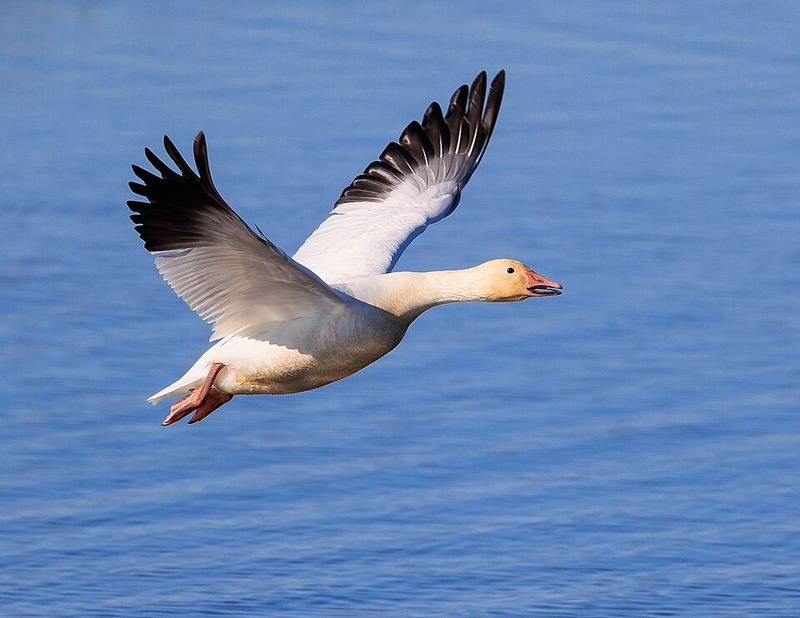
Image Credit: Frank Schulenburg.
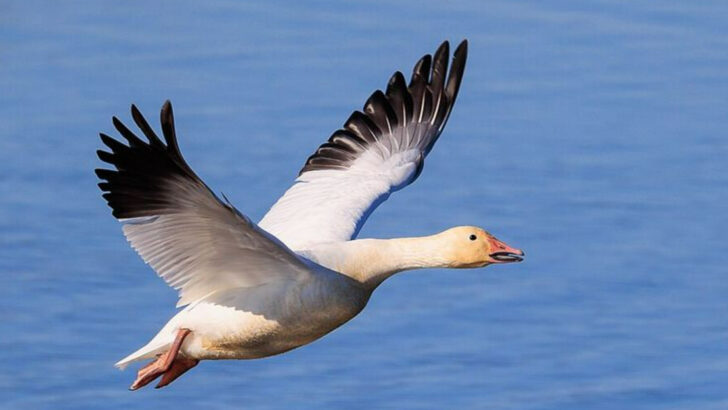
Snow geese do not do anything quietly, and that is part of their charm. During migration, huge flocks pour into North Dakota fields and wetlands, creating bright, shifting blankets of white that seem to move with a mind of their own.
When they rise together, the whole scene becomes thunderous and dazzling.
These birds travel between Arctic breeding areas and southern wintering grounds, and North Dakota gives them essential places to pause. They feed heavily in harvested fields and gather on water where safety comes in numbers.
You can feel the energy of migration in every restless wave running through the flock.
What I love most is the contrast they bring to the prairie, especially under a dark sky or against stubble fields. Their brilliant plumage, noisy calls, and sheer abundance make even a familiar roadside stop feel extraordinary during peak migration weeks across the state.
Whooping Crane
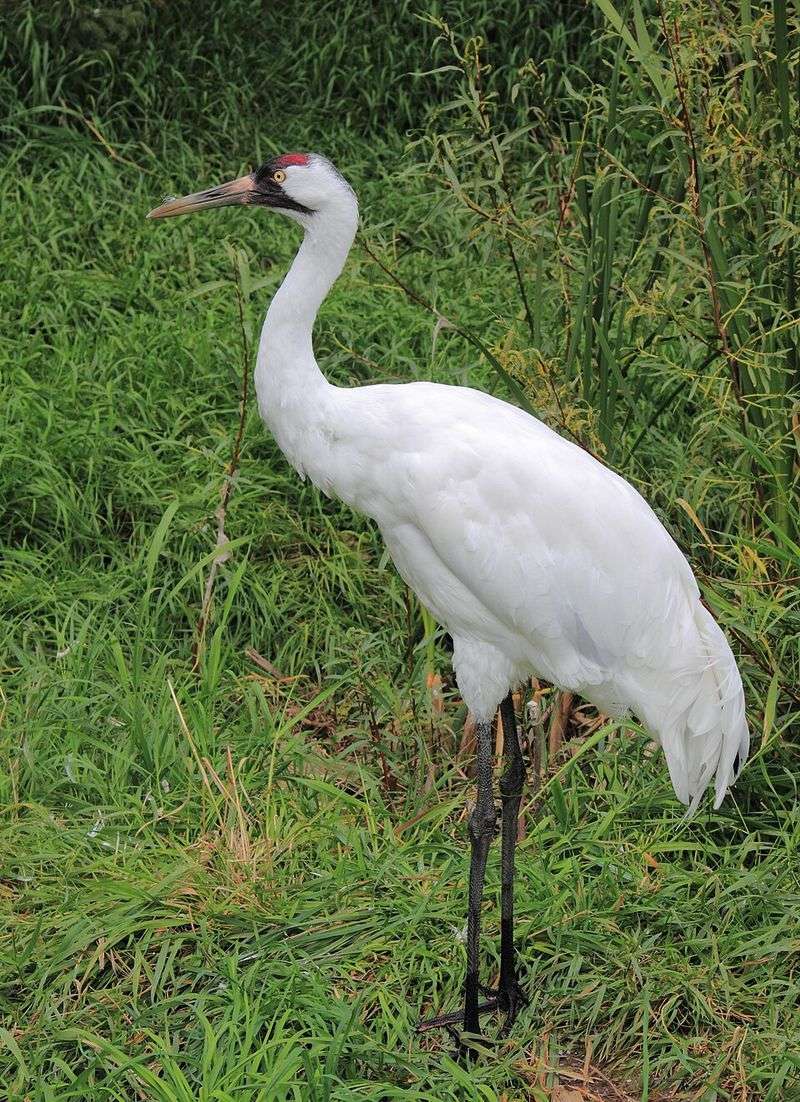
Image Credit: Sasata.
Seeing a whooping crane in North Dakota is the kind of experience that can stop you mid sentence. These towering white birds are among the rarest in North America, and any migration stop in the state feels like a small miracle in motion.
Their elegance carries extra weight because every sighting matters.
Whooping cranes travel between nesting grounds in northern Canada and wintering habitat on the Texas Gulf Coast. Along the way, they need isolated wetlands, open visibility, and minimal disturbance, which makes North Dakota an important temporary refuge when conditions line up.
You are not just seeing a bird, you are witnessing a conservation story still being written.
Their black wingtips, red crown, and slow, deliberate movements give them a nearly ceremonial presence. Even from a distance, they stand apart from other migrants.
In a state full of seasonal spectacles, this occasional visitor may be the one that feels most precious.
Tundra Swan
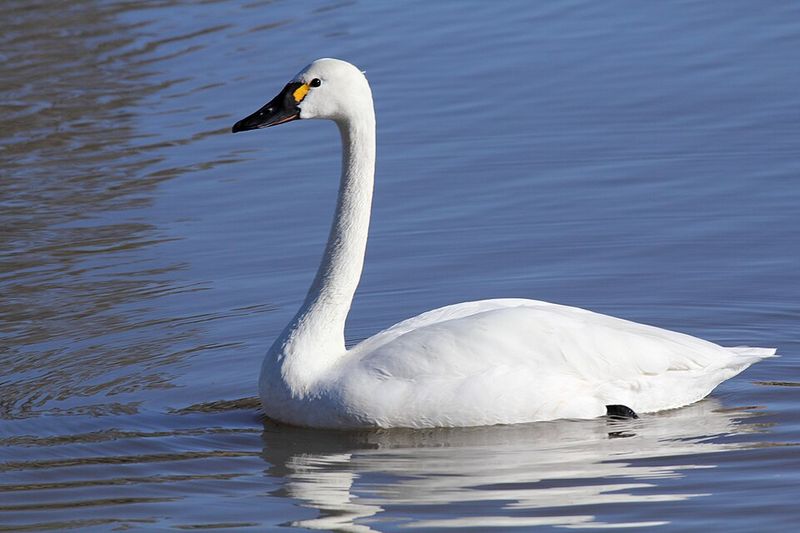
Image Credit: Dominic Sherony.
Tundra swans bring a quiet kind of drama to North Dakota migration season. When these large white birds settle onto lakes and wetlands, they make the water look suddenly ceremonial, as if the prairie has dressed up for a brief visit.
Their presence feels polished, graceful, and slightly unreal against rougher spring or fall weather.
They move through the Prairie Pothole Region on long journeys between Arctic breeding grounds and wintering areas farther south and along the coasts. North Dakota offers resting water, open space, and nearby fields where they can feed before continuing on.
If you watch them long enough, you notice how much power hides inside that calm appearance.
Families and small groups often communicate with soft, haunting calls that carry farther than you expect. I find that sound almost as memorable as the birds themselves.
For a short time, these travelers turn ordinary lakes into migration stages that feel both wild and deeply peaceful.
Canada Goose
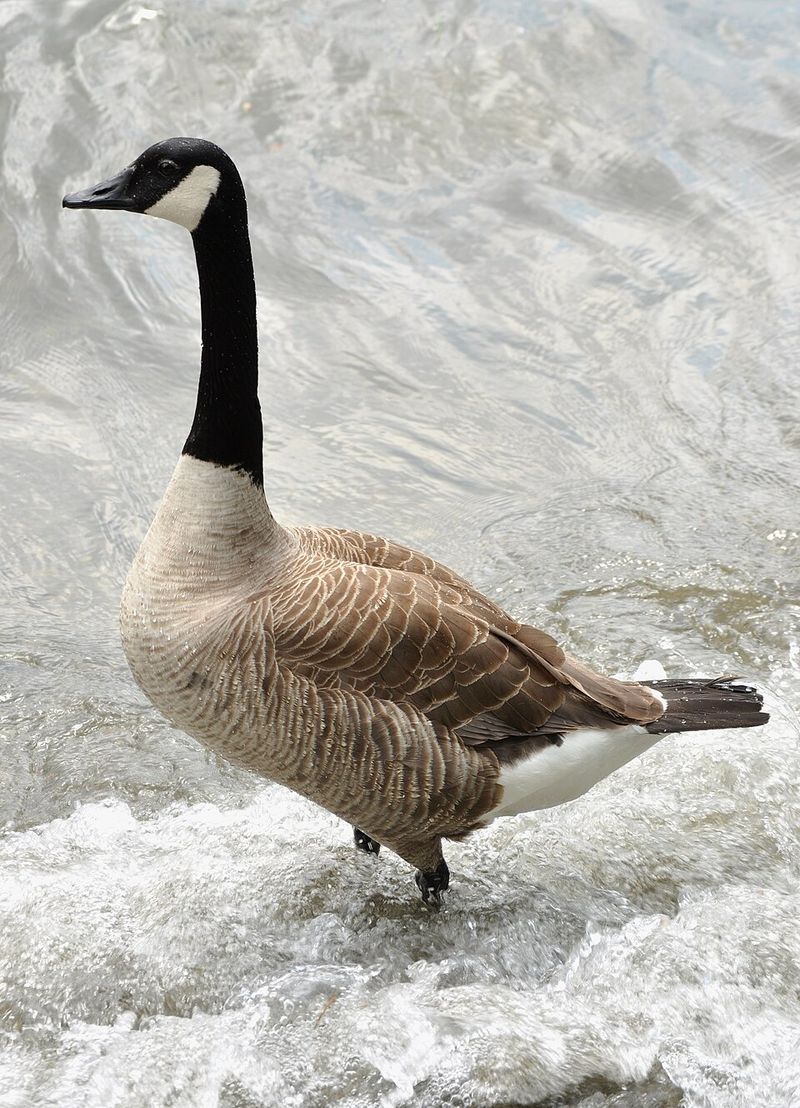
Image Credit: The High Fin Sperm Whale.
Canada geese may be familiar, but migration season in North Dakota reminds you why they never really become ordinary. Their V shaped formations cut across the sky with remarkable discipline, and those honking voices announce the season long before the birds are easy to see.
Even people who do not follow wildlife tend to look up.
These geese rely on the state’s wetlands, lakes, and agricultural fields as places to rest and feed during migration. The structure of their flocks is more than beautiful, it helps them conserve energy over long distances.
Watching one group after another pass overhead gives the day a sense of rhythm and momentum.
What makes them worth celebrating is how closely their movement is tied to daily life across the prairie. You might spot them over town, on a pond, or in stubble fields outside the highway.
Their migration is common, yes, but it is also one of North Dakota’s most dependable seasonal signatures.
American White Pelican
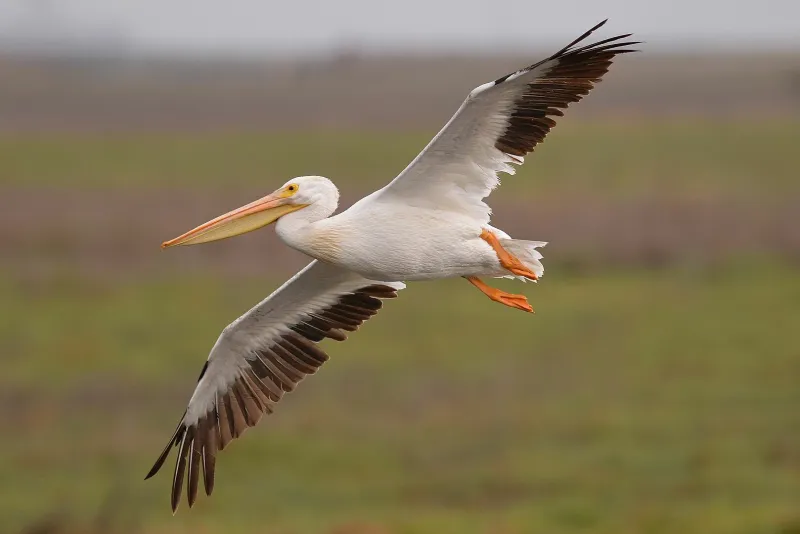
Image Credit: Ken Chan
American white pelicans look almost oversized for the prairie, which is exactly why they are so fun to spot in North Dakota. With huge wings, bright white bodies, and long bills that seem designed by a cartoonist, they bring a slightly surreal quality to any lake they visit.
Then they lift off, and suddenly all that bulk turns graceful.
These are among North America’s largest flying birds, and North Dakota is more than a quick stop for some of them. Several lakes support breeding colonies, while other birds use the state during migration before heading south for winter.
They need productive waters where cooperative feeding and safe roosting are possible.
I always think pelicans make a wetland feel busier and bolder. Whether they are gliding inches above the water or loafing in a cluster on a sandbar, they command attention without seeming hurried.
For a bird so large, their migration through the state has an oddly effortless elegance.
Red Knot
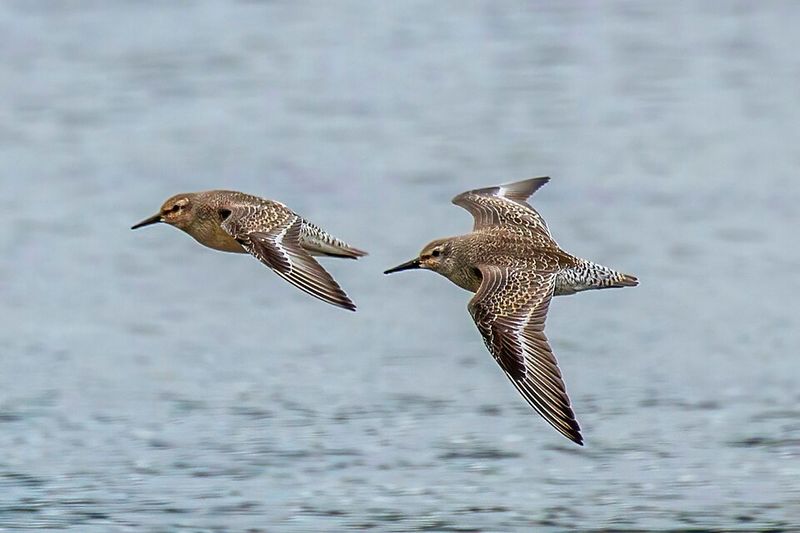
Image Credit: Charles J. Sharp.
The red knot is proof that a small bird can carry an enormous story. This shorebird undertakes one of the longest migrations on Earth, traveling between the Arctic and the southern tip of South America, and some individuals pause in North Dakota to refuel.
That makes every brief stop in a wetland feel wildly significant.
Red knots need rich feeding habitat where they can quickly rebuild energy, often probing shallow water and mud for invertebrates. North Dakota’s wetlands provide exactly the kind of temporary buffet a long distance traveler cannot afford to miss.
You might overlook one at first, but its journey is almost impossible to overstate.
What I find especially compelling is the contrast between scale and endurance. The bird itself is compact, understated, and easy to miss beside flashier migrants.
Yet inside that modest frame is a navigation and survival feat that turns an ordinary marsh stop into part of a global migration epic.
Monarch Butterfly
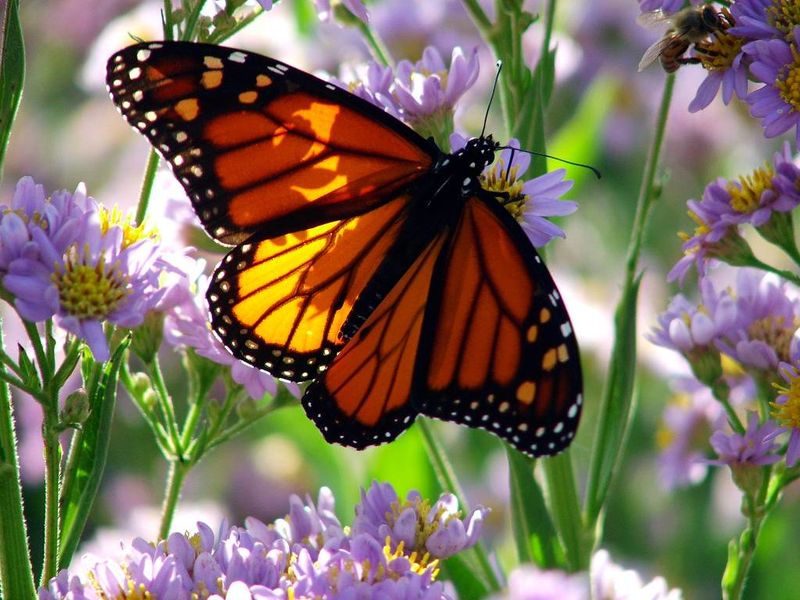
Image Credit: Timothy K Hamilton
Not every great migrant over North Dakota has feathers. Monarch butterflies drift through the state during their astonishing multi generational journey between Canada and central Mexico, turning patches of wildflowers into tiny fueling stations.
Their movement feels lighter than bird migration, but no less dramatic once you know what is happening.
These butterflies depend on nectar sources across prairies, roadsides, gardens, and restored habitat as they travel. The generation moving south is doing something especially incredible, flying a route its ancestors completed in stages.
You are looking at a fragile insect carrying one of the continent’s boldest travel stories.
I think monarchs add a different kind of wonder to migration season because they ask you to slow down and notice smaller motion. A cluster on blazing star or asters can be just as memorable as a sky full of cranes.
In North Dakota, even the breeze can be full of travelers.
Broad-Winged Hawk
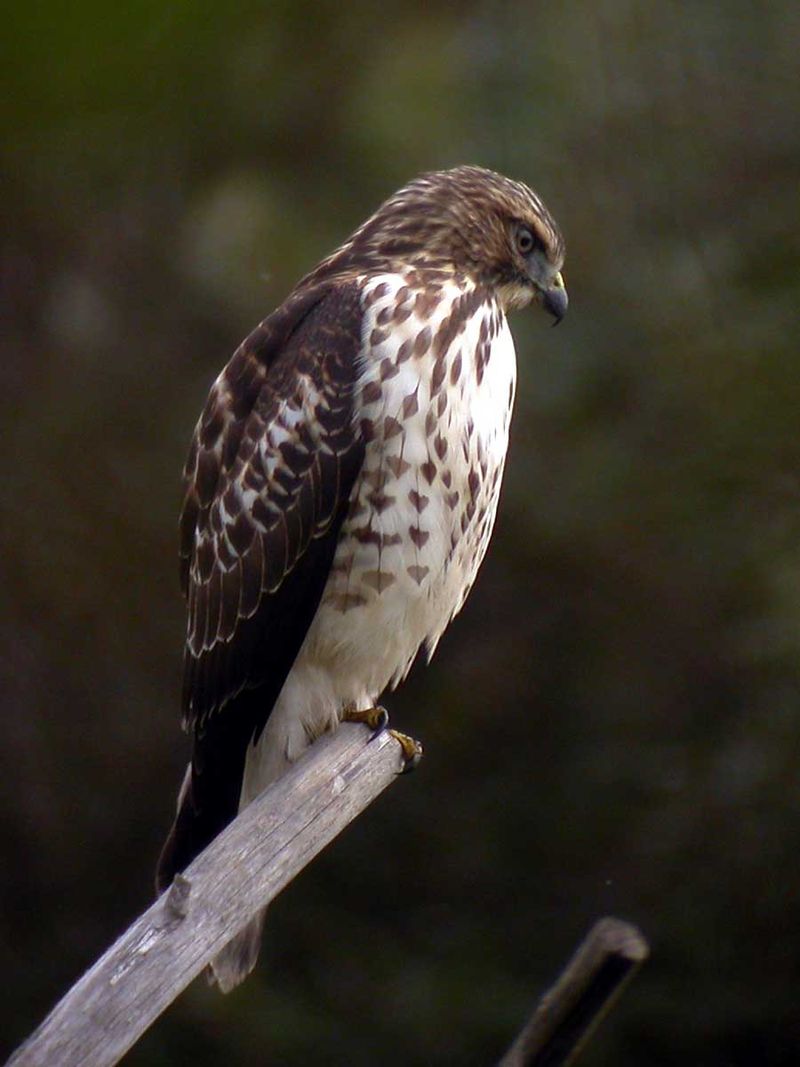
Image Credit: Len Blumin.
Broad winged hawks turn migration into an aerial strategy lesson. In autumn, these compact raptors often gather in swirling groups called kettles, rising together on warm air currents before gliding southward.
If you catch a good movement day in North Dakota, the sky can look like it is slowly revolving.
They conserve energy by using thermals, which allows them to travel impressive distances without constant flapping. North Dakota sits within an important corridor where weather, open views, and timing can produce memorable hawk watching.
What seems chaotic at first is actually a highly efficient pattern shaped by wind and instinct.
I like that broad winged hawks reward patience more than luck. At first, they may appear as tiny specks, but then more specks gather, circle, and drift until you realize a whole river of raptors is passing overhead.
Their migration is subtle from the ground, yet beautifully powerful once you notice it.
Swainson’s Hawk
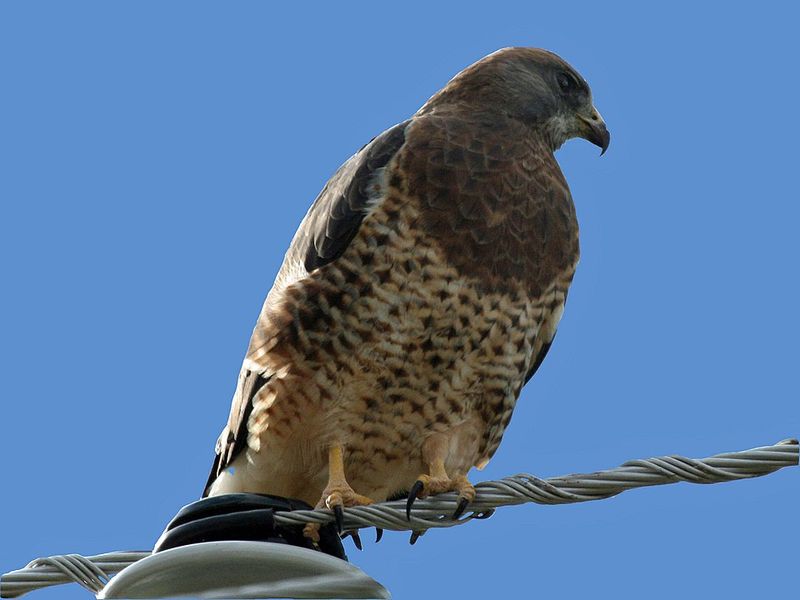
Image Credit: Dick Daniels.
Swainson’s hawks feel built for the Great Plains, so it is fitting that North Dakota plays a role in their annual cycle. These slim, long winged raptors breed across open country before launching one of the longest migrations of any North American hawk, heading all the way to South America.
That journey gives every local sighting a larger sense of scale.
You may see them perched on posts, scanning fields, or circling above grasslands where insects and small prey are plentiful. Before migration, they take advantage of the prairie food supply, building reserves for a trip that stretches far beyond the horizon.
Their calm posture hides an extraordinary amount of endurance.
What stands out to me is how ordinary they can seem until you remember where they are going. A hawk on a roadside fence suddenly becomes an international traveler.
In North Dakota, Swainson’s hawks connect local grassland life to one of the hemisphere’s most impressive raptor migrations.
Franklin’s Gull
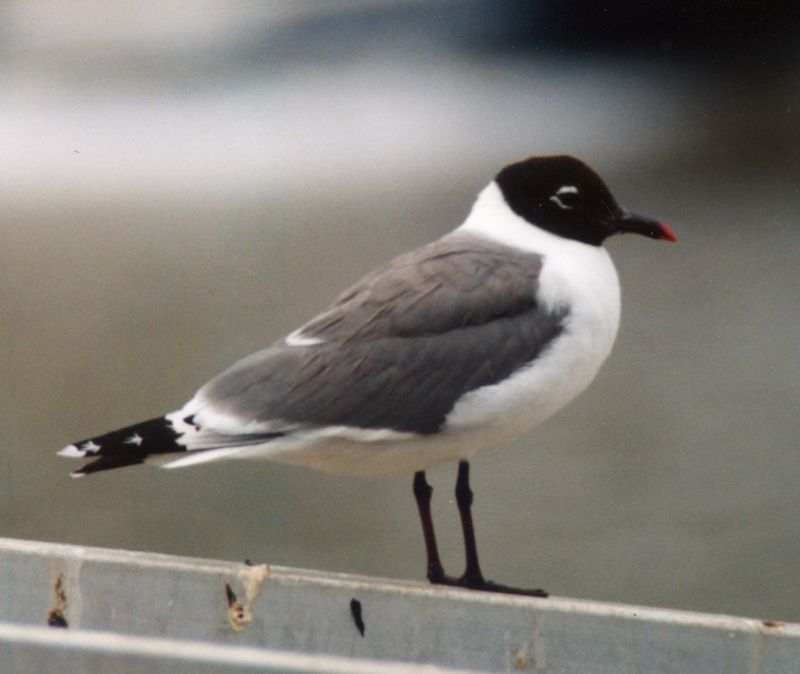
Image Credit: Aviceda.
Franklin’s gulls have a slightly mischievous energy that makes them especially fun to watch in North Dakota. They gather in large numbers around wetlands during the breeding season, then later head toward the Pacific coast of South America for winter.
That combination of prairie marsh life and international migration gives them more intrigue than many people realize.
In the state, they often feed over water or follow farm equipment to grab insects stirred from the soil. It is a clever, opportunistic behavior that suits a bird constantly balancing local abundance with long distance travel.
Their dark hoods and buoyant flight also make them stand out from the more familiar gull image.
I think Franklin’s gulls bring motion wherever they appear. A marsh with them overhead feels louder, livelier, and slightly chaotic in the best way.
They are proof that migration in North Dakota is not only about rare spectacles, but also about energetic birds linking prairie wetlands to distant South American shores.
Ruby-Throated Hummingbird
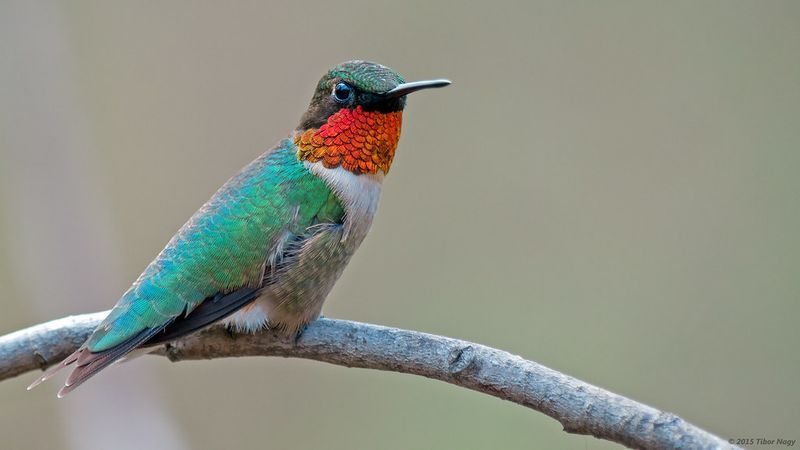
Image Credit: Tibor Nagy
Ruby throated hummingbirds seem almost too small for the distances they cover, which is part of what makes their migration through eastern North Dakota so impressive. These tiny birds flash through gardens, woodland edges, and backyard feeders during spring and fall, adding speed and sparkle to the landscape.
You usually notice them as a sudden blur first.
On migration, they rely on nectar rich flowers and supplemental feeders to keep their energy up. Despite their size, they are serious travelers moving between Central America and northern breeding grounds.
That contrast between delicacy and determination makes every stop at a blossom feel more dramatic than it looks.
I love how personal their migration can seem. Unlike distant flocks overhead, a hummingbird may pause just a few feet away, hovering in place as if checking whether you belong in its route.
In North Dakota, they remind you that epic migration does not always arrive loudly or in large numbers.
American Avocet
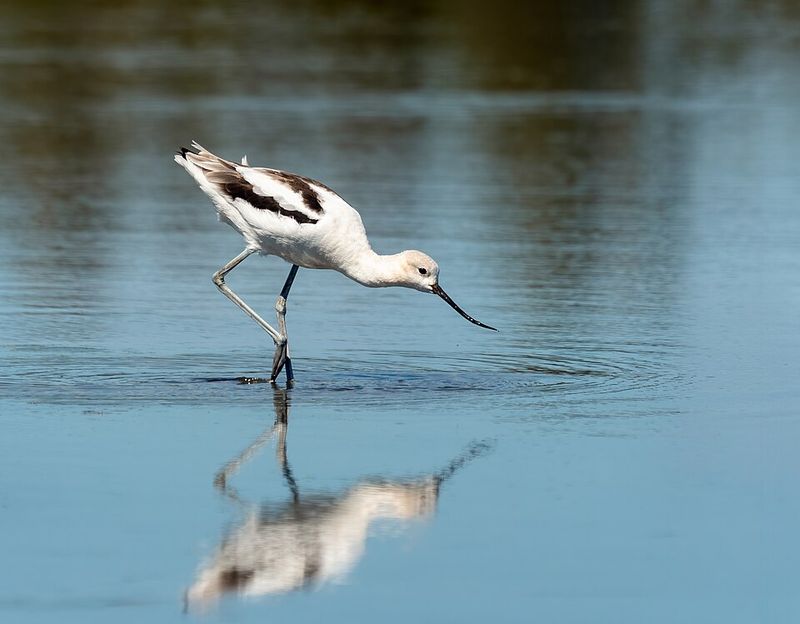
Image Credit: Rhododendrites.
American avocets look like they were designed with extra care, and North Dakota gives them excellent places to show off. Their upturned bills, long blue gray legs, and warm cinnamon heads in breeding season make them one of the most stylish migrants using the state’s shallow wetlands.
Even their feeding movements look graceful.
These birds depend on open, shallow water for probing and sweeping up aquatic prey, and they also use suitable wetlands for nesting. North Dakota’s marshes and prairie potholes provide both migration stopovers and breeding opportunities.
If you spend time watching one feed, the bill seems to draw little arcs across the surface like a calligrapher’s pen.
What I find most appealing is how avocets make a mudflat feel elegant instead of muddy. They transform practical habitat into something visually striking.
In a state famous for waterfowl and cranes, this shorebird brings a more refined kind of beauty to the migration story.
Lesser Yellowlegs
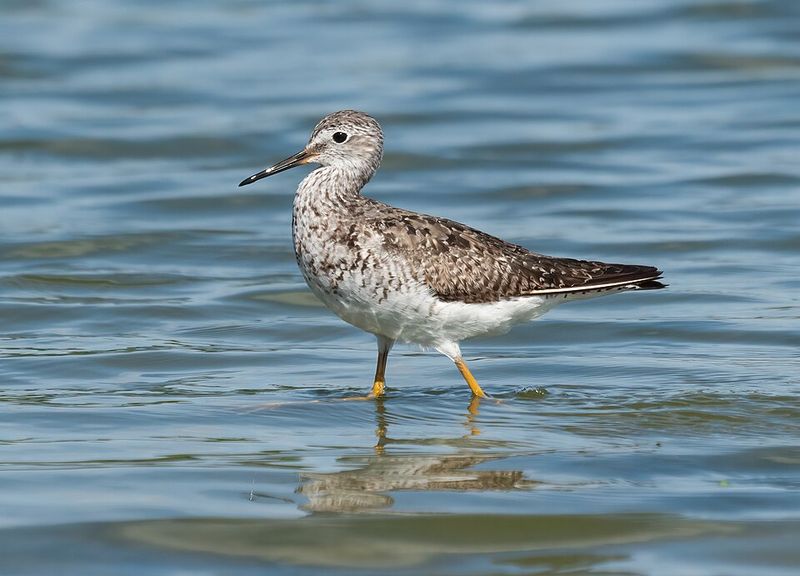
Image Credit: Rhododendrites.
Lesser yellowlegs are the kind of migrant that rewards anyone willing to look closely at North Dakota’s marshes and flooded fields. Slim, alert, and constantly moving, they pass through the state on journeys between northern breeding grounds and wintering areas that stretch deep into Central and South America.
Their elegance is understated but easy to appreciate once noticed.
These shorebirds feed on aquatic insects and other small invertebrates, picking through shallow water with focused precision. North Dakota offers critical refueling habitat where they can regain strength before continuing on.
The bright yellow legs that give them their name often stand out first, especially against dark mud or reflective pools.
I like how they make temporary habitat feel important. A roadside puddle, a wet field edge, or a quiet marsh can suddenly become part of an international travel network.
Lesser yellowlegs may not grab attention like swans or cranes, but their migration story is every bit as remarkable.