Florida still feels wild in places, but some of its most remarkable animals are slipping further out of sight every year. A few survive only on remote islands, hidden prairies, or tangled wetlands that most people pass without noticing.
Others are hanging on through intense conservation work, even as roads, storms, and development keep closing in. If you have ever wondered what is quietly disappearing in the Sunshine State, these are the species worth knowing before they become even harder to find.
Florida Panther
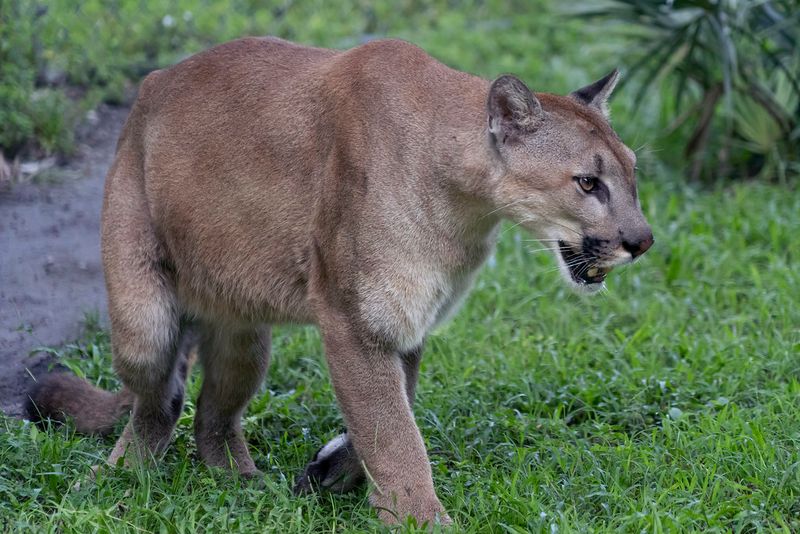
Image Credit: greyloch.
If you ever dream of spotting a true ghost of the Florida wild, the Florida panther is probably it. This big cat once ranged across much of the Southeast, but now it survives mainly in South Florida near Big Cypress and the Everglades.
Current estimates suggest only about 200 adults remain, so every healthy animal matters.
What makes this story especially tense is how little room the species has left. Roads cut through travel corridors, development keeps shrinking habitat, and vehicle collisions are still the leading cause of death.
In 2024 alone, dozens of panther deaths were recorded, most tied to cars, which tells you how narrow their margin really is.
I find the panther unforgettable because it represents both Florida’s resilience and its fragility. Wildlife crossings, fencing, and land protection are helping, and some areas have seen real improvement.
Still, these cats are secretive, mostly nocturnal, and incredibly elusive, so seeing one in the wild remains a once-in-a-lifetime kind of encounter for most people.
Key Deer
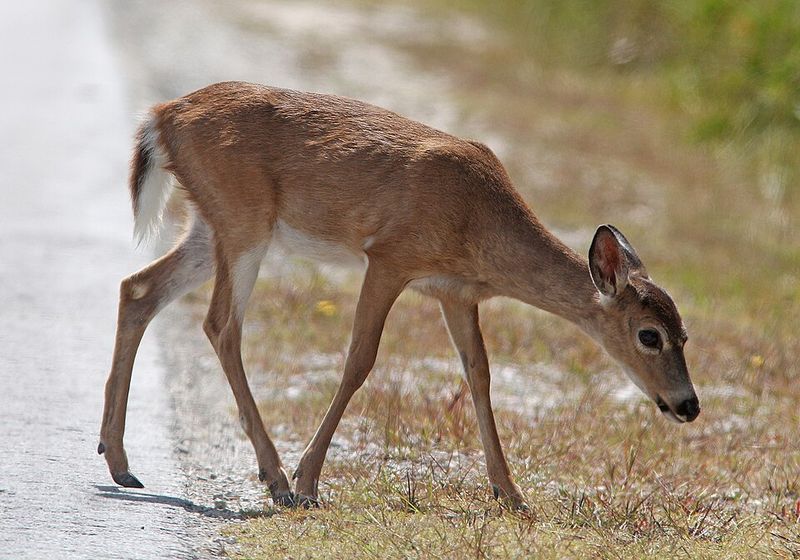
Image Credit: ALAN SCHMIERER.
The Key deer looks almost storybook small, like a white-tailed deer carefully miniaturized for island life. Found only in the lower Florida Keys, especially around Big Pine Key and No Name Key, adults stand roughly two feet tall at the shoulder.
That small size makes them charming, but it also makes their narrow range feel even more precarious.
Conservation brought this deer back from fewer than 50 animals many decades ago to roughly 700 to 800 today. Even so, the population remains vulnerable to vehicle strikes, disease outbreaks, illegal feeding, stronger hurricanes, and the long shadow of rising sea levels.
Freshwater sources are limited on these low islands, so even subtle environmental changes can hit them hard.
If you visit the National Key Deer Refuge, you might get lucky and see one browsing calmly near roadsides or hammocks. But I would never mistake occasional visibility for safety, because this is still one of Florida’s rarest mammals.
Their future depends on careful driving, habitat protection, and giving them space to stay wild.
Florida Bonneted Bat
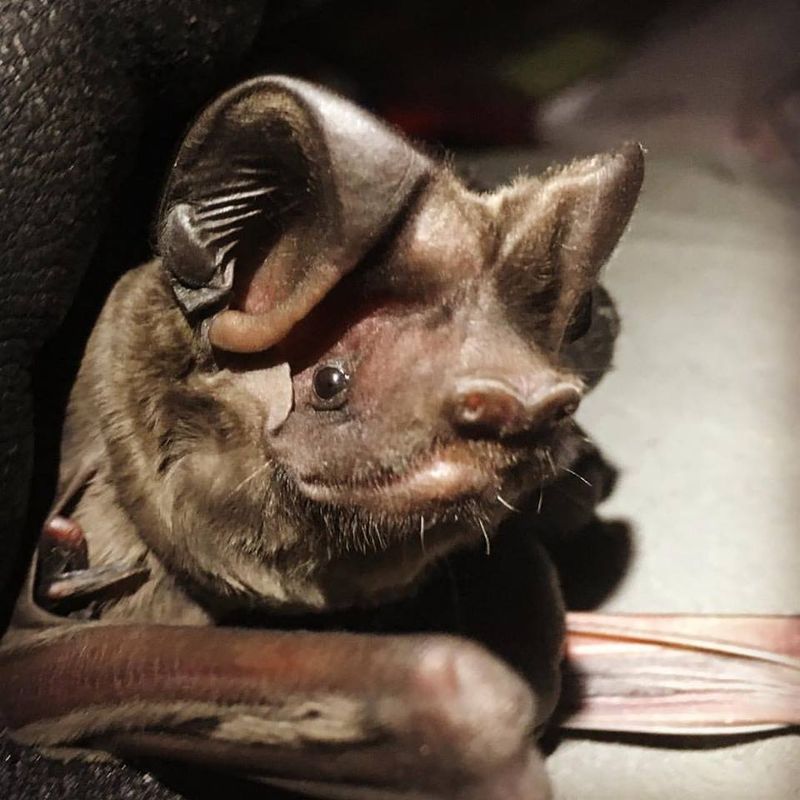
Image Credit: Shalana.gray.
The Florida bonneted bat might be the rarest animal on this list that most people could miss even while standing nearby. It is the largest bat native to Florida, with oversized ears and a powerful, fast flight that carries it high over open areas after sunset.
Scientists believe only a few hundred remain, making it one of the rarest bats on Earth.
Its biggest problem is not mystery but habitat loss. These bats need suitable roosts in tree cavities, palms, rock crevices, or certain structures, and development keeps removing or altering those spaces.
Severe storms make things worse by toppling mature trees and damaging the few places colonies still use across South Florida.
I like that this bat quietly breaks the usual bat stereotype because it is bold in shape, impressive in size, and uniquely Floridian. Yet most residents will never knowingly see one because it flies after dark and often high overhead.
That combination of tiny numbers and hidden habits makes every surviving colony feel incredibly important right now.
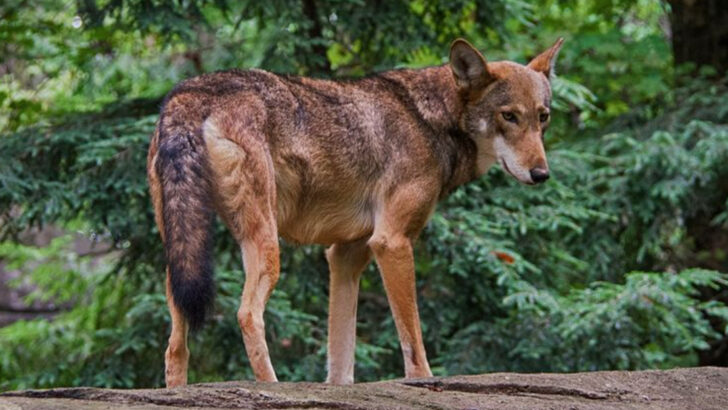
Red Wolf
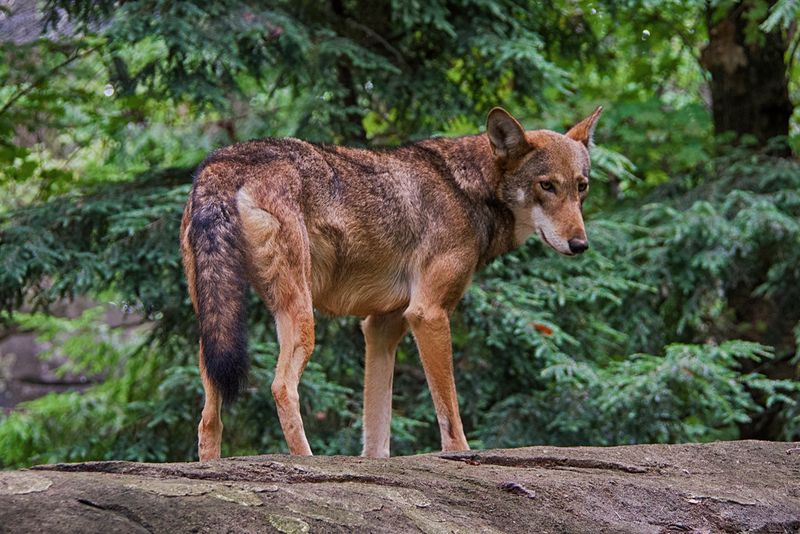
Image Credit: ucumari photography.
The red wolf carries a strange kind of presence in Florida because it is both part of the state’s past and barely part of its present. Historically, red wolves ranged through the Southeast, including Florida, but persecution and habitat loss pushed them out long ago.
Today, truly wild sightings in Florida are essentially absent, with the species surviving mainly through managed conservation programs.
That absence is what makes the red wolf feel so haunting. Hybridization with coyotes, road mortality, illegal killing, and shrinking habitat nearly erased the species, leaving captive breeding as the main path forward.
Florida still plays a role through conservation management sites like St. Vincent Island, but this is not the same as having a restored wild population across the mainland.
I included the red wolf because rarity is not always about a hidden creature still hanging on in a swamp. Sometimes rarity means a native predator has been reduced to memory, records, and recovery plans.
If the species is ever to return meaningfully, it will depend on patient breeding work, protected landscapes, and public willingness to make room.
Perdido Key Beach Mouse
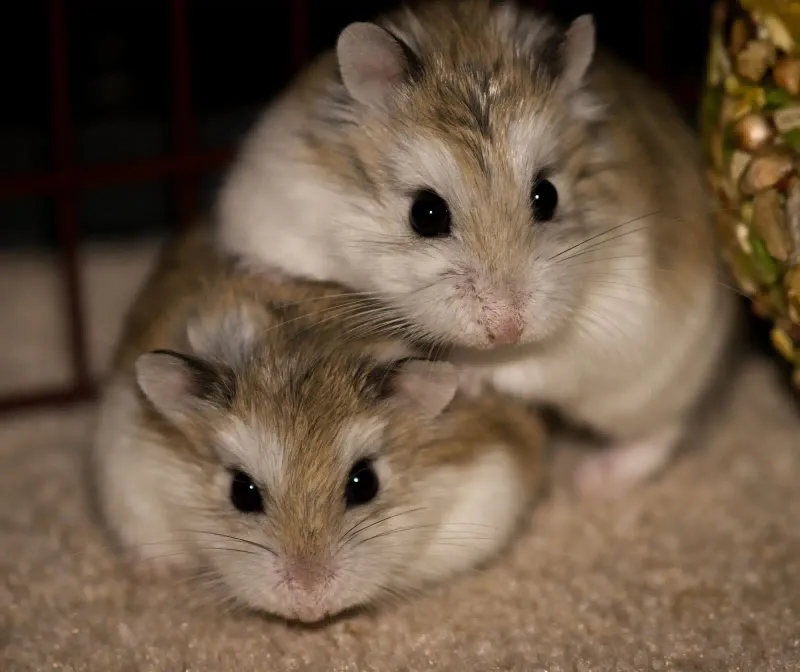
Image Credit: Matthew Crosse.
The Perdido Key beach mouse is easy to overlook, but it does some surprisingly big work in one of Florida’s most fragile landscapes. This tiny nocturnal rodent lives only in the dune systems of Perdido Key, where it feeds on seeds and native plants and helps disperse vegetation that stabilizes the sand.
In a place shaped by wind and storms, that quiet role matters more than you might think.
Its biggest threats arrive from both nature and people. Hurricanes can flatten dunes, flood burrows, and wipe out food sources in a single event, while coastal development shrinks the patchy habitat left behind.
Artificial lighting and predators around developed areas make survival even harder for an animal already spending most of its life hidden under cover.
I think beach mice challenge the idea that rare wildlife has to look dramatic to deserve attention. You will probably never see one unless you are out at the right place after dark and know exactly what to watch for.
Still, healthy dunes, restored native plants, and protected habitat can make a huge difference for this small survivor.
Florida Grasshopper Sparrow
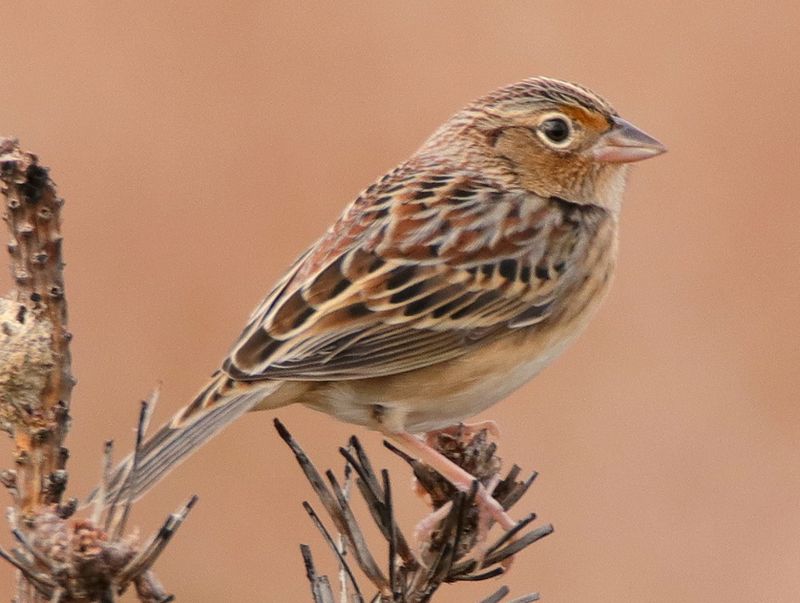
Image Credit: Jake McCumber.
The Florida grasshopper sparrow is one of those birds that makes you listen before you look. It lives only in the dry prairies of central Florida, and its thin, insect-like song often gives it away before the bird itself appears among the grasses.
Even then, spotting one feels difficult because it is small, earth-toned, and built to disappear into its surroundings.
This sparrow has suffered one of the steepest declines of any North American bird. Loss of native prairie, altered fire patterns, flooding, predation, and fragmentation pushed the wild population dangerously low, with only a tiny number left not long ago.
Captive breeding and release programs have kept the species alive, and recent numbers are better, but it remains extraordinarily rare.
I find this bird compelling because its survival depends on something many people barely notice: open prairie managed in exactly the right way. Prescribed fire, habitat restoration, and long-term monitoring are doing real work here.
But if you want to see one, expect patience, luck, and a lot of scanning across quiet grasslands that can seem empty until they suddenly are not.
Miami Blue Butterfly
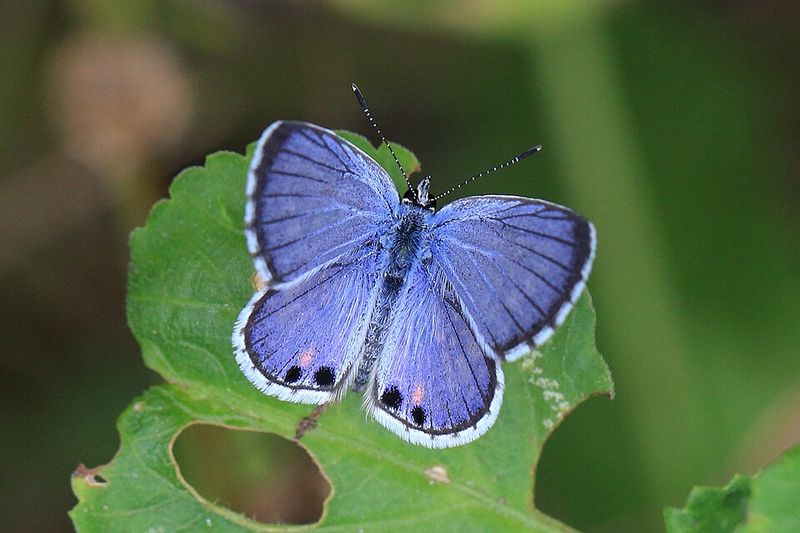
Image Credit: Charles J. Sharp.
The Miami blue butterfly proves that something tiny can still feel legendary. Once common across much of southern Florida, this little butterfly with brilliant blue upper wings now survives only in a handful of carefully managed places in the Keys.
Its beauty is immediate, but so is the sense that you are looking at a species living on a razor’s edge.
Hurricanes, habitat destruction, pesticide use, invasive ants, and damage to host plants all helped drive its collapse. By the end of the twentieth century, it was feared nearly gone, and even rediscovered colonies later disappeared.
Current wild populations remain extremely limited, which means every storm season carries outsized consequences for a butterfly with so little room to absorb losses.
I love that this species feels almost jewel-like against the roughness of coastal Florida. Yet seeing one in the wild is rare enough that many lifelong residents never do.
Captive breeding, habitat management, and protecting remote island sites are giving it a chance, but the Miami blue still stands as one of the state’s most delicate conservation stories.
Smalltooth Sawfish
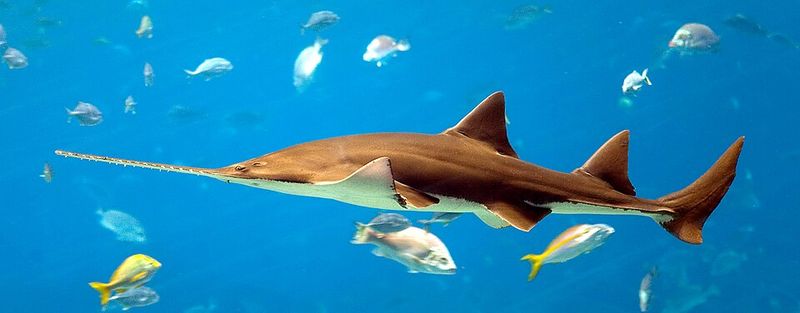
Image Credit: Diliff.
The smalltooth sawfish is one of those animals that seems too strange to be real until you see a photo and realize Florida still shelters it. With its long, tooth-lined snout and flattened body, it looks prehistoric, but it is actually a ray rather than a shark.
Today it survives mainly in southwest Florida, especially around mangrove-rich estuaries and coastal shallows.
Its decline came fast enough to make history feel recent. Fishing gear entanglement, coastal development, and the loss of nursery habitat hammered populations until the species became endangered.
Even now, unusual mortality events, including recent die-offs linked to environmental stress in the Keys, show how vulnerable recovery can be despite strict legal protections.
I think the sawfish captures a specific Florida tension: the state still holds astonishing wildlife, but often in increasingly narrow corners. Juveniles rely on mangrove shorelines, so protecting those habitats matters just as much as regulating fishing.
Encounters are still rare for anglers, divers, and boaters, which makes every verified sighting feel less like a casual observation and more like a conservation pulse check.
Eastern Indigo Snake
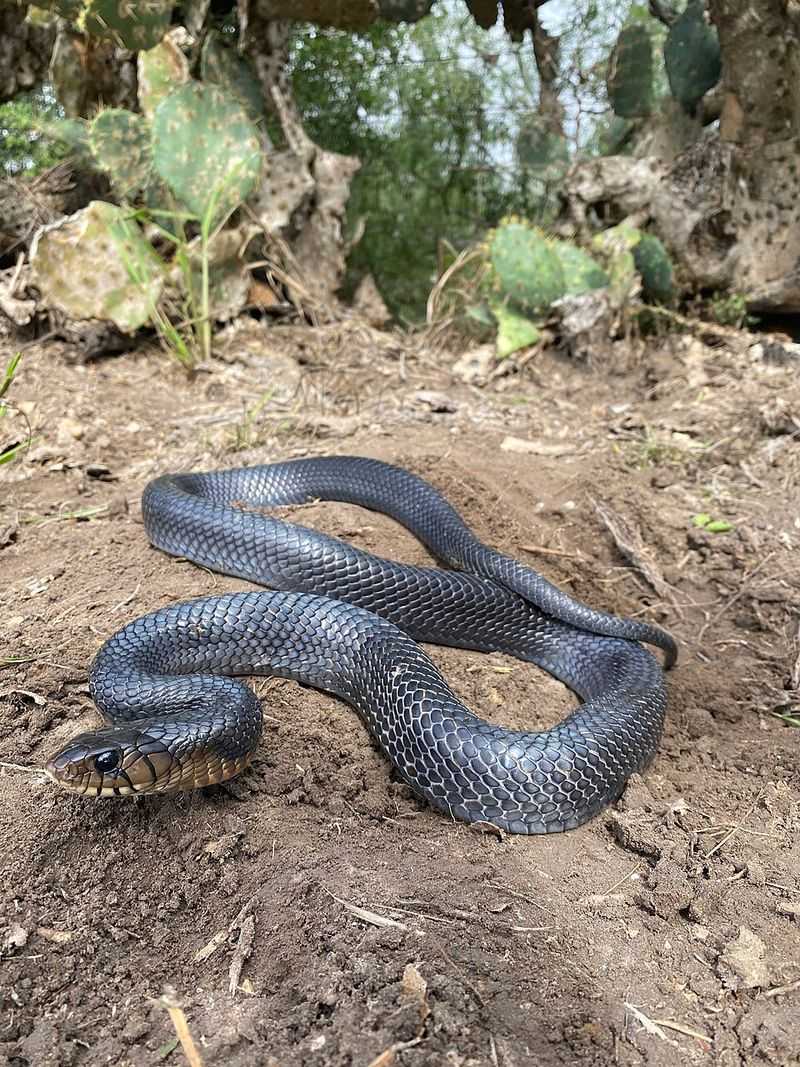
Image Credit: Dean Stavrides.
The eastern indigo snake is the kind of reptile that changes the mood of a trail the moment it appears. North America’s longest native snake can stretch beyond eight feet, and its glossy blue-black scales catch light with an almost polished look.
Despite that intimidating size, it is nonvenomous and generally shy, which makes its rarity feel more tragic than fearsome.
This snake needs large, connected habitat and often depends on gopher tortoise burrows for shelter, especially during temperature extremes. As longleaf pine systems have been fragmented by development, those burrows and travel corridors have become harder to find in healthy abundance.
Road mortality also remains a serious problem because indigo snakes move widely and often cross open ground.
I appreciate this species because it quietly does important work by eating rodents and even venomous snakes. Reintroduction efforts and habitat restoration in parts of Florida and the broader Southeast are producing hopeful signs, including breeding success from released animals.
Still, wild encounters remain uncommon, and seeing one feels like proof that a functioning pine ecosystem is still holding together.
Gopher Tortoise
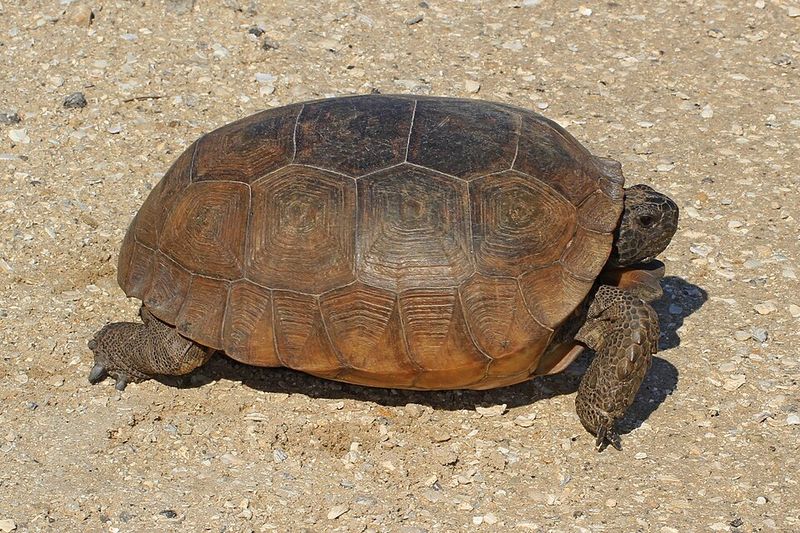
Image Credit: Judy Gallagher.
The gopher tortoise may not sound rare at first, but thriving colonies have become much harder to find than they used to be. This tortoise is famous for digging deep burrows that shelter hundreds of other species, turning it into a true keystone animal in Florida’s dry habitats.
When gopher tortoises decline, a whole network of wildlife feels the loss.
The trouble is that the same high, sandy ground tortoises prefer is also prime land for development. As longleaf pine and scrub habitats are cleared, fragmented, or poorly managed, burrow density drops and local populations become isolated.
Fire suppression adds another layer of stress by letting vegetation grow too dense for the open, sunny conditions tortoises need for feeding and nesting.
I think this species deserves more urgency than it usually gets because it supports so much hidden life underground. You can still see gopher tortoises in many parts of Florida, but strong, connected populations are less common than they should be.
Habitat restoration, prescribed burning, and careful relocation practices are all crucial if those burrow communities are going to persist.
Everglade Snail Kite
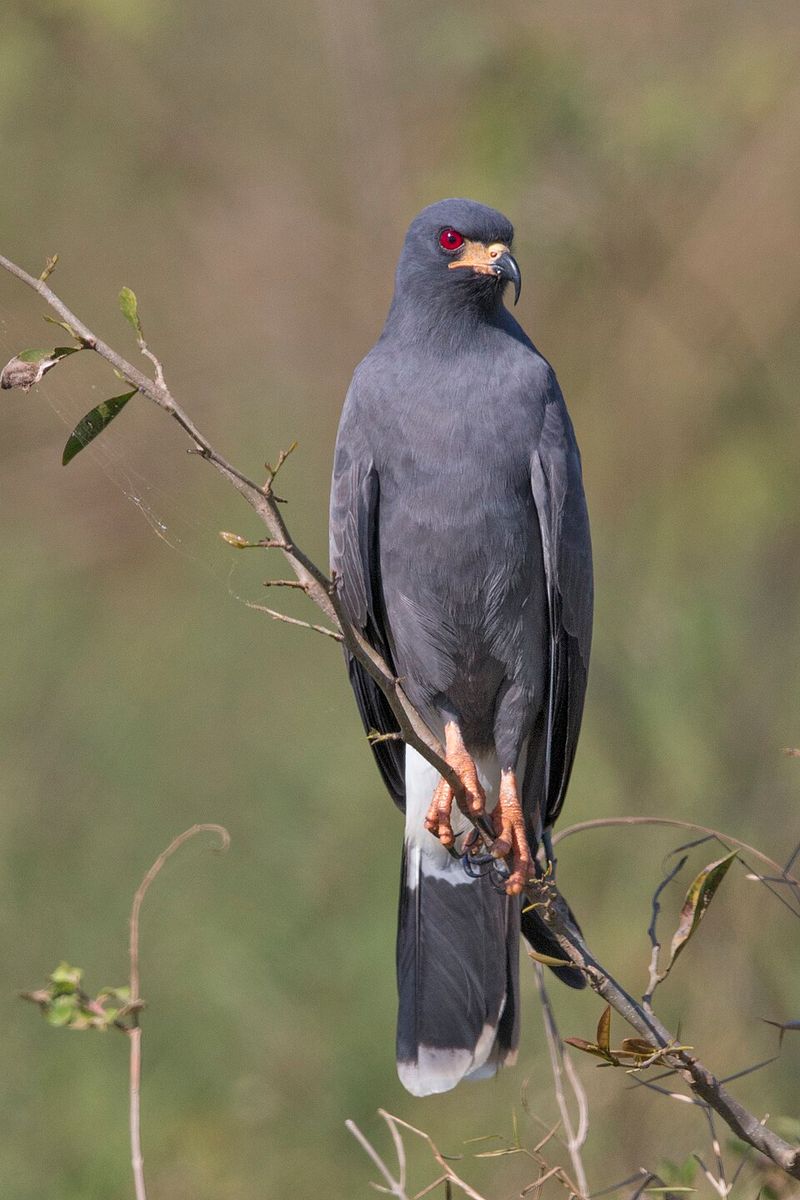
Image Credit: Andreas Trepte.
The Everglade snail kite feels like a bird designed around a single obsession. Its slender hooked bill is specialized for pulling apple snails from their shells, and that narrow diet ties its fate closely to wetland conditions in the Everglades and surrounding marshes.
When water levels shift the wrong way, the kite can lose food, nesting habitat, or both.
That dependence makes the species unusually sensitive to water management, habitat degradation, drought, and changes in snail populations. Birdwatchers may spend hours scanning wetlands near Lake Okeechobee, the Kissimmee basin, or southern marshes before one finally drifts into view.
Even when habitat looks broad and open, the bird’s distribution can be surprisingly scattered and nomadic from season to season.
I find the snail kite fascinating because it turns patience into part of the experience. You are not just searching for a raptor, you are reading the health of a marsh through its presence or absence.
Restoration work across wetland systems matters enormously here, and every sighting suggests that at least part of Florida’s water story is still working well enough for this specialist.
Schaus’ Swallowtail Butterfly
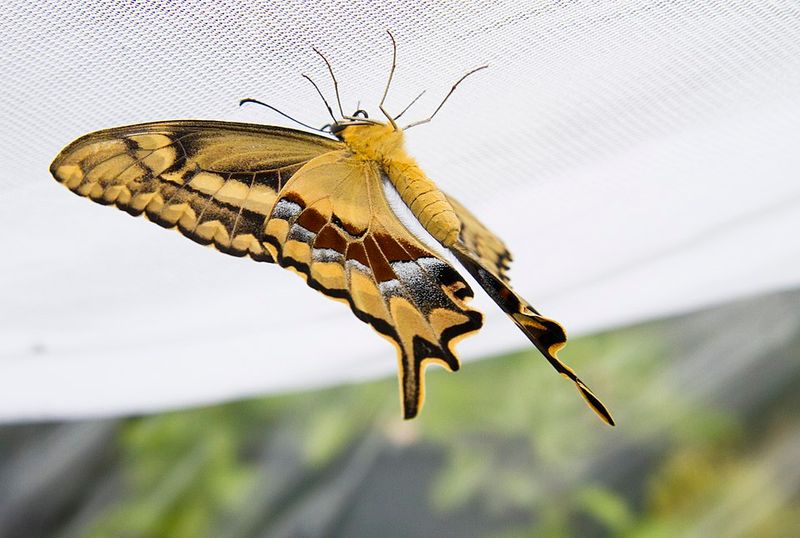
Image Credit: U.S. Fish and Wildlife Service Southeast Region.
Schaus’ swallowtail is one of those species that makes rarity look almost ceremonial. This large butterfly survives only in isolated tropical hardwood hammocks of the Florida Keys and nearby protected islands, where its brown-black wings and pale yellow markings flash through filtered light.
It is one of the rarest butterflies in the United States, and wild sightings are genuinely exceptional.
The species has been hit repeatedly by hurricanes, habitat fragmentation, mosquito control practices, drought, and invasive predators. With such a tiny range, even one bad season can undo years of progress, which is exactly why conservationists monitor breeding sites so closely.
Numbers have fluctuated dramatically over time, showing both how vulnerable and how responsive the population can be under the right conditions.
I think this butterfly says something important about Florida that beaches alone never could. Hidden in those remaining hammocks is a tropical world full of species that cannot simply relocate when pressure rises.
Captive breeding, native host plant restoration, and long-term protection of those forest patches are helping, but seeing a Schaus’ swallowtail in the wild is still a remarkable bit of luck.