
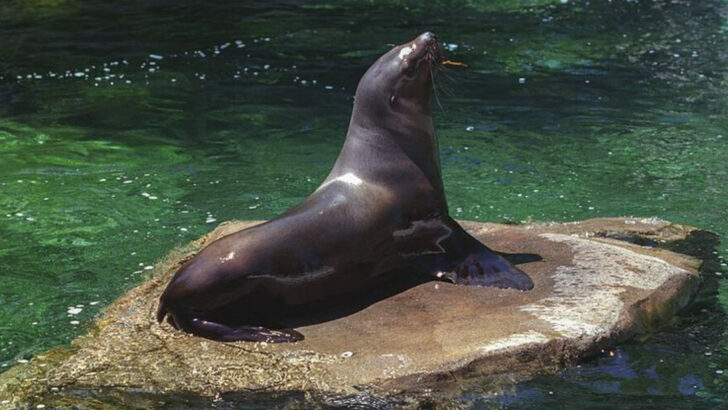
Alaska is not just big, cold, and wild – it is also home to some of the toughest survivors on Earth. In a place shaped by sea ice, dark winters, cliffs, and stormy coasts, certain animals have turned longevity into an art form.
Some live for centuries, others endure by mastering patience, teamwork, or sheer insulation. If you want proof that harsh landscapes can produce extraordinary life stories, these Alaskan animals deliver it.
Bowhead Whale
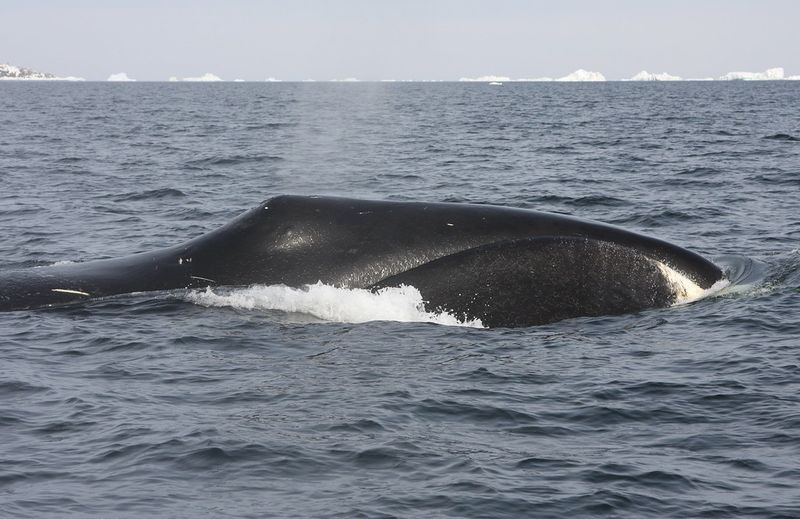
Image Credit: Kristin Laidre/University of Washington.
If Alaska had an elder statesman of the sea, I would give that title to the bowhead whale. Some individuals are believed to live well beyond 200 years, which means a single whale may outlast generations of storms, shifting ice, and even human history.
That kind of lifespan feels almost unreal until you look at how perfectly this animal is built for Arctic survival.
Its massive skull can smash through sea ice to open breathing holes, and its blubber, sometimes more than a foot thick, works like a living winter coat. Bowheads spend their lives in icy northern waters, calmly filtering krill, copepods, and other tiny drifting prey through long baleen plates.
You are looking at an animal that survives not with speed or drama, but with astonishing endurance, insulation, and quiet strength.
There is something humbling about a creature that can move slowly through frozen seas and still become one of Earth’s longest-living mammals. In Alaska’s harsh wilderness, that is a very powerful kind of success.
Greenland Shark
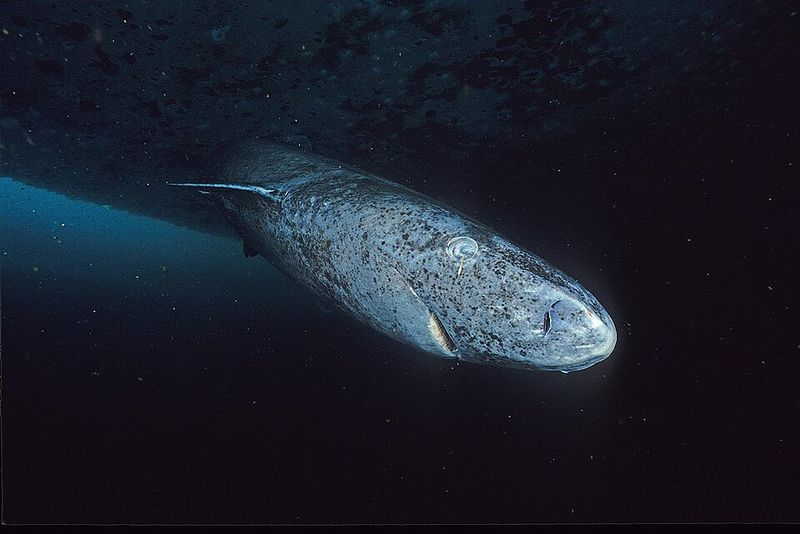
Image Credit: Hemming1952.
The Greenland shark feels less like an ordinary fish and more like a living rumor from the deep. Scientists estimate that some may survive 250 to 500 years, making this slow, shadowy animal the longest-living vertebrate known on Earth.
When you picture Alaska’s harsh wilderness, it is easy to think of mountains and bears, but some of the oldest survivors are drifting far below the surface.
These sharks inhabit frigid Arctic and North Atlantic waters, where the cold seems to slow everything, including growth and metabolism. They move with a patient, unhurried style and feed on fish, carrion, and even seals, taking advantage of whatever the deep ocean offers.
Nothing about them is flashy, yet their longevity may be one of the most extraordinary biological stories in the animal world.
I find their survival strategy strangely elegant: grow slowly, waste little, endure everything. In Alaska’s cold surrounding seas, that ancient rhythm turns the Greenland shark into a master of time itself.
Brown Bear
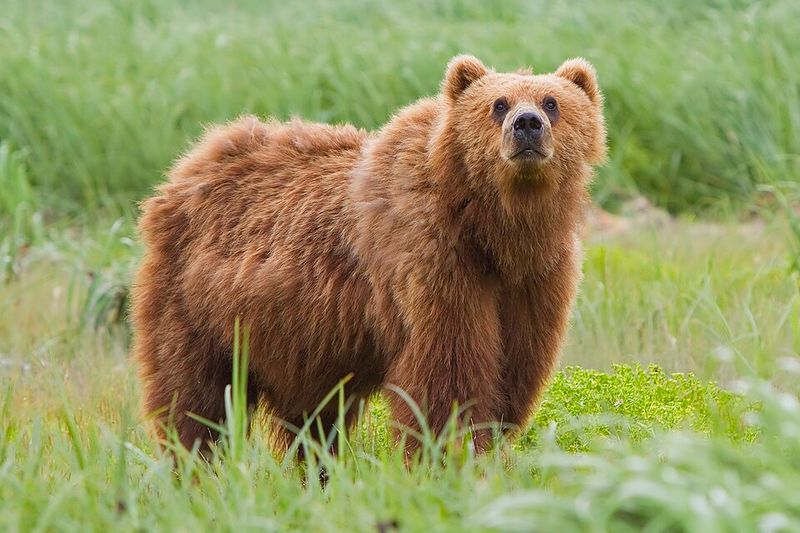
Image Credit: Yathin S Krishnappa.
Few animals say Alaska more clearly than the brown bear, a giant omnivore that can live 20 to 30 years in the wild and sometimes longer in protected settings. Its long life depends on timing, appetite, and an almost unbelievable ability to prepare for scarcity.
When salmon runs surge and berries ripen, these bears turn abundance into survival insurance.
During summer and fall, they may eat immense amounts of food each day, packing on fat that carries them through months of winter hibernation. Strong claws help them dig, tear, and catch prey, while the muscular hump over the shoulders gives them the power to move earth or flip apart a meal.
Coastal bears often grow especially large thanks to rich salmon diets, proving just how closely longevity can be tied to ecosystem wealth.
What I admire most is their seasonal discipline. A brown bear survives Alaska not by resisting the wilderness, but by reading it perfectly, feasting when it can, resting when it must, and coming back strong every spring.
Moose
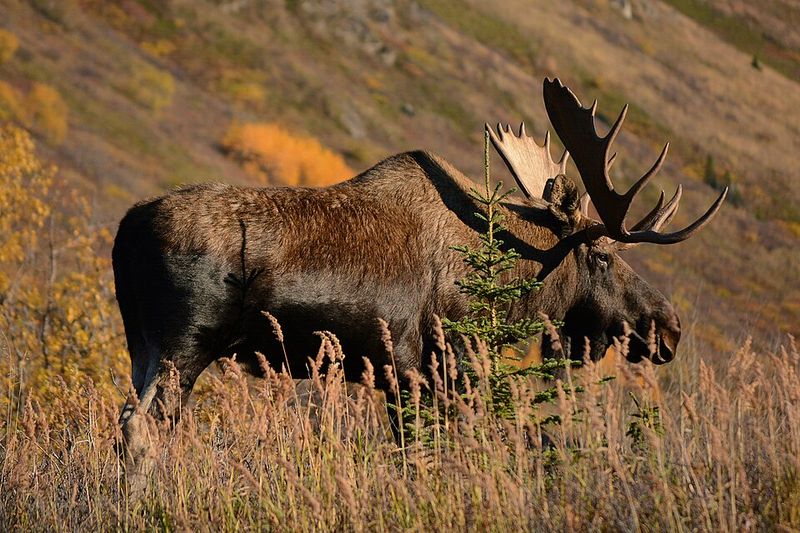
Image Credit: Paxson Woelber.
The Alaska moose has a calm, almost deliberate presence, but do not mistake that for fragility. As the largest member of the deer family, it can live 15 to 20 years in favorable conditions, navigating a world of deep snow, boggy ground, and long winters with surprising ease.
Its long legs are not just impressive to look at – they are essential tools for moving through difficult terrain.
Broad muzzles help these giant browsers feed on willow, birch, aspen, and aquatic plants, allowing them to adapt their menu across the seasons. In a place where food quality changes constantly, that flexibility matters.
Instead of relying on speed or aggression alone, moose survive through reach, height, and a feeding strategy that turns wetlands and brushy areas into dependable pantry space.
I think their longevity comes from this practical toughness. A moose does not need to dominate every moment in Alaska’s wilderness.
It simply needs to keep moving, keep browsing, and keep making smart use of a landscape that rewards endurance over drama.
Steller Sea Lion
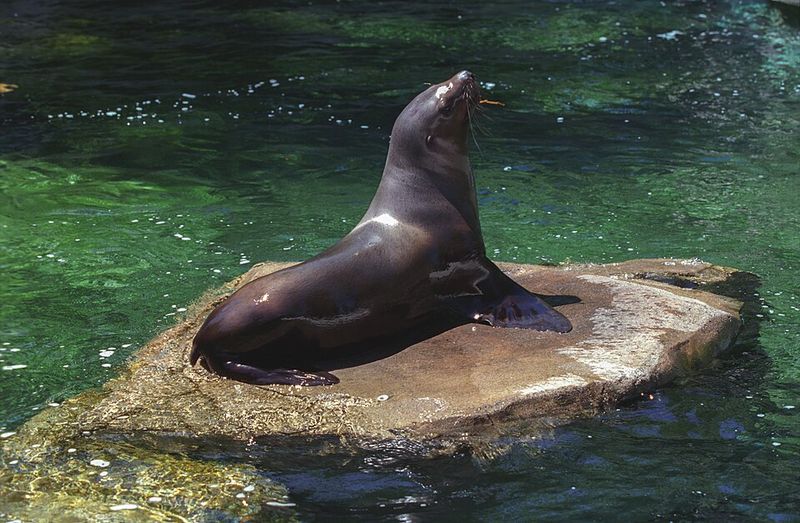
Image Credit: Jerzystrzelecki.
The Steller sea lion brings a kind of noisy confidence to Alaska’s rocky coasts, but there is serious resilience behind that swagger. As the largest eared seal, it can live around 20 years for males, while females often make it to 30 years or more.
Life along storm-lashed shorelines is not gentle, yet these marine mammals handle it with power, social structure, and flexibility.
They haul out on islands, rocks, and sometimes sea ice, using those places to rest, breed, and gather in large groups. In the water, they hunt fish such as salmon, pollock, herring, and cod, along with squid and octopus, making the most of Alaska’s productive seas.
Their size helps, but so does their ability to shift between marine feeding grounds and coastal refuge with very little hesitation.
What stands out to me is how well they balance rough conditions with communal living. You can almost hear Alaska in their barking rookeries.
Long life here is not quiet or hidden – sometimes it arrives loud, muscular, and perfectly at home on wave-beaten stone.
Bald Eagle
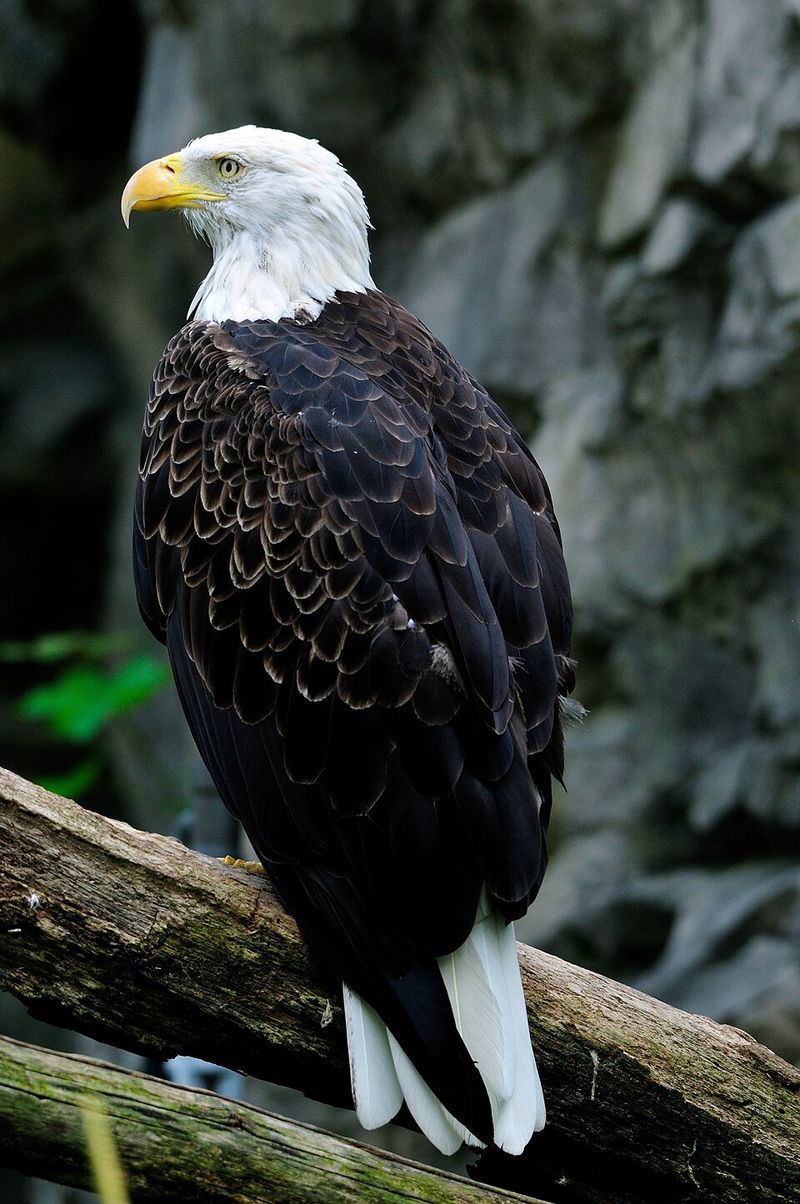
Image Credit: Gregory Moine.
In Alaska, the bald eagle feels less like a rare sighting and more like a ruler of the sky. With wild lifespans commonly reaching 20 to 30 years, these birds thrive where rivers, coastlines, and fish runs provide steady opportunity.
Their long lives are helped by sharp eyesight, efficient flight, and an ability to use both hunting skill and scavenging instinct.
You will often find them circling above salmon streams, perched near tidal flats, or scanning shorelines for waterfowl and carrion. Alaska’s abundance gives them room to succeed, but they also show impressive consistency by returning to the same nesting areas year after year.
Some nests are reused and expanded for decades, becoming giant wooden landmarks that reflect a lifetime of loyalty to one place.
I love that their longevity is tied to both freedom and routine. They soar in huge open spaces, yet keep returning home.
In a state defined by wilderness, the bald eagle proves that thriving for decades can depend on mastering the balance between roaming widely and knowing exactly where to land.
Musk Ox
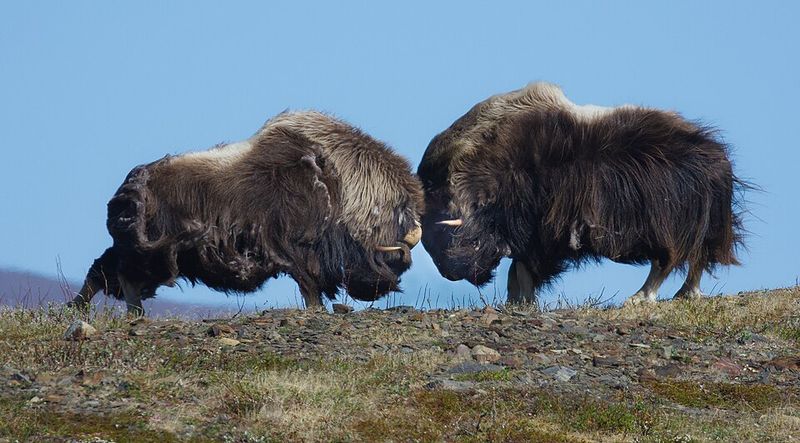
Image Credit: Gregory “Slobirdr” Smith.
The musk ox looks like it walked straight out of the Ice Age and never saw any reason to change. In Alaska’s Arctic regions, many live 15 to 20 years, surviving brutal cold that would overwhelm less specialized animals.
Their secret is not elegance – it is insulation, group defense, and a prehistoric level of stubbornness.
Their famous undercoat, called qiviut, is one of the warmest natural fibers in the world, trapping heat against freezing temperatures and relentless wind. When danger approaches, musk oxen often form tight defensive circles, placing vulnerable calves in the middle while adults face outward.
That social strategy, paired with sheer cold tolerance, helps explain how they continue to endure in landscapes that can feel almost empty of mercy.
There is something deeply reassuring about an animal that survives by standing firm together. The musk ox does not race across Alaska’s wilderness trying to outsmart winter.
It meets winter head-on, wrapped in extraordinary fur, backed by the herd, and prepared to last through conditions that still look primeval today.
Gray Wolf
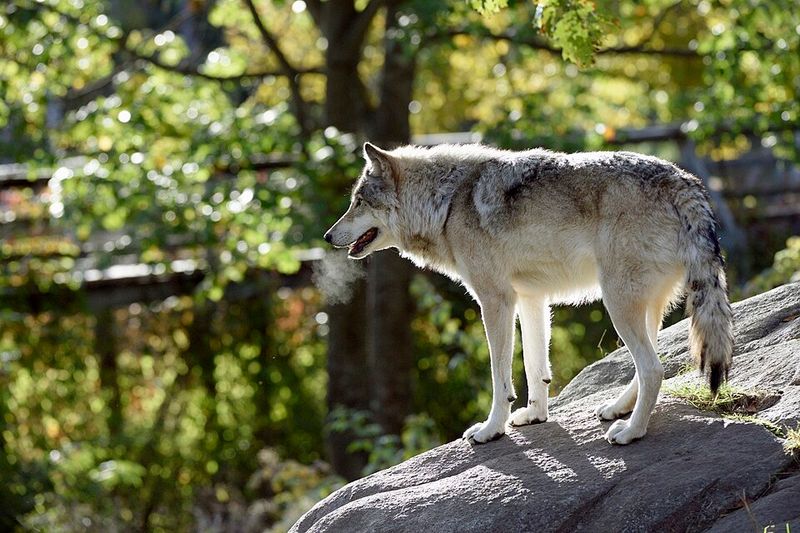
Image Credit: Bert de Tilly.
The gray wolf may not live as long as a bowhead or walrus, but its staying power comes from something just as impressive: teamwork. In Alaska, wolves typically live 6 to 10 years in the wild, though some make it well into their teens.
That is a serious achievement for an animal surviving through cold, competition, injury risk, and the challenge of hunting large prey.
What keeps them going is the pack. Wolves live in tightly bonded family groups that improve hunting success, protect pups, and help individuals survive hard seasons when food is scarce or conditions turn brutal.
Their endurance allows them to travel huge distances, while cooperation lets them pursue caribou, moose, and other demanding prey that no lone hunter could handle as effectively.
I think that makes the wolf one of Alaska’s most relatable survivors. Long life here is not always about armor or size.
Sometimes it depends on trust, communication, and knowing your place in a group that can move through snow and silence like a single living mind.
Sea Otter
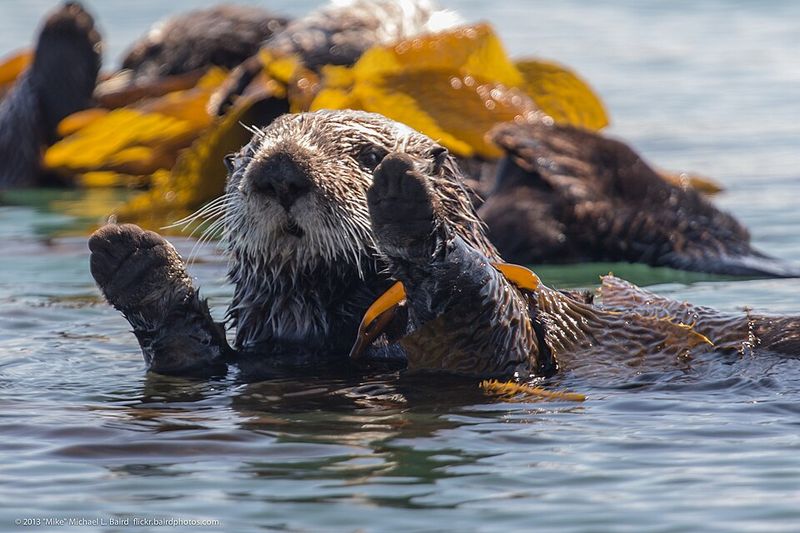
Image Credit: Mike Baird.
The sea otter survives Alaska’s cold coastal waters with a strategy that feels almost impossibly delicate. Instead of depending on thick blubber like many marine mammals, it relies on the densest fur of any mammal on Earth.
That grooming-intensive insulation helps sea otters live about 15 to 20 years in the wild, even in chilly northern habitats.
They spend hours cleaning and fluffing their fur so it can trap air and keep icy water away from the skin. At the same time, they hunt sea urchins, crabs, clams, and other shellfish, often floating on their backs while using clever paws and even tools to crack open food.
Their lives may look playful from a distance, but every detail is a lesson in maintenance, metabolism, and precision.
I find that combination of softness and toughness fascinating. A sea otter thrives in Alaska not by overpowering the environment, but by constantly tending to the small things that make survival possible.
In a harsh wilderness, even longevity can depend on daily care, patience, and a perfectly kept coat.
Dall Sheep
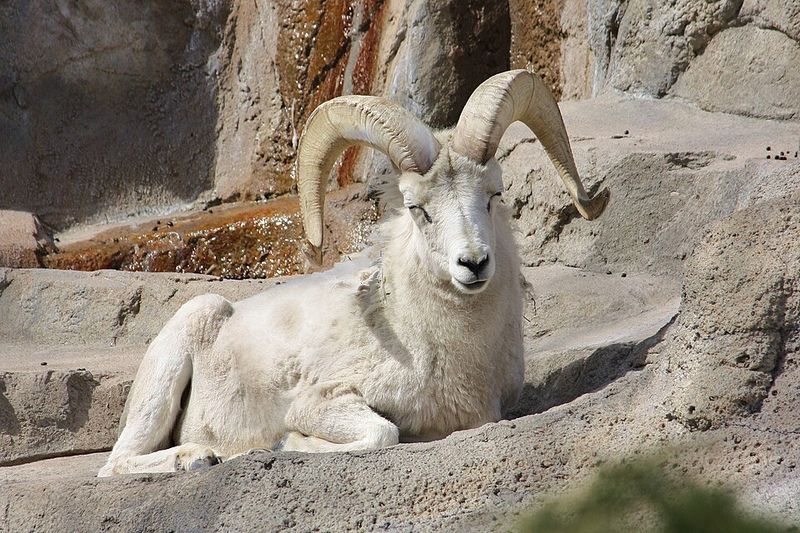
Image Credit: Postdlf.
Dall sheep make Alaska’s mountains look even steeper by treating sheer cliffs like ordinary pathways. These agile alpine survivors often live 10 to 15 years or longer, spending their lives in rugged high country where a single misstep could be costly.
Their longevity depends on sharp footing, constant awareness, and the ability to turn impossible terrain into reliable shelter.
Predators struggle to follow them across narrow ledges and exposed slopes, so the mountains themselves become a protective advantage. Rams grow heavy curled horns over much of their lives, and those horns record age in annual rings called annuli, almost like a built-in biography.
In open alpine country, where weather changes fast and cover can be limited, balance and elevation become as important as strength.
What I admire is how completely Dall sheep trust the landscape others would avoid. They are not just surviving near cliffs – they are surviving because of them.
In Alaska’s harsh wilderness, that feels like a brilliant inversion: the most dangerous places can become the safest homes when you are born to climb.
Pacific Walrus
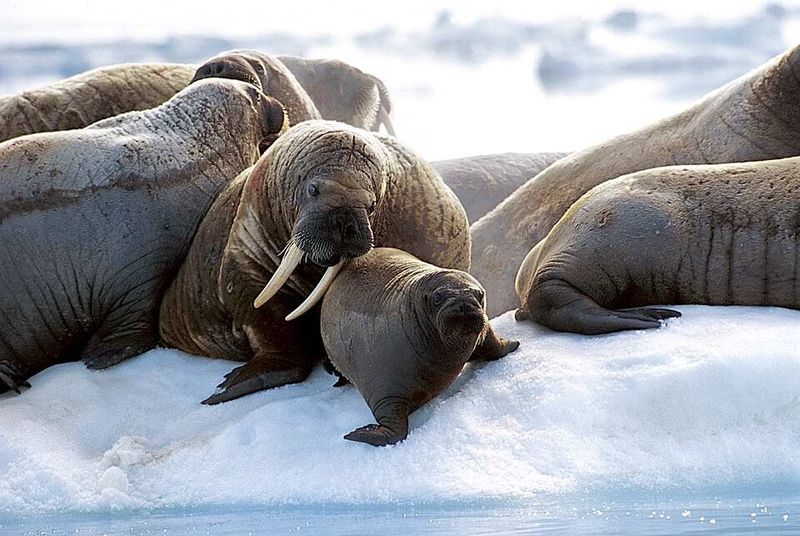
Image Credit: Ansgar Walk.
The Pacific walrus looks built from spare parts of the Arctic: tusks, whiskers, blubber, and pure determination. In Alaska, these remarkable marine mammals commonly live 30 to 40 years, a lifespan supported by social behavior and specialized tools that suit icy seas perfectly.
They are instantly recognizable, but the real story is how practical every feature becomes in a harsh environment.
Their long tusks help them haul onto sea ice, establish dominance, and defend themselves when needed. Thick whiskers are sensitive enough to locate clams and other prey hidden in seafloor sediments, turning muddy bottom feeding into a precise art.
Add a heavy insulating layer of blubber, and you have an animal designed to rest in cold air, dive into frigid water, and return to crowded haulouts with confidence.
I think the walrus embodies Alaska’s coastal wildness in a wonderfully strange way. It is social, loud, heavily armed, and deeply adapted to the edge between ocean and ice.
Long life here comes from being weird in exactly the right directions.
Common Raven
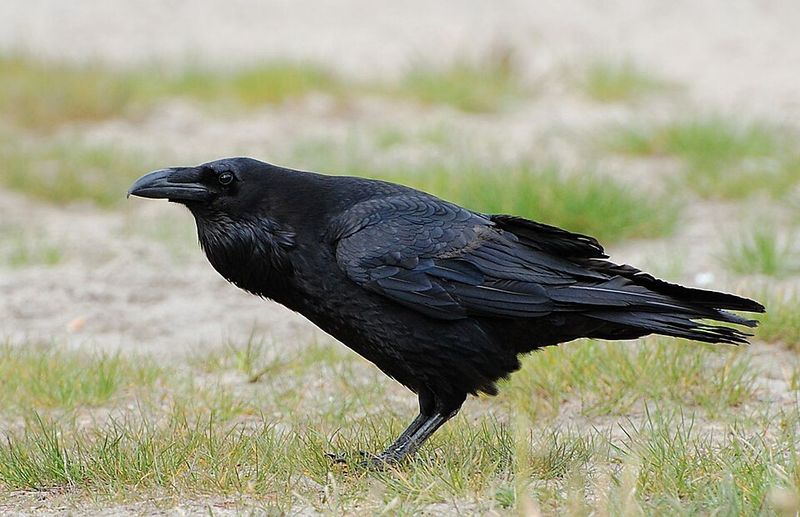
Image Credit: Accipiter (R. Altenkamp, Berlin).
The common raven might be the smartest long-term opportunist on this list. Wild ravens in Alaska often live 10 to 15 years, and some captive birds have survived for decades beyond that.
Their success comes from intelligence, curiosity, and an ability to turn almost any habitat, from coastal forest to Arctic tundra, into usable territory.
Ravens eat nearly anything: berries, grains, insects, small animals, eggs, carrion, and even scraps tied to human activity. They solve problems, remember places, and exploit opportunities with a flexibility that feels almost mischievous.
In winter, when resources shrink and conditions harden, that mental adaptability becomes just as important as feathers, wings, or shelter.
I love how ravens make Alaska feel both ancient and alive with possibility. They are part scavenger, part strategist, part trickster, and entirely at home in difficult country.
If some animals survive by brute strength and others by insulation, the raven proves another route to longevity: stay alert, stay inventive, and never let a hard landscape convince you there is only one way to live.