
Wyoming is full of animals that seem to move before you even register what happened. Out on sage flats, in cold streams, and along shattered mountain cliffs, survival often comes down to split-second timing.
Some of these species sprint, some dive, and some vanish like they were never there. If you love wildlife with serious speed and attitude, this list is about to pull you in.
Pronghorn
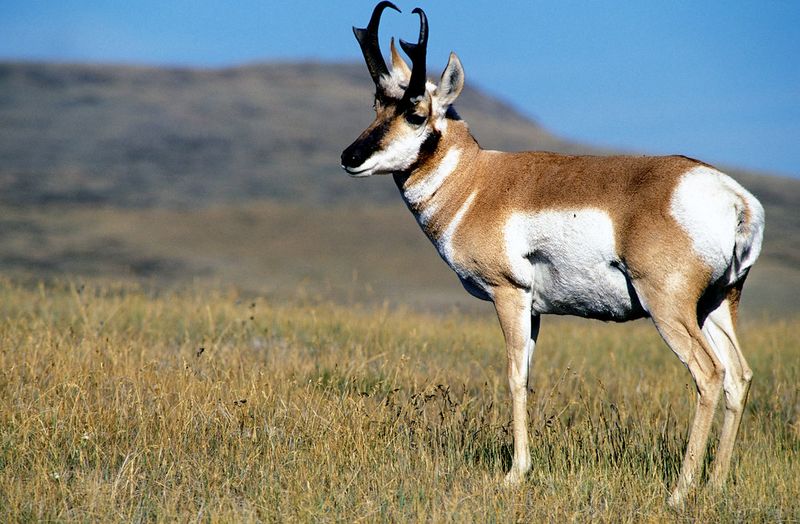
Image Credit: USFWS Mountain-Prairie.
If you spend any time on Wyoming’s open range, the pronghorn feels almost unreal. It can explode into motion so quickly that your eyes barely catch the first stride before it is already tearing across sagebrush country.
That instant reaction is paired with legendary speed, making it one of the most difficult animals for predators to close in on.
What really impresses me is how much of its quickness starts before it runs. Pronghorns have exceptional eyesight, a nearly panoramic view, and the ability to notice movement from miles away.
In a place with few places to hide, reacting early is everything, and this species seems built around that exact rule.
Once danger registers, it follows a simple plan that works beautifully: flee first, assess later. Large lungs, a big heart, shock-absorbing hooves, and lean muscles help it sustain fast travel over long distances.
In Wyoming, that lightning-fast decision making is just as important as raw speed.
Golden Eagle
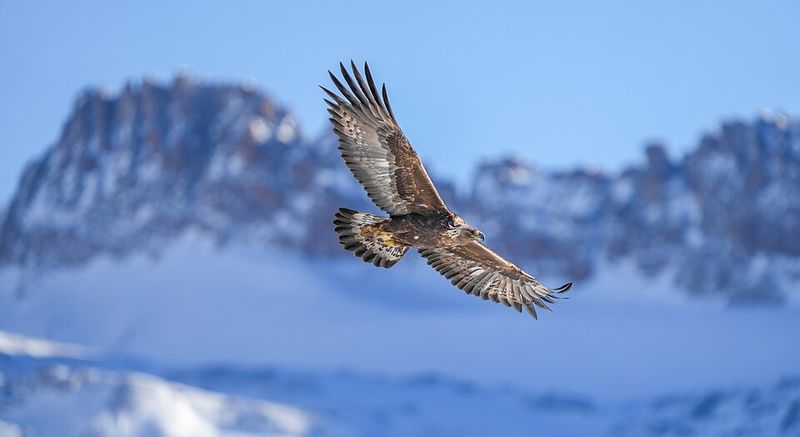
Image Credit: Giles Laurent.
The golden eagle does not just hunt fast – it hunts with terrifying precision. Soaring high above Wyoming’s open country, it can spot small prey from astonishing distances, then fold into a dive that turns calm air into a weapon.
By the time a rabbit or ground squirrel realizes the danger, the eagle is already committed.
I find the reaction time during the final approach even more impressive than the top speed. A golden eagle must constantly adjust its angle, wing position, and focus while closing the gap in seconds.
That mix of razor vision and instant flight corrections is what makes its attacks feel almost surgical.
Wyoming gives this raptor the perfect stage: wind, cliffs, and wide-open hunting ground. It can circle for long periods, reading the land like a living map, then shift from effortless glide to explosive action without warning.
Few predators show such complete control between patience, speed, and split-second decision making.
American Pika
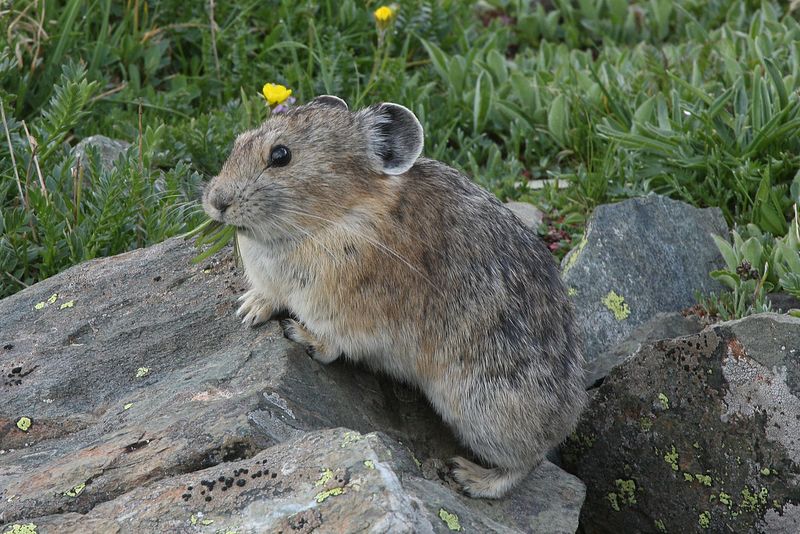
Image Credit: J. N.
The American pika looks adorable, but its daily life is basically a reaction-time test. Living among Wyoming’s rocky talus slopes, this tiny mammal survives by reading danger instantly and disappearing into cracks that seem impossibly small.
One second it is gathering plants in the open, and the next it is simply gone.
If you watch pikas long enough, you notice how alert they stay even during ordinary foraging. Their sharp calls can warn nearby animals when hawks or other threats appear, but they also know when silence is smarter.
Against a sneaky predator like a weasel, fast feet and quiet timing may matter more than any alarm.
What makes the pika so fascinating is the contrast between its size and its nerve. It lives in exposed, high-elevation terrain where hesitation can be fatal, so every movement is efficient and deliberate.
In Wyoming’s mountain country, this little bundle of fur survives because its reactions are outrageously quick.
Mule Deer
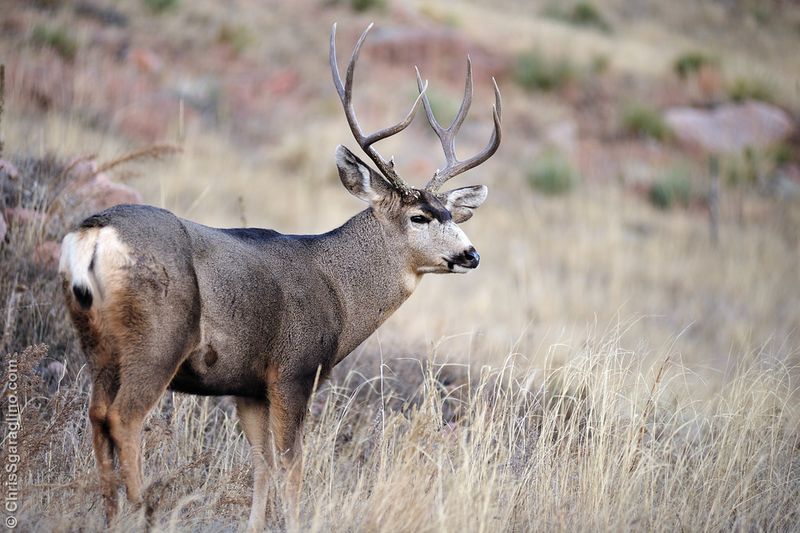
Image Credit: Chris Sgaraglino.
Mule deer have a style of escape that is hard to forget once you see it. When danger appears, they do not just run – they bound, springing with all four feet in a stiff-legged motion called stotting that lets them clear brush, rocks, and uneven ground fast.
It looks almost playful until you realize it is a finely tuned survival move.
I think their reactions stand out because they combine awareness with athleticism so smoothly. Those oversized ears are constantly gathering information, their eyesight helps detect movement, and powerful hind legs do the rest.
In a heartbeat, a calm grazer becomes a fast, obstacle-clearing escape artist.
Wyoming’s broken terrain actually favors that kind of sudden mobility. Mule deer can change direction, gain elevation, and keep a predator guessing while covering rough country that would slow many pursuers.
Their famous bounding gait is not just dramatic to watch – it is a brilliant answer to a landscape where surprise is always part of the equation.
Prairie Falcon
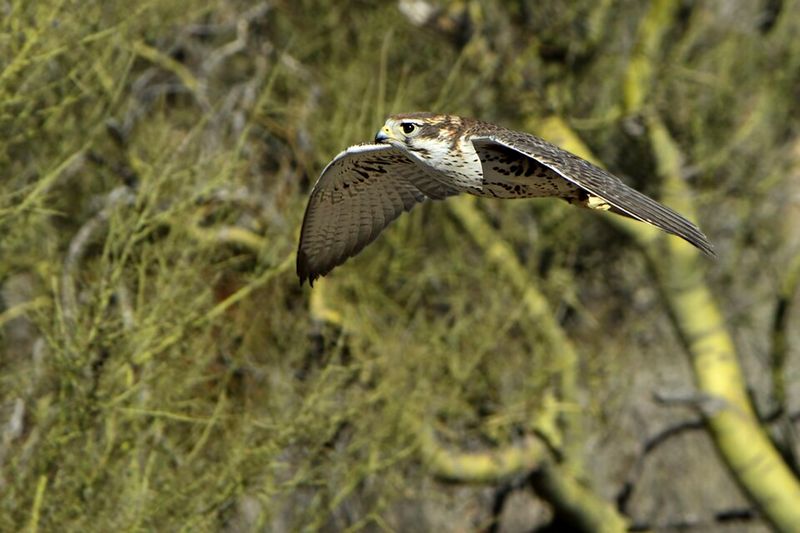
Image Credit: Alan Vernon.
The prairie falcon feels like a missile designed specifically for Wyoming’s wide-open spaces. It races low over grasslands, shrub-steppe, and broken country with a kind of lean, aggressive speed that leaves little room for prey to react.
What grabs me most is how quickly it can respond to every twist, dip, and sudden turn during a chase.
Unlike a hunter that relies on one dramatic strike from above, this falcon often thrives in chaotic pursuit. It can angle around terrain, surge after birds flushing at the last second, or drop onto small mammals before they reach cover.
Those rapid adjustments are what separate a fast flyer from an efficient killer.
Its body tells the whole story: pointed wings, a long tail, and a frame built for maneuverability as much as speed. In Wyoming, where prey often tries to escape across open ground or through gusty air, the prairie falcon’s split-second reflexes become its greatest advantage.
It is all chase, calculation, and ruthless timing.
Mountain Lion
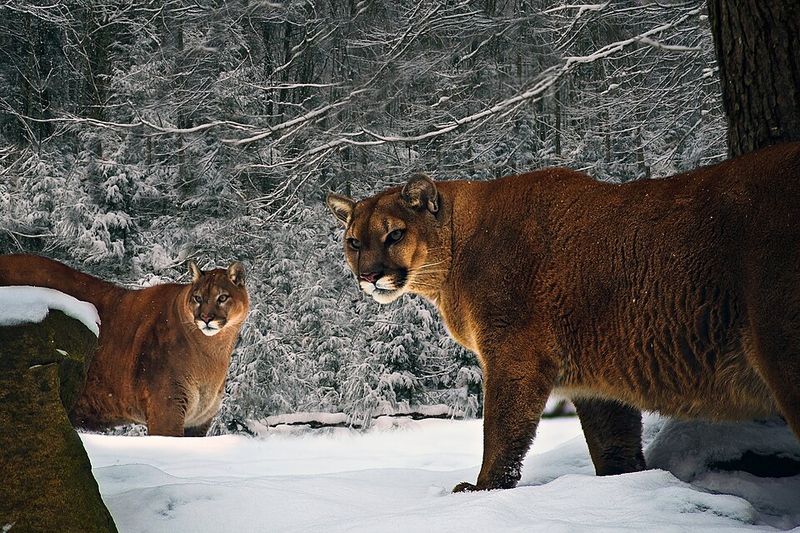
Image Credit: ForestWander.
The mountain lion is proof that fast reactions do not have to be flashy. Much of its power lies in stillness, because this predator can wait in cover with remarkable patience before turning that silence into a sudden, violent burst.
When it decides to move, the attack unfolds so fast that prey often has almost no chance to respond.
I always think of the first leap as the most impressive part. With powerful hind legs, large paws, and perfect balance, a mountain lion can spring forward, climb, pivot, or slam through rough ground in one fluid motion.
That explosive start is exactly what ambush hunting demands in Wyoming’s rocky and brushy terrain.
Its speed over long distances is not the story here – timing is. A lion reads distance, angle, and vulnerability, then commits in an instant, often aiming for the neck before a deer can fully escape.
Few Wyoming animals show such a deadly combination of restraint, athletic precision, and lightning-fast decision making.
White-Tailed Jackrabbit
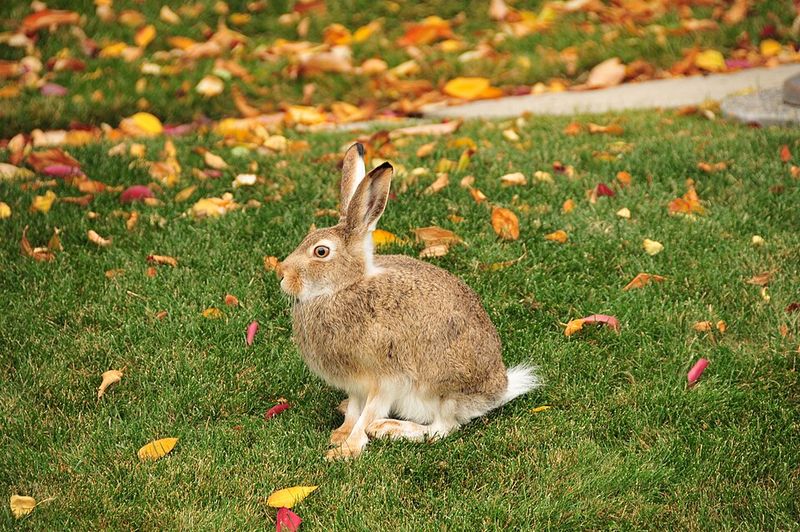
Image Credit: Iain George (TheIguana).
The white-tailed jackrabbit reacts like a coiled spring with ears. In Wyoming’s open country, it often stays motionless until the last possible moment, then blasts away with astonishing acceleration that can make a predator look clumsy.
That first launch is only part of the trick, though, because the real magic comes in what happens next.
Instead of fleeing in a predictable line, this hare throws in sharp zigzags and sudden directional changes that seem almost chaotic. If you imagine a coyote trying to guess where the rabbit will be one second later, you understand why this strategy works.
The jackrabbit turns speed into confusion, which is often even more valuable than raw pace.
Its long legs, strong feet, and alert senses make the whole performance possible. On sage flats and grasslands where hiding places can be limited, quick reactions are everything, and hesitation can be fatal.
The white-tailed jackrabbit survives by making every escape feel improvised, explosive, and maddeningly hard to track.
Northern Goshawk
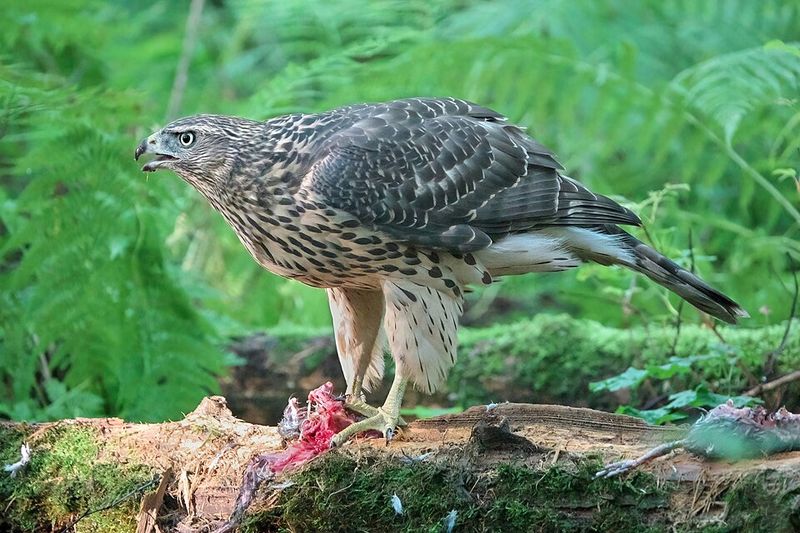
Image Credit: Andrey Gulivanov.
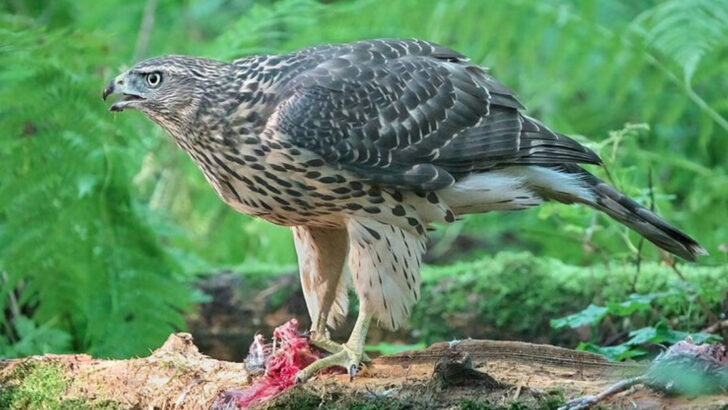
The northern goshawk is what happens when a forest hunter refuses to be slowed by the forest itself. In Wyoming woodlands, it can rocket through tight spaces, weaving between trunks and branches with a confidence that feels almost impossible at that speed.
Its reactions have to be immediate, because there is no room for hesitation in that kind of chase.
I love how different this bird feels from raptors of the open plains. A goshawk is built for surprise, threading through cover after birds or squirrels that think the trees will protect them.
Every wingbeat, tilt, and tail adjustment happens in a split second, turning dense habitat into an aerial obstacle course it knows how to win.
That agility makes it one of the most impressive avian hunters in the state. It can launch from a hidden perch, burst into motion, and maintain control while everything around it narrows into passing gaps and moving prey.
In Wyoming’s forests, the northern goshawk survives by making impossible-looking maneuvers feel routine.
Western Rattlesnake
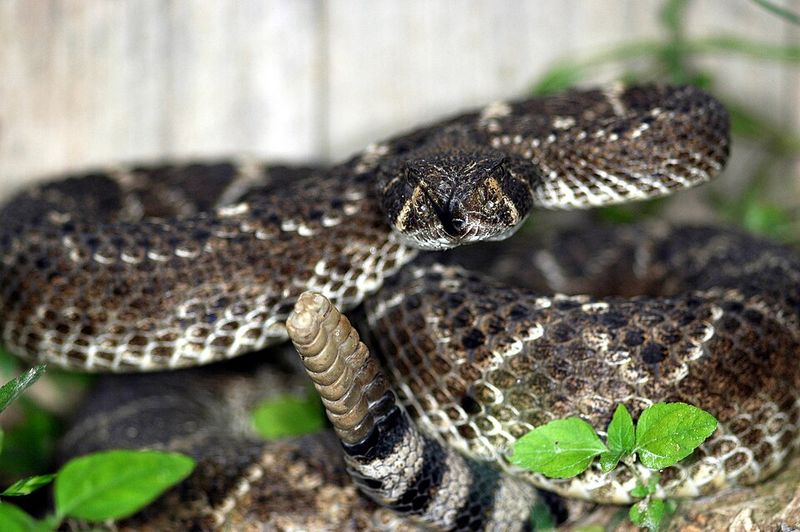
Image Credit: Clinton & Charles Robertson.
The western rattlesnake does not need a long chase to prove how fast it is. Its signature move is the strike, a sudden burst of motion so quick that you mostly register the aftermath instead of the action.
In Wyoming’s prairies and rocky ground, that reaction can be defensive, predatory, or both, depending on what triggered it.
What fascinates me is how much accuracy is packed into that speed. Heat-sensing pits help the snake detect warm-bodied prey, while its body stays coiled and ready like a loaded spring.
When the moment comes, it can deliver a rapid bite before a rodent or careless threat fully understands the distance has vanished.
People often focus only on the rattle, but the real story is efficiency. This snake conserves energy, stays still, and then acts with startling precision when timing matters most.
In a landscape where exposure can be risky, the western rattlesnake survives by turning patience into one of Wyoming’s most lightning-fast reactions.
American Kestrel
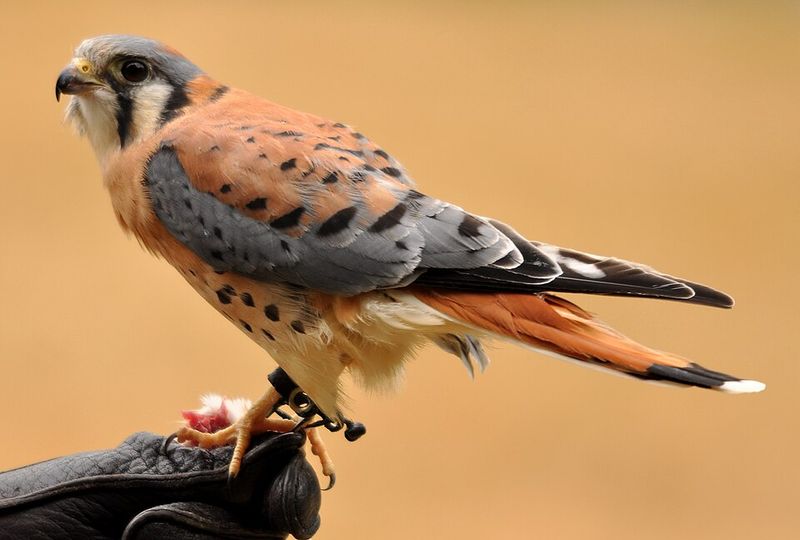
Image Credit: Chris.
The American kestrel may be small, but it hunts with the confidence of a much larger raptor. Out over Wyoming fields and fencelines, it can hover into the wind, lock onto movement below, and drop instantly toward insects, rodents, or small birds.
That quick transition from suspended control to sudden attack is what makes it so impressive.
If you watch one closely, you can see how much precision is involved. A kestrel has to read shifting wind, moving prey, and changing distance all at once, then correct its body position in midair without losing momentum.
Those tiny adjustments happen fast, but they are the reason the final grab looks so clean.
I think its size actually makes the performance more dramatic. This is not brute force carrying the hunt – it is timing, coordination, and sharp reflexes packed into a compact falcon.
In Wyoming’s open habitats, the American kestrel succeeds by turning every hover, dive, and last-second correction into a beautifully efficient strike.
Coyote
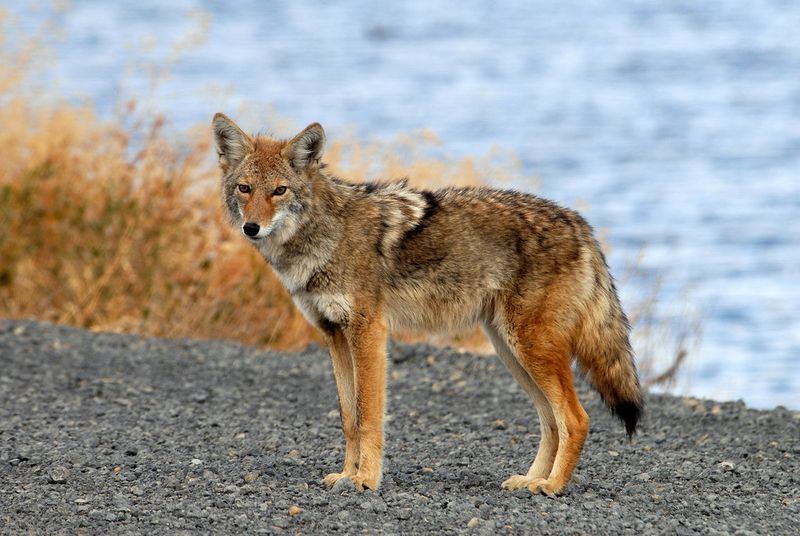
Image Credit: USFWS Pacific Southwest Region.
The coyote earns its place on this list because its reactions are not just physical – they are mental, too. In Wyoming, this adaptable predator survives by making fast decisions while moving through everything from open plains to foothills and snowy ground.
It can switch from cautious observer to committed chaser in an instant.
What stands out to me is how flexible its quickness feels. A coyote may pounce on a rodent, veer after a rabbit, dodge a kick from larger prey, or abandon a risky pursuit the moment conditions change.
That kind of responsiveness is not flashy like a falcon dive, but it is every bit as important.
Its body supports the strategy with speed, endurance, and nimble footwork, yet the real edge is awareness. Coyotes constantly read scent, sound, and movement, then react with whatever option makes the most sense.
In a state as varied as Wyoming, that blend of instinct, improvisation, and fast motion helps explain why coyotes seem to thrive almost everywhere.
Cutthroat Trout
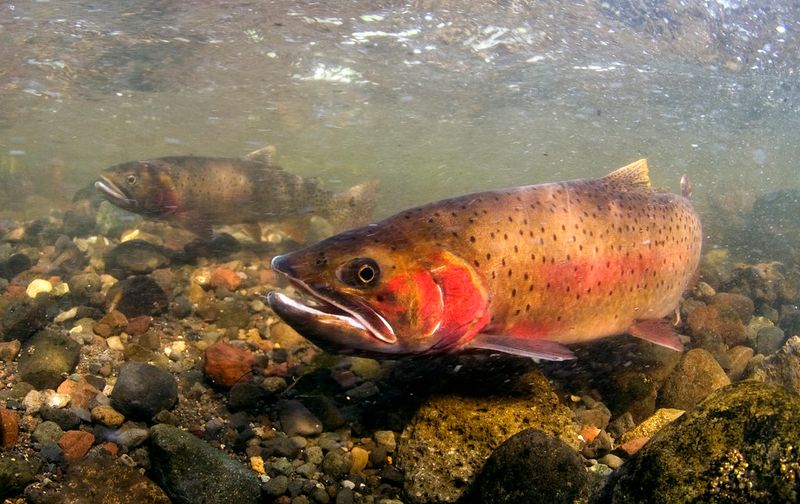
Image Credit: Jay Fleming.
The cutthroat trout brings lightning-fast reactions into Wyoming’s cold, clear water. In streams and lakes, it has to make instant choices about drifting insects, fleeing minnows, shifting current, and approaching danger from above.
A missed beat can mean a missed meal – or becoming one.
I find fish like this easy to underestimate until you imagine how quickly they process their world. Food can appear for a split second in current, and a trout must angle, surge, and open its mouth with perfect timing to intercept it.
Just as quickly, it may snap away from a larger fish, diving bird, or mammal probing the shallows.
The native cutthroat’s reactions are tied to a body built for fluid maneuvering. Streamlined shape, strong fins, and sensitivity to vibration let it move with sudden precision instead of wasted effort.
In Wyoming waters, where conditions can change from calm to dangerous in moments, that rapid responsiveness is one reason this trout remains such a captivating survivor.
Long-Tailed Weasel
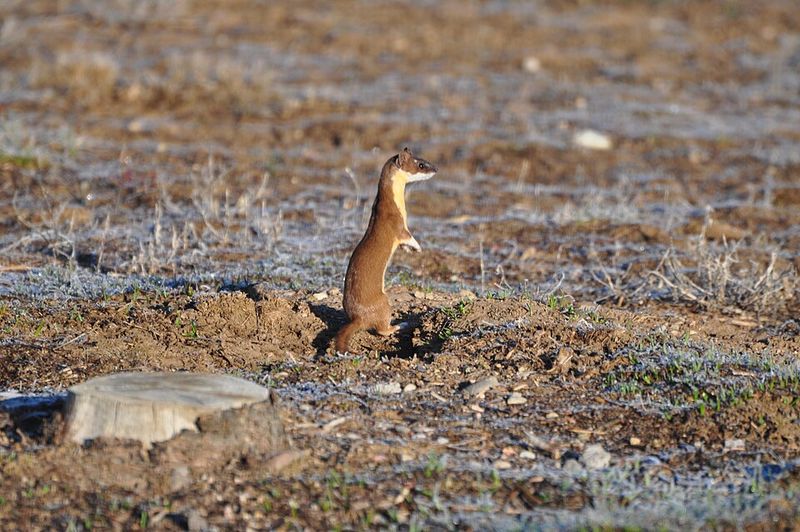
Image Credit: USFWS Mountain-Prairie.
The long-tailed weasel looks like pure nervous energy poured into a flexible body. In Wyoming grasslands, brush, and edges of cover, it darts with such speed that following it can feel like trying to track a streak of motion.
Those rapid reactions help it hunt animals that are themselves built to escape quickly.
What impresses me most is how well this predator operates in tight, messy spaces. It can shoot through burrows, slip under vegetation, and pivot instantly when prey changes direction.
A rodent may get only a split second of warning before the weasel turns a narrow passage into a dead end.
Of course, being small means it also has to stay alert for danger from above and behind. That makes its reflexes useful not just for attacking, but for surviving as something that other predators would gladly eat.
In Wyoming, the long-tailed weasel succeeds by combining aggression, flexibility, and unbelievably quick reactions into one restless package.
Bighorn Sheep
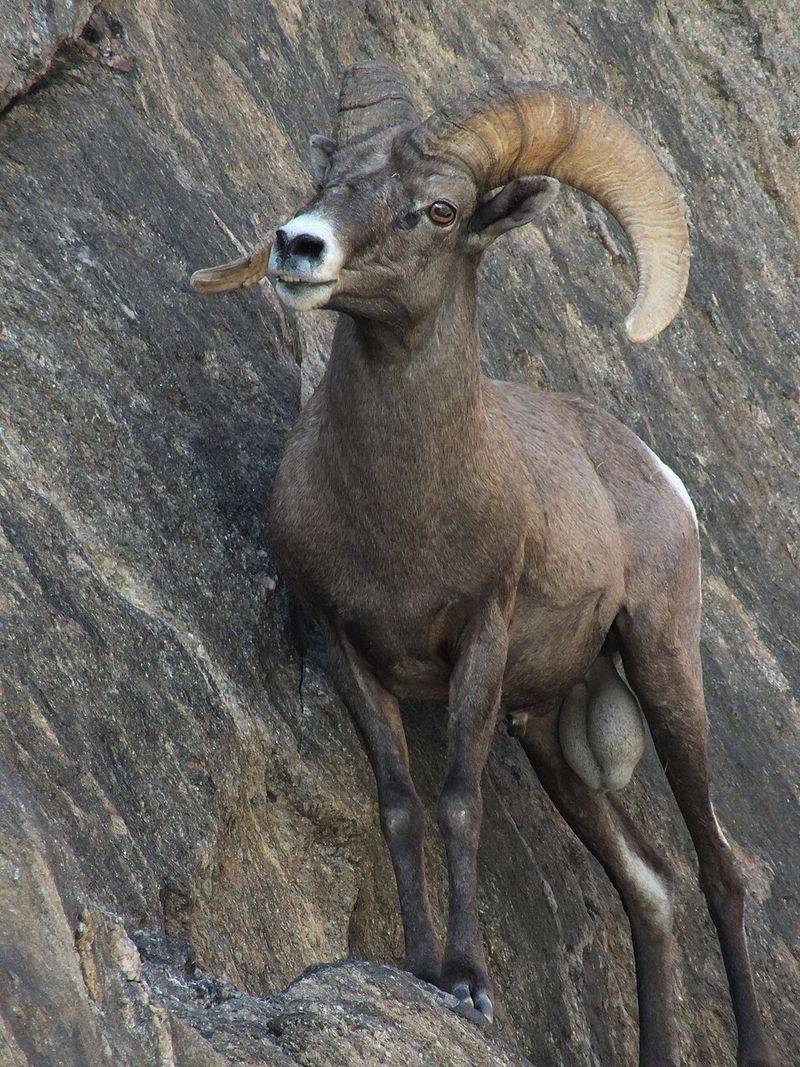
Image Credit: Oregon State University.
Bighorn sheep make impossible terrain look routine, and that illusion depends on fast reactions. On Wyoming’s cliffs and broken mountain slopes, a delayed step could mean a fall, while a perfectly timed leap can mean safety from a pursuing predator.
Their speed is not about flat-out sprinting so much as immediate control under extreme conditions.
I think their balance deserves as much respect as their strength. Bighorn sheep can plant, pivot, and spring between narrow ledges with a confidence that seems almost casual, even when the drop below is brutal.
Those rapid adjustments become especially important when mountain lions or other threats force them into quick evasive movement.
Their specialized hooves grip rough surfaces, and their muscular bodies provide the power to launch upward or sideways when needed. But the physical tools only matter because the animal uses them so quickly.
In Wyoming’s high country, bighorn sheep survive by turning cliffs into escape routes and by reacting before danger fully closes the gap.