
Virginia trails are full of quiet movement if you know where to look. One bend might reveal a turtle in the mud, while the next brings the rush of wings or the flick of a tail vanishing into the woods.
Some of these animals are obvious, others seem almost designed to stay hidden. Keep your eyes up, down, and just off the path, because these are the wild neighbors you are most likely to meet out there.
White-Tailed Deer
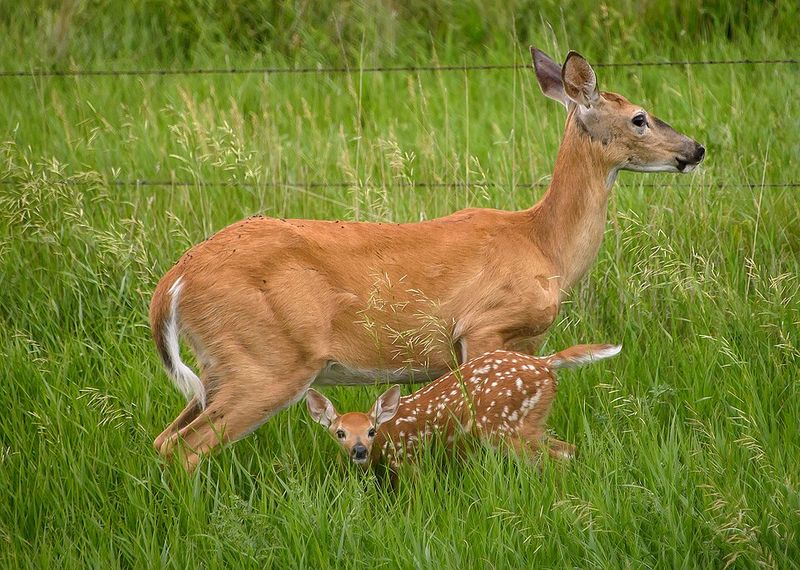
Image Credit: Marshal Hedin.
If you hike in Virginia often, the white-tailed deer is probably the animal you are most likely to spot first. They seem to materialize from the woods at dawn and dusk, standing perfectly still as if they think you cannot see them.
For a few seconds, you might share a quiet stare before the whole moment breaks.
That break usually comes with a sudden leap and the flash of a bright white tail, which acts like a warning flag to nearby deer. They live across Virginia in forests, fields, and even near suburbs, so almost any trail can deliver a sighting.
I always think deer make the woods feel more alive, especially when a small group moves silently through the trees like pale, careful shadows.
Eastern Gray Squirrel
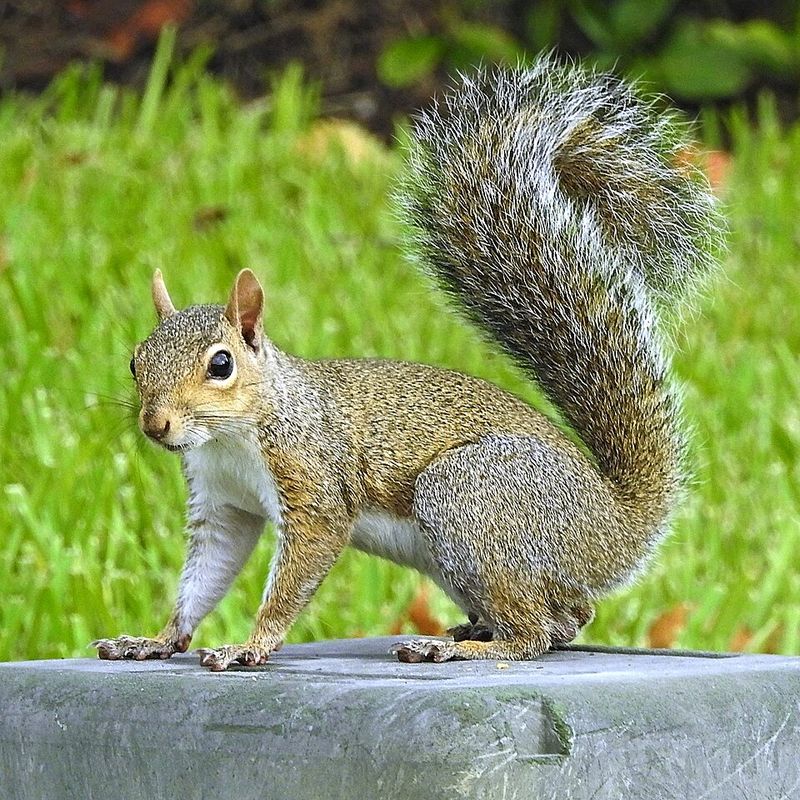
Image Credit: JeffreyGammon.
The eastern gray squirrel may not sound exciting at first, but on Virginia trails it is one of the most entertaining animals to watch. You will hear leaf litter crackling, then catch one sprinting across the path or spiraling up a tree trunk with ridiculous confidence.
In hardwood forests filled with acorns and hickory nuts, they are practically part of the soundtrack.
These squirrels spend plenty of time in the trees, but they are constantly dropping to the ground to dig, stash, and retrieve food. Their bushy tails help them balance on branches, and their quick stops and starts make them look permanently caffeinated.
If you slow down and actually watch one for a minute, you will notice how much drama a single squirrel can pack into a very small patch of woods.
Eastern Chipmunk
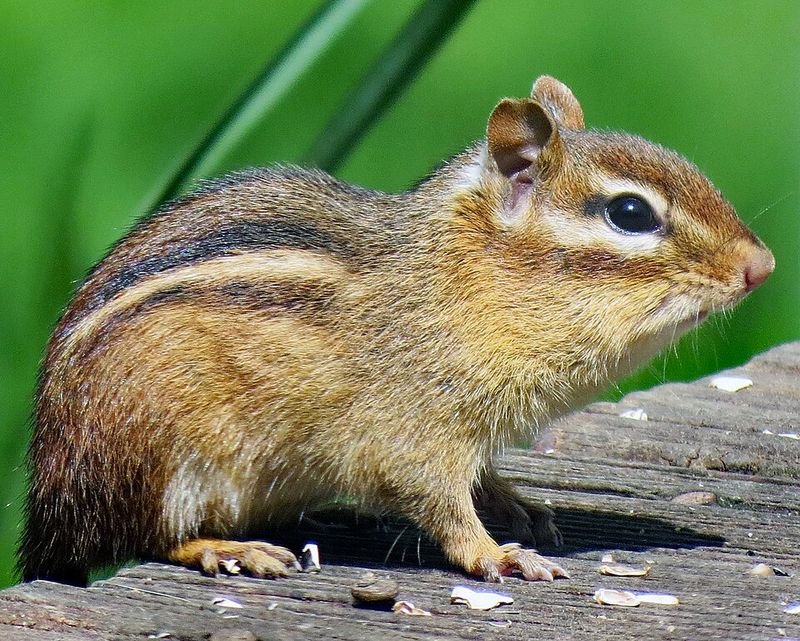
Image Credit: James St. John.
Eastern chipmunks feel like the comedians of a Virginia trail, always appearing for a second and then disappearing before you can point them out properly. Usually you hear them first, giving a sharp chipping call from a rock pile, stump, or fallen log somewhere just ahead.
That sound can make the whole forest seem suddenly alert.
Unlike their tree-loving squirrel cousins, chipmunks stay closer to the ground and use burrows, woody debris, and stone crevices for cover. Their expandable cheek pouches let them carry food back to storage chambers, which is impressive for such a tiny animal.
When one finally pauses in the open, striped back glowing in a patch of sunlight, it feels like you have been let in on a secret most hikers walk right past.
Black Bear
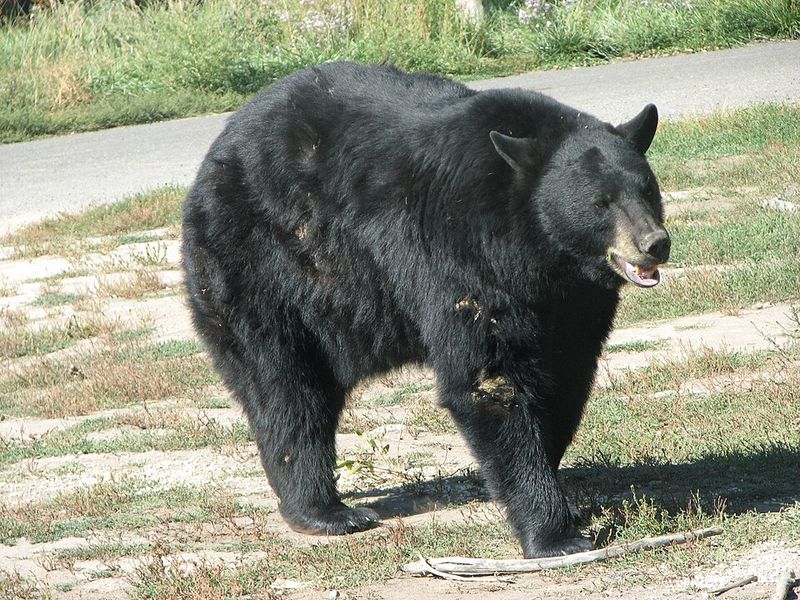
Image Credit: DaBler.
Seeing a black bear on a Virginia trail is the kind of moment that instantly changes your heartbeat. Most sightings happen in mountain forests or remote sections of trail, where bears wander in search of berries, nuts, insects, and anything else worth investigating.
In late summer and fall, they can spend huge parts of the day eating to prepare for winter.
Even though black bears are powerful animals, they are usually more interested in avoiding you than confronting you. A distant bear flipping logs or moving through a berry patch can be unforgettable, especially when you realize how quietly something so large can travel.
If you do spot one, giving it space is everything, and the best part of the encounter is often simply knowing you shared the woods with one of Virginia’s most iconic residents.
Wild Turkey
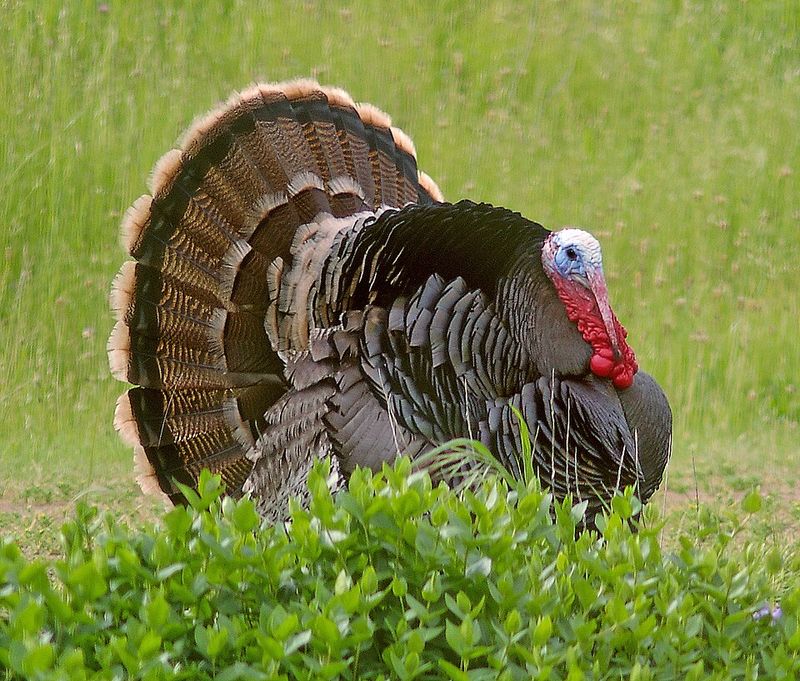
Image Credit: ALAN SCHMIERER.
Wild turkeys have a talent for making an ordinary hike suddenly chaotic. You might be walking through calm woods when a large bird explodes from the brush beside the trail, beating the air with a loud, heavy rush that startles you far more than it should.
A flock moving through the understory can feel prehistoric in the best possible way.
Turkeys are common across Virginia, from mountain forests to lower, brushier landscapes, and they often travel in groups while scratching for seeds, insects, and mast. On the ground they look sturdy and deliberate, but when they flush unexpectedly, the noise is unforgettable.
I think they are one of the most underrated trail sightings, because they combine size, attitude, and pure jump-scare energy in a way few woodland animals can match.
Red-Tailed Hawk
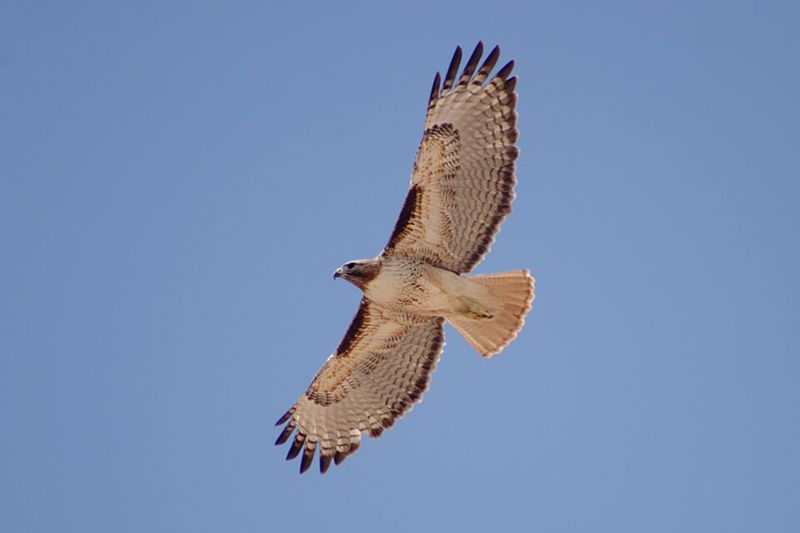
Image Credit: Alan Vernon.
Not every memorable trail animal is on the ground, and the red-tailed hawk proves that fast. When you reach an open ridgeline or clearing in Virginia, there is a good chance you will see one circling high above on rising air, barely moving its wings.
It can look effortless, like the bird is simply stitched into the sky.
These are among the most common hawks in the state, and they also perch on dead snags, treetops, fence posts, and other high vantage points. Their broad wings and sturdy shape make them easier to recognize, and in good light the reddish tail can stand out beautifully.
If you pause long enough to watch one ride thermals over the mountains, the whole landscape starts to feel bigger, wilder, and much more connected than it did a minute earlier.
Eastern Box Turtle
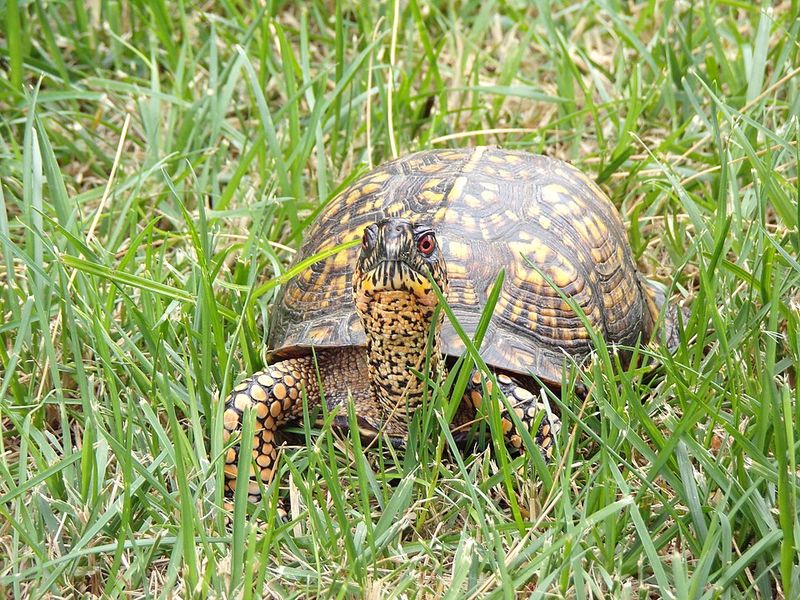
Image Credit: Aaron Lucas.
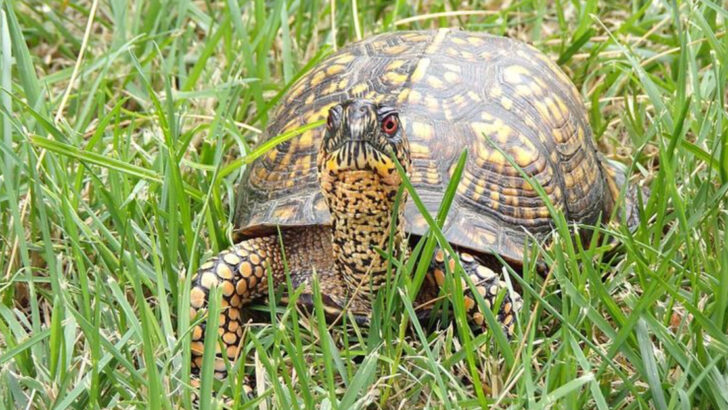
The eastern box turtle is easy to miss, which somehow makes spotting one feel even more special. On many Virginia trails, especially after rain or during active spring days, you might notice a small domed shell moving slowly across the path like a living piece of polished forest floor.
They bring a quiet, ancient pace to a world that usually rushes past.
Box turtles are terrestrial, not pond-bound, and their hinged shell lets them close up tightly when threatened. That high dome and patterned shell are beautiful up close, with earthy colors that fit perfectly into leaf litter and mud.
If you find one crossing the trail, the best moment is simply kneeling nearby and appreciating how self-contained and steady it seems, as if it carries its whole philosophy of life right on its back.
Copperhead
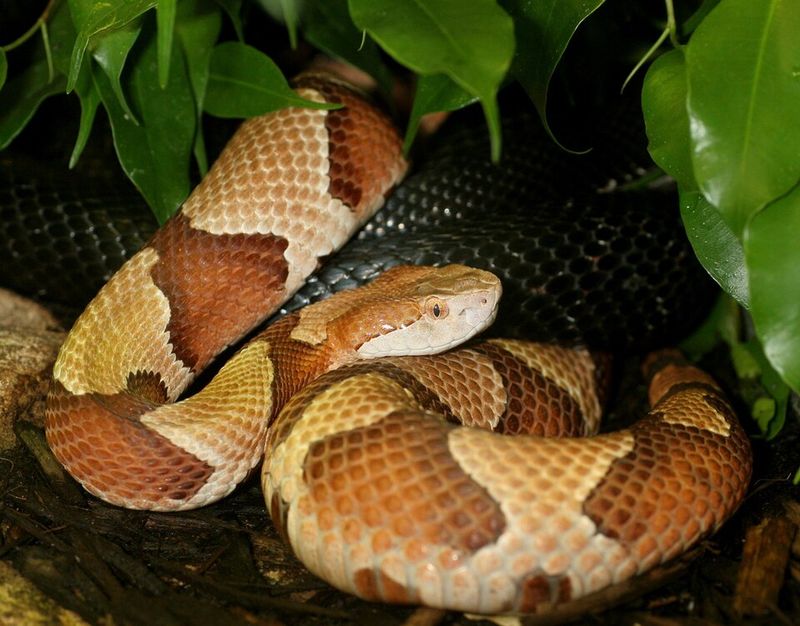
Image Credit: Tad Arensmeier.
The copperhead is one of those Virginia trail animals you hope to notice before you get too close. Its coppery body and hourglass pattern blend astonishingly well into leaf litter, rocky edges, and fallen branches, which is exactly why careful footing matters on warm, wooded trails.
A still copperhead can look almost unreal once you finally pick out the pattern.
It is the venomous snake hikers are most likely to encounter in Virginia, especially in rocky or leafy areas during spring and fall. Despite its reputation, the real lesson here is awareness rather than panic, because most bites happen when people do not see the snake or try to interact with it.
If you give a copperhead room and respect, the encounter becomes less about fear and more about just how perfectly some animals are built to disappear.
Black Rat Snake
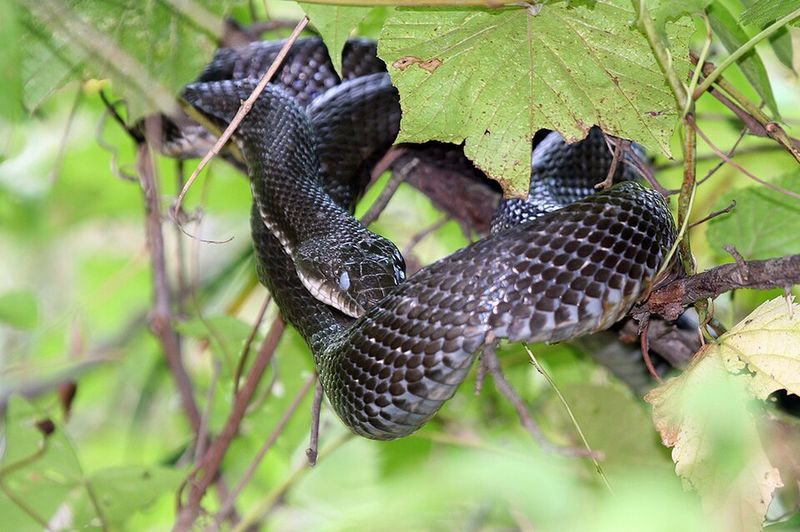
Image Credit: https://www.flickr.com/people/sherseydc/.
A black rat snake can definitely make you do a double take on a Virginia hike. These long, dark snakes are excellent climbers, so you may see one stretched along a stone wall, crossing the trail, or draped over a low branch like it owns the place.
Their size alone can surprise hikers who are not expecting such a large snake in the woods.
The good news is that black rat snakes are non-venomous and usually shy, even if they sometimes flatten their heads or kink their bodies when stressed. They help control rodent populations and are far more useful than threatening, despite the intimidating first impression.
I actually think they are one of the coolest reptile sightings on a trail, because once the initial shock passes, you start noticing how sleek, calm, and surprisingly graceful they really are.
Pileated Woodpecker
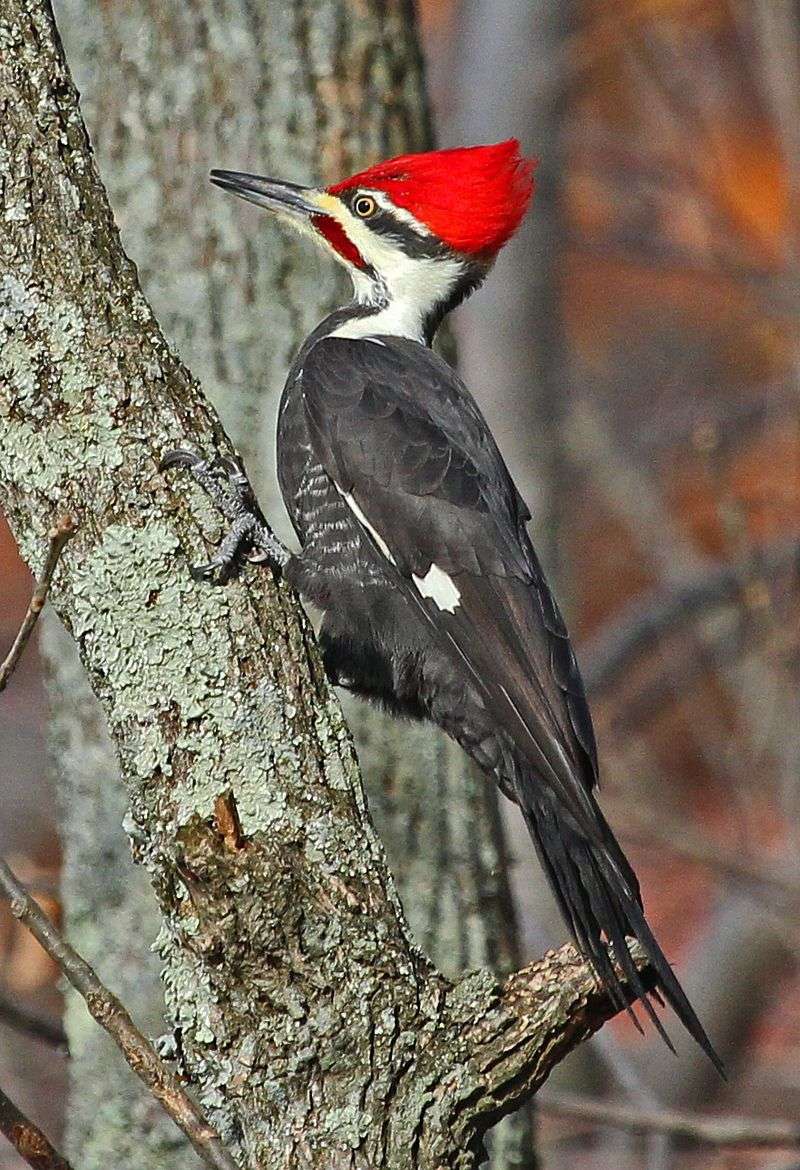
Image Credit: Judy Gallagher.
You often hear a pileated woodpecker long before you ever see it. The loud drumming can echo through a Virginia forest like someone hammering on hollow wood, and its wild, laughing call carries even farther.
Then suddenly the bird appears, large and unmistakable, with a bold red crest that makes it look almost too dramatic to be real.
These crow-sized woodpeckers favor bigger trees, especially dead or dying ones where they chisel into wood for carpenter ants and other insects. If you find fresh wood chips scattered below a trunk, it is worth looking up and waiting a minute.
Watching one work is mesmerizing, because every strike feels powerful and deliberate, and the whole bird seems built for noise, motion, and the kind of forest theater you usually only get if you are paying close attention.
Virginia Opossum
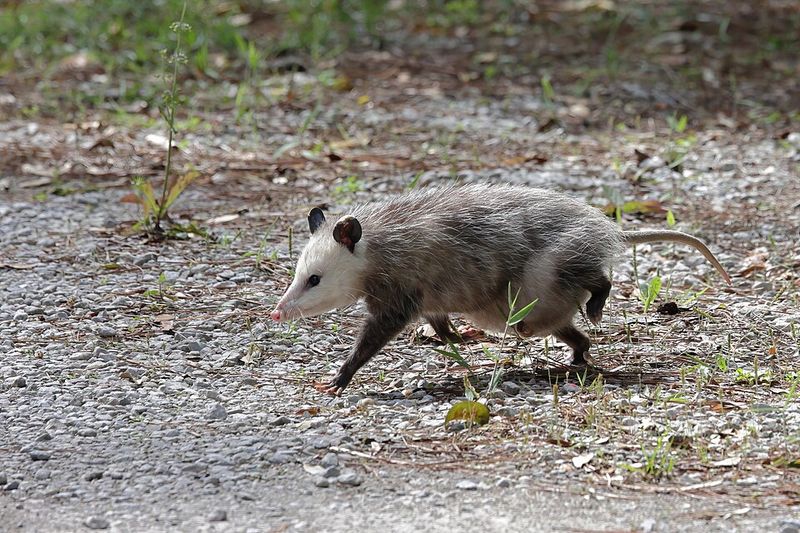
Image Credit: Lauren McLaurin.
The Virginia opossum looks like it was assembled from leftover woodland parts, and I mean that affectionately. If you catch one near a trail at dawn or dusk, you will notice the pointed white face, bare tail, and slow, deliberate walk that makes it seem completely unimpressed by your presence.
It is one of the most unusual mammals you are likely to see in Virginia.
As North America’s only native marsupial, the opossum already has built-in trail bragging rights, but its behavior is just as interesting. It is mostly nocturnal, often sticks near wooded areas and streams, and famously
Groundhog
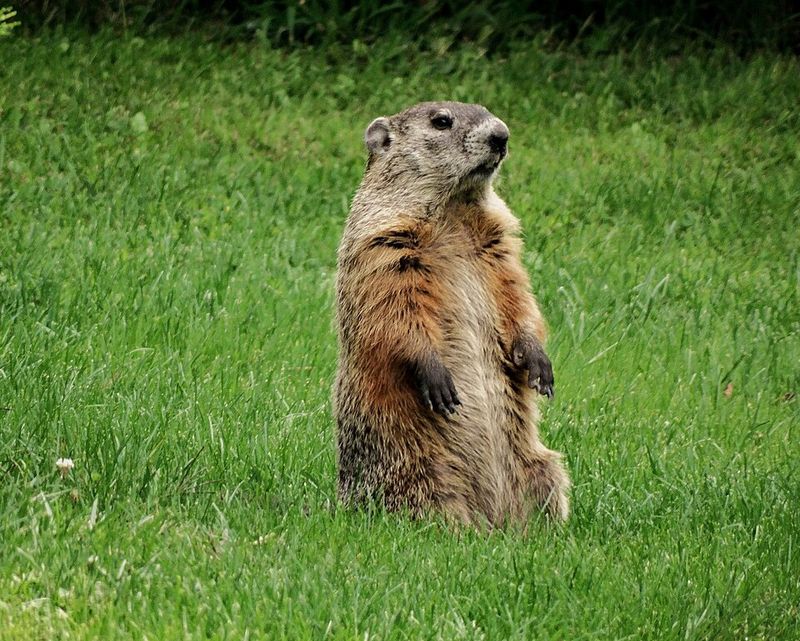
Image Credit: LadyCamera.
Groundhogs are classic trail-edge animals, especially where a Virginia path skirts open meadows, fields, or sunny clearings. The usual sighting is wonderfully specific: a chunky animal standing straight up on its hind legs, scanning for danger like a tiny, overcautious park ranger.
Once it notices you, it often drops and hustles back toward its burrow.
Also called woodchucks, groundhogs are heavy-bodied rodents with complex underground homes that can include several entrances and chambers. They stay active through the warmer months before hibernating in the colder part of the year.
What makes them fun to watch is that they somehow combine caution with total visibility, because once you learn the habitat, you start spotting them exactly where the forest gives way to open ground and the sun hits hardest.
Barred Owl
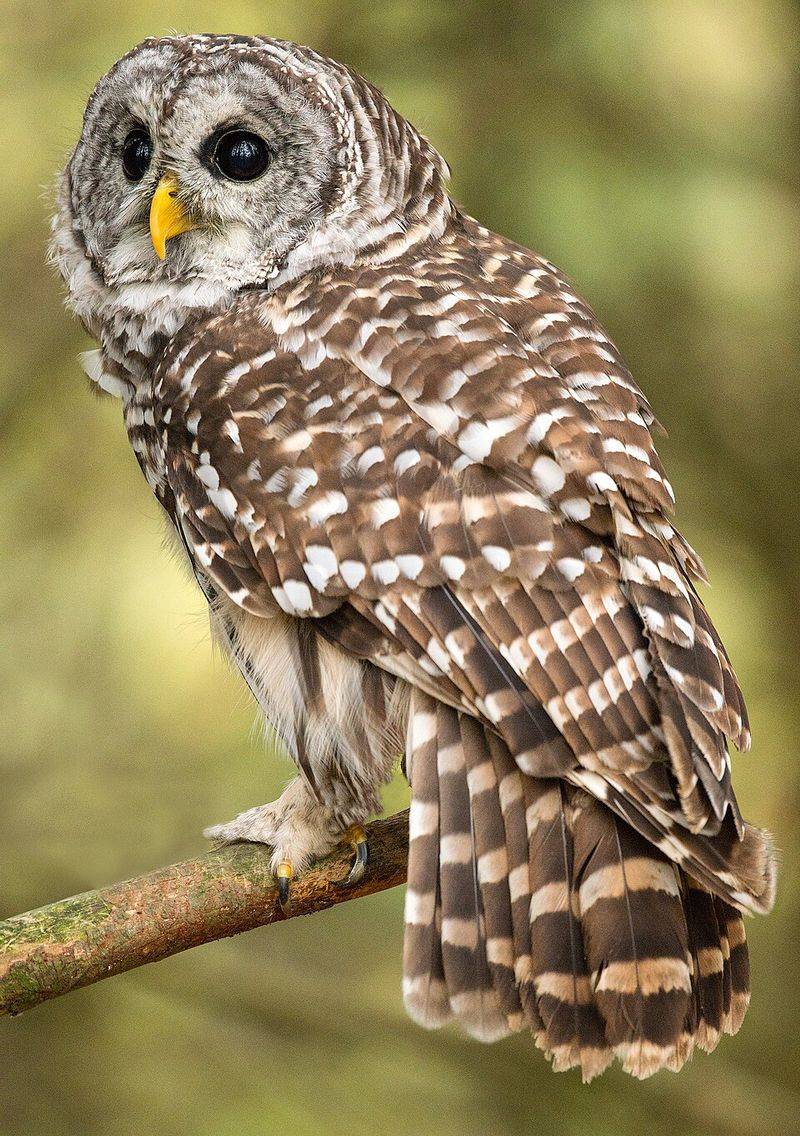
Image Credit: Peter K Burian.
Even if you never spot a barred owl right away, you might hear one before you see it. That famous “who cooks for you” call carries through Virginia woods with a spooky, almost playful echo that makes any trail feel wilder.
When one is roosting above the path, it can seem surprisingly calm, watching hikers with those dark, thoughtful eyes.
They blend into tree bark so well that you can walk past one without noticing until it moves. That sudden glimpse feels magical, like the forest decided to reveal a secret.
If you hike near mature woods or streams, this is bird worth listening for.
Red-Backed Salamander
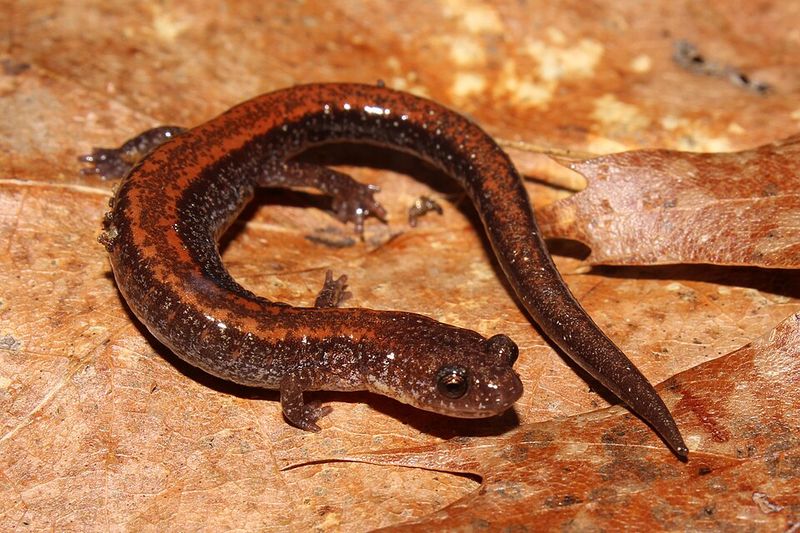
Image Credit: Alex Karasoulos.
The red-backed salamander is proof that some of the most common trail animals are also the easiest to overlook. In Virginia’s moist forests, this small salamander lives beneath damp logs, rocks, and thick leaf litter, quietly occupying the cool hidden layer below your boots.
You are far more likely to pass hundreds of them than to notice even one.
If you carefully lift a wet log or rock and put it back exactly as you found it, there is a decent chance you will meet one. Its slim body and reddish stripe can look jewel-like against dark soil and moss.
I love that this tiny amphibian is considered one of the most abundant vertebrates in eastern forests, because it reminds you that the real drama of a trail is not always in the obvious sightings, but in the miniature world just underneath.