
Georgia’s wild dating scene is far stranger than most people imagine. Out in swamps, forests, ponds, and coastal waters, animals flirt with booming calls, risky acrobatics, flashing lights, and even outright deception.
Some of these rituals look romantic, some look ridiculous, and a few feel like nature crossed with performance art. Once you see how these creatures win mates, you may never look at a quiet Georgia evening the same way again.
American Alligator
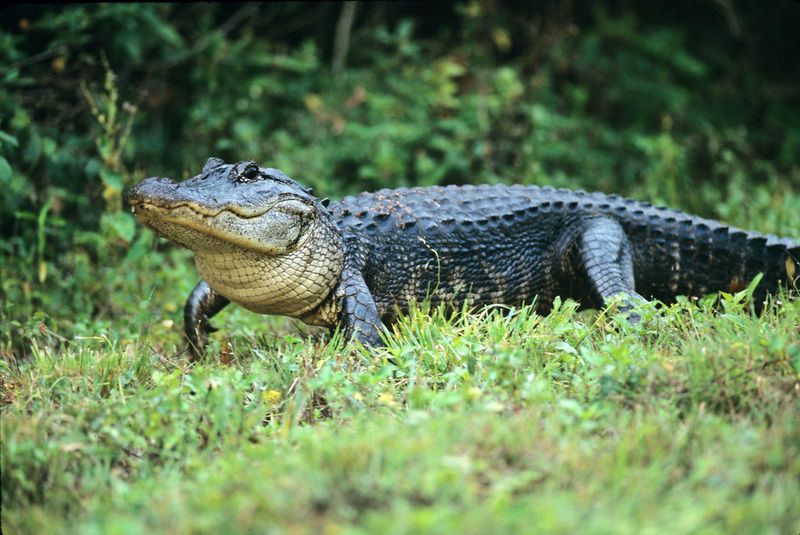
Image Credit: U.S. Department of Agriculture
If you ever want proof that romance in Georgia can look downright prehistoric, the American alligator delivers. During spring, a male does not just float around hoping to be noticed.
He bellows so deeply that the sound includes infrasonic vibrations, and the water over his back starts quivering in what people call the water dance.
That rippling surface is not just for show, even though it looks like a swamp magic trick. It tells nearby females that this male is powerful, and it warns competing males to think twice before moving closer.
Researchers also note that the frequency of the bellow can hint at body size, which means rivals may size each other up before a fight ever begins.
I love how efficient this is. In one booming display, he turns the whole pond into a speaker, a billboard, and a threat display.
For you, it is a reminder that even still water in Georgia might be hiding a very loud love song.
American Woodcock
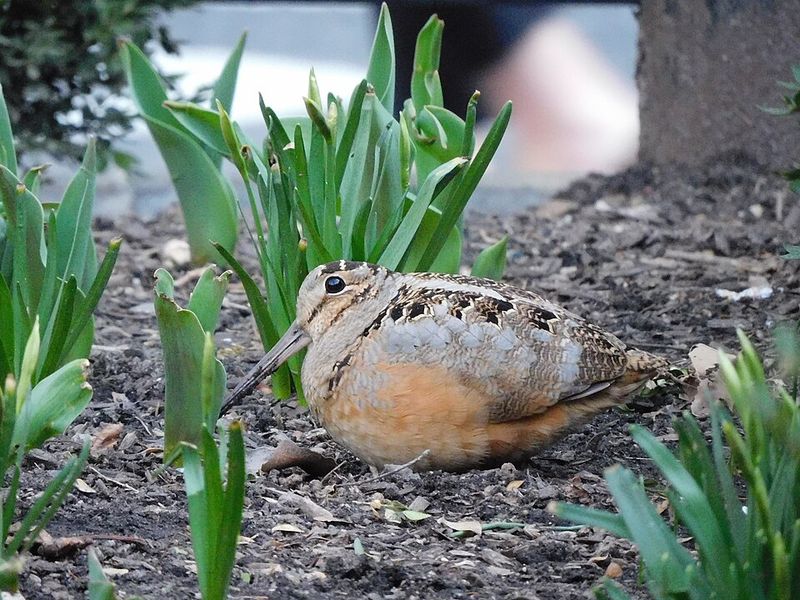
Image Credit: Rachel Casiano.
The American woodcock courts like a tiny bird that desperately wanted to become an airshow pilot. At dusk in Georgia fields and forest edges, the male starts on the ground with a nasal peent call that sounds almost comically unimpressive.
Then, without much warning, he launches into the air and turns the whole routine theatrical.
He spirals upward, sometimes reaching roughly 200 to 300 feet, while specially shaped wing feathers create a twittering sound as he flies. Once high enough, he zigzags back down in a dramatic descent, often landing near where he began.
All of that effort is designed to impress a female who may be watching from below, judging whether his performance is worth her attention.
I find the contrast amazing. On the ground he seems plain, even awkward, but in the air he becomes pure spectacle.
If you are walking Georgia’s open edges at dusk, you might be hearing one of the state’s strangest serenades overhead.
Fireflies
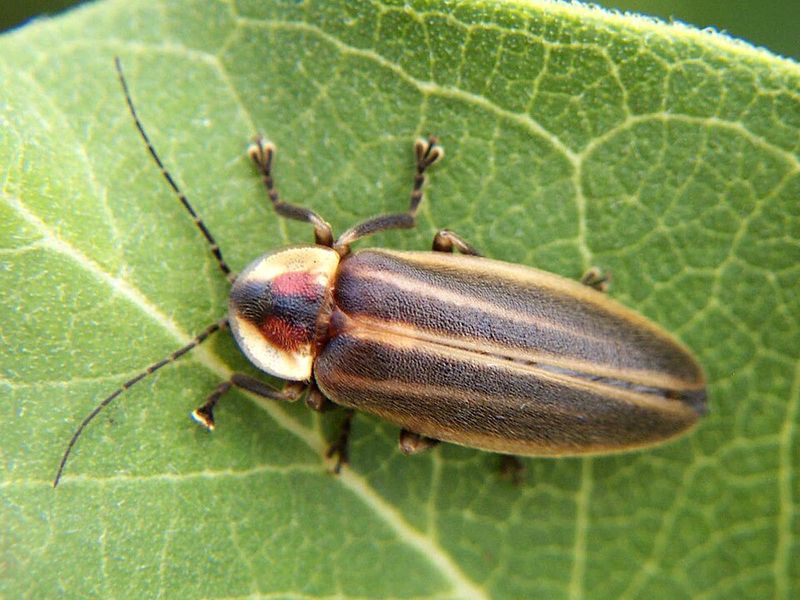
Image Credit: Bruce Marlin.
Fireflies make Georgia summer nights feel romantic, but their courtship can take a sharp turn into trickery. Most species use species specific flash patterns to find the right mate, sending tiny glowing signals through the dark like airborne Morse code.
To you, it looks peaceful and dreamy, but some females are running a much darker game.
Females in the genus Photuris can mimic the flash codes of other firefly species, especially males expecting a willing partner. The fooled male approaches, thinking he has found romance, and instead gets ambushed and eaten.
This behavior is not random cruelty either, because the predatory female can gain defensive chemicals from her prey and pass protection along to her eggs.
That means the light show is part love song, part heist, and part survival strategy. I cannot think of many courtship stories stranger than this one.
In Georgia, even the prettiest blinking signal in the yard might be bait with teeth attached.
Green Anole
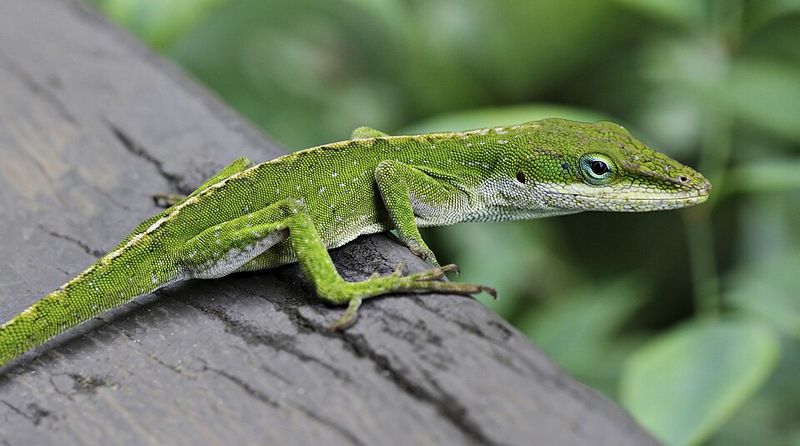
Image Credit: Paul Hirst (Phirst).
The green anole turns courtship into a tiny flexing contest that is impossible to ignore once you know what to watch for. Perched on branches, shrubs, or fence posts across Georgia, the male suddenly extends a bright pink dewlap from his throat.
Then he adds rapid head bobs and push-up-like motions, as if he is pitching himself with equal parts confidence and urgency.
This display is aimed at females, but it also doubles as a warning to rival males. The message is simple: look at my color, notice my stamina, and back off if you cannot compete.
During breeding season these motions become more frequent, and because anoles often choose visible perches, the whole routine feels a little like a neighborhood talent show.
I like that this ritual is both flashy and practical. The male uses color and movement at once, making sure he is seen from a distance.
If you slow down in a Georgia yard, you may catch one mid performance, doing reptile pushups for love.
Spotted Salamander
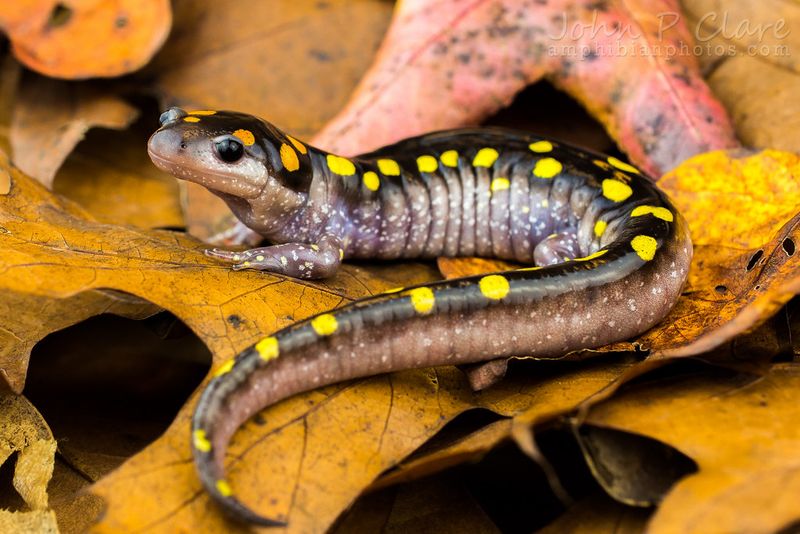
Image Credit: John P Clare
Spotted salamanders make courtship feel secretive, seasonal, and wonderfully strange. On the first warm rainy nights of late winter, they emerge in numbers and head toward woodland ponds in what naturalists often call a breeding congress.
If you were lucky enough to witness it, you would see a quiet migration that feels almost ceremonial.
Males usually arrive first and gather in the water before beginning a subtle underwater dance. Instead of mating through direct physical transfer, males deposit tiny packets of sperm called spermatophores on the pond bottom or attached surfaces.
Females then pick them up with the cloaca, allowing internal fertilization without direct sexual contact during the transfer itself.
That detail is what makes this ritual so memorable to me. It is intimate, but oddly hands off, almost like leaving a carefully wrapped gift on the floor and hoping the right recipient accepts it.
Georgia’s rainy woods may look still, yet beneath the pond surface an extraordinary matchmaking system is unfolding.
Bald Eagle
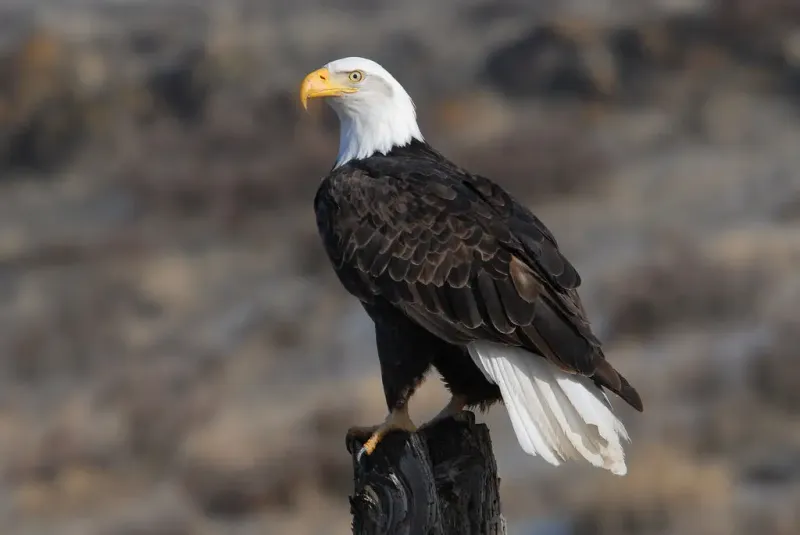
Image Credit: USFWSmidwest.
Bald eagles already look dramatic before courtship begins, so it feels almost unfair that their romantic display is this intense. High over Georgia lakes and rivers, a pair may soar upward, lock talons, and tumble in a spinning free fall.
It is called the cartwheel display, and it looks less like flirting than a dare taken far too seriously.
They drop together in a controlled but hazardous spiral, separating only before they would strike the ground or water below. The behavior is a normal part of courtship, not an accident, and it likely helps reinforce the bond between the birds while showcasing agility and trust.
Few animal displays communicate commitment so boldly, because both birds are literally risking a terrifying plunge together.
I think that is what makes it unforgettable. Plenty of species sing, dance, or flash colors, but these eagles turn gravity into part of the proposal.
If you see them over Georgia, you are not just watching birds fly. You are watching a relationship stress test in midair.
Ruffed Grouse
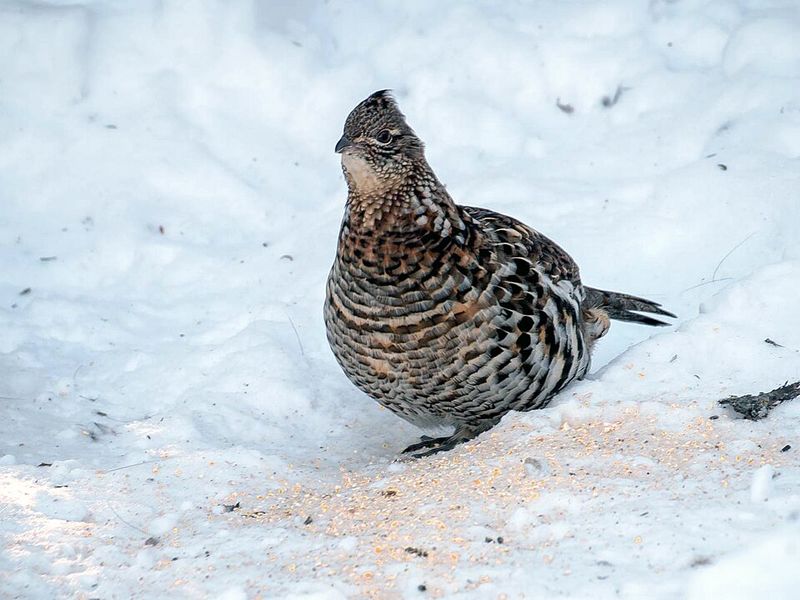
Image Credit: Per.
The ruffed grouse proves that courtship does not always need bright feathers or elegant song. In Georgia’s mountain forests, the male often climbs onto a log, stump, or boulder and begins a drumming display that sounds almost mechanical.
He beats his wings rapidly against the air, not the wood, creating a deep accelerating thump that can be felt as much as heard.
That low booming pulse carries through the forest in spring, advertising his presence to females and staking out space against rivals. The action creates a pressure effect as air rushes inward, which is why the sound feels richer and stranger than ordinary wingbeats.
To someone unfamiliar with it, the noise can seem like a distant engine starting up somewhere in the trees.
I love how understated this performance looks from a distance. There is no flashy leap or colorful banner, just a grounded bird turning empty air into percussion.
If you hike in the Georgia mountains during spring, the forest floor itself can seem to vibrate with his odd little love drum.
Praying Mantis
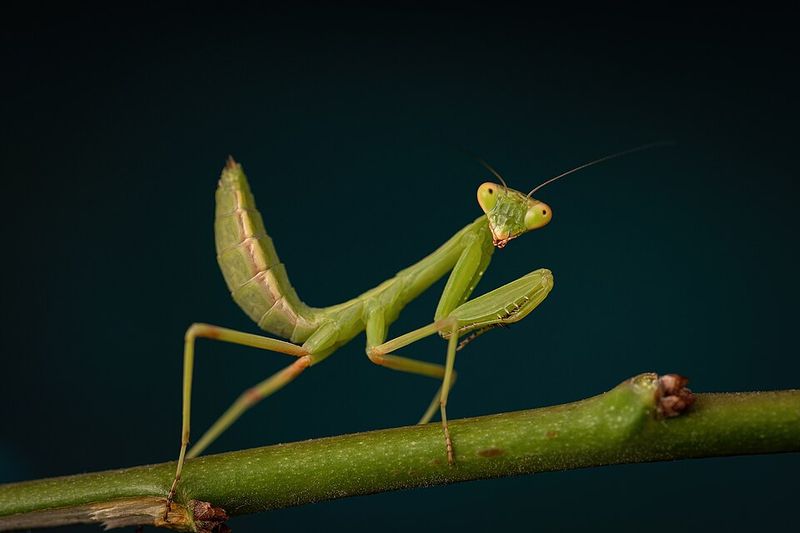
Image Credit: Mihai C. Popa.
Praying mantis courtship is the kind of story that makes every male’s romantic confidence seem wildly misplaced. The male approaches a much larger female carefully, because she is not just a potential mate.
In a notable share of natural encounters, roughly 13 to 28 percent, she may bite off his head during or after mating and eat him.
As brutal as that sounds, the behavior can actually help the female by providing nutrients that support egg production. Even stranger, mating may continue after decapitation because the male’s nervous system can still drive the physical process.
Nature does not pause for dignity here, and that is exactly why this ritual has become so infamous.
What fascinates me is that the risk does not stop males from trying. The payoff is reproduction, and evolution has apparently decided the danger is still worth it.
If you picture courtship as flowers and moonlight, Georgia’s mantises offer a sharp correction. Sometimes romance is really just a high stakes biological gamble with terrible odds.
Wolf Spider
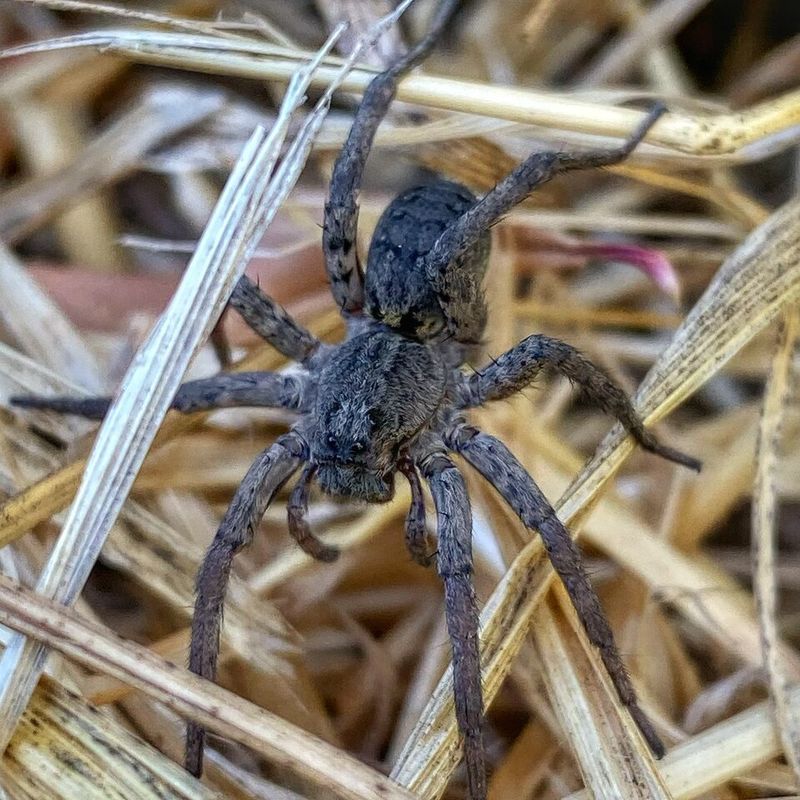
Image Credit: Succulent54.
Wolf spiders do not rely on webs or glowing colors to get noticed. Instead, the male performs a ground level concert, drumming and waving specialized front legs in a display that feels part percussion and part semaphore.
To you it might look like a tiny creature conducting invisible music, but the female is reading vibrations through the ground with remarkable sensitivity.
These movements are not random. The rhythm, complexity, and precision can help a female judge whether the male is an acceptable partner, and studies suggest females often prefer more elaborate performances.
Because the communication travels through surfaces, every patch of leaf litter, soil, or sand becomes part of the stage.
I find that wonderfully weird, because it means the romance is happening partly in a sensory world most people never notice. There is no web, no singing branch, no obvious spotlight.
In Georgia, a male wolf spider can win attention by turning the earth itself into a message board and tapping out his credentials one vibration at a time.
Wild Turkey
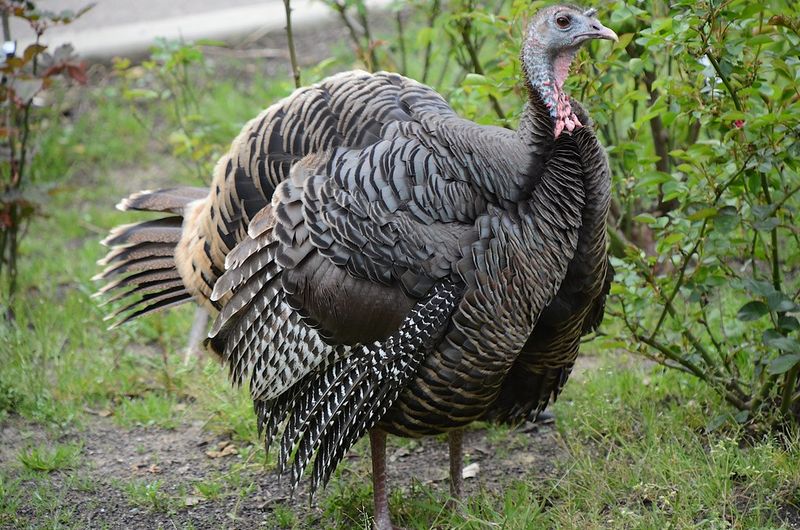
Image Credit: Russell Mondy
Wild turkey courtship is impossible to call subtle, and honestly that is part of the charm. A male in breeding mode puffs up, fans his tail, drops his wings so the tips drag the ground, and struts like he owns every inch of the field.
Then he adds gobbling, along with a swollen snood and brightly colored head caruncles that turn his face into a living billboard.
The whole performance is meant to impress hens, but it also serves as a dominance display toward other males. Size, posture, sound, and color are all working together, creating a full body sales pitch that is hard to ignore.
Seen up close, the strut feels almost theatrical, as if the bird has rehearsed every turn and shuffle for maximum effect.
I think that is why turkeys fascinate people so much once they stop laughing at them. Beneath the comic swagger is a highly tuned communication system.
If you hear gobbling echo through a Georgia morning, there is a good chance some feathered showman nearby is putting on the boldest courtship parade in the woods.
West Indian Manatee
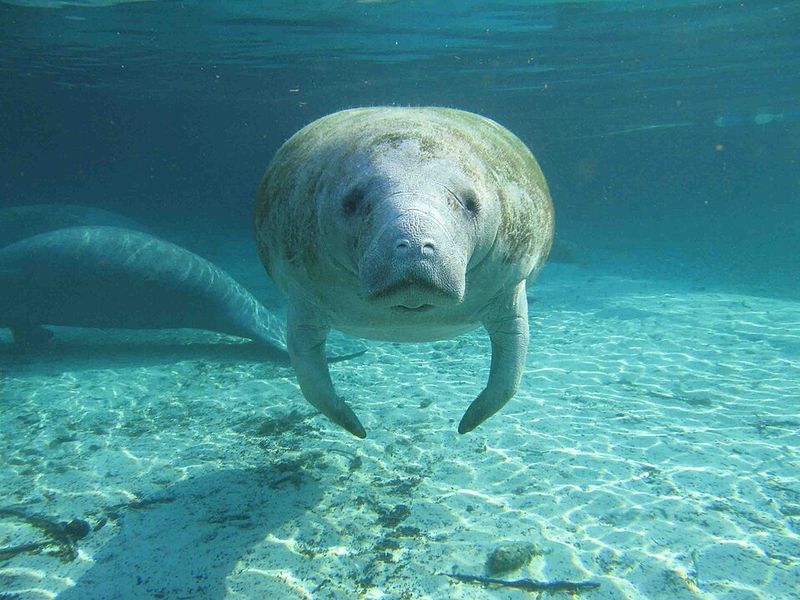
Image Credit: U.S. Geological Survey.
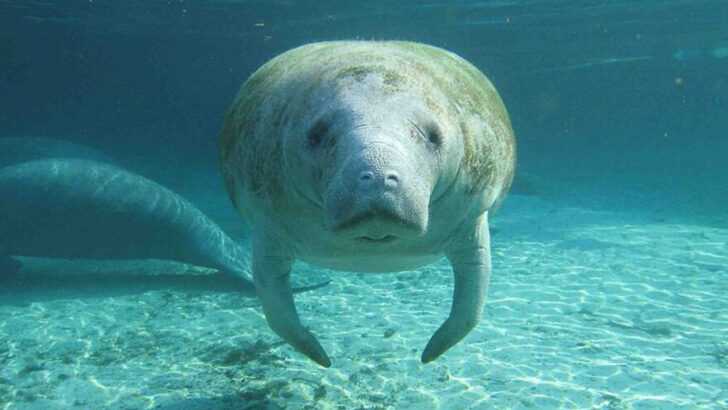
West Indian manatee courtship looks less like a sweet pair bonding moment and more like a slow moving aquatic traffic jam. In Georgia’s coastal waters, a receptive female may be followed by a mating herd made up of multiple males.
These males push, trail, nudge, and jostle around her for days, and sometimes even weeks, as she moves through the water.
Some herds can be surprisingly large, with many males competing for the chance to mate. The female may mate with several of them before the herd finally breaks up, which means the process is prolonged, physically crowded, and far from private.
For an animal with such a gentle reputation, the social intensity of this ritual can come as a real surprise.
I think the oddest part is the patience involved. There is no quick serenade or flashy stunt, just extended pursuit and persistence on a marine timescale.
If you imagine manatees as sleepy coastal drifters, Georgia’s mating herds reveal a much more complicated and competitive side to their underwater love lives.
Eastern Box Turtle
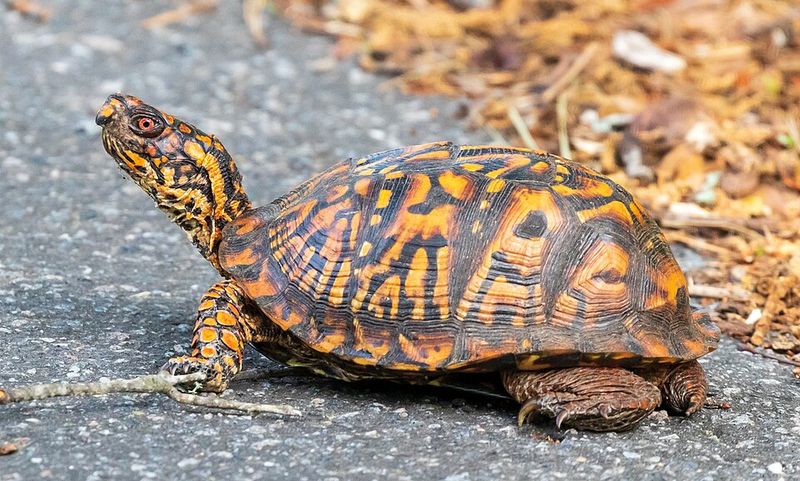
Image Credit: (c) Joshua Liverman.
Eastern box turtle courtship moves at exactly the speed you would expect, but the details make it wonderfully odd. A male may spend hours circling a female, bobbing his head and gently biting at the edges of her shell or even at her legs.
Nothing about it is rushed, and that slow persistence gives the whole encounter a strangely deliberate feel.
The male’s anatomy helps too, because his concave plastron can make mounting the female’s domed shell easier once she is receptive. Courtship and mating can happen from spring into summer and even later, so there is no single narrow window for all this shell based negotiation.
From a human perspective it can look almost polite, until the nipping starts and reminds you that reptile romance has its own rules.
I like this example because it proves bizarre behavior does not need speed or spectacle. Sometimes strangeness arrives in slow motion.
If you spot box turtles in Georgia, you might be watching a quiet, hours long conversation told through circling, head bobs, and gentle but very persistent bites.