
Louisiana is full of animals that seem to know magic tricks, especially when it comes to vanishing in plain sight. In swamps, forests, marshes, and coastal flats, color and posture can turn a living creature into part of the landscape.
Some hide in muddy water, others become bark, leaves, or reeds with almost unfair precision. If you think you are good at spotting wildlife, these ten masters of disguise might prove otherwise.
American Alligator
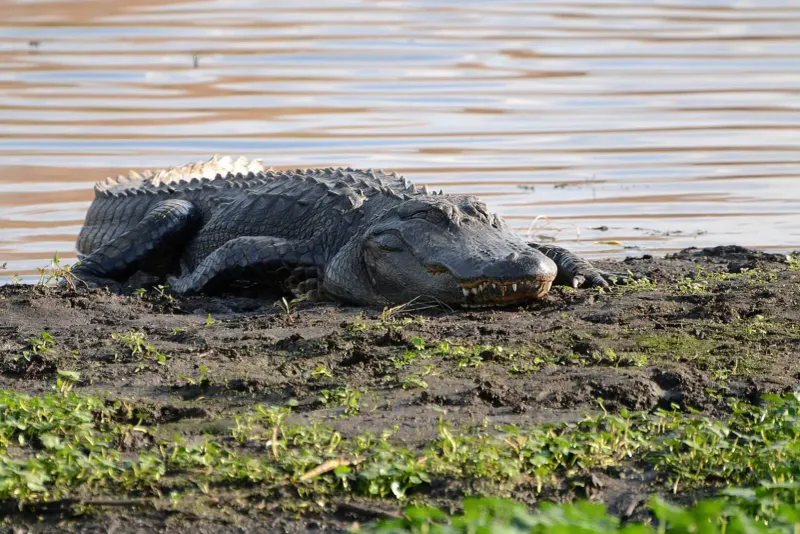
Image Credit: Geoff Gallice.
If you have ever scanned a Louisiana bayou and felt watched, there is a good chance an American alligator was already studying you. This reptile practically melts into dark water, where its rough charcoal skin mirrors mud, floating debris, and shadow.
Often, only the eyes and nostrils break the surface, which makes the whole scene feel a little eerie.
That camouflage is not just dramatic – it is useful. An alligator can wait with incredible patience, letting fish, birds, or careless mammals come closer without announcing its presence.
In swamps thick with cypress roots, tannin stained water, and patches of marsh grass, its shape becomes part of the scenery.
What I find most impressive is how little movement it needs to disappear. You could look straight at one and still miss it if the light is low and the water is still.
In Louisiana, stealth is part survival skill, part hunting strategy, and the alligator has mastered both better than almost anything else.
Barred Owl
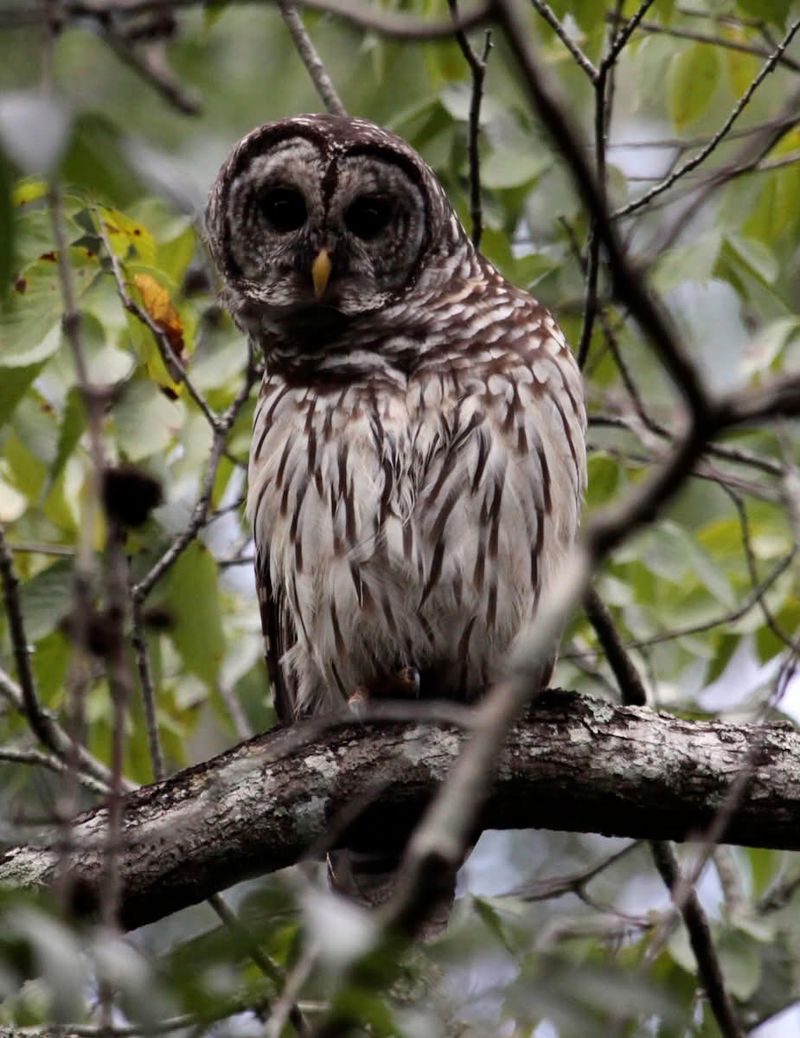
Image Credit: Robert L Curtis
The barred owl is one of those birds that can make you question your own eyesight. In Louisiana hardwood forests, its brown and white barring matches textured bark so closely that it can sit a few feet away and still go unnoticed.
During the day, when it rests quietly against a trunk, it looks less like a bird and more like part of the tree.
You usually hear this owl before you ever see it, which adds to the mystery. Its rounded body, dark eyes, and layered feathers break up any obvious outline, especially in filtered light where branches cast moving shadows.
That disguise helps it stay hidden from mobbing songbirds and gives it a peaceful place to wait until evening.
I love how the barred owl turns stillness into camouflage. It does not need flashy colors or strange tricks, just perfect feather patterning and patience.
When you finally spot one, it feels like the forest revealed a secret it had been keeping from you all along.
Eastern Screech-Owl
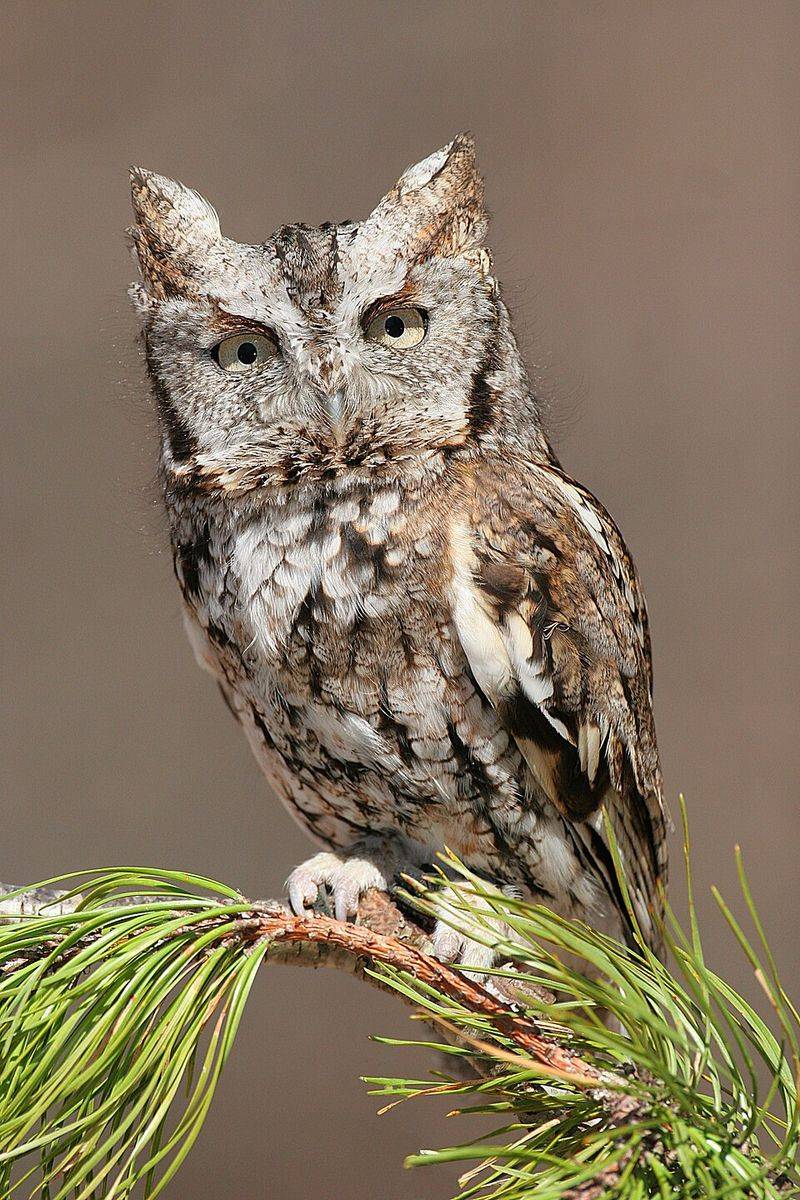
Image Credit: Wolfgang Wander.
The eastern screech-owl may be small, but it disappears with the confidence of a much larger magician. Its plumage comes in gray or reddish forms, and both look uncannily like weathered bark on old Louisiana trees.
If one presses itself against a trunk beside a hollow, you can stare right past it without realizing a bird is there.
That camouflage works because the owl is all texture and pattern. Fine streaks, mottling, and soft feather edges blur its shape, while its upright posture turns it into what seems like a broken branch stub.
In wooded neighborhoods, swamp edges, and quiet forests, it hides so well that its trilling calls often give it away before your eyes do.
What makes this species unforgettable is how ordinary its hiding place looks. There is no dramatic nest platform or open perch inviting attention.
You are just looking at a tree, until suddenly the tree has eyes. In Louisiana, that kind of surprise feels perfectly on brand for the wild places just beyond the trail.
Southern Flounder
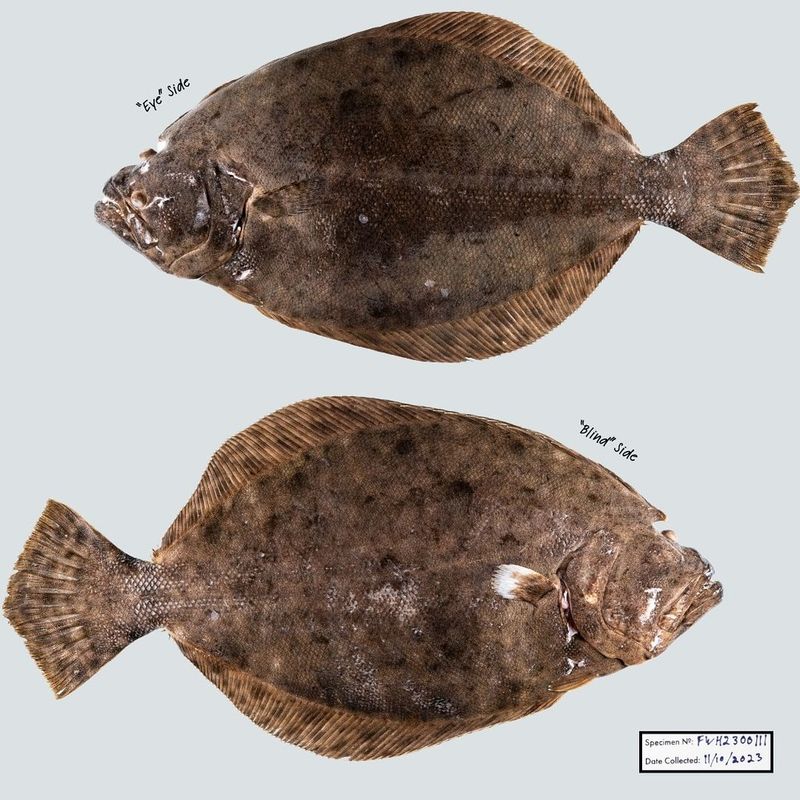
Image Credit: FWC Fish and Wildlife Research Institute.
The southern flounder is the kind of animal that seems designed by someone who loved ambush scenes. Lying flat on sandy or muddy bottoms, it blends so completely with the seabed that you might notice it only when it moves.
Its olive brown body, scattered spots, and low profile make it look like a patch of bottom rather than a fish waiting to strike.
Both eyes sit on the upper side of its head, which lets it stay pressed against the substrate while still watching the water above. It can also adjust its coloration through pigment cells, improving the match with mud, sand, or shell speckled flats.
In Louisiana estuaries, bays, and channels, that combination turns the flounder into an expert at vanishing where everything else seems exposed.
I think the strangest part is how calm its camouflage feels. There is no frantic darting for cover, just a fish becoming background.
Sometimes it even buries itself slightly, leaving the outline almost impossible to trace until prey wanders within striking distance.
Green Anole
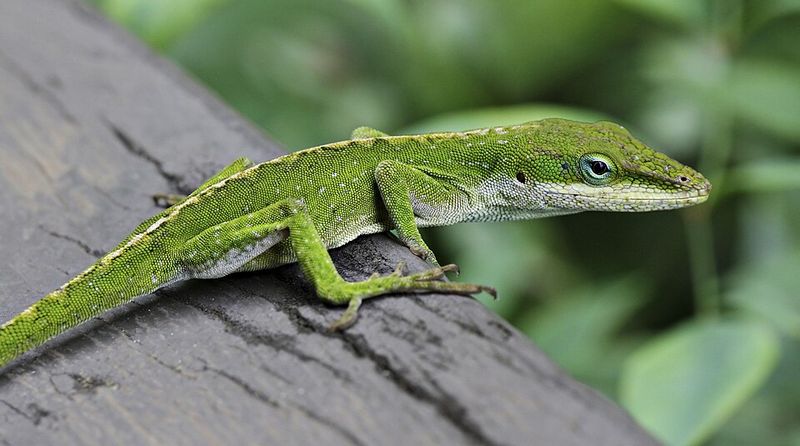
Image Credit: Paul Hirst (Phirst).
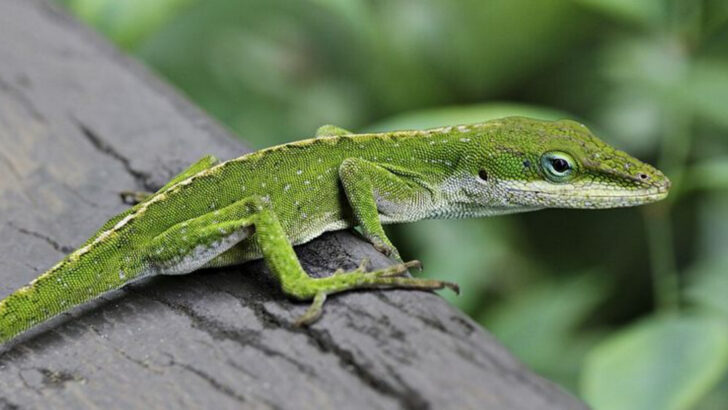
The green anole makes camouflage feel lively and a little theatrical. Louisiana’s state reptile is often a bright leaf green, which helps it vanish among vines, shrubs, and low tree branches with almost unfair ease.
Then, under different conditions, it can shift toward brownish tones, making the same little lizard seem to belong to bark instead of leaves.
That color change is influenced by temperature, humidity, mood, and overall condition, so it is not a simple costume trick. Still, when you are trying to spot one in a tangle of greenery, the effect feels personal.
Its slender body, pointed face, and habit of freezing in place help even more, because stillness can hide just as effectively as color.
I always think anoles reward careful attention. One moment a branch looks empty, and the next you notice a tiny eye tracking your movement from the exact shade of green you ignored.
In Louisiana yards, parks, and forests, they are proof that disappearing does not require size – just the right colors and timing.
Eastern Copperhead
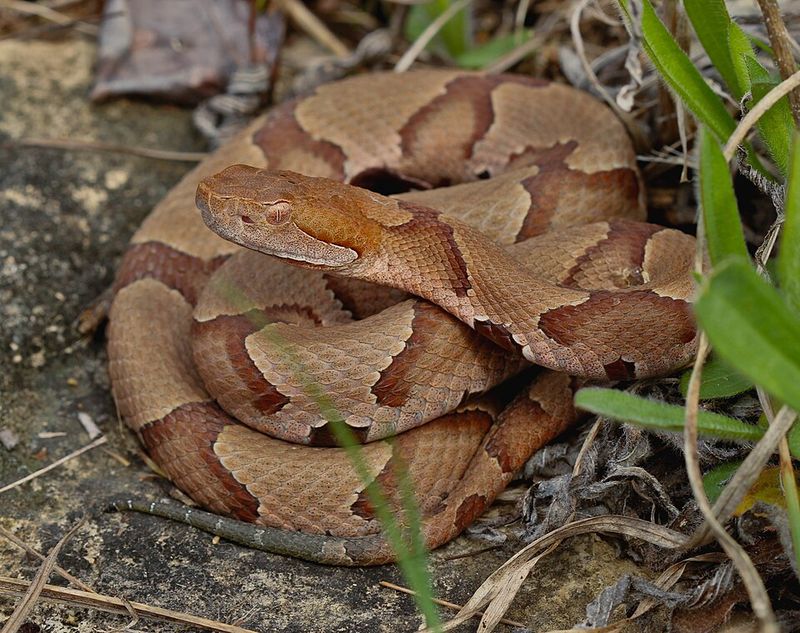
Image Credit: Peter Paplanus.
The eastern copperhead is a powerful reminder to watch where you step in Louisiana woods. Its tan to pinkish brown body carries darker hourglass bands that look remarkably like dead leaves scattered across the forest floor.
When it stays motionless, which it often does, the snake becomes so well hidden that even experienced hikers can miss it.
This camouflage is not flashy, but it is incredibly effective. Fallen leaves, pine straw, and dappled light break up the snake’s outline until the pattern reads as ordinary woodland clutter rather than a living predator.
That helps the copperhead avoid detection and also supports its ambush style, letting rodents, frogs, and other prey come dangerously close.
What stands out to me is how this snake relies on restraint. Instead of fleeing at every disturbance, it trusts the design nature gave it and simply holds still.
You may never realize one was nearby unless it shifts or the light catches its pattern just right. That quiet confidence is what makes its camouflage so impressive.
Gray Treefrog
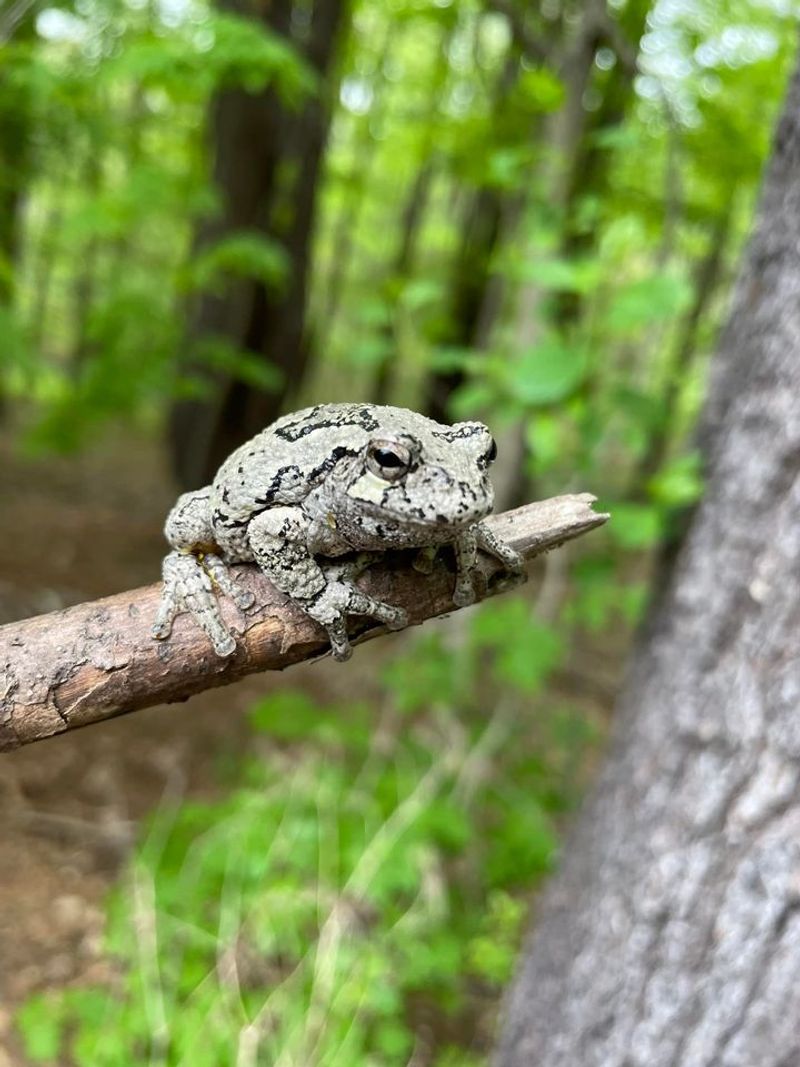
Image Credit: Randidawn.
The gray treefrog is easy to overlook until it starts calling, and that is exactly the point. Its skin can range from gray to green or brown, often matching bark, lichen, or weathered wood with impressive accuracy.
In daylight, when it rests against trunks or branches, it looks like a rough patch of texture rather than a living amphibian.
Its camouflage works on more than color alone. The skin has a mottled, slightly warty appearance that mimics the uneven surface of trees, and the frog often flattens itself close to the background.
Because it is mostly nocturnal, you are more likely to hear that musical trill at dusk than actually find the animal responsible for it.
I think that hidden by sound effect makes this species especially memorable. You know it is there, somewhere nearby, but your eyes keep losing the game.
In Louisiana’s humid woods and neighborhoods, the gray treefrog turns ordinary bark into a perfect hiding place, proving that the smallest animals can be some of the hardest to detect.
American Bittern
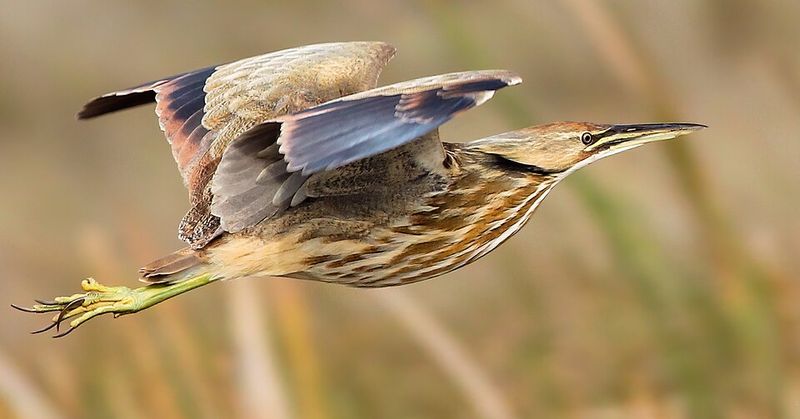
Image Credit: Gary Leavens.
The American bittern might be the ultimate disappearing act in Louisiana marshes. Its streaked brown, buff, and white plumage looks so much like cattails and reeds that the bird can seem to dissolve into the wetland around it.
If you catch one standing at the edge of dense grass, you may only notice movement before it becomes impossible to separate from the plants.
When threatened, the bittern takes camouflage a step further by freezing with its bill pointed straight upward. That posture stretches the body into the same vertical lines as surrounding stems, and it may even sway gently as if moved by wind.
Suddenly, what looked like a bird becomes just another reed in a field full of reeds.
I love how strange and elegant that strategy feels. There is no sprinting for cover, only complete commitment to becoming scenery.
In Louisiana wetlands, where light flickers across water and grasses overlap in every direction, this bird uses pattern, posture, and patience to hide in a way that feels almost theatrical.
Florida Stone Crab
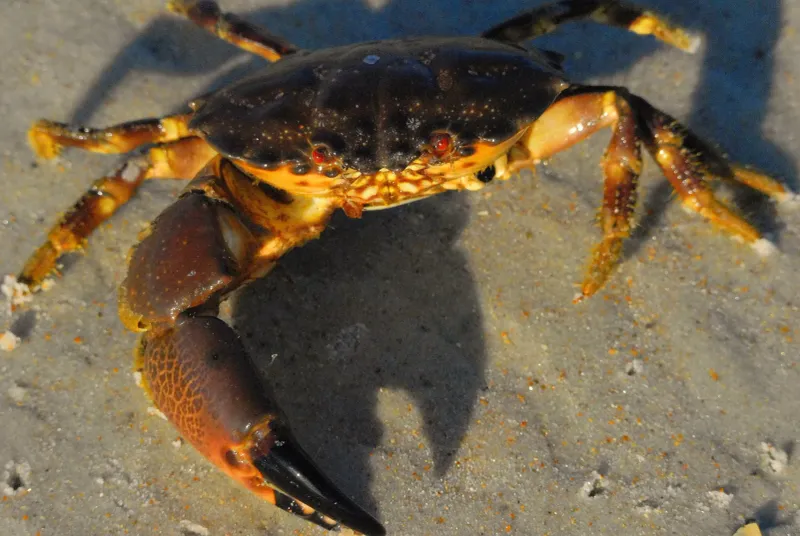
Image Credit: Andrea Westmoreland.
The Florida stone crab does not get as much attention as swamp icons or flashy birds, but its camouflage deserves respect. Along the Gulf Coast, its brownish olive shell is mottled with darker patches that blend naturally with mud, broken shells, rocks, and seagrass debris.
On a cluttered bottom, that pattern helps the crab disappear into what looks like ordinary coastal rubble.
This matters because life in shallow water can be dangerous from every direction. Fish, birds, and larger predators are always scanning for movement, so a crab that matches the seafloor gains valuable protection.
At the same time, that same disguise helps it forage more quietly for mollusks and other prey without advertising its presence.
What I enjoy about the stone crab is how tough and understated it looks. Nothing about it seems showy, yet the shell is doing careful visual work the whole time.
In Louisiana adjacent coastal habitats, where muddy and shell covered bottoms create natural visual noise, the crab takes full advantage of every speckle and shadow around it.
Virginia Opossum
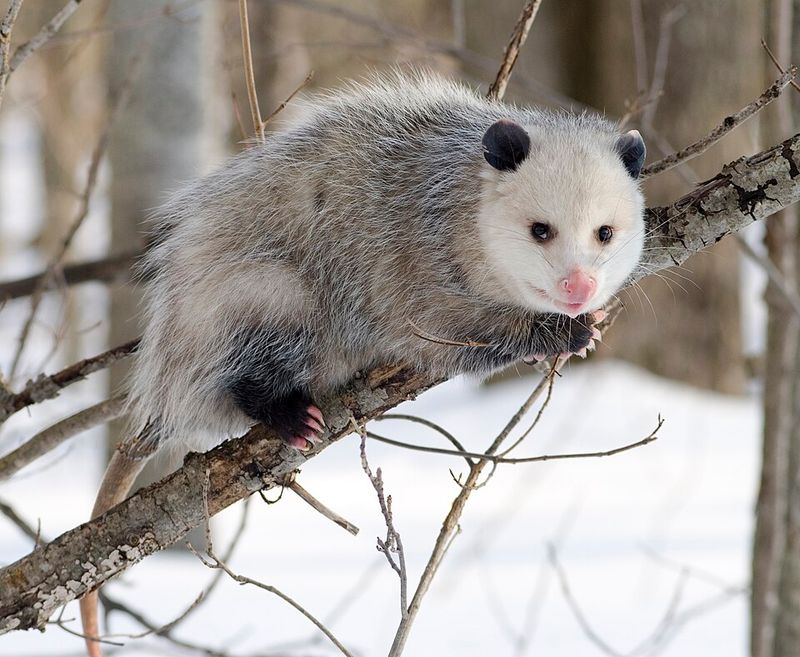
Image Credit: Cody Pope.
The Virginia opossum is not the first animal people mention when they think about camouflage, but it quietly earns a place on this list. Its grizzled gray coat blends well with nighttime shadows, brush piles, tree roots, and dim woodland edges across Louisiana.
After dark, that muted coloring can make the animal seem to fade into the background before you fully register what you saw.
Its mostly nocturnal routine strengthens the effect. By moving when light is low, the opossum lets shadow do much of the camouflage work, while its shaggy fur softens the outline of its body.
In forests, suburban yards, and fencerows, it often slips along unnoticed, hidden less by perfect pattern than by timing, texture, and the natural confusion of darkness.
I find that kind of camouflage especially relatable because it feels practical rather than flashy. The opossum is not pretending to be a leaf or a stump.
It just knows how to use dim light, messy cover, and a quiet pace to avoid attention. Sometimes disappearing is less about transformation and more about choosing the right hour.