
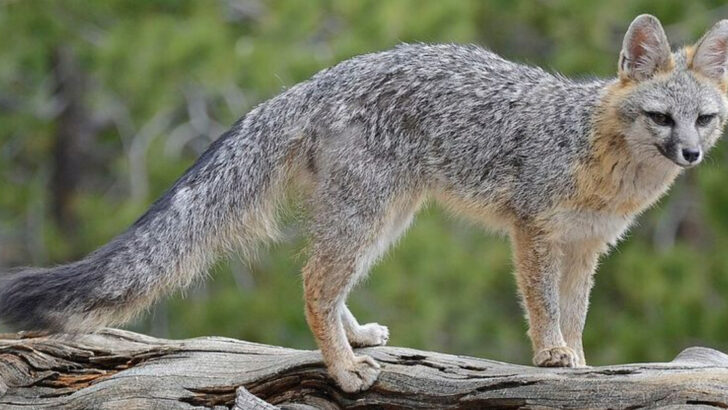
Texas changes character after sunset. The heat softens, the sounds sharpen, and a hidden cast of animals starts moving through canyons, suburbs, wetlands, and desert brush.
Some are famous, some are strangely overlooked, and all of them reveal a wilder side of the state. If you have ever wondered what is really out there after dark, these nighttime Texans are worth meeting.
Ringtail
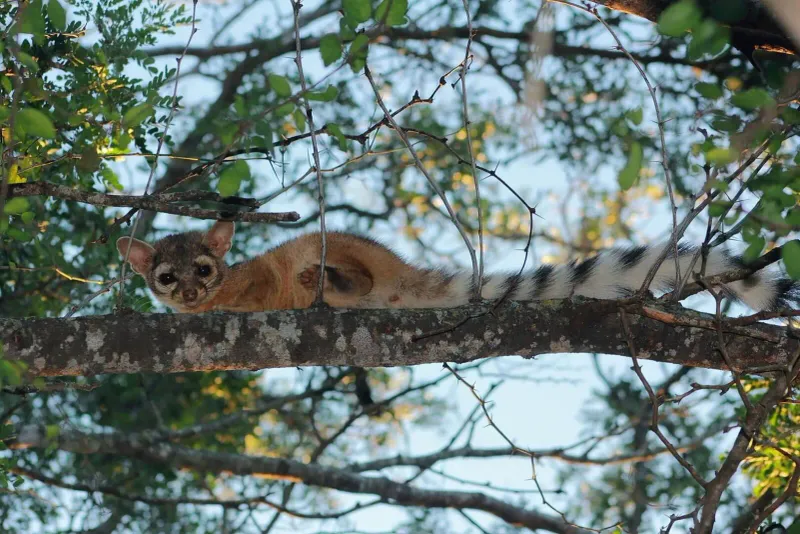
Image Credit: Juan Cruzado Cortés.
If you ever spot a ringtail at night, it can feel like you have stumbled into a secret Texas fairy tale. This agile mammal moves across rocky ledges, hollow trees, and canyon walls with almost shocking confidence, using its long black-and-white tail for balance.
It is often mislabeled as the state mammal of Texas, but that title actually belongs to Arizona, while Texas simply offers excellent ringtail country.
Ringtails belong to the raccoon family, not the cat family, even though the old nickname miner’s cat still follows them around. In places like the Edwards Plateau, Hill Country, and the Trans-Pecos, they emerge after dark to hunt insects, rodents, birds, reptiles, fruit, and whatever else the night provides.
One of their coolest tricks is rotating their hind feet so they can descend headfirst, making steep rock faces look almost easy.
Great Horned Owl
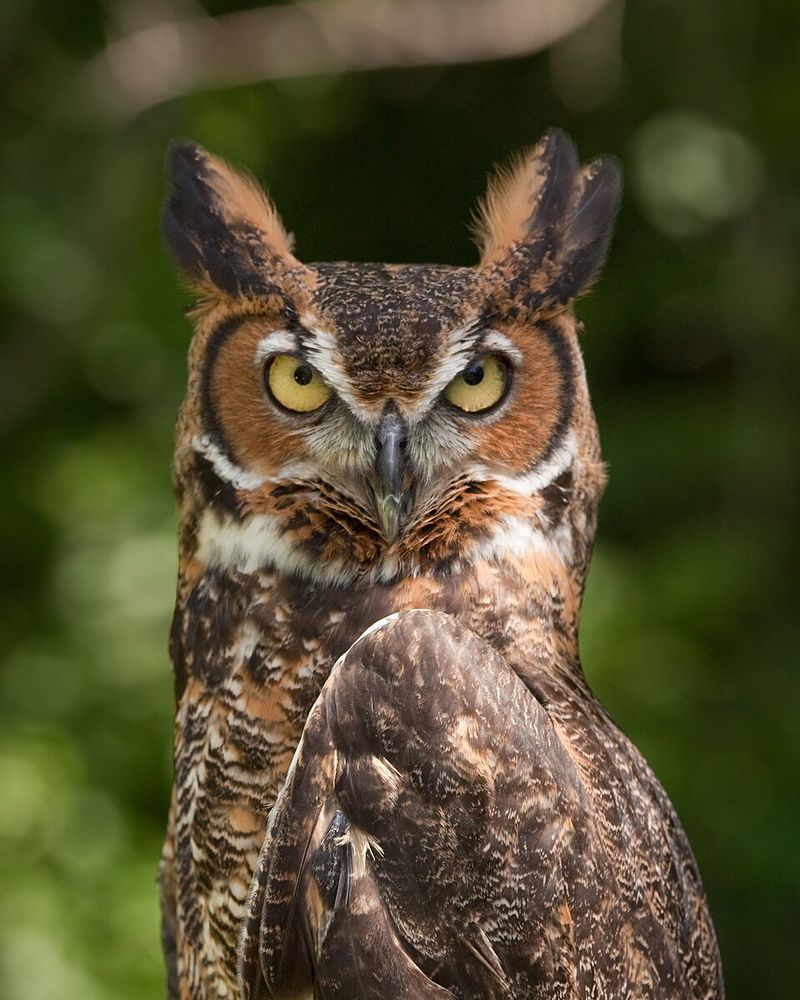
Image Credit: Greg Hume.
The great horned owl feels like the undisputed ruler of many Texas nights. With its deep stare, feathered ear tufts, and ghost-quiet flight, it patrols woodlands, ranchland, desert edges, and even suburban greenbelts with total authority.
You usually hear it before you see it, and that distant hooting can make the dark feel instantly deeper.
This owl is a powerful predator that relies on exceptional hearing, strong talons, and stealth instead of speed alone. Rabbits, rodents, snakes, and birds are all fair game, and few nighttime hunters in Texas are as versatile or as confident.
What fascinates me most is how it can appear almost motionless one second, then drop from a branch with precision so clean it barely seems real, leaving only a burst of movement and a suddenly silent patch of grass below.
Nine-Banded Armadillo
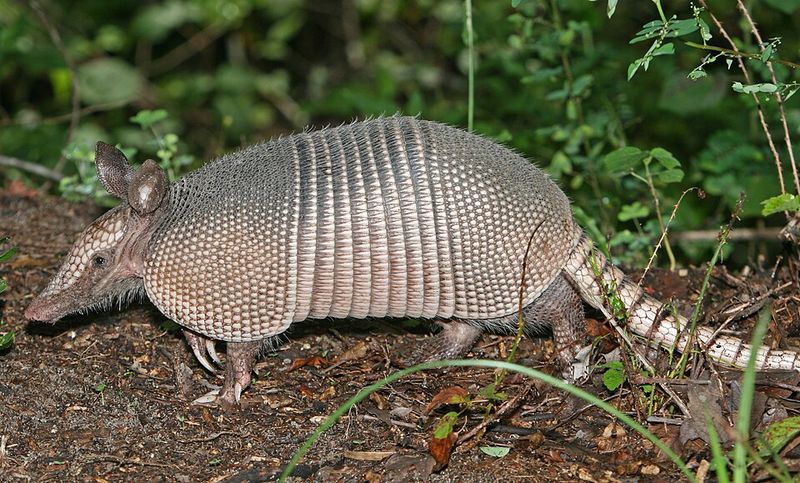
Image Credit: http://www.birdphotos.com.
The nine-banded armadillo is one of those animals that somehow looks ancient, awkward, and perfectly designed all at once. Across Texas, it often becomes most active after sunset, nosing through yards, pastures, and brushy edges with a determined shuffle that seems almost mechanical.
If you have ever heard rustling in dry leaves at night, an armadillo is a strong suspect.
Its armor gets most of the attention, but the real star is its nose. Armadillos use an excellent sense of smell to locate insects, grubs, worms, and other hidden invertebrates buried beneath the soil, then dig with surprising speed to reach them.
I like that it does not need drama to be memorable, because its whole routine is a quiet, patient excavation of the dark, turning ordinary ground into a buffet while the rest of the landscape seems asleep and still.
Raccoon
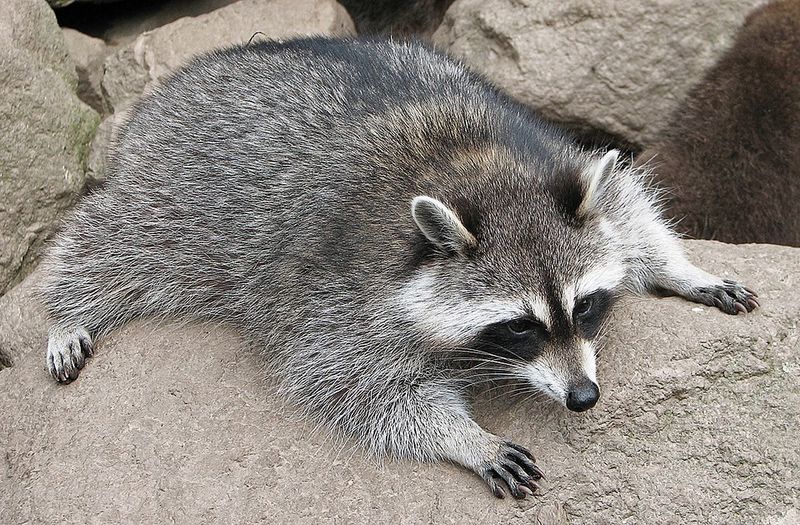
Image Credit: Darkone.
Raccoons are the nighttime opportunists you can never quite underestimate. In Texas, they thrive in forests, wetlands, neighborhoods, parks, and city alleys, adjusting to almost any landscape as long as food and shelter exist nearby.
Their masked faces may look charming, but their problem-solving skills are what really make them successful after dark.
Those dexterous front paws act almost like little hands, helping raccoons inspect creek banks, trash bins, tree cavities, and muddy shorelines for anything edible. Fruit, insects, eggs, crayfish, and discarded human food all end up on the menu, which explains why they seem equally comfortable in a cypress swamp or behind a restaurant.
What makes them fascinating is the mix of curiosity and caution, because every nighttime raccoon looks like it is investigating the world for the first time while also fully expecting the world to surprise it back.
Gray Fox
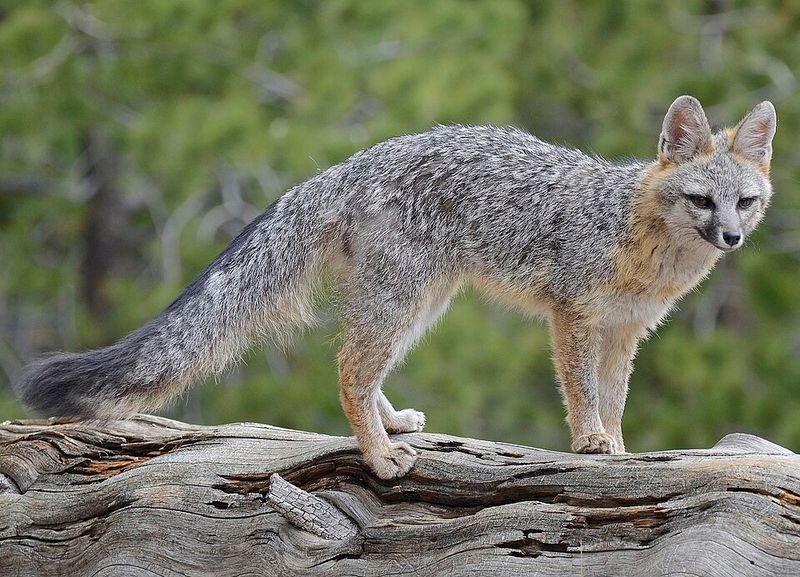
Image Credit: VJAnderson.
The gray fox has a quiet kind of charisma that makes it easy to overlook and impossible to forget once you notice it. Unlike most wild canids, it can climb trees, which gives this nighttime hunter an almost mischievous edge in Texas woodlands.
That ability alone makes it feel less predictable than the average fox slipping through the dark.
Gray foxes usually hunt small mammals, birds, insects, and fruit, moving with a careful, measured confidence through brushy cover and forest edges. Their salt-and-pepper coats blend beautifully with bark, shadows, and dry understory, so you may only catch a brief shape and a flick of tail before they disappear.
I always think of them as the acrobats of the Texas night shift, because they combine stealth, adaptability, and climbing skill in a way that feels almost handmade for rough terrain, tangled branches, and the dim light where ordinary hunters lose their advantage.
Mexican Free-Tailed Bat
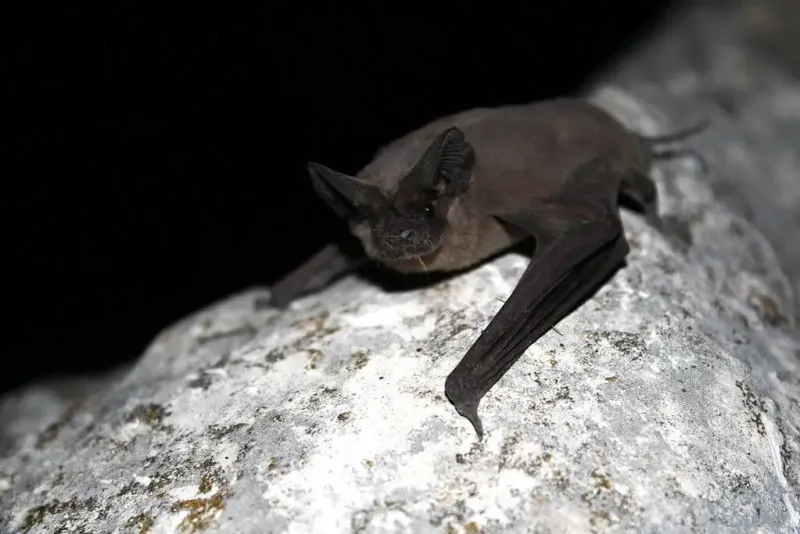
Image Credit: ITU Pictures
Few nighttime events in Texas are as unforgettable as a river of Mexican free-tailed bats pouring into the evening sky. The spectacle looks almost like smoke reversing direction, except every twisting ribbon is alive and heading out to hunt.
In a state famous for scale, these bat colonies still manage to feel gloriously oversized.
Texas hosts some of the world’s largest concentrations of this species, with millions emerging from caves and bridges to feed on flying insects. They consume huge numbers of moths, beetles, and other aerial pests, making them not just dramatic to watch but genuinely important to agriculture and ecosystems.
What I love most is the contrast between the chaos of the swirling exit and the precision of the hunt that follows, because once the cloud spreads into the dark, each bat becomes an efficient, fast-moving insect catcher working a shift most people never fully witness.
Western Diamondback Rattlesnake
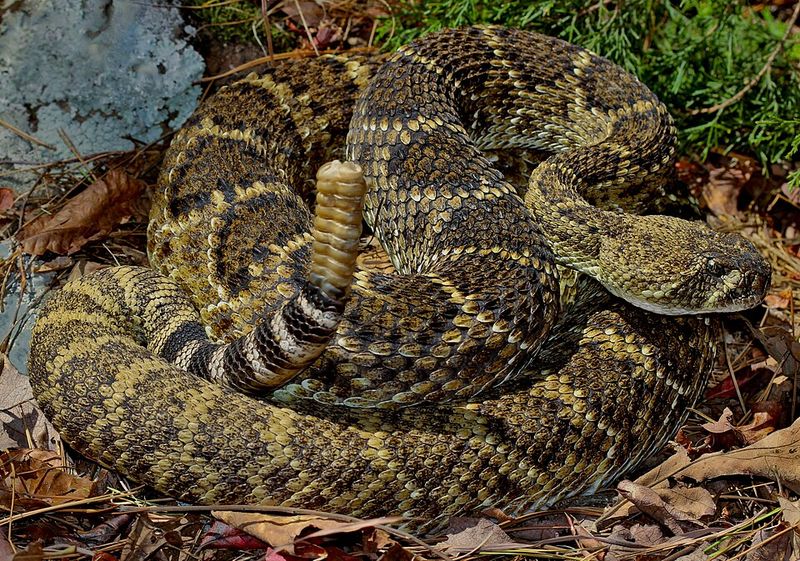
Image Credit: Peter Paplanus.
The western diamondback rattlesnake becomes especially interesting when Texas heat pushes it toward a more nocturnal schedule. On hot summer nights, it glides through desert scrub, grassland, and rocky country with a level of calm that can make the landscape feel suddenly more serious.
You may never see one, but the possibility changes how you pay attention.
This venomous snake hunts rodents, rabbits, birds, and lizards, using heat-sensitive facial pits to detect warm-bodied prey in low light. Its famous rattle is a warning system, not a battle cry, and most individuals would rather avoid conflict than waste energy on it.
That mix of efficiency and restraint is what fascinates me, because the diamondback is not just dangerous, it is highly tuned to nighttime survival, reading the dark through vibration, temperature, scent, and movement in a way that feels more advanced than the human senses we trust.
Common Nighthawk
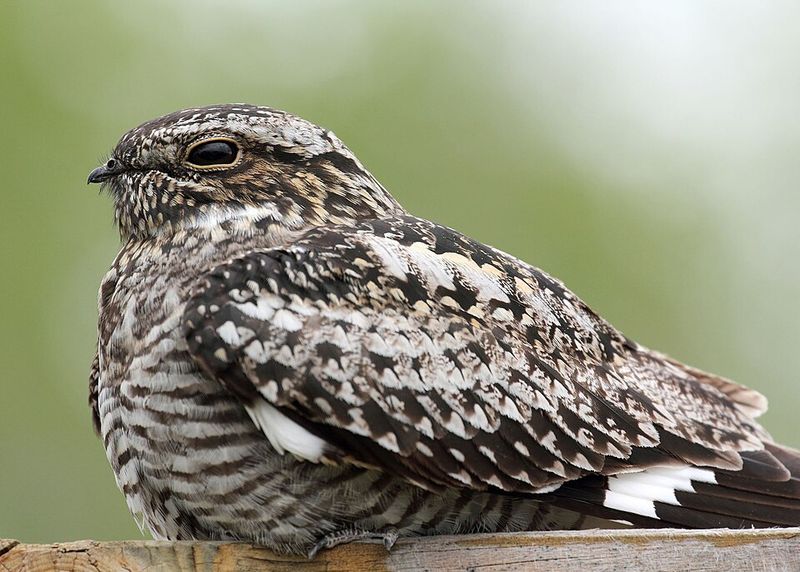
Image Credit: Oregon Department of Fish & Wildlife.
The common nighthawk may have one of the most misleading names in Texas birdlife. It is not a hawk, and if you catch sight of one at dusk, it behaves more like an aerial gymnast than a bird of prey, slicing through open sky with sharp turns and sudden drops.
Once you learn its shape and flight style, evening skies get a lot more interesting.
Nighthawks become active around sunset and feed on moths, beetles, mosquitoes, and other flying insects, scooping them up with a surprisingly wide mouth. They often patrol above fields, roads, rooftops, and open country, where their erratic movements can look playful even when they are fully focused on hunting.
I find them especially compelling because they make twilight feel busy rather than quiet, transforming that in-between hour into a feeding rush where every zigzag and dip is part of a finely practiced strategy played out against fading Texas light.
Virginia Opossum
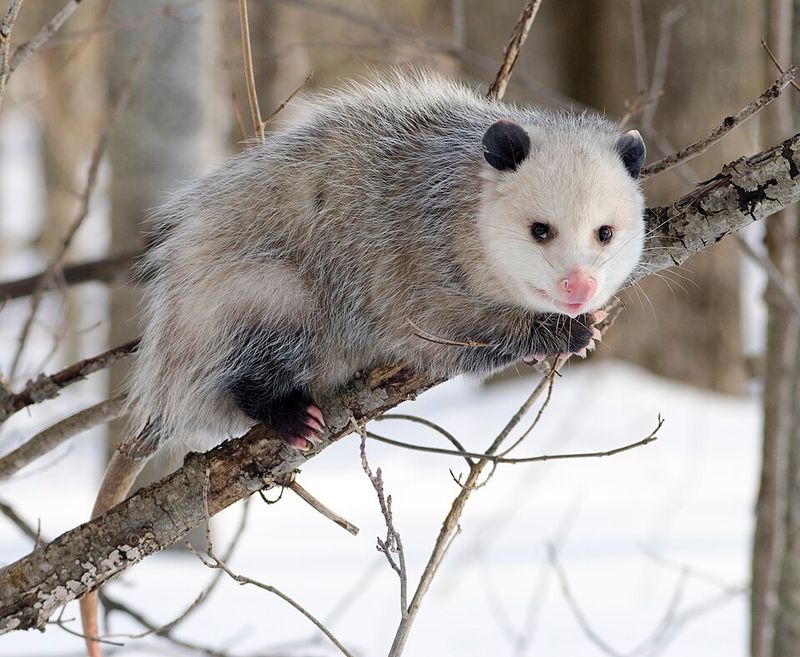
Image Credit: Cody Pope.
The Virginia opossum has mastered the art of looking scruffy, bewildered, and completely successful all at once. As North America’s only native marsupial, it brings a strange kind of charm to Texas nights, whether it is crossing a quiet road, exploring a fence line, or rustling through leaf litter behind a shed.
You might laugh at first glance, but this animal is built for survival.
Opossums are opportunistic feeders that eat insects, fruit, carrion, small animals, and sometimes even venomous snakes. They are mostly active after dark, when cooler temperatures and reduced competition make it easier to move through neighborhoods, woods, and farmland without drawing much attention.
What makes them so memorable is their refusal to fit anyone’s idea of elegance, because despite the bare tail, pale face, and awkward gait, they persist with a practical intelligence that turns the night into a place of steady, unspectacular, and very effective resilience.
Bobcat
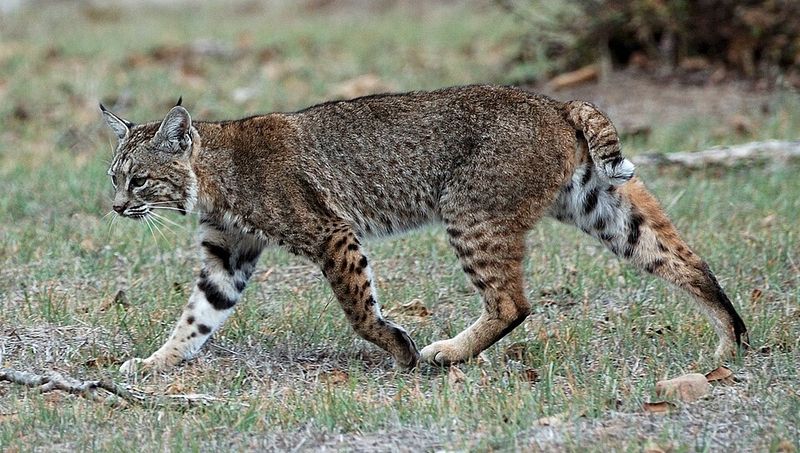
Image Credit: Don DeBold.
The bobcat is one of those Texas predators that seems to appear only when the night is paying close attention. It is widespread across the state, yet still manages to feel elusive, as if every sighting has been carefully negotiated with shadow and silence.
Even when bobcats move in daylight, much of their most effective hunting happens after dark.
Rabbits, rodents, birds, and other small prey are typical targets, and the bobcat relies on stealth, patience, and sudden speed rather than prolonged chases. Its spotted coat and compact build help it vanish into brush country, woodland margins, and rocky terrain with almost unfair ease.
I think that is what makes it so compelling, because this is not a flashy predator demanding attention, but a measured one that takes it anyway, turning stillness into strategy and using the darkness not as cover alone, but as a partner in the quiet mechanics of the hunt.
Striped Skunk
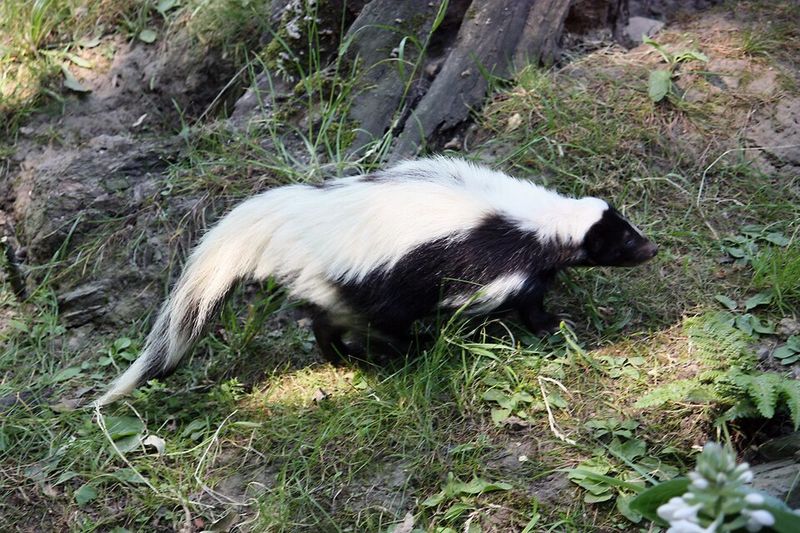
Image Credit: Dmitrij Rodionov.
The striped skunk has a reputation so strong that most people forget to look beyond it. Yes, the defensive spray is real and unforgettable, but this nighttime forager is usually more interested in minding its business than starting trouble.
In Texas fields, woodlots, and rural edges, it spends the dark hours following its nose from one snack opportunity to the next.
Insects, grubs, berries, eggs, and small rodents all fit neatly into a skunk’s flexible diet, which helps it adapt to many habitats. It moves with a deliberate, almost unbothered pace that can seem comical until you realize how effective that confidence really is.
What fascinates me is the honesty of the whole design, because the bold black-and-white pattern practically announces, respect my space and we will both be fine, making the striped skunk one of the clearest examples of peaceful nighttime wildlife backed by serious self-defense.
Western Screech-Owl
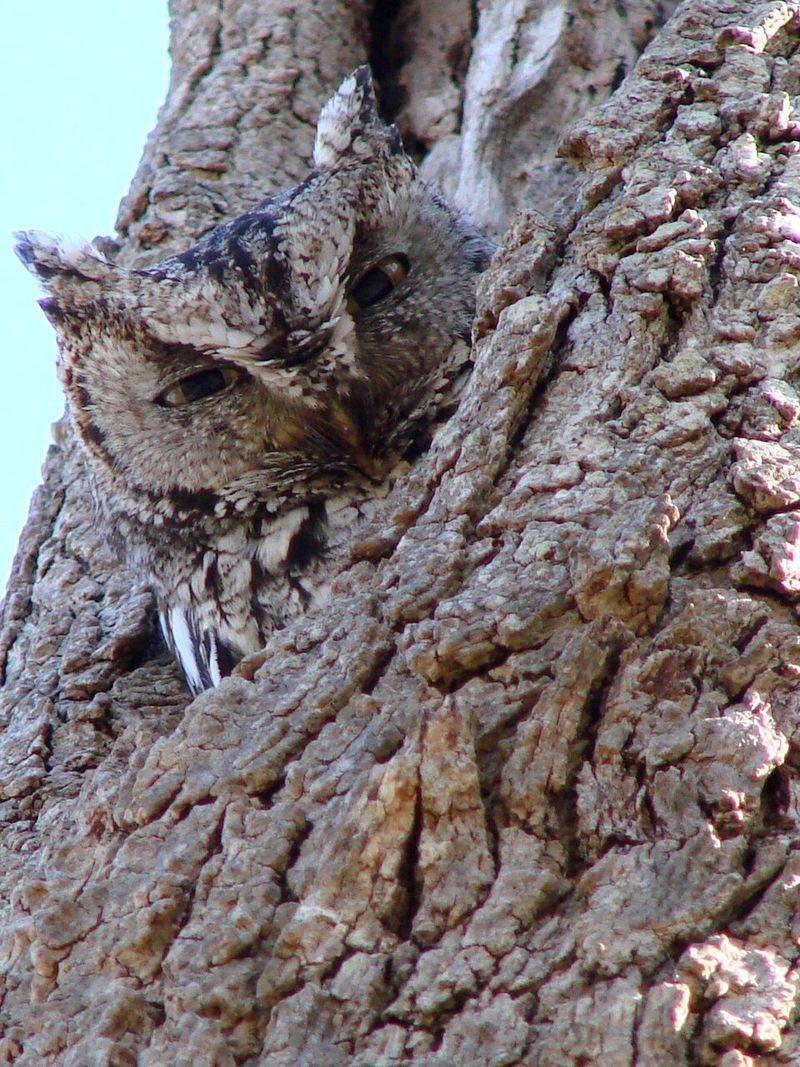
Image Credit: Zach.
The western screech-owl proves that small predators can still dominate a nighttime scene. Tucked into wooded neighborhoods, creek corridors, and rural groves across much of Texas, this compact owl often goes unnoticed until its call drifts out of the dark.
Once you know it is nearby, every tree cavity starts to look like a possible hiding place.
At night, it hunts insects, mice, lizards, and small birds, launching from perches with sharp focus and efficient timing. During the day, its camouflage is so effective against bark that it can seem to disappear completely, which makes its nighttime transformation even more impressive.
I love how this owl turns ordinary places into something quietly enchanted, because a suburban street with porch lights and parked cars can still host a skilled little hunter overhead, reminding you that wild behavior does not stop where human routines begin, especially after sunset.