
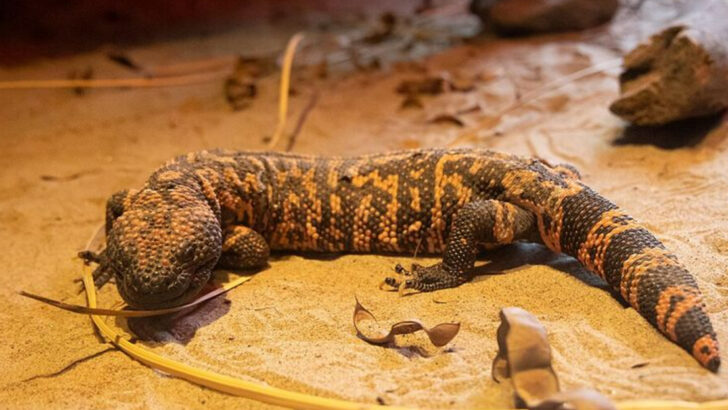
Arizona looks cinematic at first glance, but its deserts and mountains hide some seriously intense residents. From sand-colored snakes to tiny arachnids that slip into garages and woodpiles, these animals demand respect, not panic.
Knowing where they live and what their venom can do makes every hike, backyard chore, and road trip a lot smarter. If you want the wild side of Arizona without learning the hard way, start here.
Arizona Bark Scorpion
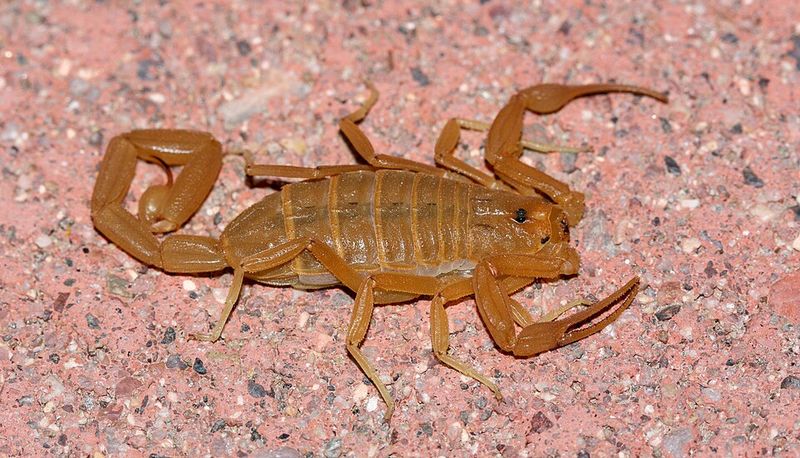
Image Credit: Andrew Meeds.
If you spend enough time around Arizona homes, campsites, or shaded desert washes, the Arizona bark scorpion is the one creature you really do not want to meet barefoot. It is the most medically significant scorpion in North America, and its neurotoxic sting can hit hard fast.
During the day, it hides under bark, rocks, woodpiles, and cracks that seem too small to matter.
What makes this species extra unsettling is how easily it slips indoors, sometimes through gaps as tiny as a sixteenth of an inch. It also climbs walls, trees, and rough surfaces surprisingly well, which means the usual idea of a ground-dwelling scorpion does not fully apply here.
At night, it emerges to hunt, especially in warmer months.
A sting can bring intense pain, numbness, twitching, sweating, and muscle spasms. Children face the greatest danger, and serious cases may involve breathing trouble.
Around this scorpion, caution is not overreacting – it is common sense.
Western Diamondback Rattlesnake
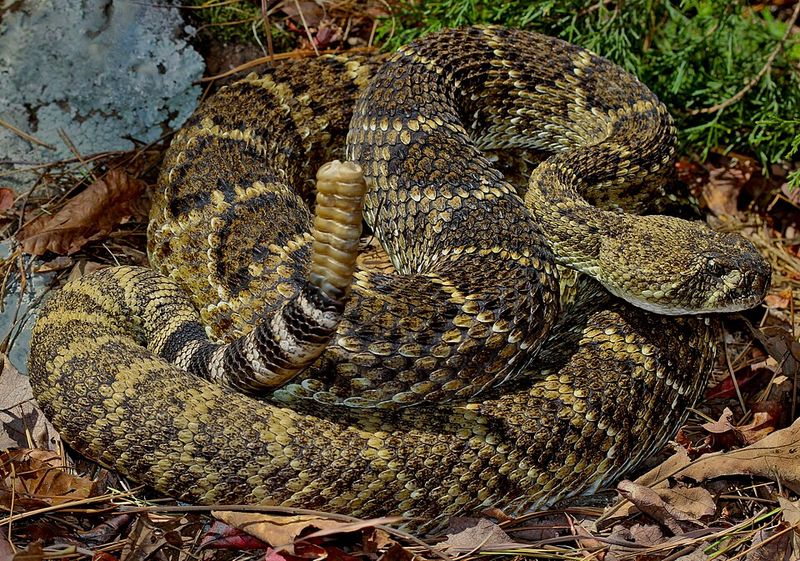
Image Credit: Peter Paplanus.
The Western diamondback rattlesnake feels like the classic Arizona warning label come to life. You can find it in deserts, grasslands, rocky hills, and a surprising range of elevations, which is one reason it turns up in so many close calls.
Its venom is primarily hemotoxic, meaning a serious bite can damage tissue, disrupt blood clotting, and trigger internal bleeding.
I think what makes this snake especially important to recognize is not just its fame, but its flexibility. It is a habitat generalist, comfortable from low desert country to higher rough terrain, so hikers and homeowners alike can cross paths with it.
If threatened, it usually prefers to warn first, but that warning should never be tested.
A bite from a Western diamondback is a medical emergency, full stop. Swelling, severe pain, and rapidly worsening symptoms can develop quickly.
If you see the heavy body, bold diamond pattern, and unmistakable rattle, give it distance and let it keep the trail for a while.
Mojave Rattlesnake
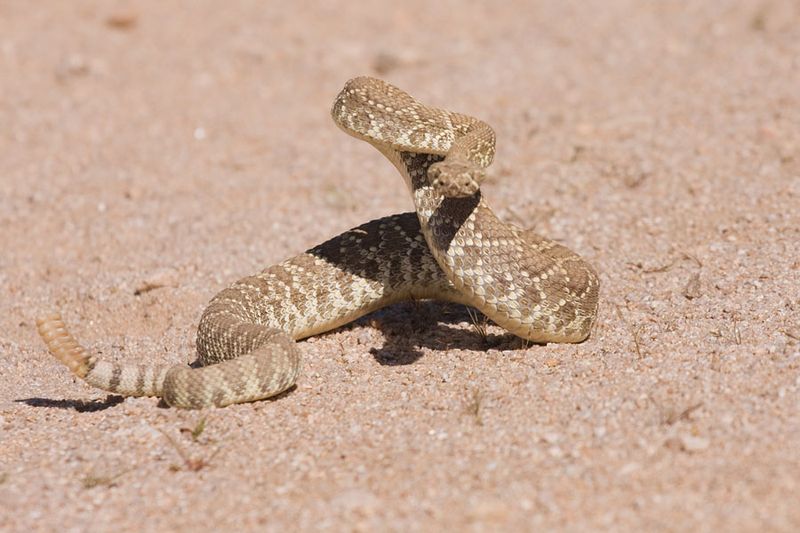
Image Credit: David~O.
The Mojave rattlesnake has a reputation that is earned, not exaggerated. Found across much of Arizona in arid scrubland, open desert, and sparsely vegetated plains, this snake carries one of the most potent rattlesnake venoms in North America.
Its venom can combine neurotoxic and hemotoxic effects, which means it can attack both nerves and tissue in dangerous ways.
Unlike species that strongly favor rocky terrain, Mojaves often prefer open country with brush, mesquite, and grassier ground. They spend hot periods under rocks or in burrows, then become more active when temperatures ease.
That behavior makes dawn, dusk, and warm nights especially important times to stay alert on desert walks.
A bite is potentially life-threatening and needs immediate treatment, even if symptoms seem delayed at first. People sometimes underestimate this snake because not every encounter ends dramatically, but that is a risky gamble.
If you hear a rattle in open scrubland, assume the Mojave deserves serious space and serious respect.
Black-Tailed Rattlesnake
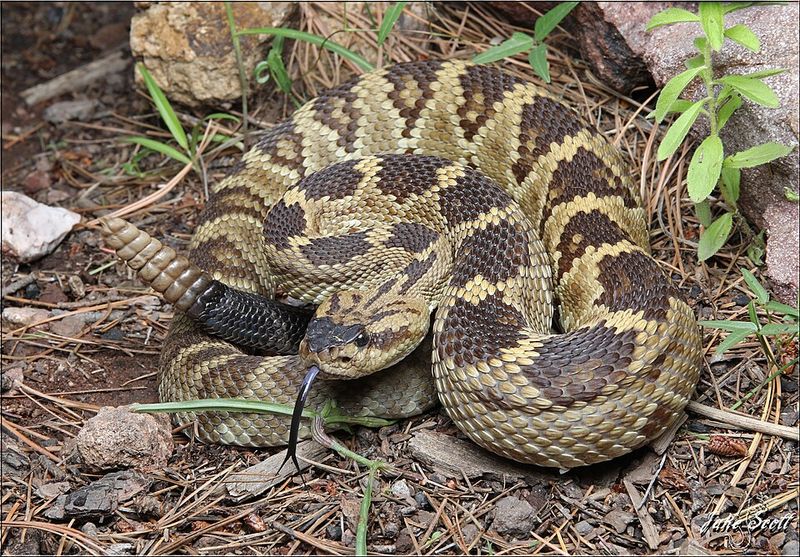
Image Credit: Caudatejake.
The black-tailed rattlesnake is one of Arizona’s more calm-looking venomous snakes, but calm-looking should never be confused with harmless. This species lives in mountain canyons, rocky slopes, grasslands, and even higher elevation forests, giving it a much broader range than many visitors expect.
Its venom is primarily hemotoxic and can still cause severe injury if a bite occurs.
What stands out to me is how adaptable this rattlesnake is. It can show up from desert country to sky island habitats above 8,000 feet, and it is capable of climbing and swimming as well as moving over broken rock.
Often, it relies on warning behavior first, rattling when it senses danger rather than charging into conflict.
That relatively steady temperament is helpful, but it should not make anyone casual. A bite can be medically serious and potentially lethal without proper care.
If you notice the darker tail and sturdy body on a canyon trail, the smartest move is simple – stop, back away slowly, and give it room.
Tiger Rattlesnake
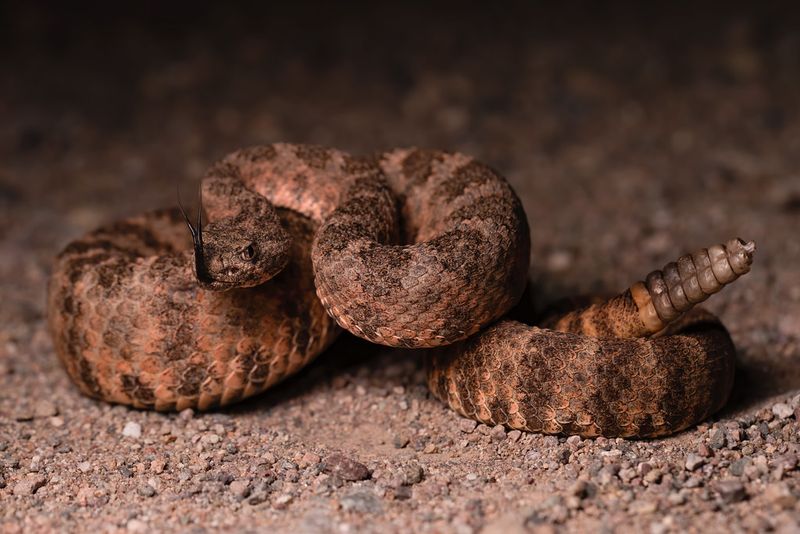
Image Credit: Patrick Randall
The tiger rattlesnake is one of those Arizona animals that many people never see, which is probably for the best. It lives mainly in southern Arizona foothills, rocky canyons, bajadas, and rugged slopes, blending beautifully into tough terrain.
Despite its smaller size, it carries remarkably potent venom with strong neurotoxic and muscle-damaging effects.
This snake often turns up in places that feel remote and dramatic, from desert scrub to woodland edges in higher country. Because it is uncommon and secretive, hikers may not think much about it, but its medical significance is real.
Its short fangs and lower venom yield do not cancel out the danger when the venom itself is so powerful.
A bite should be treated as a life-threatening emergency, especially for children or smaller adults. The species is rarely encountered, but rarity is not safety.
If you are wandering rocky southern Arizona foothills and spot a banded rattlesnake with a compact build, admire it from a distance and count yourself lucky instead of curious.
Sidewinder
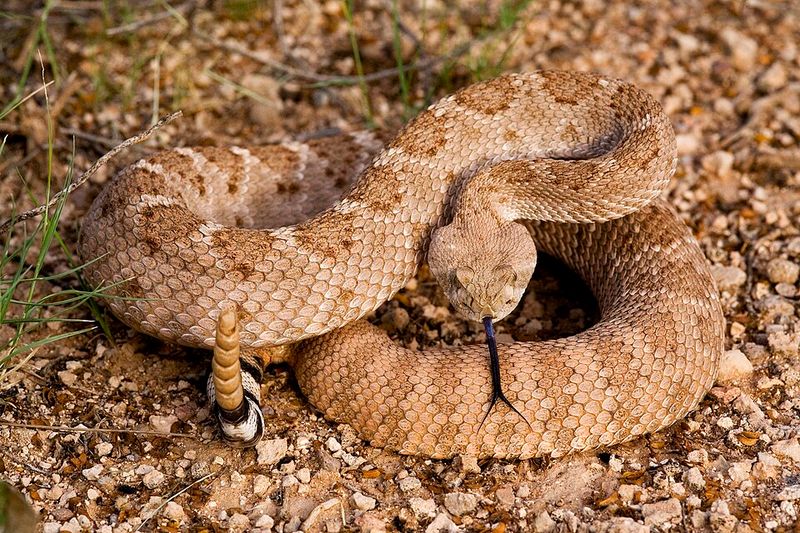
Image Credit: Patrick Alexander.
The sidewinder looks almost unreal when it moves, sketching looping tracks across loose sand like a creature built by the desert itself. In Arizona, it is most associated with sandy dunes and other soft, sparsely vegetated terrain where rocky habitat is scarce.
Its venom is mainly hemotoxic, and while it is generally less dangerous than some larger rattlesnakes, a bite still deserves serious attention.
What makes this snake unusual is its signature sideways motion, a practical solution for traveling over hot, unstable sand. In brutal summer heat, it often shelters in burrows or partially buries itself under shaded sand during the day.
That means a person can get surprisingly close without realizing a snake is present.
Sidewinders are usually defensive rather than aggressive and often rely on warning before striking. Healthy adults often experience pain, bruising, and swelling instead of catastrophic outcomes, but no venomous bite should be shrugged off.
If you see fresh J-shaped tracks on dunes, that is your hint to slow down and scan every step.
Gila Monster
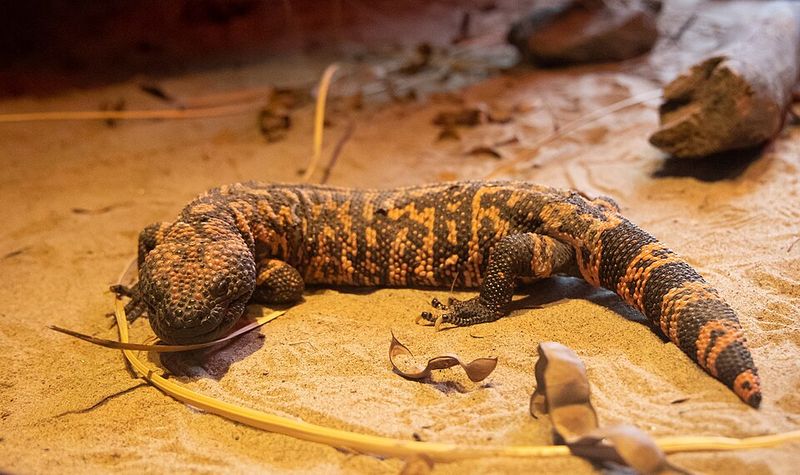
Image Credit: Theo Kruse / Burgers’ Zoo.
The Gila monster is one of Arizona’s most iconic venomous animals, and honestly, it looks unforgettable even before you learn how it bites. This heavy-bodied lizard lives in the Sonoran Desert, rocky washes, foothills, and desert canyons, though it spends most of its life hidden underground.
Unlike snakes that inject venom quickly, it delivers venom through grooved teeth while chewing and holding on.
That biting style is exactly why people are warned never to handle one. The venom can cause severe pain, swelling, weakness, nausea, dizziness, sweating, and low blood pressure, and the pain may linger far longer than most people expect.
Fatalities are extremely rare, but rare does not mean impossible, especially if complications or allergic reactions enter the picture.
What I find most fascinating is how secretive this reptile is, spending up to ninety-five percent of its time in burrows or crevices. It is not typically aggressive unless provoked.
Still, if you meet one on a trail, admire the colors, keep your distance, and let it pass.
Black Widow Spider
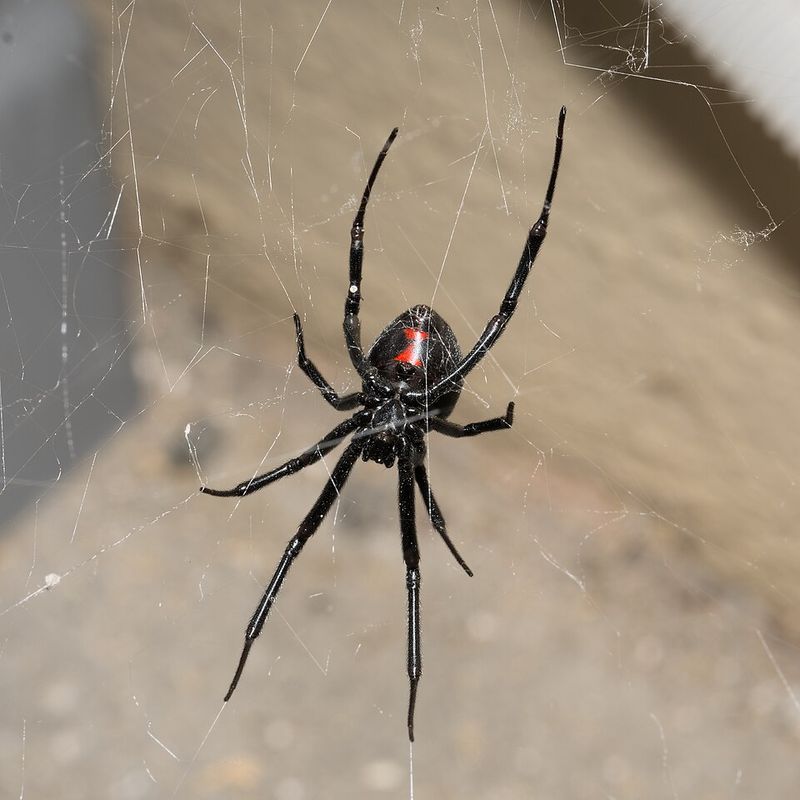
Image Credit: Dllu.
The black widow spider is the kind of venomous animal that can turn an ordinary garage cleanup into a memorable mistake. In Arizona, it favors dark, undisturbed spaces like sheds, woodpiles, storage boxes, crawl spaces, and corners that do not get much attention.
Its venom is neurotoxic, and while bites are rarely fatal with modern care, they can be intensely miserable.
Only the female delivers the famous bite, usually when protecting eggs or when pressed against skin. Symptoms can escalate from a sharp local reaction to widespread muscle cramps, abdominal pain, sweating, nausea, headache, and restlessness.
In children, older adults, or vulnerable people, complications can be more serious and deserve quick medical evaluation.
What makes black widows so unnerving is not size, but placement. They thrive in exactly the sort of forgotten spaces where hands reach first and eyes check later.
If you are moving firewood, opening an old bin, or reaching behind patio clutter, gloves and caution are doing more work than bravado ever will.
Desert Recluse
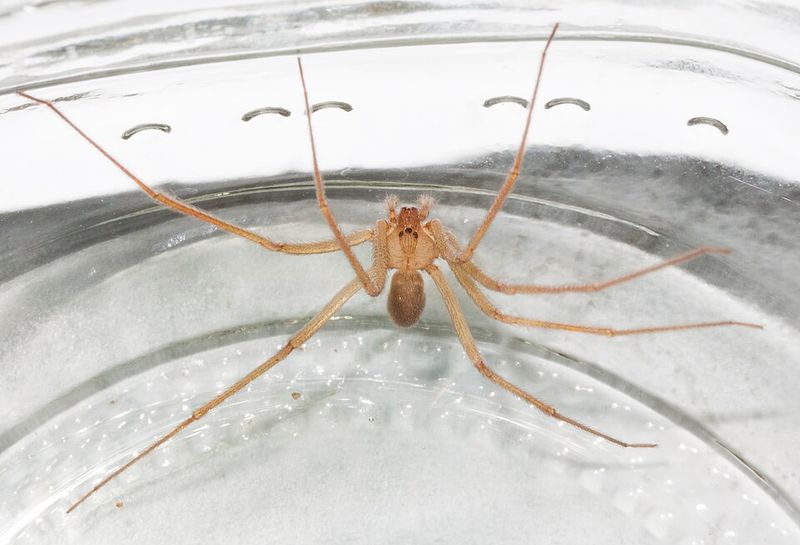
Image Credit: DesertTrip.
The desert recluse is more secretive than famous, which may be why it feels extra creepy once you know where it hides. In Arizona, recluse spiders favor dry, undisturbed spots such as attics, garages, storage areas, woodpiles, dead cacti, and sheltered natural spaces like rodent dens.
Their venom is cytotoxic, meaning it can damage tissue instead of mainly attacking the nervous system.
Bites are uncommon because these spiders are not aggressive and usually strike only when trapped against skin. That said, the bite can become a real medical issue, sometimes leading to skin ulcers, slow-healing lesions, or localized tissue death.
Rare severe cases may involve systemic complications, which is why any worsening wound deserves prompt attention instead of internet guesswork.
One reason desert recluse encounters are so misleading is that the spider itself is small, quiet, and easy to overlook. You may never know it was nearby until a storage box gets moved or old clutter gets sorted.
Around undisturbed corners, patience, gloves, and careful shaking-out habits are your best defense.
Giant Desert Centipede
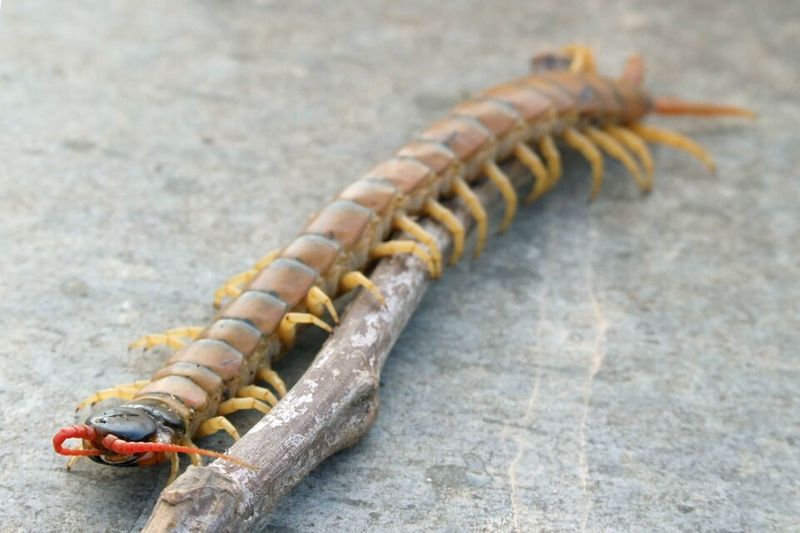
Image Credit: ערן פינקל.
The giant desert centipede is proof that Arizona does not need giant predators to make your skin crawl. This long, fast arthropod hides under rocks, logs, and other dark, damp shelter, then emerges as a capable hunter armed with venom-injecting forcipules, which are modified front legs.
A bite is famously painful and often more shocking than people expect from something so low to the ground.
Most bites cause immediate intense pain, redness, swelling, and localized inflammation, but the experience can still feel extreme. Some people also report dizziness, vomiting, headache, or a racing heart, and rare severe reactions do happen.
Unlike shy creatures that freeze and hope for the best, giant desert centipedes can be defensive and willing to bite when threatened.
What makes them especially unsettling is their speed and confidence in tight spaces. Lift the wrong rock, move a log without gloves, or reach into a cool crevice, and you could surprise one at close range.
Serious danger is uncommon, but this is definitely not a desert resident to handle casually.
Tarantula Hawk Wasp
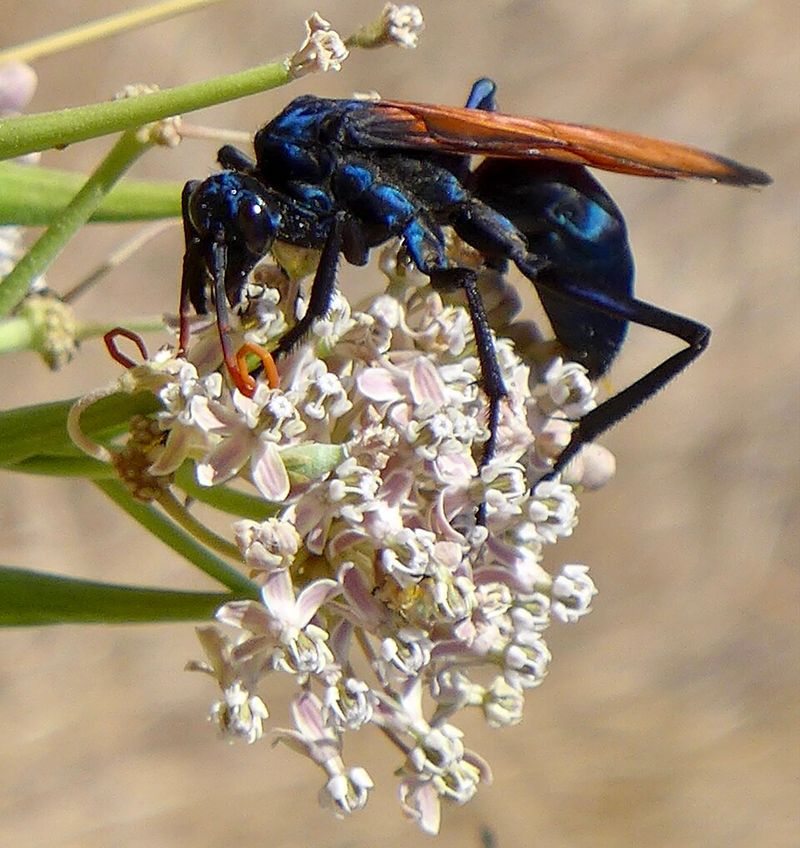
Image Credit: (c) icosahedron.
The tarantula hawk wasp might be the most dramatic insect on this list, mostly because its sting has a legendary reputation. In Arizona, you may spot it around desert flowers, mesquite, milkweed, and open terrain where it feeds and patrols in startling flashes of dark blue and orange.
Its venom is not usually medically dangerous to healthy people, but the pain is considered among the most intense insect stings on Earth.
That pain is the whole story here. Victims often describe a blinding, incapacitating burst that peaks fast and can make coordinated movement feel impossible for several minutes.
The good news is that these wasps are generally docile and rarely sting without provocation, so the danger usually comes from grabbing, trapping, or swatting one.
What I love and fear about tarantula hawks is their contradiction: gorgeous, almost elegant, yet armed with a sting that can stop your afternoon cold. For most people, the main risk is temporary agony rather than lasting damage.
If one is visiting flowers nearby, give it runway, not attention.