
Oklahoma wildlife does not always defend itself with claws, speed, or brute force. Sometimes the trick is fake death, exploding chemicals, detachable tails, or even blood fired from the face.
If you think you know how animals survive, this lineup gets wonderfully weird fast. Keep reading, because these twelve creatures turn self-defense into one of nature’s strangest performances.
Texas Horned Lizard
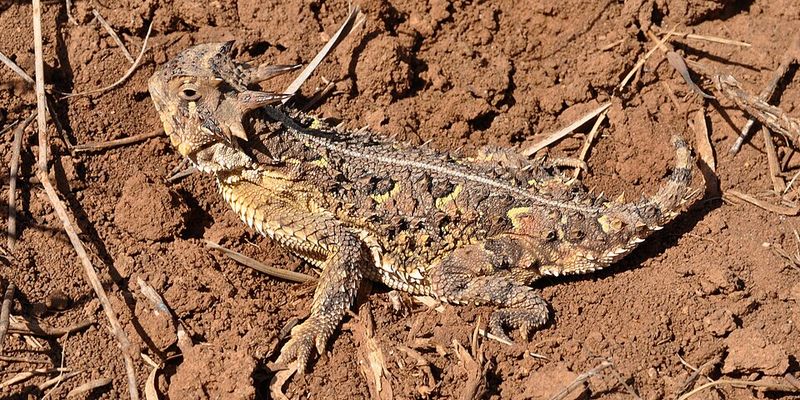
Image Credit: William L. Farr.
If you walked past a Texas horned lizard in Oklahoma, you might miss it completely because its sandy colors and spiky outline blend beautifully into dry ground. That camouflage is its first shield, and it works so well that many predators probably lose track of it before a chase even starts.
But when a fox or coyote pushes too close, this odd little reptile can switch from invisible to unforgettable in seconds.
It restricts blood flow leaving the head, builds pressure behind the eyes, and then ruptures tiny vessels to shoot a narrow stream of blood outward. The spray can reach several feet and is aimed at a predator’s mouth or eyes, where the foul taste and irritation create instant regret.
It sounds made up, but for canine attackers especially, this bizarre trick can be more effective than teeth, speed, or drama.
Eastern Hognose Snake
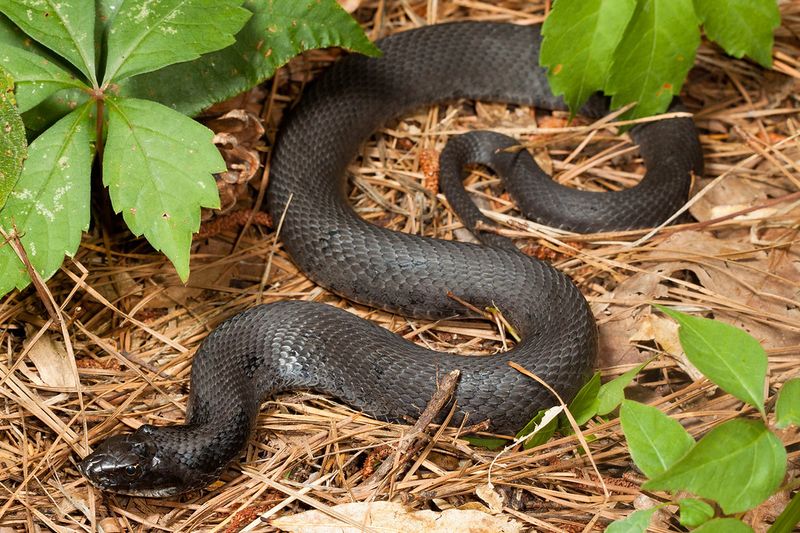
Image Credit: Natalie McNear
The Eastern hognose snake is one of those animals that seems to understand theater better than violence. If you bother it on an Oklahoma trail, it often starts with a full intimidation routine, flattening its neck, lifting its head, and hissing like it wants you to believe something far more dangerous just arrived.
For a harmless snake, that bluff is bold, creative, and surprisingly convincing from the right angle.
If the scary act fails, the hognose escalates into pure melodrama by flipping onto its back and going limp. Its mouth hangs open, the tongue droops out, and it may release a foul musk that makes the whole scene smell convincingly rotten.
The strangest part is commitment: if you roll it upright, it often rolls over again, stubbornly insisting on being dead until the threat finally gives up and leaves.
Virginia Opossum
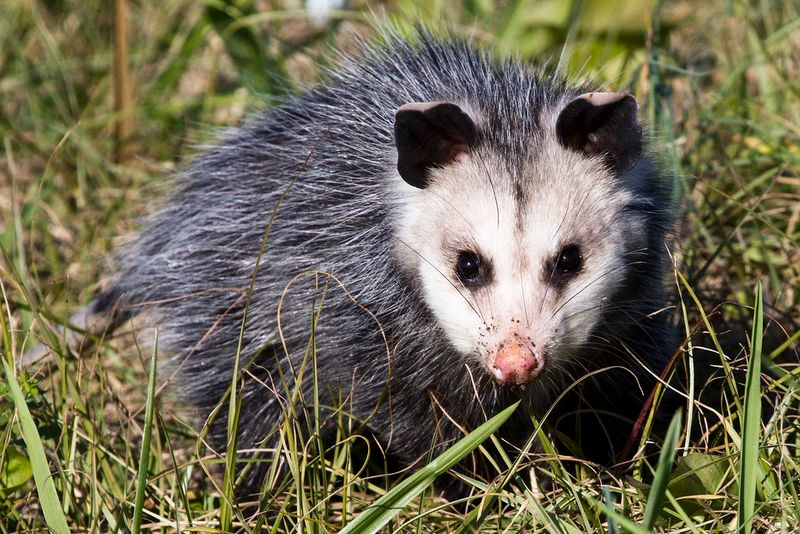
Image Credit: U.S. Fish and Wildlife Service Southeast Region.
The Virginia opossum does not just pretend to die in a casual way. When danger becomes overwhelming, this Oklahoma survivor can slip into thanatosis, an involuntary catatonic state that makes its body look slack, helpless, and utterly unappetizing to anything hunting for a fresh meal.
If you ever see one collapsed with open eyes and a dangling tongue, you are probably watching one of nature’s strangest emergency shutdown systems.
During this episode, the opossum may drool, lose normal posture, and release a foul fluid from its glands that smells like decay. That rotten scent helps sell the illusion of a carcass so convincingly that many predators decide the risk is not worth the bite.
It is such an extreme response that the animal can remain in this state for hours, turning vulnerability itself into a defense that works by making attackers feel disgust instead of hungry.
Nine-Banded Armadillo
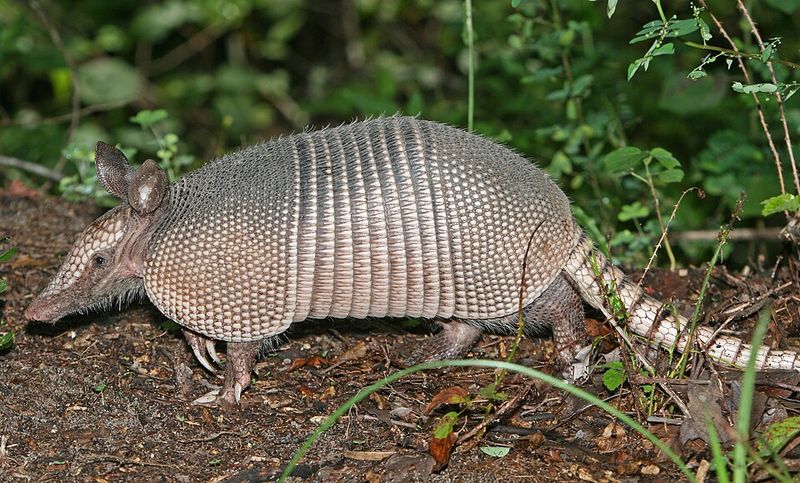
Image Credit: http://www.birdphotos.com.
The nine-banded armadillo looks like it should have a medieval defense plan, but Oklahoma’s version does something much stranger than curling into a tight armored ball. When frightened, it often launches straight up into the air in a sudden vertical leap that can surprise predators and people alike.
If you are expecting a quiet scuttle, that spring-loaded reaction feels almost absurd the first time you see it.
This jump may help the armadillo dodge a paw strike or make an attacker misjudge distance in the split second that matters. Unfortunately, the same reflex becomes disastrous near roads, where a startled leap can send the animal directly into a car bumper instead of away from danger.
It is a defense mechanism that makes sense in the wild, but in human landscapes it becomes a tragic example of how an ancient survival trick can misfire in a modern world.
Striped Skunk
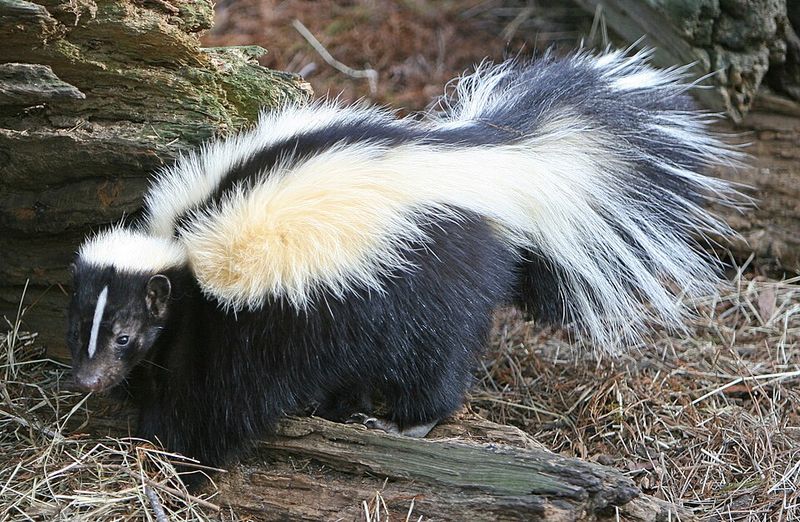
Image Credit: http://www.birdphotos.com.
The striped skunk does not believe in subtle warnings. Before it ever uses its famous chemical weapon, it usually gives you plenty of signals, including foot stamping, tail raising, and an agitated posture that practically begs a predator to reconsider.
If that message still gets ignored, the skunk is fully prepared to turn one bad decision into a memory that lingers far longer than anyone wants.
Its spray is an oily musk loaded with sulfur compounds, and it can be delivered with impressive accuracy from a surprising distance. The smell is not just unpleasant, it is overwhelming, clinging to fur, skin, and air with a persistence that feels almost supernatural.
Because producing that fluid is costly and replenishment takes time, the skunk treats spraying as a last resort, which somehow makes its clear pre-show warnings even more polite than most wild animals ever bother being.
Bombardier Beetle
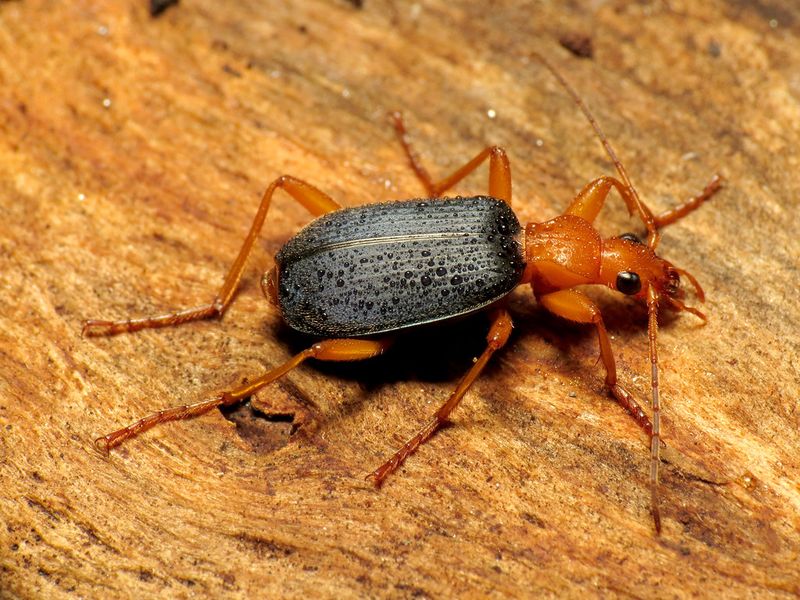
Image Credit: Katja Schulz
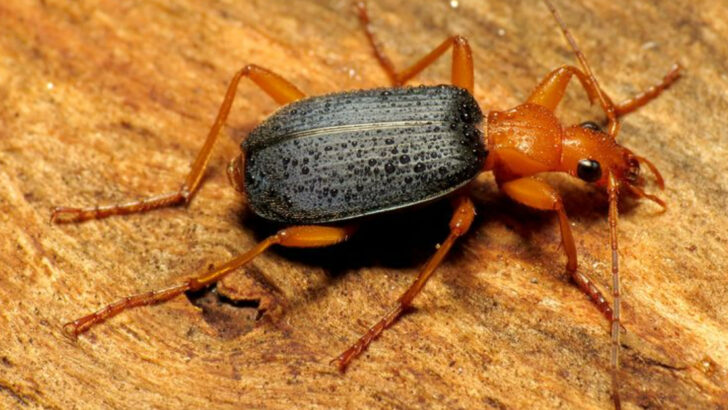
The bombardier beetle is proof that tiny animals sometimes have the most outrageous technology. Hidden in its abdomen are separate chemicals that stay harmless until the beetle suddenly mixes them in a special chamber, creating a rapid reaction that heats the contents and builds pressure almost instantly.
If you imagine a small living spray cannon with perfect timing, you are getting close to the truth.
When threatened, it fires a hot, noxious burst with an audible popping sound that can startle predators before the irritation even lands. The liquid is not just smelly, it is chemically aggressive and can be aimed in short pulses, giving the beetle unusual control for such a small creature.
In Oklahoma fields and woodlands, that means an attacker expecting an easy snack instead gets blasted by what feels like a miniature lab accident wrapped inside a glossy little insect body.
American Toad
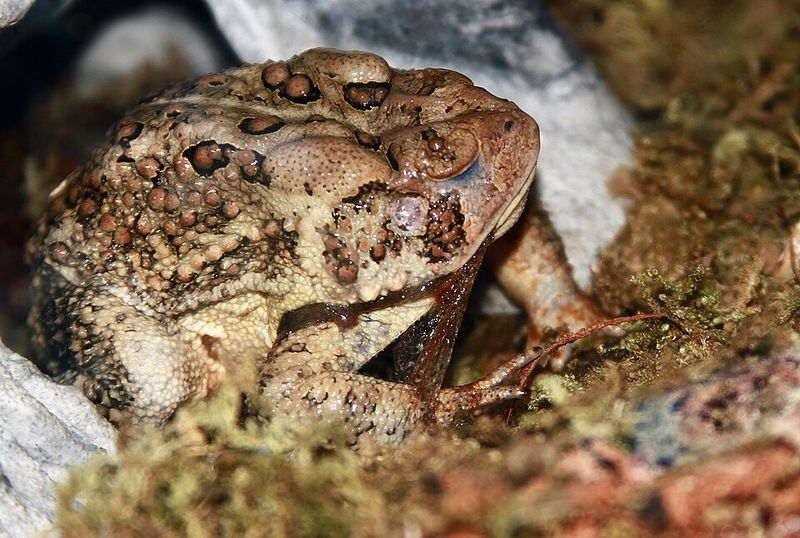
Image Credit: Chewyismycopilot.
The American toad looks humble enough that many predators probably assume it will be an easy mouthful. That assumption changes quickly when the toad inflates its body with air, making itself look larger, rounder, and much harder to swallow than expected.
If you have ever tried to imagine a living cork with opinions, this defense comes surprisingly close.
Behind the eyes sit enlarged parotoid glands that release a milky, bitter toxin called bufotoxin when the toad is grabbed or seriously disturbed. That secretion can irritate a predator’s mouth and eyes, creating an instant lesson in why not every small animal is worth biting.
The combination is smart and simple: first become awkwardly oversized, then taste terrible enough that the attacker spits you out and remembers the experience the next time a squat little toad appears in the grass.
Millipede
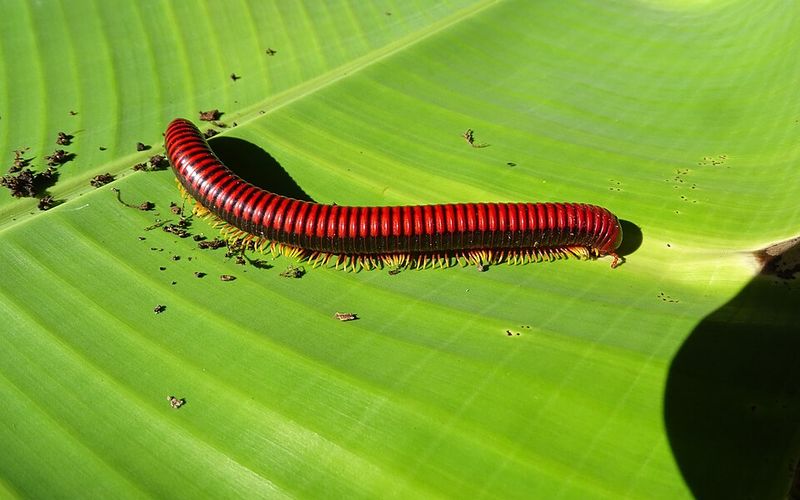
Image Credit: John Mather.
A millipede is not built for a dramatic chase, so its defense strategy leans into patience, armor, and chemistry. When disturbed in Oklahoma woods or gardens, many species curl into a tight spiral that shields their soft underside and tucks vulnerable legs safely inward.
It is a quiet move, but it turns a delicate crawler into a compact, much tougher target.
The real surprise comes from glands that can ooze defensive compounds when the animal feels cornered. In some species, those secretions include cyanide-related chemicals that smell sharp and unpleasant, warning would-be predators that this snack may come with consequences.
You probably would not expect such potent chemistry from something that spends its life under logs and leaves, yet that contrast is exactly what makes the millipede so memorable: it survives not by fighting harder, but by becoming sealed, stubborn, and unexpectedly toxic.
Eastern Fence Lizard
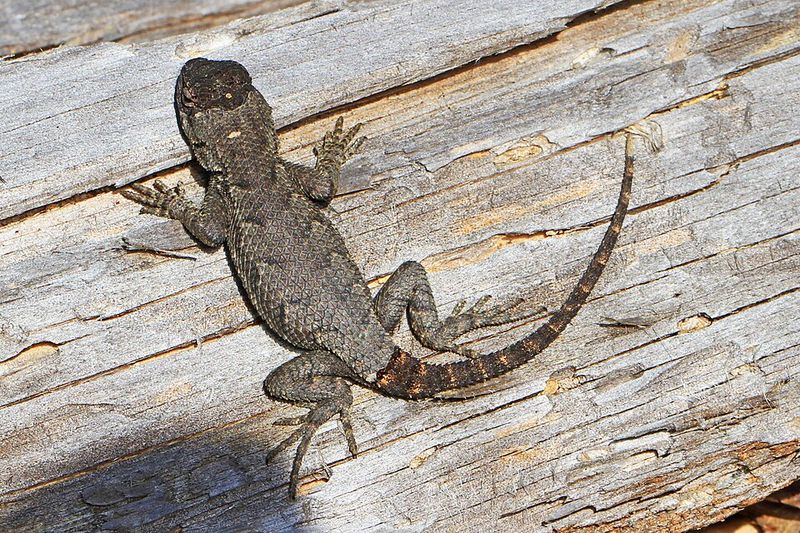
Image Credit: Judy Gallagher.
The Eastern fence lizard relies on one of the most unsettling tradeoffs in the animal world. If a predator grabs its tail, the lizard can intentionally detach that body part through a process called autotomy, sacrificing a piece of itself to save the rest.
For you, it might look shocking, but for the lizard it is a built-in escape button with a very clear purpose.
After detaching, the tail keeps wriggling violently on the ground, pulling a predator’s attention toward the moving distraction while the lizard bolts for cover. That few seconds of confusion can mean everything when survival depends on reaching bark, rock, or brush before the attacker refocuses.
A replacement tail eventually regrows, though it is rarely identical to the original, which makes this defense feel both brilliant and costly, like an emergency exit that works best because it leaves behind something alive-looking enough to fool danger.
Tarantula
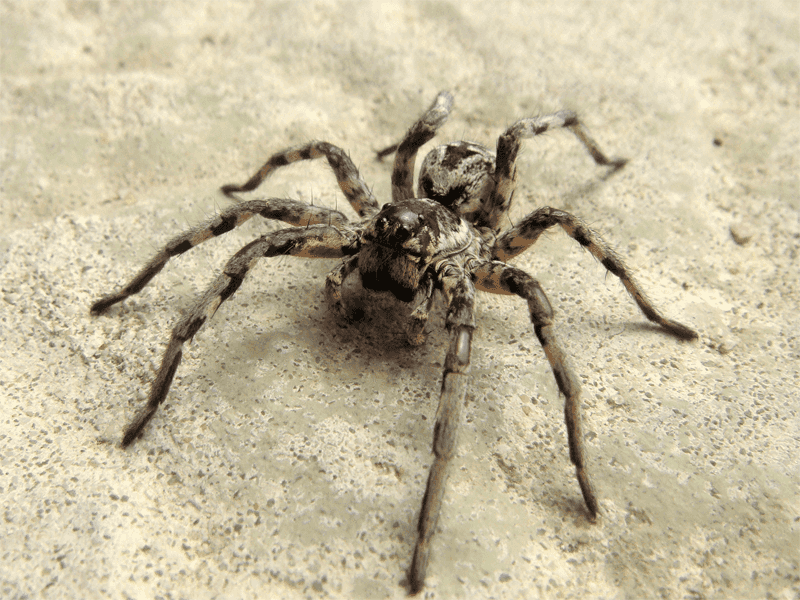
Image Credit: João Coelho.
Oklahoma’s tarantulas already look intimidating, but one of their most effective defenses does not involve biting at all. When threatened, they can use their hind legs like tiny brushes, rapidly kicking specialized barbed hairs off the abdomen and into the air.
If you are a predator expecting a simple grab, that cloud becomes an awful surprise almost immediately.
These urticating hairs can lodge in the eyes, nose, skin, or mouth, causing intense irritation that may send an attacker retreating before fangs are ever needed. It is an elegant strategy because the spider avoids close combat while still creating plenty of discomfort from a short distance.
The overall effect feels sneaky rather than flashy, which somehow makes it even more impressive: instead of lunging dramatically, the tarantula lets a drifting storm of microscopic barbs convince danger that backing away is the smartest choice available.
Crawfish
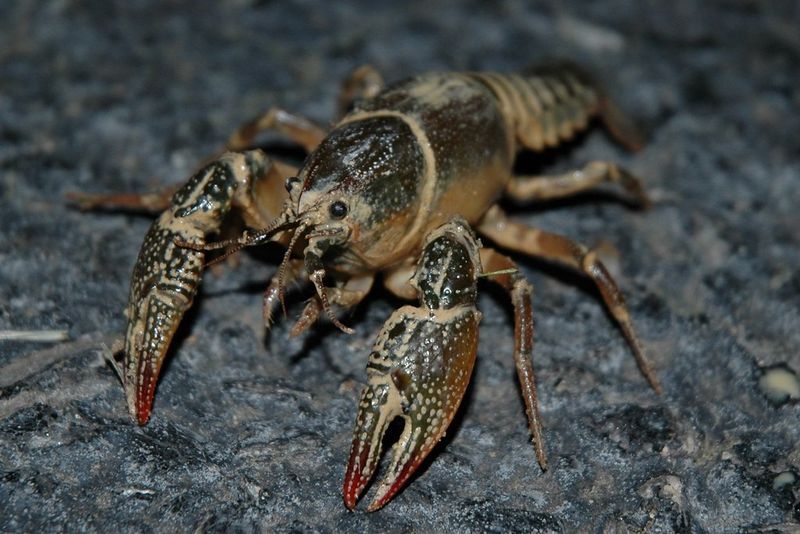
Image Credit: cygnus921
Crawfish spend a lot of time looking like armored little tanks, but their best defense is actually a sudden burst of speed in reverse. When something threatening gets too close, the muscles in the tail contract with explosive force, folding the body and launching the animal backward through the water.
If you blink, the crawfish is gone and the muddy bottom is all that remains.
This tail-flip escape is incredibly fast, often giving predators almost no time to adjust once the movement begins. Instead of turning around and swimming forward like many animals would, the crawfish uses its own body as a spring, turning surprise into instant distance.
It is such a smart reflex because it works from any position, requiring no dramatic setup and very little warning, which means a fish or wading bird can go from nearly successful to completely confused in one sharp, powerful snap.
Eastern Spotted Skunk
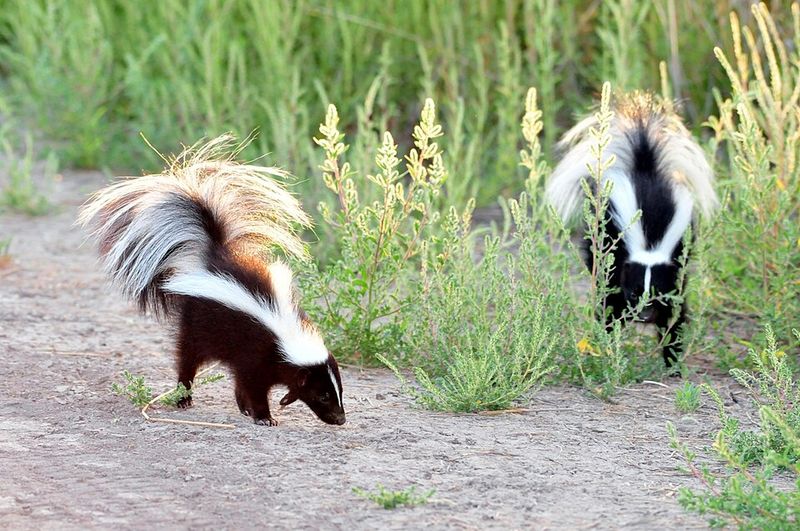
Image Credit: USFWS Mountain-Prairie.
The Eastern spotted skunk takes the ordinary skunk warning routine and turns it into full acrobatics. When threatened, it can rise into a handstand on its front paws, lifting the hindquarters and tail high so its bold black-and-white pattern becomes impossible to ignore.
If you saw that pose in the dark, you would probably understand the message immediately, even before the smell entered the conversation.
This display makes the skunk appear larger, stranger, and more confident than most predators expect from such a small mammal. If the warning still fails, it can pivot and deliver an accurate spray while maintaining the dramatic stance, proving that the performance is not empty flair.
What makes this defense so unforgettable is the combination of spectacle and function: it is both a visual threat and a practical aiming system, which feels almost too theatrical to be real until you learn that nature absolutely invented it first.