
Hawaii already looks surreal, but its wildlife can feel even more unbelievable than the scenery. Across reefs, rainforests, and mountain ridges, you can spot animals painted in colors so vivid they seem edited by nature itself.
Some glow like tropical candy, others wear patterns that look hand-drawn, and a few can even change their appearance in seconds. If you love creatures that make you stop and stare, this lineup is going to pull you straight in.
Humuhumunukunukuapua’a (Reef Triggerfish)
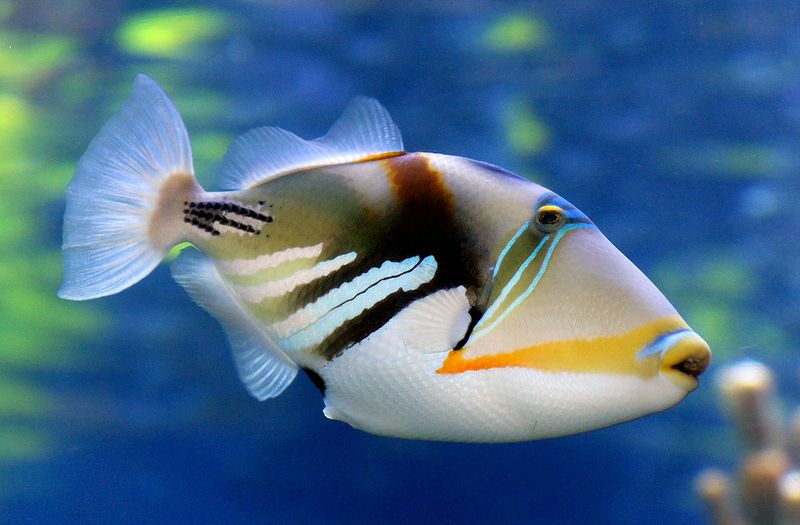
Image Credit: Bernard Spragg. NZ
If you ever needed proof that Hawaii’s reefs enjoy showing off, the humuhumunukunukuapua’a makes the case instantly. This official state fish looks almost painted by hand, with crisp blocks of beige, yellow, blue, and black arranged like underwater street art.
Even its long Hawaiian name adds to the drama, especially once you learn it loosely refers to a triggerfish with a pig-like snout.
What makes it even cooler is that those flashy looks come with clever defenses. When danger gets too close, it can lock its dorsal spine upright and wedge itself tightly into a reef crevice.
Predators then have a miserable time trying to pull it out, which feels like a very on-brand move for such a stubborn little celebrity.
I also love that this fish is not just decorative reef wallpaper. It roots around for food, can make grunting sounds when threatened, and may even shift color with mood or activity.
That means the humuhumunukunukuapua’a is every bit as strange as it is stunning.
Moorish Idol
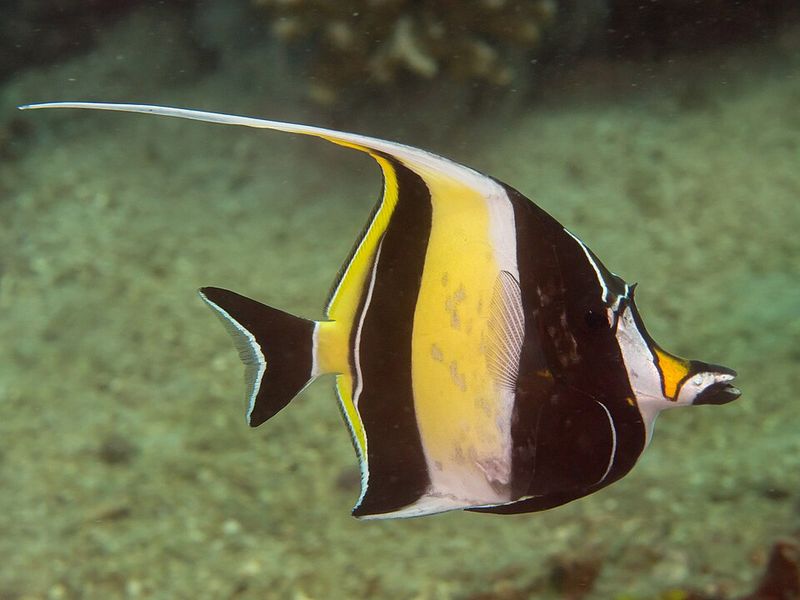
Image Credit: Rickard Zerpe.
The Moorish idol is one of those Hawaiian reef animals that looks too polished to be real. Its body is striped in bold black, white, and yellow bands, and that long trailing dorsal fin gives it the kind of elegance you would expect from a luxury logo, not a fish.
Underwater, it glides like a floating piece of stained glass that somehow learned how to turn corners.
Its beauty is not just for show, either. Those dramatic color blocks may help break up its outline, making it harder for predators to track the fish clearly against the reef.
Add the horn-like bumps above its eyes and its small tubular snout, and you get a creature that looks both refined and slightly alien.
When you see one threading through shallow reef ledges in Hawaii, it is easy to understand why photographers love it so much. It feeds on sponges and other tiny reef life, but visually it steals the entire scene.
Honestly, it feels less like wildlife and more like living design.
Parrotfish
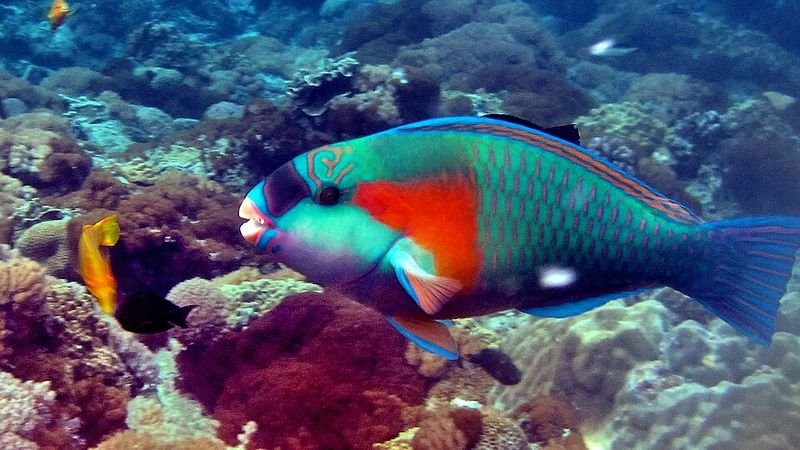
Image Credit: Divervincent.
Parrotfish in Hawaii look like someone took a box of highlighters and turned it into a reef animal. Their bodies can glow with turquoise, pink, green, and blue so intensely that they seem almost neon under clear tropical water.
Then you notice the beak-like mouth, and suddenly the whole fish feels even more bizarre in the best possible way.
That strange mouth is not just a style choice. Parrotfish use fused teeth to scrape algae from coral and bite into reef surfaces, helping keep fast-growing seaweed from overwhelming slower corals.
As they grind coral while feeding, they also create fine sand, which means some of Hawaii’s bright beaches owe part of their beauty to these busy grazers.
I think that mix of beauty and usefulness makes parrotfish especially unforgettable. They are flashy enough to stop you in your tracks, but they are also doing essential maintenance work all day long.
It is hard not to respect a fish that looks like a tropical dream and helps build the shoreline.
Achilles Tang
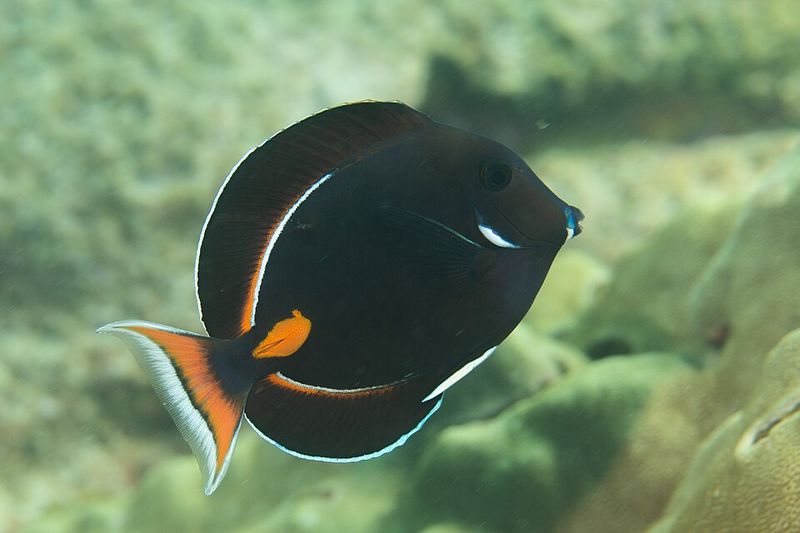
Image Credit: cello caruso-turiello.
The Achilles tang proves that dramatic design does not need a huge color palette to be unforgettable. Most of its body is deep black or dark brown, but near the tail sits a blazing orange-red patch that looks almost airbrushed onto the fish.
Against the dark body, that bright mark hits with the kind of contrast you notice instantly, even in a busy reef scene.
That colorful accent is not just there to look stylish. The Achilles tang carries a sharp, scalpel-like spine near its tail that it can use in self-defense, and the bold marking acts like a warning sign.
It often lives in energetic surge zones and exposed reefs, which somehow fits its high-impact look perfectly.
There is something undeniably sleek about this fish. It moves with the confidence of an animal that knows exactly how striking it is, while still spending much of its day grazing on algae and seaweed.
If reef fish had sports cars, the Achilles tang would absolutely be one of them.
Peacock Mantis Shrimp
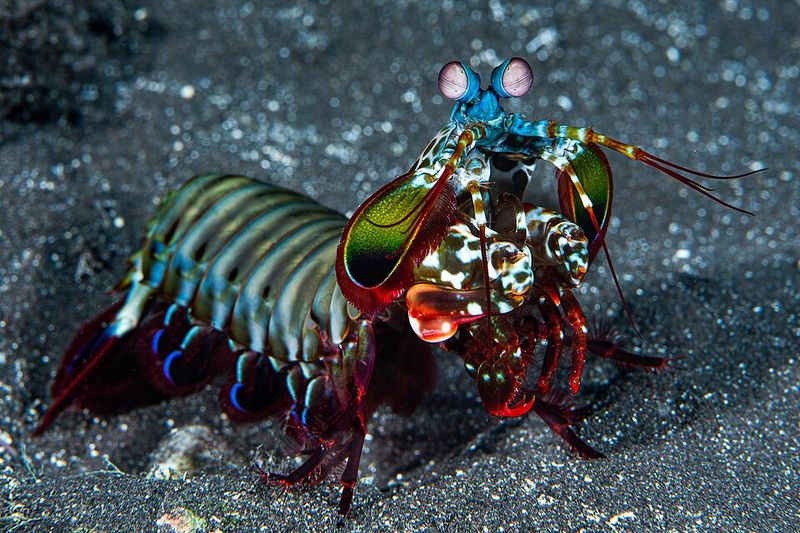
Image Credit: Cédric Péneau.
The peacock mantis shrimp looks like a small reef creature built from leftover gemstones. Its body flashes green, blue, orange, and red all at once, with oversized eyes that make it seem even more futuristic.
If you stumbled across one in Hawaii without knowing what it was, you might guess toy, alien, or special effect before landing on crustacean.
Then you learn what it can do, and the colors become only half the story. This animal has one of the most complex visual systems known, with far more color receptors than humans, and its club-like claws can strike prey with explosive force.
Those punches are so powerful they have become legendary for cracking shells and even shattering aquarium glass.
I love colorful animals that also come with absurd superpowers, and this one absolutely delivers. The peacock mantis shrimp is tiny, gorgeous, and strangely intimidating all at once.
It feels like Hawaii hiding a comic book character in plain sight among the coral and rubble.
Spanish Dancer Nudibranch
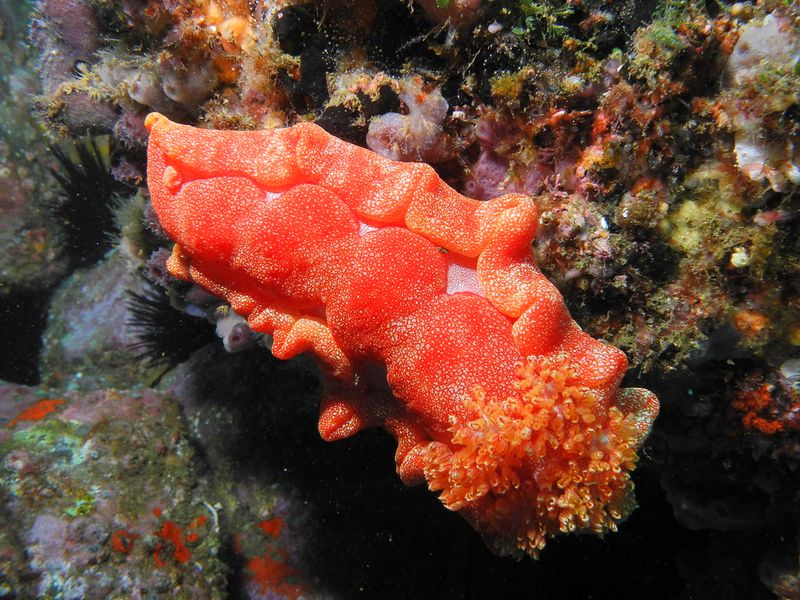
Image Credit: John Turnbull.
The Spanish dancer nudibranch is the kind of sea creature that makes you question whether the ocean is being intentionally theatrical. Its body is usually a brilliant red, sometimes edged with orange, pink, or yellow, and its frilly outline looks like fabric caught in motion.
When it swims, those ruffles ripple through the water like a flamenco skirt, which is exactly how it earned its unforgettable name.
For all its beauty, this sea slug is not trying to blend in. Its vivid coloring works as a warning to predators that it is distasteful or toxic, thanks in part to chemicals linked to the sponges it eats.
It is also mostly nocturnal, which somehow makes the whole creature feel even more mysterious and dramatic.
I think that contrast is what makes the Spanish dancer so memorable. It moves with real elegance, but underneath that performance is a very practical survival strategy.
In other words, this Hawaiian oddity is equal parts ballerina, warning sign, and living ribbon floating over the reef.
I’iwi (Scarlet Honeycreeper)
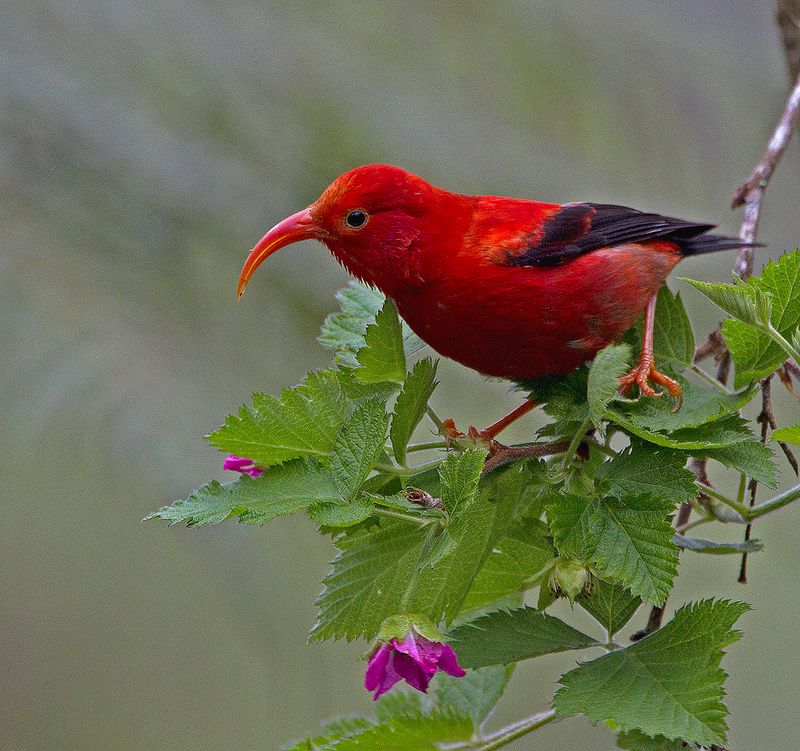
Image Credit: USFWS – Pacific Region.
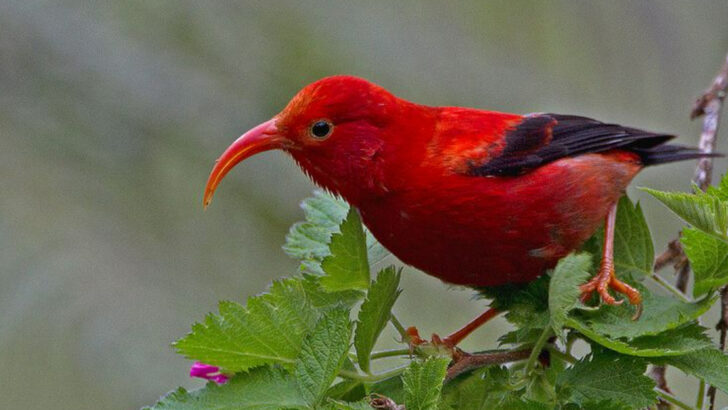
The i’iwi looks like someone turned a tropical flower into a bird and then gave it wings black as polished lava. Its scarlet plumage is intensely bright, and the long curved salmon-colored bill adds a shape that feels both delicate and dramatic.
In Hawaii’s native forests, that red flashes through the trees so vividly it can seem almost unreal at first glance.
This bird is more than a beautiful color splash in the canopy. Its bill and brush-tipped tongue are perfectly adapted for sipping nectar from curved native flowers, especially ohia blossoms, making it an important pollinator in fragile island ecosystems.
Long before modern wildlife lovers admired it, Native Hawaiians treasured its feathers for ceremonial cloaks and helmets.
That history gives the i’iwi an extra layer of presence whenever you read about it or spot it. It carries beauty, ecological importance, and cultural significance all at once.
Few Hawaiian animals feel as iconic, or as instantly unforgettable, as this red streak moving through misty mountain forest.
‘Apapane
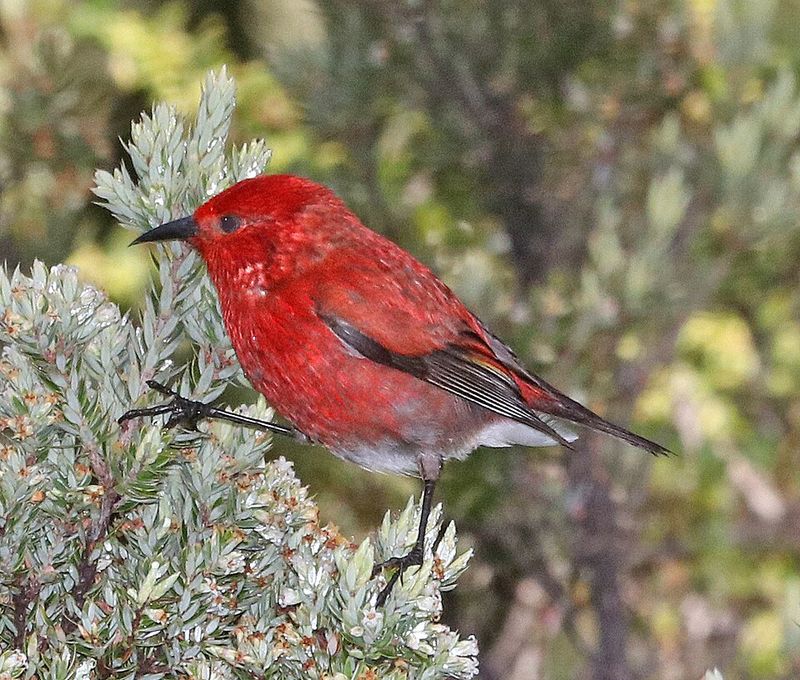
Image Credit: ALAN SCHMIERER.
The ‘apapane may be smaller and more common than some of Hawaii’s other native birds, but it is no less eye-catching. Its deep crimson body, dark wings, and flashes of white underneath give it the look of a glowing ember darting through green forest canopies.
When it moves quickly among ohia trees, the color contrast is so strong that it feels almost electric.
This honeycreeper spends much of its time feeding on nectar from ohia lehua blossoms, and that close relationship with native flowers helps define its entire presence in the forest. After feeding, its face can end up dusted with pollen, which somehow makes an already vivid bird look even more charming.
It also picks insects and spiders from leaves, showing it is more versatile than its sugary reputation suggests.
I like that the ‘apapane combines everyday energy with unforgettable looks. It is one of the native birds people are more likely to encounter, yet it still feels special every time.
Some animals do not need rarity to seem magical, and this is one of them.
Hawaiian Happy-face Spider
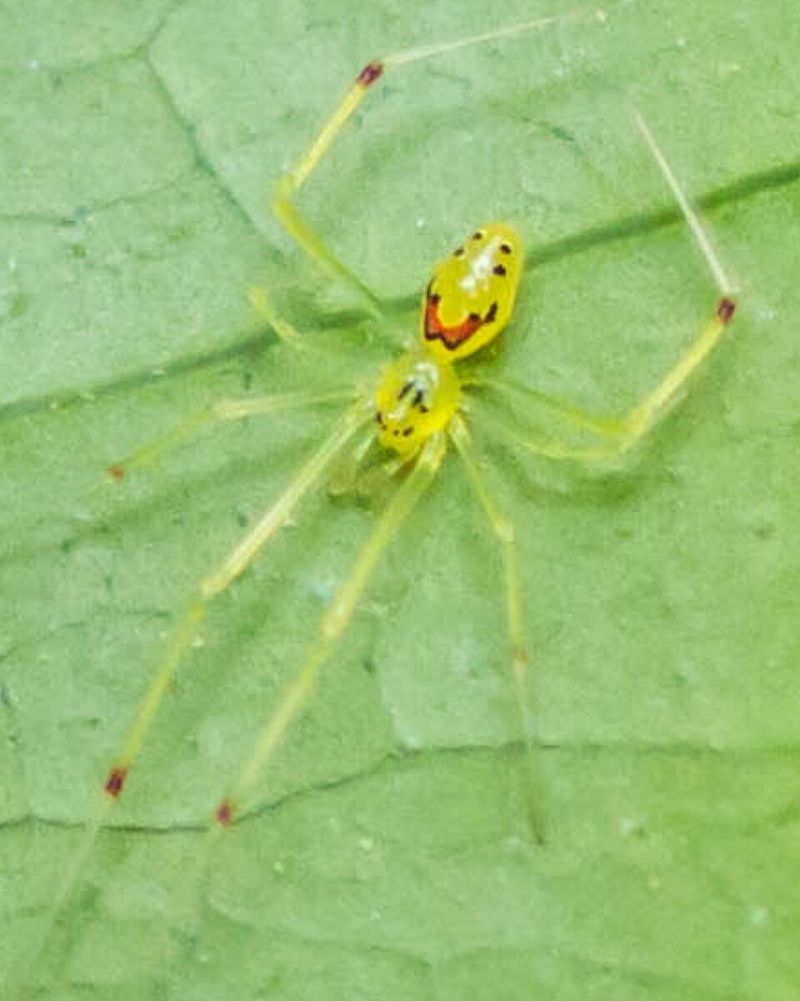
Image Credit: Melissa McMasters.
The Hawaiian happy-face spider might be one of the most delightfully strange animals on the islands. This tiny forest spider can carry markings on its abdomen that resemble a cartoon smiley face, drawn in shifting combinations of yellow, red, black, and white.
Since the patterns vary so much from one individual to the next, each one feels like a tiny custom design hidden under a leaf.
Its body is small enough to miss easily, which only adds to the charm once you know what to look for. The abdomen is often pale yellow and translucent, but it can shift toward green or orange depending on diet, giving this species yet another layer of visual weirdness.
These spiders live in wet and mesic forests and tend to stay tucked beneath leaves, away from casual attention.
I love that one of Hawaii’s most unusual colorful animals is also one of its smallest. You are not looking at a flashy bird or reef fish here, but a miniature surprise.
It feels like nature sneaking in a private joke for patient observers.
Oahu Tree Snail (Achatinella)
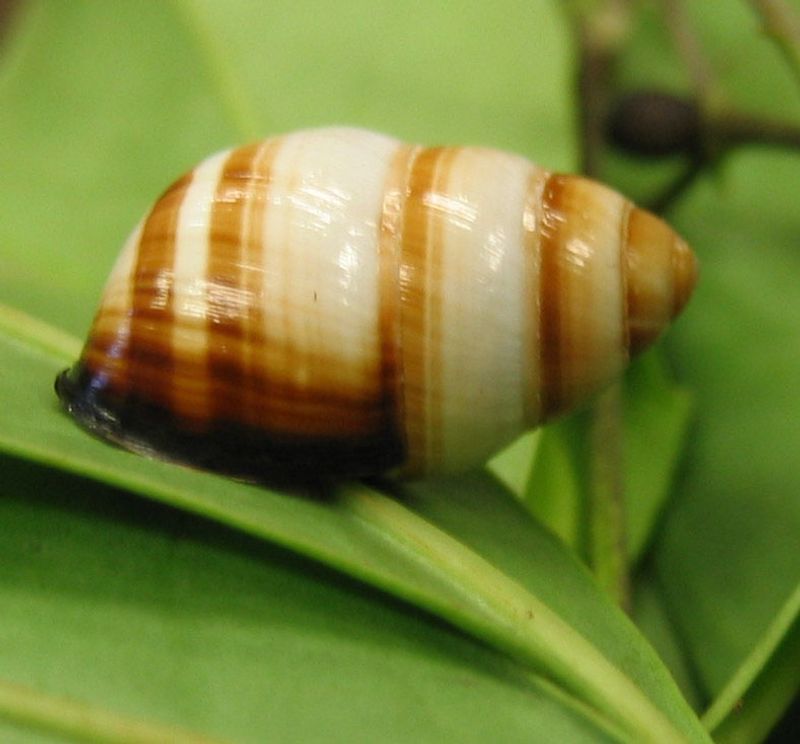
Image Credit: Army Environmental Update.
The Oahu tree snail is proof that even a snail can look like a tiny luxury object. Its glossy shell often swirls with yellow, brown, white, and black in patterns so polished and precise that they resemble hand-painted marbles.
On a damp leaf in a Hawaiian forest, one can look less like a mollusk and more like a bead placed there by an artist.
What makes these snails even more fascinating is how distinct their shell patterns can become from ridge to ridge. Thousands of years of isolation helped create unique looks in different populations, turning geography into living design.
They are also unusual in their life history, giving birth to live young and reproducing slowly, which sadly adds to their vulnerability.
That vulnerability is impossible to ignore, because all species in this genus are federally listed as endangered. So while the colors are beautiful, they also carry a sense of urgency.
Seeing photos of these snails feels a little like looking at irreplaceable island jewels that nature can no longer afford to lose.
Peacock Flounder
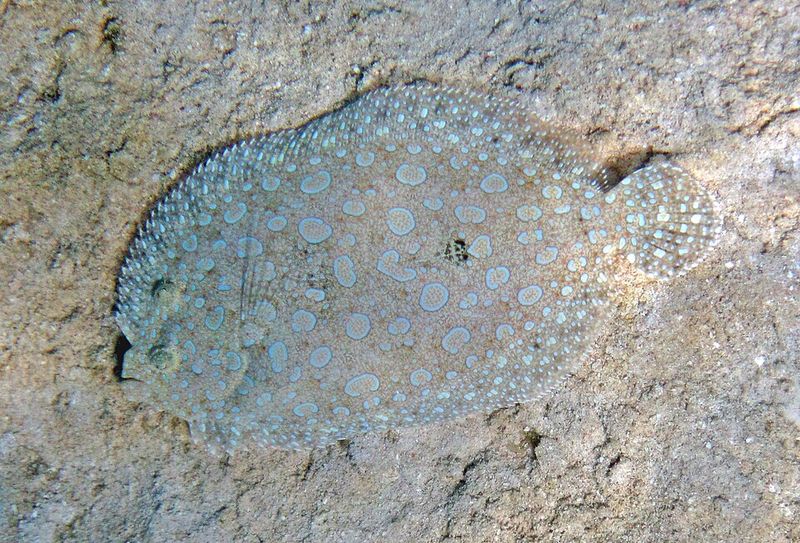
Image Credit: James St. John.
The peacock flounder is one of Hawaii’s best examples of a hidden masterpiece. At first glance it can disappear into the seafloor, flattened against sand or rubble in mottled brown camouflage.
Then the light catches those vivid blue rings scattered across its body, and suddenly a fish that seemed invisible looks decorated with glowing jewels.
That tension between concealment and showiness is what makes it so compelling. The peacock flounder can rapidly shift its color and pattern to match surrounding sand, coral, or rock, causing those bright markings to appear and fade with surprising speed.
It is a predator built for ambush, and its ability to transform the whole mood of its body is part of that strategy.
I think this fish is especially memorable because it rewards patience. You do not always notice it right away, but once you do, it feels like a secret revealed by the reef itself.
Few Hawaiian animals capture that blend of camouflage, sudden brilliance, and quiet weirdness quite so perfectly.