
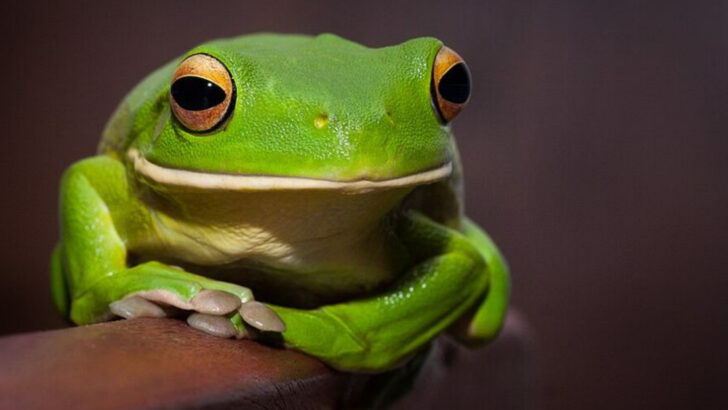
Florida does not do subtle when it comes to wildlife. Around marshes, springs, reefs, and even suburban yards, color flashes from feathers, scales, shells, and wings in ways that can feel almost unreal.
Some of these animals are famous, while others stay hidden until you know exactly where to look. If you want a tour of Florida at its most vivid, these standout creatures are the ones worth watching for.
Roseate Spoonbill
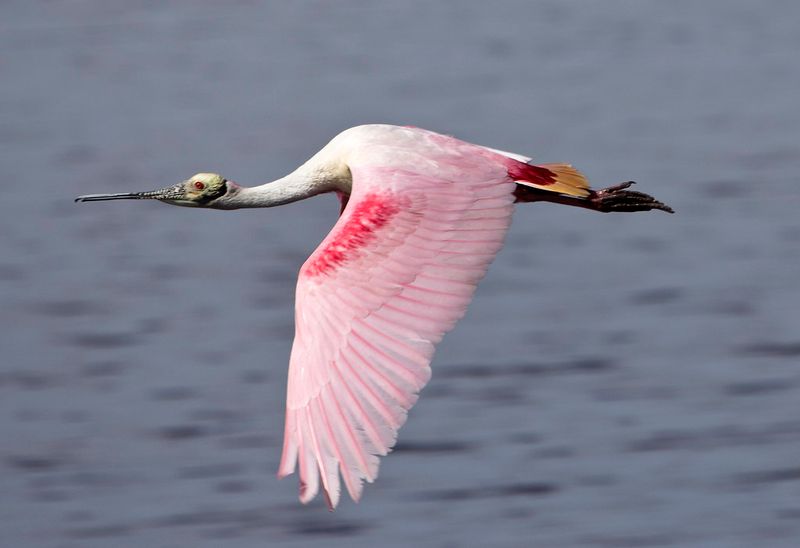
Image Credit: Watts.
If you have ever mistaken a roseate spoonbill for a flamingo, you are definitely not alone. This striking wading bird glows in shades of pink that come from carotenoid pigments in the crustaceans and other small prey it eats.
In Florida, you are most likely to spot it in coastal marshes, mangrove edges, mudflats, lagoons, and estuaries where shallow water makes feeding easier.
What makes the spoonbill unforgettable, beyond the color, is that oversized bill shaped like a spatula. It swings the bill side to side through the water, feeling for shrimp, insects, and tiny fish rather than searching with its eyes.
I love how elegant it looks one second and how oddly practical it seems the next, especially when groups feed together in glowing pink clusters.
Because this species is listed as threatened in Florida, every sighting feels a little more special. Seeing one lift off over a marsh, with pink wings catching the light, is pure coastal magic.
Painted Bunting
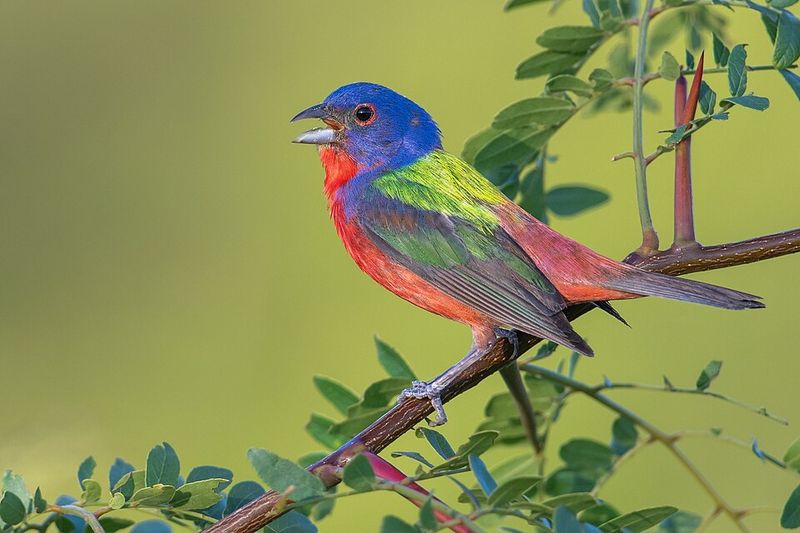
Image Credit: Dakota L.
The painted bunting looks less like a real bird and more like someone colored it with the brightest pencils they could find. A breeding male shows off a cobalt-blue head, green back, and brilliant red underparts that seem almost too intense for a songbird.
In parts of Florida, you can find these tiny gems around shrubby habitat, woodland edges, coastal scrub, and even backyard feeders.
What makes them even more appealing is that their beauty arrives with a soft, musical personality instead of flashy size. They often forage on the ground for seeds, then switch heavily to insects during breeding season, when protein matters more for growing chicks.
If you are patient near brushy cover in late spring or early summer, you might catch a quick burst of color that feels like a secret reward.
Florida is special because it hosts both breeding and wintering painted buntings, which gives you more chances than most places. Once you see one in good light, every sparrow-sized bird gets a second look.
Purple Gallinule
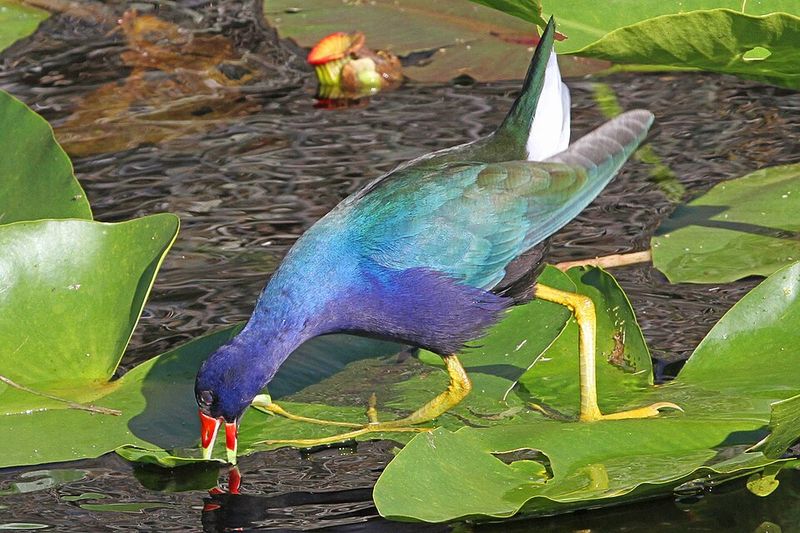
Image Credit: Judy Gallagher.
The purple gallinule is the kind of bird that makes a Florida marsh feel suddenly tropical. Its body flashes with blue, green, and purple iridescence, while a red bill tipped in yellow and absurdly long yellow toes finish the look.
If you watch one closely in a pond or freshwater marsh, you will see it stepping lightly across floating plants as if lily pads were built just for it.
Those oversized toes are not just for show. They spread the bird’s weight so it can walk on vegetation, climb reeds, and pull apart aquatic plants while searching for seeds, insects, snails, flowers, and other small food.
I think that mix of elegance and awkwardness is part of the charm, especially when one makes a short flight with its legs dangling in full view.
Florida offers this species year-round in the right wetland habitat, which means you do not have to rely on luck during migration. Find dense floating vegetation, slow down, and the marsh may suddenly start glowing back at you.
Eastern Bluebird
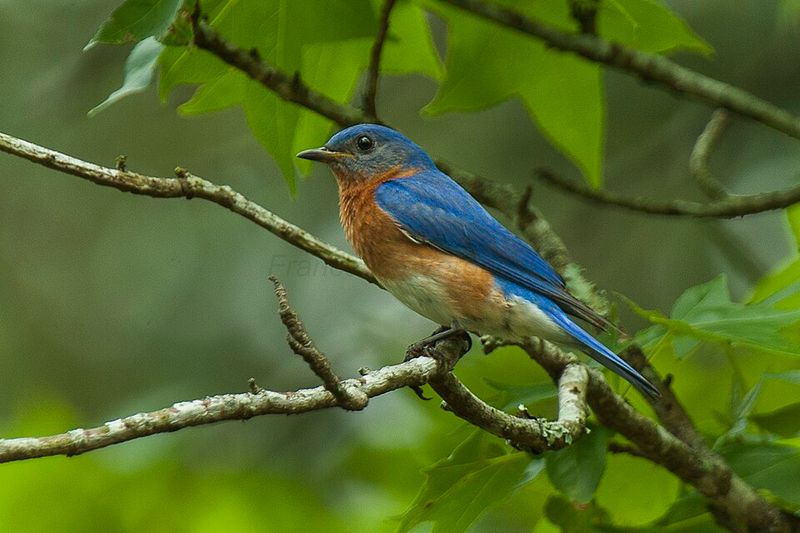
Image Credit: Francesco Veronesi.
The eastern bluebird brings a calmer kind of brilliance to Florida, but that softer beauty is exactly why it stands out. A male glows with vivid blue upperparts and a warm rusty-orange chest, creating a color combination that feels clean, classic, and instantly cheerful.
You are most likely to notice one in open woodlands, farms, parks, roadsides, and rural neighborhoods where it can hunt from low perches.
Bluebirds are wonderfully practical little birds. During warmer months they scan the ground for insects like beetles, caterpillars, grasshoppers, and spiders, then drop down with quick precision to grab them.
In winter, they shift toward berries and fruit, which is one reason they stay welcome in gardens and yards that include native plants or nest boxes.
I love that their comeback story is tied to people paying attention. Because they nest in cavities, properly placed bluebird boxes have helped support populations in many areas.
When a bluebird lands nearby, Florida suddenly feels brighter without even trying.
Scarlet Kingsnake
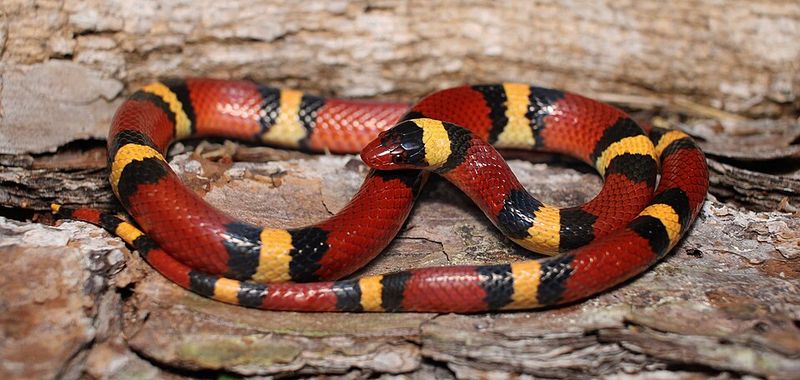
Image Credit: MH Herpetology.
The scarlet kingsnake proves that Florida’s brightest animals are not all birds and butterflies. This slender, nonvenomous snake wears bold rings of red, black, and yellow that immediately grab your attention and also help it mimic the much more dangerous eastern coral snake.
In the wild, though, you usually do not see it posing in the open, because it spends much of its life tucked under loose bark, logs, leaf litter, or rotting stumps.
That secretive lifestyle makes every encounter feel memorable. Scarlet kingsnakes are mostly nocturnal and specialize in hunting lizards and small snakes, though they may also take frogs, invertebrates, or small mammals depending on size and opportunity.
If you are someone who normally overlooks reptiles, this species has a way of changing your mind fast because the pattern is so clean and dramatic.
It also offers a useful reminder that bright colors in nature often mean more than beauty. Sometimes they warn, sometimes they bluff, and sometimes they help an otherwise hidden animal stay one clever step ahead of predators.
Florida Manatee
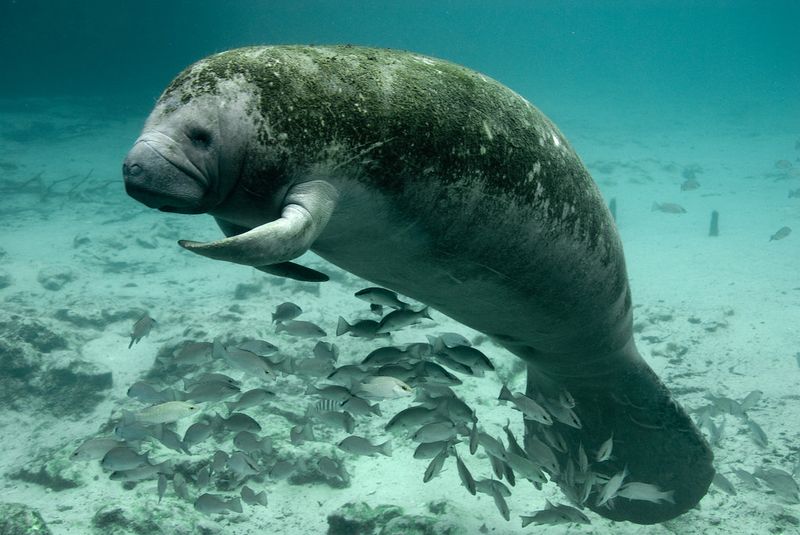
Image Credit: Keith Ramos.
The Florida manatee is not flashy in the usual sense, but its beauty grows on you almost instantly. Its broad gray body often carries greenish or brownish patches of algae, scars, and natural texture that make each individual look gently weathered and completely unique.
In crystal-clear springs, rivers, bays, and canals, that soft shape moves with such calm purpose that everything around it seems to slow down.
Manatees are herbivores that spend hours grazing on seagrasses and freshwater vegetation, using their flippers to steer and sometimes even help guide food. During winter, they gather in warm-water refuges like natural springs because prolonged cold can be deadly for them.
I think that seasonal movement is part of what makes seeing them so meaningful, especially when dozens drift together in water so clear you can watch every subtle roll and breath.
They may not be bright pink or electric blue, but they absolutely belong on this list. Florida would feel far less magical without these peaceful giants turning quiet waterways into something unforgettable.
Green Tree Frog
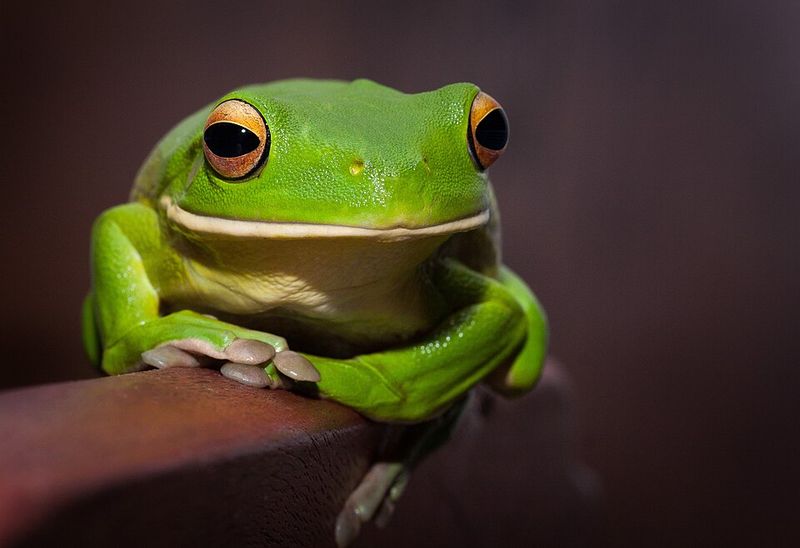
Image Credit: Bignoter.
The green tree frog is one of those animals that can make a backyard feel like a tiny piece of wild Florida. Its bright emerald body and pale stripe running along the side look almost too polished to be real, especially under porch lights or on glossy leaves after rain.
Even though the color seems loud to us, it blends surprisingly well among reeds, grasses, and wet green foliage.
These frogs are nocturnal insect hunters with excellent climbing ability thanks to their sticky toe pads. Around ponds, marshes, cypress edges, and gardens, they wait for moths, flies, mosquitoes, crickets, and other insects drawn toward moisture or light.
If you spend time outdoors after dark, you may hear them before you see them, then suddenly notice one sitting motionless like a tiny green ornament with eyes.
I like them because they add life to spaces many people overlook. A single tree frog on a window can turn an ordinary humid evening into something more vivid, more local, and unmistakably Florida.
Butterfly Peacock Bass
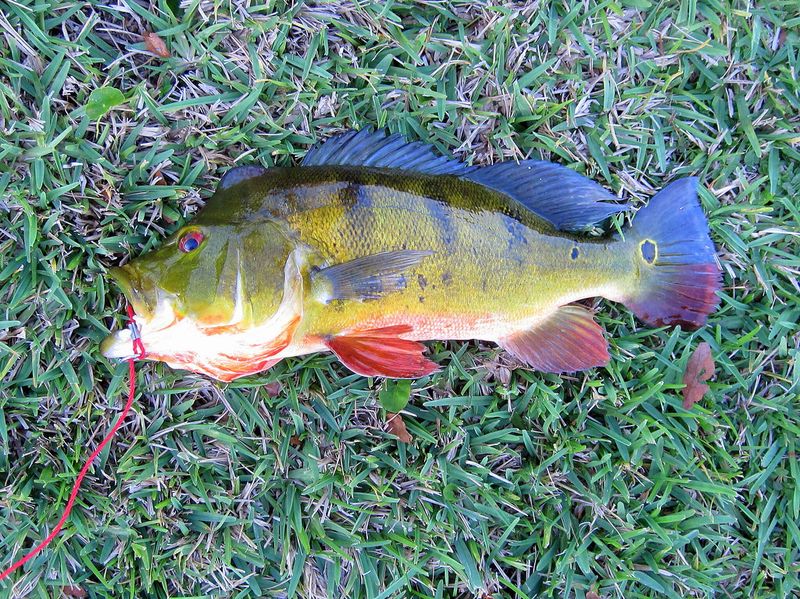
Image Credit: Kenneth Cole Schneider.
Despite the confusing common name sometimes attached to it, the butterfly peacock bass is one of Florida’s most colorful fish. Introduced to southeast Florida’s freshwater canals, this species shows off a golden body, dark vertical bars, and a striking eye spot on the tail that looks like a painted peacock feather.
In clear water and bright sun, those colors can look almost tropical enough to belong on a postcard.
You are most likely to find peacock bass in warm canals, ponds, lakes, and shady freshwater spots around Miami-Dade and Broward counties. They are fast, aggressive daytime hunters that feed mainly on other fish, often lurking near bridge pilings, bends, culverts, and fallen trees before bursting forward.
I think part of their appeal is the contrast between setting and species, because a neighborhood canal suddenly holds something that looks imported from a much more exotic place.
Florida has plenty of native beauty, but this fish still earns a place for pure visual impact. Few freshwater animals in the state bring such bold color and instant drama to the water.
White Ibis
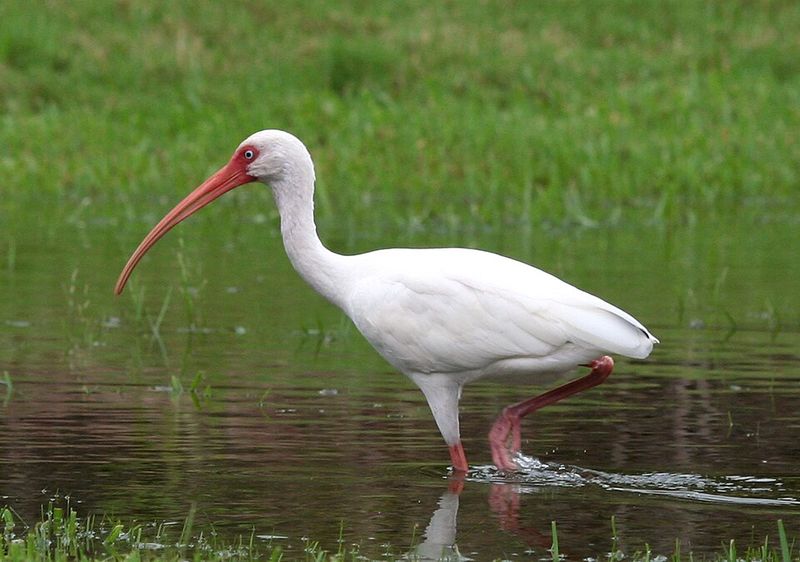
Image Credit: Terry Foote.
The white ibis shows that brightness does not always mean rainbow colors. Its clean white plumage paired with a vivid red-orange downcurved bill and matching legs creates one of the sharpest color contrasts in Florida’s wetlands.
When a flock moves together across a marsh, golf course, or soggy lawn, the whole scene feels more elegant than everyday birds have any right to be.
These ibises are social, tactile foragers that probe soft ground and shallow water for crayfish, crabs, insects, snails, worms, frogs, and other small prey. Instead of hunting by sight alone, they often sweep and feel with those curved bills, which gives their feeding style a steady, rhythmic quality.
I love watching a group spread out across wet grass because the white bodies and glowing bills create an almost choreographed pattern as they move.
They also adapt to surprisingly human spaces, which means you may meet them far from a postcard marsh. That accessibility is part of their charm.
Florida puts remarkable birds in ordinary places, and the white ibis proves it beautifully.
Zebra Longwing Butterfly
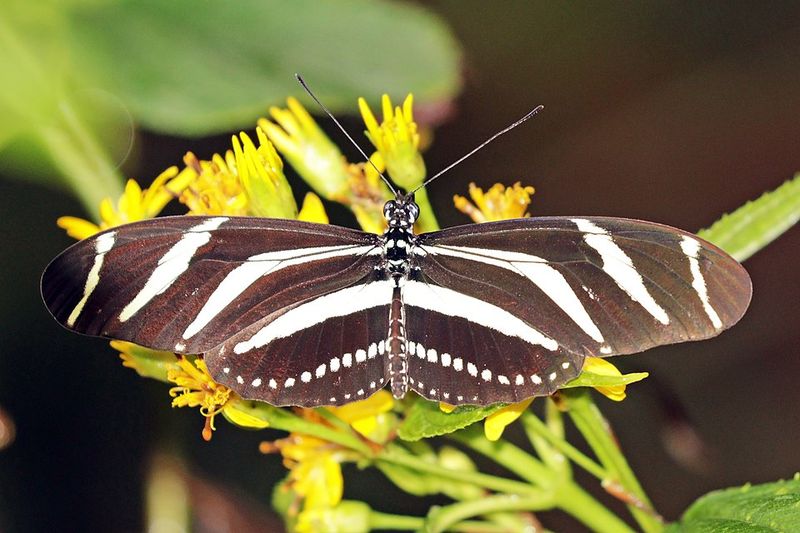
Image Credit: Charles J. Sharp.
The zebra longwing is Florida’s official state butterfly, and once you see one gliding through a garden, that choice makes perfect sense. Its long black wings crossed with vivid yellow stripes look refined, tropical, and unmistakable even from a distance.
Rather than darting past in a blur, it often floats with a slow, deliberate flight that gives you time to appreciate every line.
This butterfly is more unusual than it first appears. Adults feed on both nectar and pollen, which helps them live much longer than many other butterflies, and their caterpillars use passion vines that contribute toxins making the adults distasteful to predators.
One of my favorite details is their habit of communal roosting, with groups returning to the same evening spots again and again like tiny winged regulars.
You can find zebra longwings in shaded gardens, woodland edges, hammocks, and places where passionflowers grow. They do not just add color to Florida.
They add personality, memory, and that slightly theatrical feeling that the state’s wild beauty always seems to deliver.
Rainbow Parrotfish
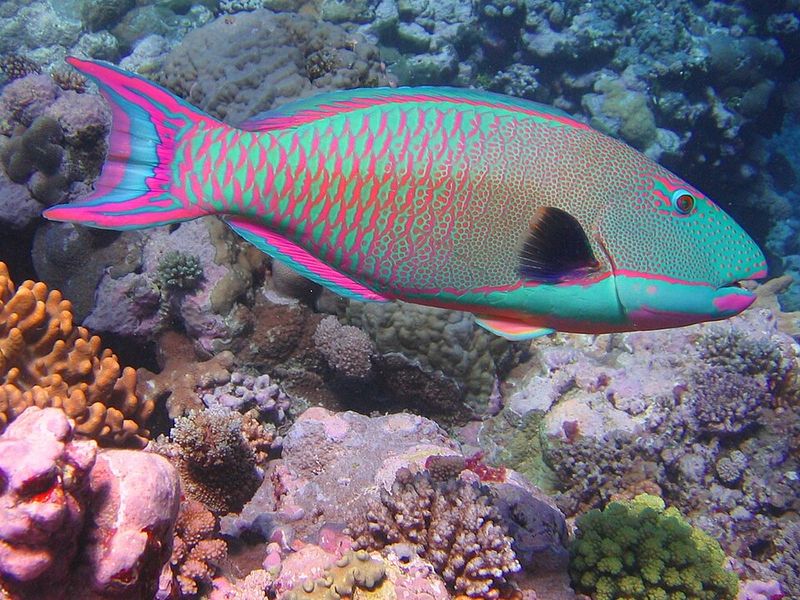
Image Credit: Rling~.
The rainbow parrotfish looks like a reef decided to become a single animal. In Florida waters, especially around coral habitats and nearby seagrass and mangrove systems, this large fish can show brilliant mixes of green, blue, orange, and pink that shift with age and sex.
Its heavy beak-like mouth gives it a slightly comical expression until you realize that tool is essential to the health of the reef itself.
Parrotfish scrape algae and organic material from coral and rocky surfaces, helping prevent reefs from being smothered by unchecked growth. As they feed, they also grind bits of carbonate material that later pass through as fine white sand, which means their everyday grazing literally helps build tropical beaches.
I love that something so colorful also does such gritty, practical work beneath the surface where most people never notice.
Because juveniles often use mangroves as nursery habitat before moving to reefs, they are tied to several of Florida’s richest ecosystems at once. Few animals better capture the bright, interconnected beauty of coastal Florida than this underwater artist.
Royal Tern
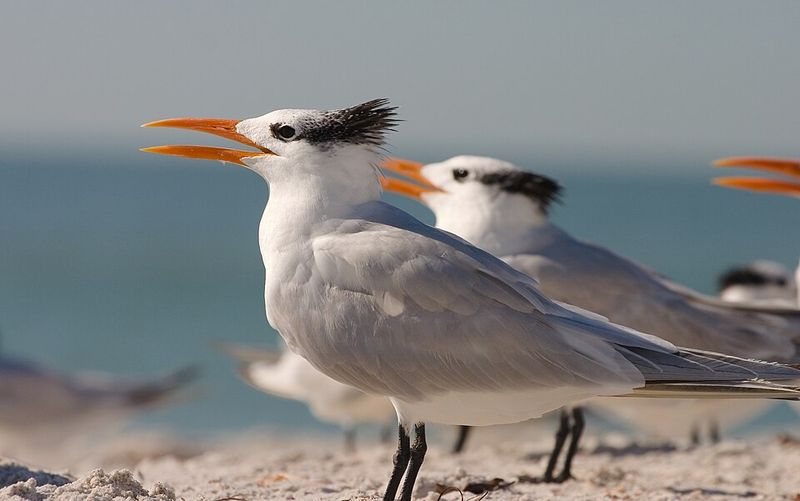
Image Credit: Nicholas Atamas.
The royal tern carries itself like a bird that knows exactly how stylish it is. With a shaggy black crest, sleek pale body, and vivid orange bill, it stands out immediately along Florida beaches, estuaries, harbors, and sandbars.
Even at rest, it looks aerodynamic and a little dramatic, like the seabird version of windswept hair done on purpose.
What really wins me over is the way it hunts. Royal terns hover over the water, then plunge headfirst to snatch small fish, shrimp, and other prey with impressive precision, often from heights that make the dive look riskier than it is.
In colonies, their calls and constant motion create a restless energy that feels inseparable from the coast itself, especially where groups gather on open sand.
Florida birders know them well, but they still deserve more appreciation for sheer visual impact. Not every beautiful animal needs neon colors to make an impression.
Sometimes a sharp crest, a glowing bill, and total confidence against a bright shoreline are more than enough to own the scene.
Flame Skimmer Dragonfly
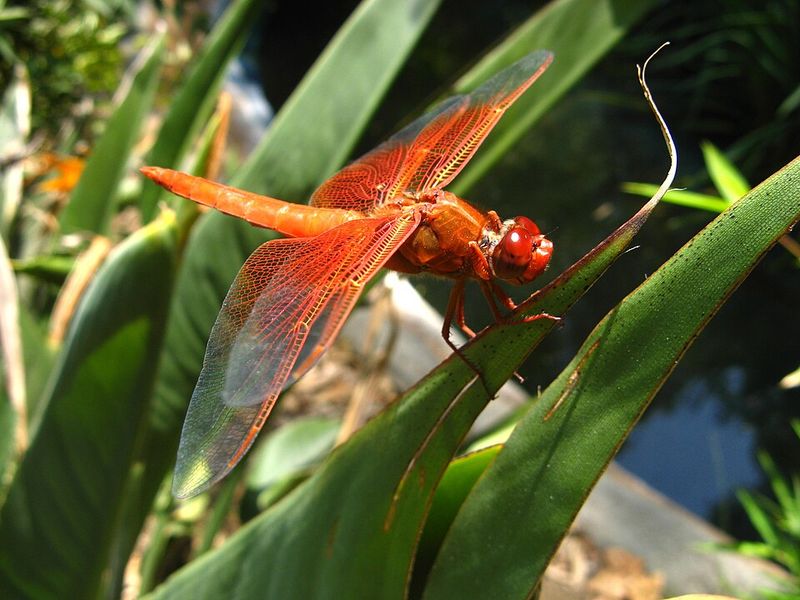
Image Credit: Regular Daddy.
The flame skimmer looks like a dragonfly built out of embers. A mature male can glow with fiery red-orange across the body, eyes, and even parts of the wings, creating a flash of color that seems to hover rather than fly.
Although it is more strongly associated with the western United States than Florida, it still deserves mention here as a benchmark for what brilliant insect color can look like.
Dragonflies like this are not delicate little decorations. They are aerial predators with speed, precision, and a serious appetite for mosquitoes, flies, moths, and other soft-bodied insects, often launching from a favored perch and returning to the same spot after a chase.
I find that combination of elegance and efficiency especially satisfying, because the brightest creatures are often the hardest workers in the landscape.
If you ever see a red dragonfly catching sunlight over still water, you understand the appeal instantly. Whether you are comparing species or dreaming up the most vivid winged hunters, the flame skimmer remains one of the most unforgettable color explosions in the insect world.
Atlantic Blue Crab
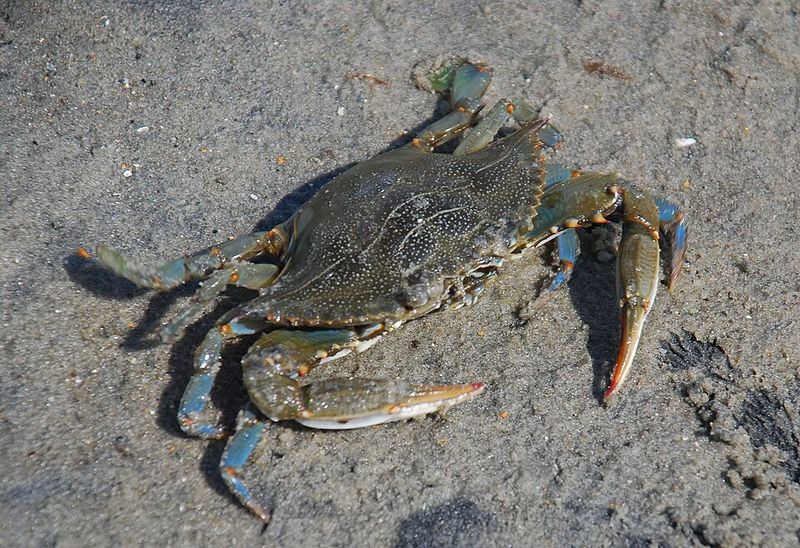
Image Credit: Jarek Tuszyński.
The Atlantic blue crab might be one of Florida’s most underrated works of art. At first glance you notice the olive-green shell, but then the legs and claws reveal those rich sapphire tones that look almost painted on.
Females add vivid red tips to the pincers, which makes the entire animal feel even more dramatic in shallow estuaries, bays, marshes, and seagrass edges.
Blue crabs are not just beautiful, they are busy. They are strong swimmers, predators, scavengers, and ecosystem multitaskers that feed on mollusks, fish, plants, detritus, and even other crabs when the chance appears.
I like that their beauty comes with attitude, because they move with clear purpose and never seem especially interested in whether you appreciate how good they look while doing it.
They also play a major role in Florida’s coastal food webs, serving as both hunter and prey across different life stages. That means this brilliant crab is not simply a colorful resident of the estuary.
It is part of the machinery that keeps those productive, tangled, salt-touched ecosystems alive and thriving.