
Hawaii feels like another planet when you start looking closely at the wildlife. On these islands, evolution turned familiar animals into astonishing specialists, and it also produced creatures you will not easily forget.
Some are sacred, some are tiny, and some look almost invented, yet each one tells a story about isolation, survival, and wonder. If you want a wilder view of Hawaii than beaches and resorts, these extraordinary species deserve your attention.
Hawaiian Monk Seal
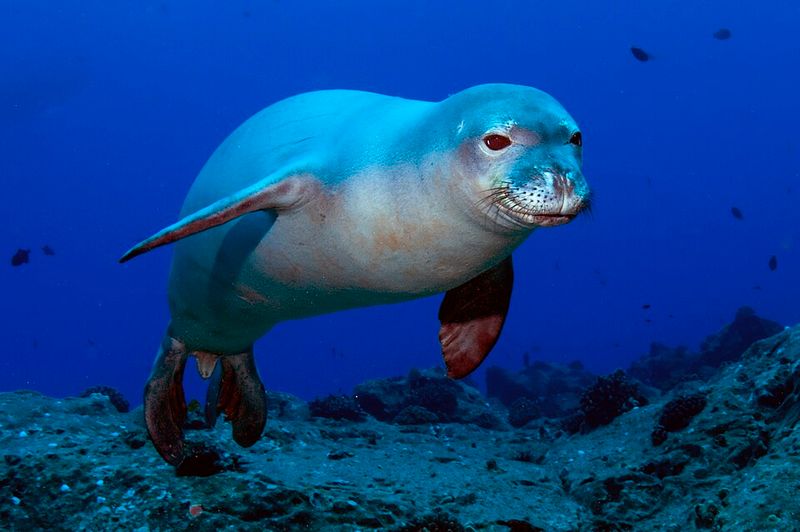
Image Credit: N3kt0n.
If you ever wanted proof that Hawaii can still surprise you, the Hawaiian monk seal delivers it with sleepy charisma and serious rarity. This endangered marine mammal is found only in the Hawaiian archipelago, where adults can stretch beyond seven feet and weigh up to 600 pounds.
I love that such a powerful hunter can also look completely unbothered while napping on a beach like it owns the shoreline.
In the water, monk seals are skilled bottom foragers, searching for fish, octopus, eels, and crustaceans, often in relatively deep coastal areas. Today, roughly 1,600 remain, with many living in the protected Northwestern Hawaiian Islands, though habitat loss, marine debris, disease, shark predation, and human disturbance still threaten their recovery.
If you spot one, the best thing you can do is admire it from a respectful distance, because this rare local icon needs space almost as much as it needs clean, healthy ocean habitat.
Nene
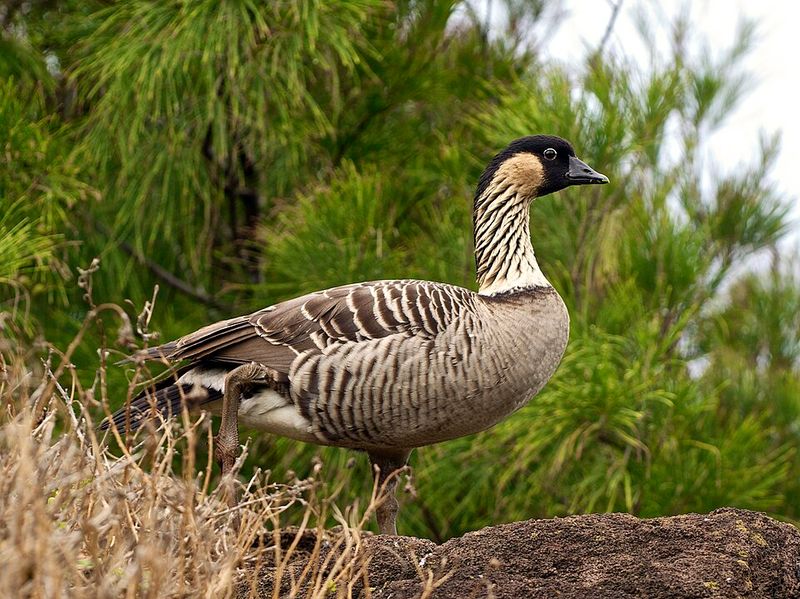
Image Credit: Jörg Hempel.
The nene looks like a goose that rewrote the rules after moving to a volcanic archipelago and deciding lava fields were home. As Hawaii’s state bird and the rarest goose in the world, it evolved from ancestors related to Canada geese, but its shorter wings and partly webbed feet suit walking far better than endless migration.
When you see one stepping calmly across rugged ground or clipped resort grass, it feels like evolution made something practical and elegant at once.
Its comeback is one of Hawaii’s most encouraging wildlife stories, because the population once dropped to fewer than 30 birds. Conservation breeding, habitat management, and protection helped restore numbers, and now visitors may notice nene in parks, ranchlands, and even golf courses across several islands.
Still, the bird remains vulnerable to predators, vehicles, and habitat pressures, so every sighting feels less like checking off a bird list and more like witnessing a hard-won survival story in motion.
Hawaiian Green Sea Turtle
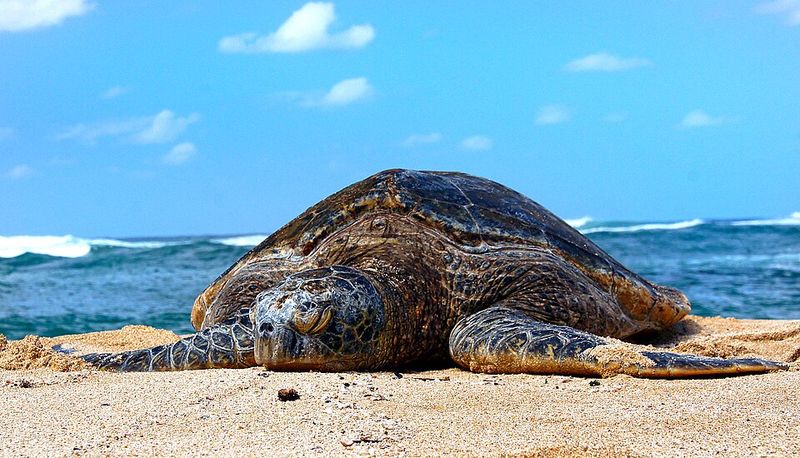
Image Credit: Bernard Spragg. NZ.
The honu has a calm, ancient presence that can make an entire shoreline feel quieter the moment you see one. Hawaiian green sea turtles spend their lives cruising shallow coastal waters, grazing on algae and seagrass, and helping keep reef habitats balanced in the process.
You do not need a dramatic encounter either, because even a slow silhouette passing over reef rock can feel unforgettable.
Beyond their beauty, honu carry deep cultural meaning in Hawaii, where they are often associated with protection, endurance, and connection to place. These turtles can live for decades and may return to familiar nesting areas over the course of their lives, yet they still face danger from fishing gear, boat strikes, plastic pollution, and careless human behavior near resting beaches.
If you are lucky enough to spot one basking on shore or feeding in the shallows, the respectful choice is simple: give it room, let it rest, and enjoy one of Hawaii’s most beloved marine residents without interrupting its day.
Iiwi
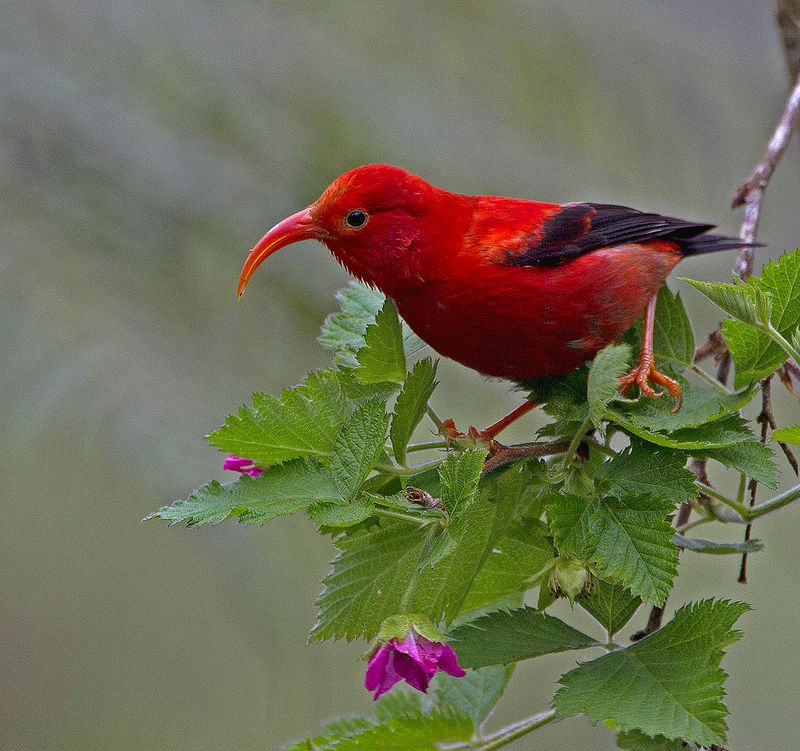
Image Credit: USFWS – Pacific Region.
The iiwi looks like someone dipped a songbird in scarlet paint and handed it a perfectly curved nectar straw. This native Hawaiian honeycreeper is one of the islands’ most recognizable birds, famous for its bright red plumage and long bill adapted for sipping nectar from flowers like ohia lehua.
When you picture a living jewel flickering through a cloud forest, this is probably the bird your mind wants.
Its beauty hides a fragile reality, because the iiwi depends heavily on native forest ecosystems and the flowers that feed it. By moving from bloom to bloom, it helps pollinate important plants, yet mosquito-borne avian malaria has pushed many populations into cooler, higher elevations where mosquitoes are less common.
That means every iiwi sighting carries both delight and urgency, a reminder that Hawaii’s forests are not just scenic backdrops but life-support systems for species found nowhere else. Protecting native habitat, controlling invasive threats, and taking climate change seriously all matter if you want this scarlet flash to remain part of Hawaii’s soundtrack.
Happy-Face Spider
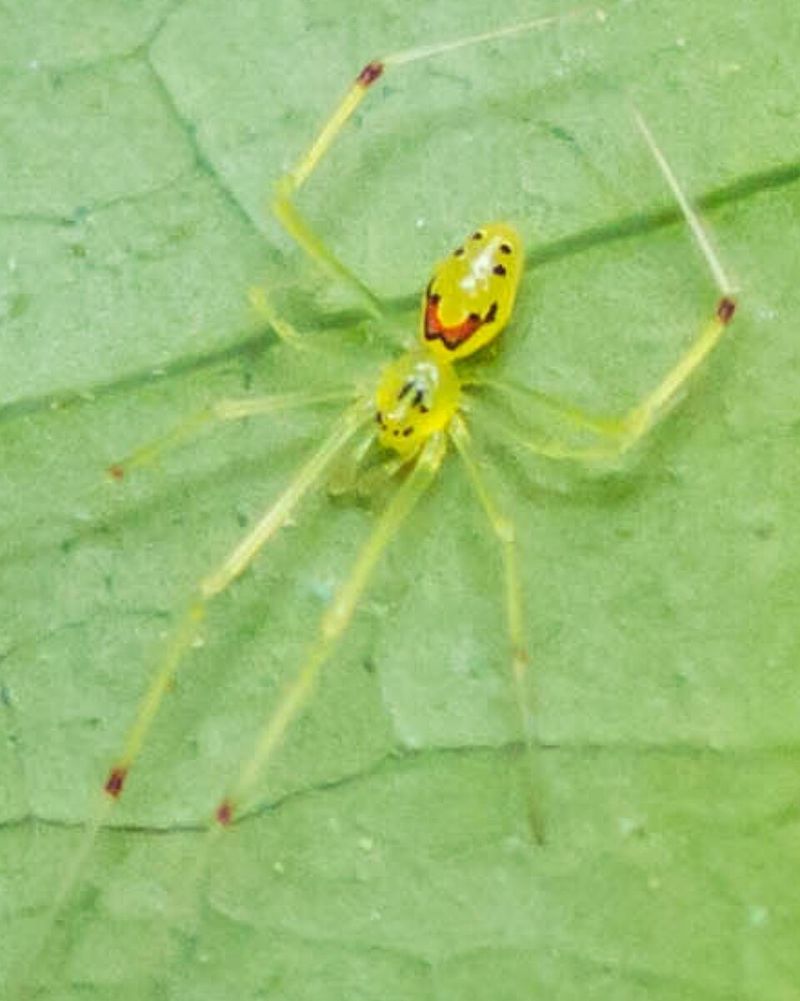
Image Credit: Melissa McMasters.
If Hawaii were casting a tiny mascot for delightful weirdness, the happy-face spider would get the role immediately. This small native spider is famous for abdominal markings that sometimes resemble a smiling face, although the patterns vary wildly from one individual to another.
You could spend an afternoon looking at photos of them and still feel amazed that evolution apparently has a sense of graphic design.
Despite the playful nickname, this spider is more scientifically fascinating than cartoonish, because researchers still debate exactly why those bold markings exist. One leading idea is that the unusual patterns may confuse predators, though the species is harmless to people and far more vulnerable than threatening.
It also lives in a habitat under pressure from invasive species and environmental change, which makes its survival less guaranteed than its cheerful reputation suggests. I think that contrast is part of its magic: a creature barely larger than a bead, hidden in Hawaiian forest vegetation, carrying one of the most unexpectedly joyful looks in the animal world.
Hawaiian Hoary Bat
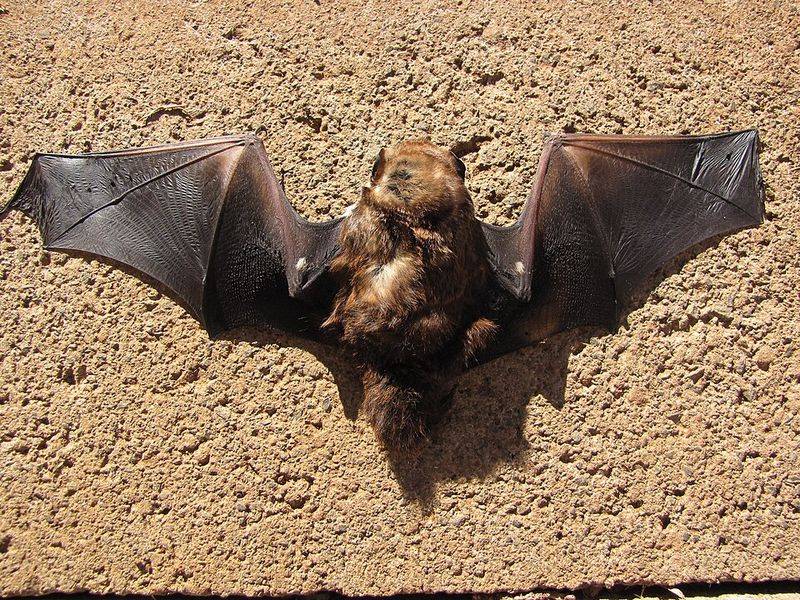
Image Credit: Forest and Kim Starr.
The Hawaiian hoary bat, known as opeapea, is the kind of animal that makes nighttime in Hawaii feel mysteriously alive. It is the islands’ only native land mammal, and its frosted brown fur, tipped with white, gives it a slightly silvered look as it moves through dusk after insects.
Unlike bats that gather in caves, this one usually roosts alone in tree foliage, which somehow makes it feel even more elusive.
After sunset, it hunts moths, beetles, mosquitoes, and other insects using echolocation, turning the evening air into an invisible map of prey and obstacles. That quiet efficiency is impressive, but the species faces real pressure from habitat loss and collisions associated with wind energy development, creating conservation challenges that are not always easy to solve.
If you catch only a quick flicker overhead, it may not seem dramatic, yet you are watching a survivor found nowhere else on Earth. For me, that brief, almost ghostlike appearance is exactly what makes opeapea memorable: it asks you to notice Hawaii after dark, not just in postcard daylight.
Pueo
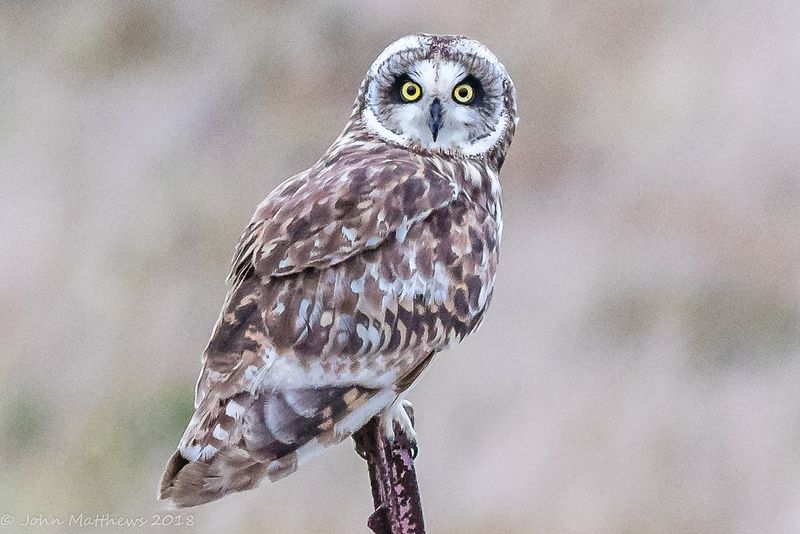
Image Credit: John Matthews.
The pueo does not need darkness to be mysterious, which is part of what makes this Hawaiian owl so compelling. A subspecies of the short-eared owl, it often hunts in daylight, gliding low over open grasslands as if it is reading the ground for movement.
That daytime presence gives every sighting a strangely intimate feeling, because you are not peering into the night for it, it simply appears in your world.
In Hawaiian tradition, the pueo is often regarded as an aumakua, or family guardian spirit, and that cultural significance gives the bird an added layer of reverence. Its haunting calls, focused stare, and graceful flight have inspired stories for generations, while its practical side remains all business as it searches for rodents and small birds.
Modern threats such as habitat change, vehicle strikes, and introduced predators make protection increasingly important. I think the pueo represents something rare in wildlife: a predator that feels both earthly and symbolic at once, equally at home in ecology and memory, crossing fields like a message you almost understand.
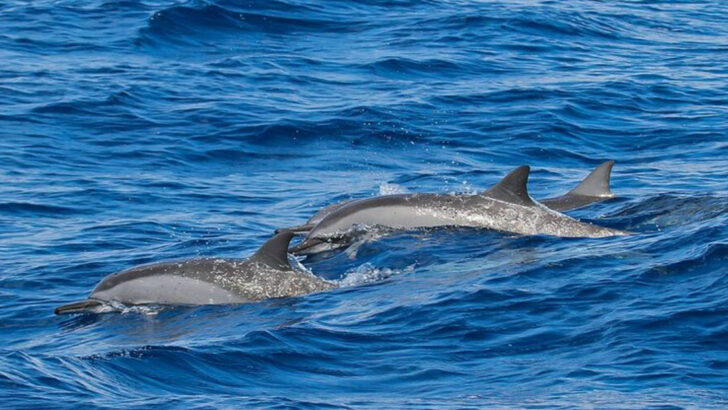
Hawaiian Spinner Dolphin
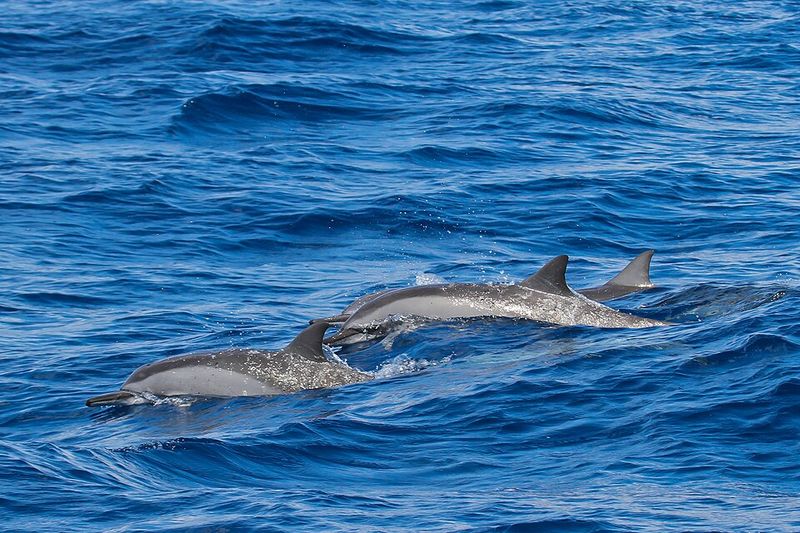
Image Credit: Bennet Gevers.
Hawaiian spinner dolphins have the kind of athletic flair that can make the ocean feel like a stage. Famous for their airborne spins, these dolphins launch clear of the water and rotate multiple times before splashing back down, turning a simple surfacing into a performance you will replay in your head all day.
It is easy to focus on the acrobatics, but their daily rhythm is just as interesting.
They often rest in sheltered bays during the day, then head offshore at night to feed on squid and small fish. That schedule means human disturbance can do real harm, especially when swimmers or boats repeatedly interrupt essential daytime rest, which is why regulations and respectful viewing practices matter so much.
The most rewarding encounter is not the closest one, it is the one where the dolphins remain relaxed and undisturbed while you watch from a proper distance. There is something satisfying about appreciating wild behavior without demanding more from it, and spinner dolphins reward that patience with a reminder that grace in nature is often most spectacular when left alone.
Kamehameha Butterfly
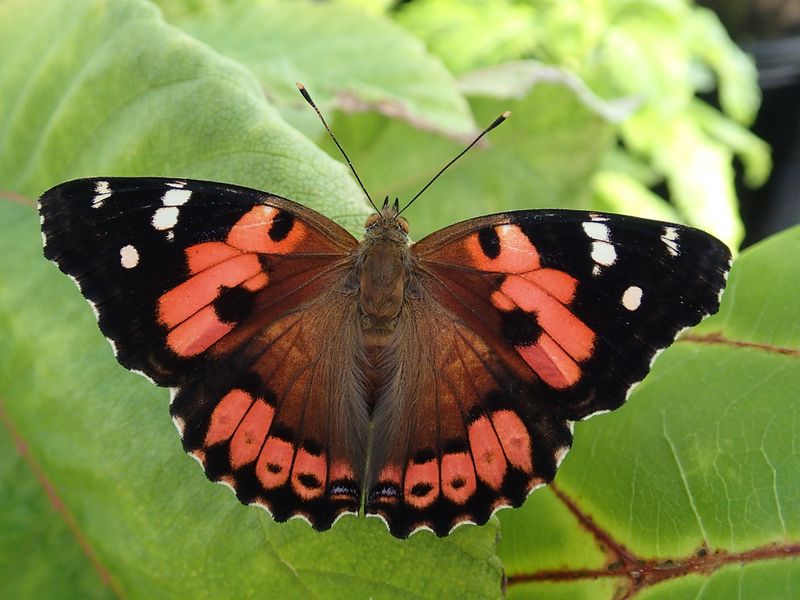
Image Credit: Will Haynes / Hawaii DLNR-DOFAW.
The Kamehameha butterfly feels like royal confetti drifting through the forest, which is fitting given its name. Named for Hawaii’s royal family, it is one of only two butterfly species native to the islands, and its orange wings marked with black make it wonderfully easy to recognize.
If you spot one fluttering through a garden edge or native woodland, the moment feels cheerful, but also a little exclusive.
That is because this butterfly depends strongly on healthy native habitat, especially mamaki plants that feed its caterpillars. Without those plants and the forest communities around them, the species loses far more than a snack, it loses the foundation of its life cycle.
I like that its story is not just about beauty, but about connection, because the butterfly quietly ties royalty, botany, and conservation together in one vivid package. Protecting native forests, planting appropriate host species, and limiting the spread of invasive plants all help ensure this bright local emblem keeps fluttering through Hawaii.
Sometimes the smallest wings carry the clearest reminder that ecosystems survive through relationships, not isolated stars.
Hawaiian Yellow-Faced Bee
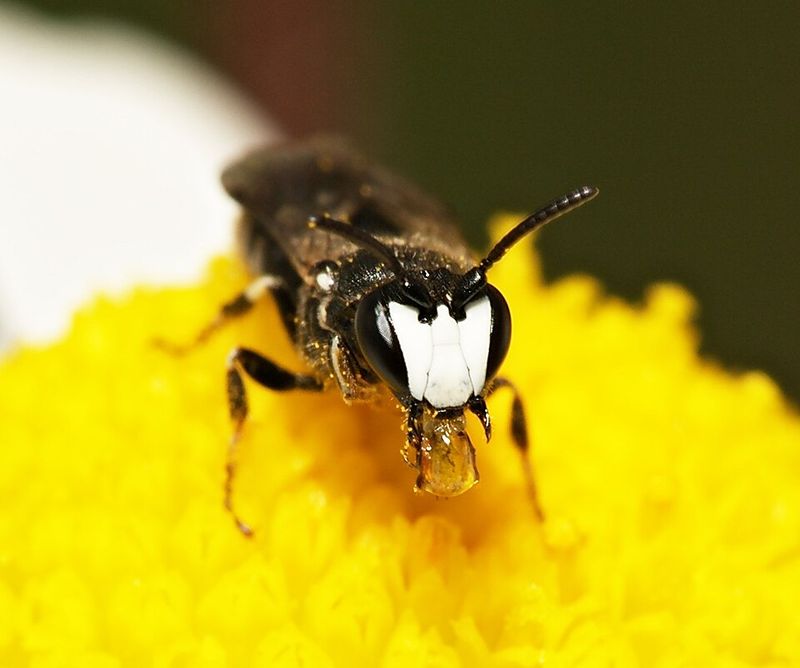
Image Credit: Sarefo.
The Hawaiian yellow-faced bee will not dominate your vacation photos, but it might be one of the most important creatures you never noticed. These tiny native bees are solitary rather than hive-building, and they pollinate native Hawaiian plants that other insects often ignore.
Their understated scale is part of what makes them so remarkable, because entire ecosystems can lean on insects small enough to miss with one careless glance.
Several species are federally listed as endangered, largely because of habitat loss, invasive plants, introduced predators, and the general unraveling that follows ecological disruption. Protecting them means protecting much more than a single pollinator, since many native plants depend heavily on these bees for reproduction and long-term survival.
I find that humbling, because it shifts your attention from Hawaii’s obvious spectacle to its quieter machinery of life. If colorful birds and sea turtles are the headliners, yellow-faced bees are the backstage crew keeping the whole production running.
Saving them is not only about insects, it is about preserving the living relationships that make Hawaii’s flora unique, resilient, and unmistakably local.
Hawaiian Bobtail Squid
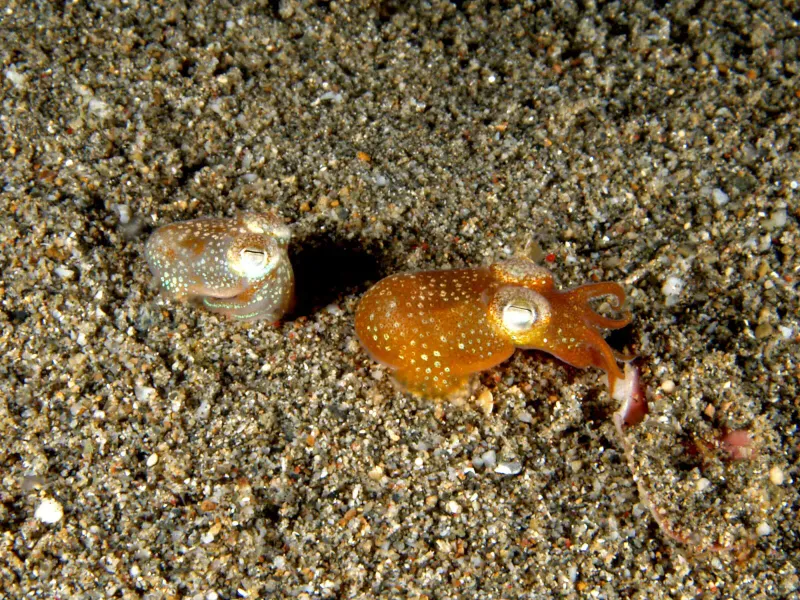
Image Credit: Nhobgood Nick Hobgood.
The Hawaiian bobtail squid is proof that an animal can be tiny, adorable, and scientifically revolutionary all at once. Only a few inches long, it spends much of its time near the seafloor, but its real fame comes from a partnership with bioluminescent bacteria housed in a specialized light organ.
That built-in glow helps camouflage the squid by matching moonlight from above, making it harder for predators below to spot its silhouette.
This relationship has turned the species into a star of biological research, especially for scientists studying how animals and microbes cooperate. What sounds like a fantasy detail is actually one of the clearest real-world examples of symbiosis, and it has helped researchers understand communication between hosts and beneficial bacteria at a deeper level.
I love that something so small can illuminate such big questions, because it makes Hawaii feel like both a natural wonderland and an outdoor laboratory. The bobtail squid may not be as famous as a dolphin or turtle, but once you learn its story, it becomes hard to forget a creature that literally glows with collaboration.