
Louisiana is full of animals that seem to slip right into the landscape, whether that means swamp water, bark, leaves, or sand. Some are famous, some are easy to overlook, and a few are so convincing that you could pass within feet of them and never know it.
If you love wildlife with a little mystery built in, this lineup is hard to beat. Here are ten Louisiana animals whose best survival trick is looking like they are not there at all.
American Alligator
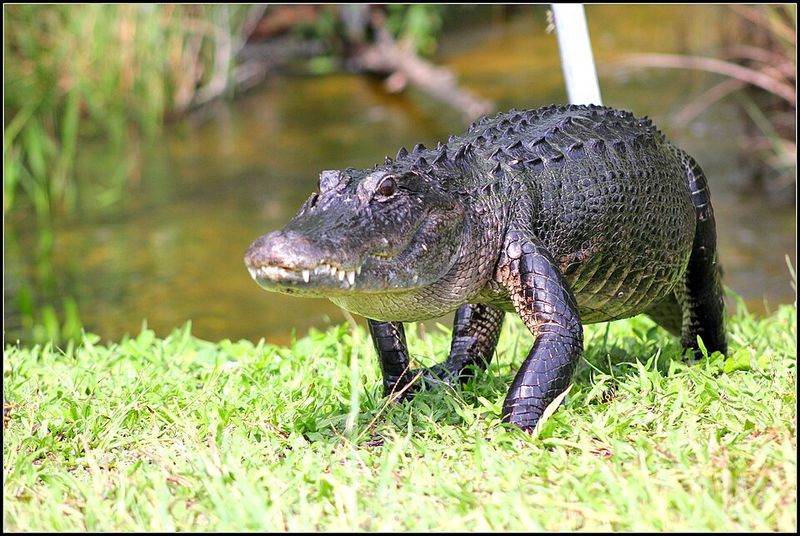
Image Credit: cuatrok77.
If you have ever stared across a Louisiana bayou and thought you were looking at a half-sunken log, you may have already been fooled by an American alligator. Its rough, mud-colored scales, low profile, and stillness let it melt into swamp water, floating vegetation, and driftwood with almost unfair ease.
Only the eyes and nostrils break the surface, and even those can look like stray leaves or dark knots in the water.
That camouflage is more than a spooky party trick. It helps alligators hide from prey, conserve energy while they wait, and stay protected when young, especially since immature gators have yellow banding that blends with marshy shadows and grasses.
In Louisiana wetlands, where water is stained, cluttered, and always shifting, this famous reptile becomes part of the scenery so completely that you usually notice it only after it moves, which is exactly how it likes things.
Eastern Screech-Owl
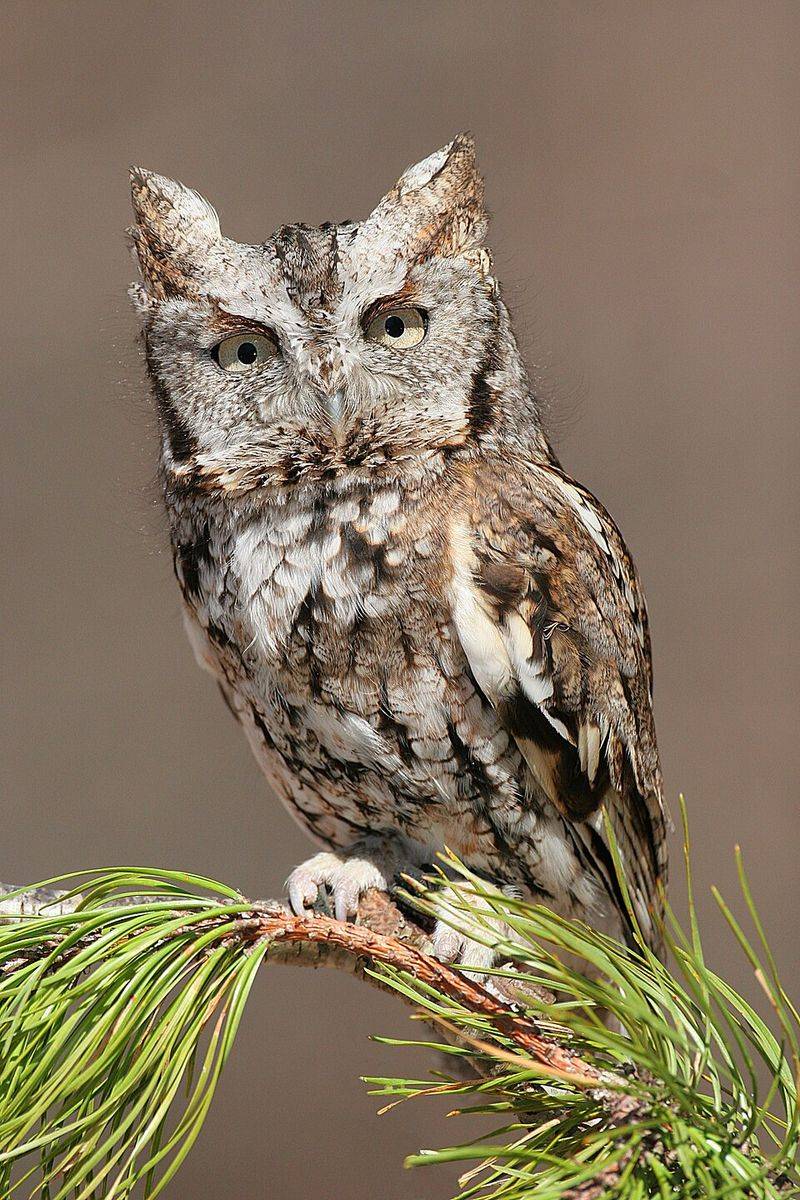
Image Credit: Wolfgang Wander.
An Eastern Screech-Owl has the kind of camouflage that makes you question your own eyesight. When it presses itself against the bark of a live oak, its gray or reddish-brown feathers line up so well with the trunk that the whole bird seems to vanish into cracks, lichens, and shadows.
During the day it often freezes completely, turning a simple perch into one of the best disappearing acts in Louisiana woods.
What makes the illusion even better is the owl’s posture. If it senses trouble, it stretches tall and narrow, pulls its feathers tight, and starts looking less like a bird and more like a broken branch stub or a rough knot on the tree.
Because screech-owls stay in Louisiana year-round, you could be walking under one at any season and never realize it. If you want to spot one, you have to slow down, scan every snag carefully, and trust that the bark might suddenly blink back at you.
Green Anole
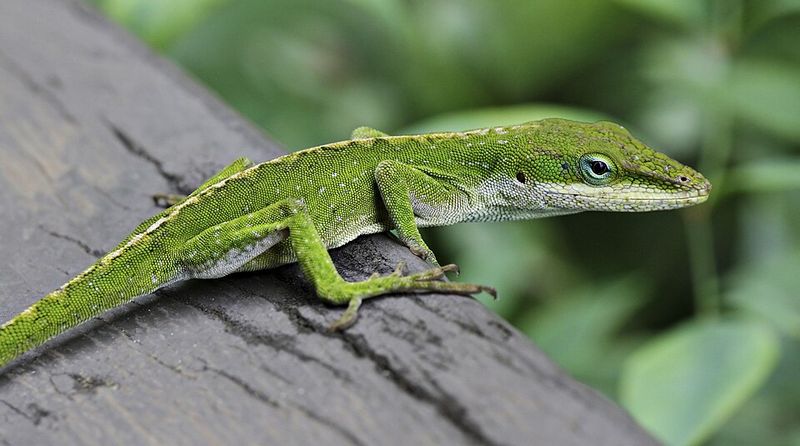
Image Credit: Paul Hirst (Phirst).
The green anole is one of those everyday Louisiana animals that can still surprise you. On a porch rail, fence post, or shrub branch, it may flash bright green one moment and fade to brown or gray the next, depending on temperature, mood, health, and surroundings.
That quick shift is why it seems to dissolve into leaves or bark almost as soon as you notice it.
People often call it a chameleon, but it is not one, and honestly it does not need the extra title to impress anyone. In shaded yards and moist thickets, this little lizard uses color, stillness, and a slim body shape to disappear among vines and foliage, where predators and people can miss it completely.
If you watch closely, you will see that camouflage for an anole is not just about matching a leaf. It is about becoming part of the background so naturally that your eyes slide right past it until a tiny head turns or a tail twitches.
Copperhead Snake
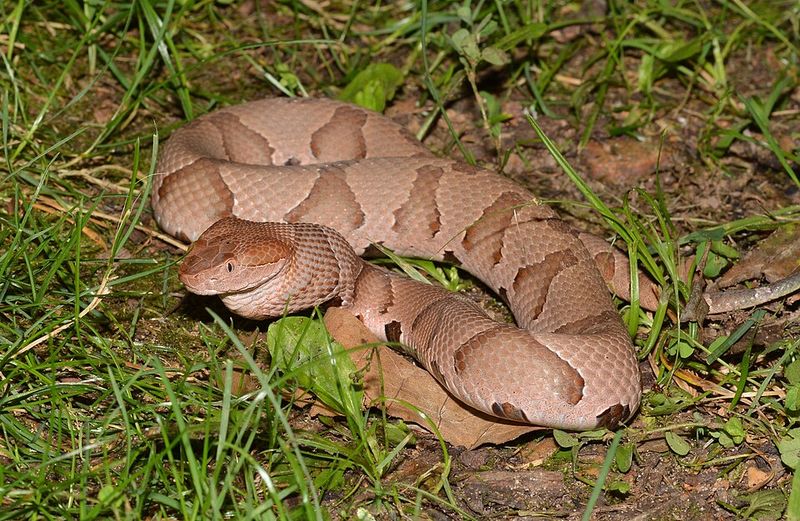
Image Credit: Andy Reago & Chrissy McClarren.
The copperhead may be one of the clearest examples of why camouflage deserves your respect. Coiled among dead leaves, pine straw, and filtered light on a Louisiana forest floor, its tan, beige, and rusty hourglass bands look so much like the ground that the snake can seem invisible until you are dangerously close.
It does not need speed or noise to make an impression. It just needs one still moment and the perfect patch of leaf litter.
That is why hikers are told to watch every step, especially in warm months and wooded places. A copperhead often relies on remaining motionless, letting its patterned body blend into the jumble of curled leaves and brown shadows rather than trying to escape.
From a distance, the bands break up the snake’s outline so effectively that your brain reads the whole shape as ordinary forest debris. If you are moving fast, you can miss it completely, which is exactly what makes this venomous Louisiana reptile such a master of hidden survival.
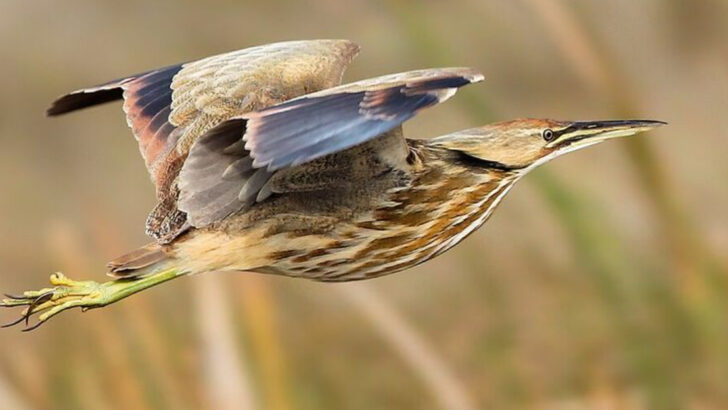
American Bittern
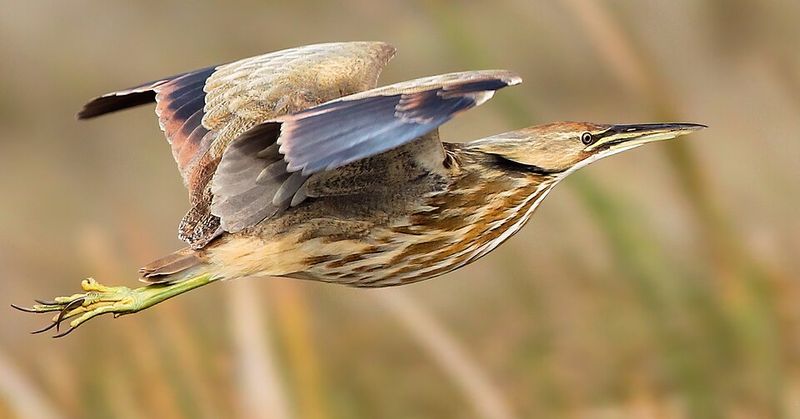
Image Credit: Gary Leavens.
The American Bittern does not just hide in marsh grass. It performs the marsh.
This secretive bird already wears streaked brown and white plumage that matches reeds and cattails, but when danger appears, it takes the act further by pointing its bill straight up, compressing its body, and swaying gently with the vegetation. Suddenly, what looked like a bird becomes one more vertical stalk in a noisy Louisiana wetland.
I love this one because the disguise feels almost theatrical, yet it works brilliantly. Bitterns spend much of their time in marshes where movement and pattern matter as much as color, so their hiding pose helps erase their outline while the wind does the rest of the visual work.
If you scan a wetland too quickly, you will miss them every time, even when one is right in front of you. The trick is to pause, look for anything that seems slightly too symmetrical, and wait, because the reed you are studying might eventually turn its head.
Luna Moth
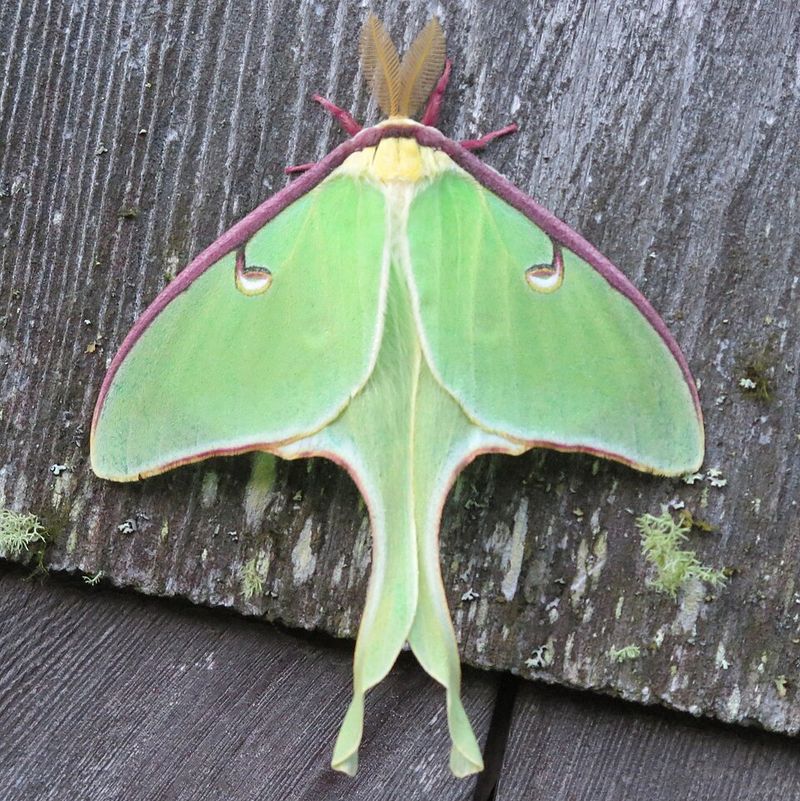
Image Credit: David notMD.
The luna moth looks almost too elegant to be practical, yet its beauty is part of the disguise. Resting on fresh spring foliage, its pale green wings blend with new leaves so smoothly that the moth can seem like a soft extension of the branch rather than an insect.
By day, when it sits still with wings angled just right, the outline disappears into the calm geometry of the plant around it.
Its color can lean yellow-green or bluish-green, which helps it fit naturally into the shifting palette of southern vegetation. Even the transparent eyespots and long tails add to the confusion, breaking up the shape enough to make predators hesitate while most people walk by without a second glance.
In Louisiana, spotting a luna moth often feels accidental, like the woods briefly deciding to reveal a secret. If you find one, you usually realize you were looking at the leaf first and the moth second, which is exactly how camouflage succeeds for this ghostly nighttime flyer.
Chuck-will’s-widow
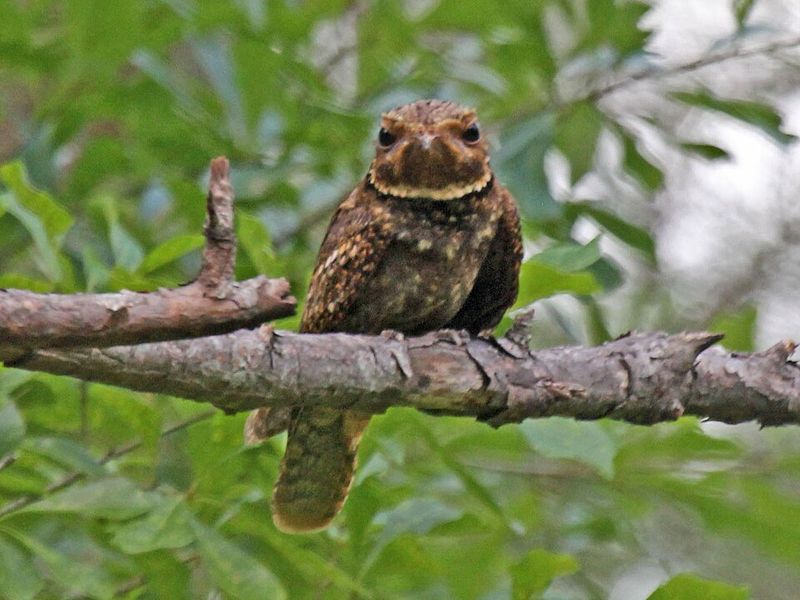
Image Credit: DickDaniels.
The Chuck-will’s-widow is the kind of bird that makes the forest floor feel alive in the sneakiest possible way. By day it rests directly on leaves or low limbs, and its warm brown, gray, and black plumage copies the look of bark, dead leaves, and scattered shade with astonishing accuracy.
You can be very close to one and still see nothing but ordinary woodland clutter.
Because it is nocturnal, staying hidden through daylight hours is essential, and this species handles that challenge with almost eerie calm. Rather than fleeing, it trusts its leaf-patterned feathers to do the work, flattening into the background until its body no longer reads as a bird at all.
Many people have walked within a few feet of a Chuck-will’s-widow without noticing it, which feels believable the moment you see how perfectly it matches the ground. If one finally flushes from underfoot, the surprise is unforgettable, mostly because you are left wondering how something that size stayed invisible so easily.
Walking Stick
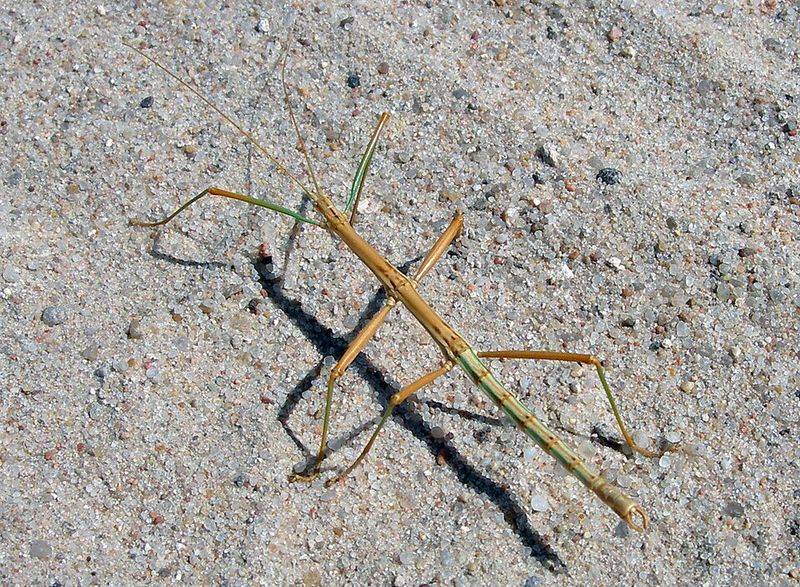
Image Credit: James St. John.
The walking stick feels like nature having a little fun with your attention span. Long, skinny, and colored in mottled greens or browns, it looks so much like a twig that even when one is right in front of you, your eyes may register it as part of the plant instead of an insect.
In a Louisiana backyard, hedgerow, or forest edge, that illusion works beautifully among thin stems and tangled branches.
What really sells the disguise is behavior. A walking stick may sway gently as if moved by the breeze, remain perfectly motionless for long stretches, or even drop and play dead when threatened, all of which help it stay one step ahead of birds and curious humans.
Its body shape is so committed to the stick idea that legs and torso seem to disappear into a single line. If you ever find one, you usually feel like the shrub allowed you to notice it rather than the other way around, which says everything about how convincing this camouflage specialist really is.
White-Tailed Deer Fawn
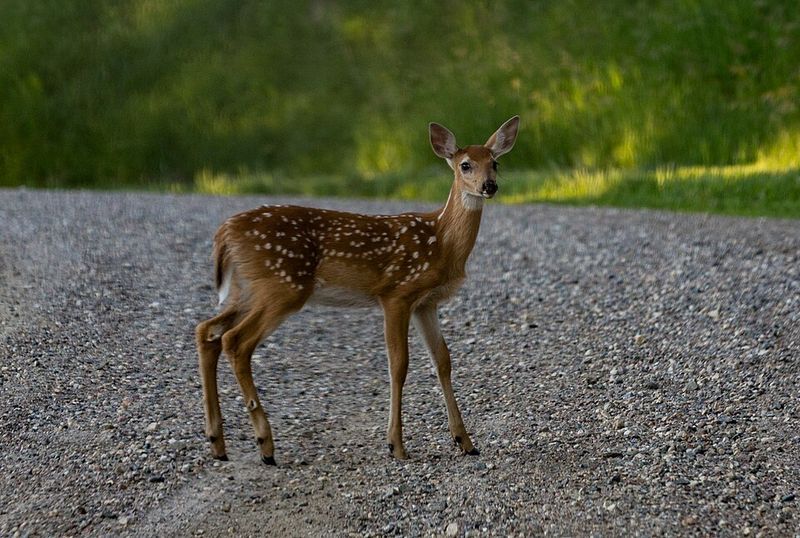
Image Credit: Tony Webster.
A white-tailed deer fawn survives its earliest days by doing almost nothing at all. Tucked low in grass, leaves, or brush, its reddish-brown coat patterned with white spots mirrors the dappled sunlight that falls through branches, making the little deer look like a patch of light-speckled ground instead of a vulnerable animal.
If you accidentally come near one, the fawn’s instinct is usually to stay still, not run.
That stillness is paired with another clever advantage: newborn fawns have very little scent, which makes them harder for predators to detect. Their mothers nurse them periodically and then leave them hidden, reducing movement and odor around the resting spot while the camouflage does most of the protective work.
In Louisiana woods and field edges, this strategy can be remarkably effective because the spotted coat blends so naturally with summer shade. If you ever notice one, the best response is to back away quietly, because what looks abandoned is often a perfectly healthy fawn doing exactly what nature designed it to do.
Southern Flounder
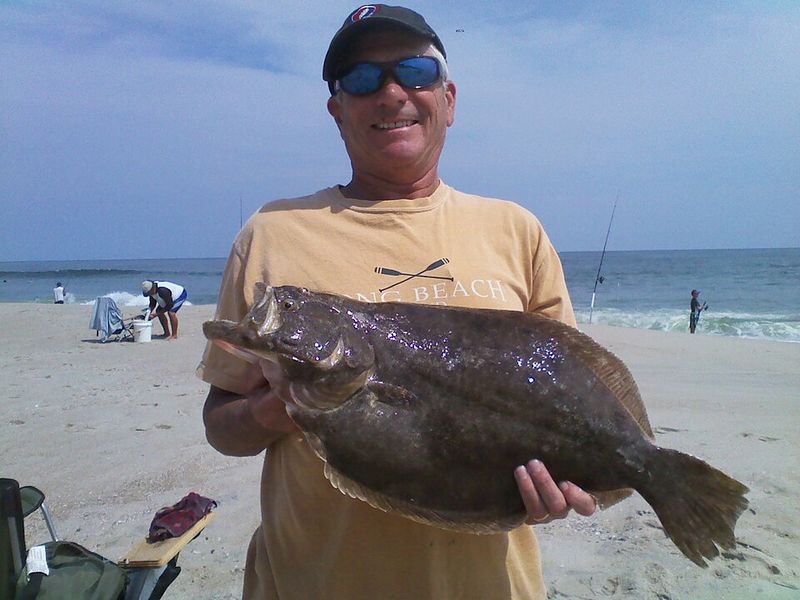
Image Credit: Mick Johnson.
The Southern Flounder might be the strangest camouflage artist on this list, and that is saying something in Louisiana. This flatfish spends its life pressed against sandy or muddy bottoms in coastal waters, with both eyes positioned on one side of its body so it can watch the world while lying almost flush with the seafloor.
At a glance, it looks less like a fish and more like a lightly textured patch of bottom.
What makes it especially impressive is its ability to adjust color and pattern to better match whatever lies beneath it. Mud, sand, shell fragments, and shifting coastal light all become part of the disguise, allowing the flounder to hide from predators and ambush prey without much movement.
For anglers, waders, and anyone peering into shallow water, the fish often stays invisible until it suddenly darts away in a burst of motion. That dramatic reveal is the whole trick: the Southern Flounder blends so completely into Louisiana’s coastal floor that you usually discover it only at the exact moment it decides to stop disappearing.