
Montana is full of wild beauty, but some of that beauty can turn painful fast if you end up in the wrong spot. A surprising number of animals can kick, charge, spray, or spin around before you even process what is happening.
If you love wildlife and wide-open country, knowing which rear ends deserve serious respect can save you a brutal mistake. Here are eleven Montana animals that look fascinating from a distance and downright regrettable from behind.
Moose
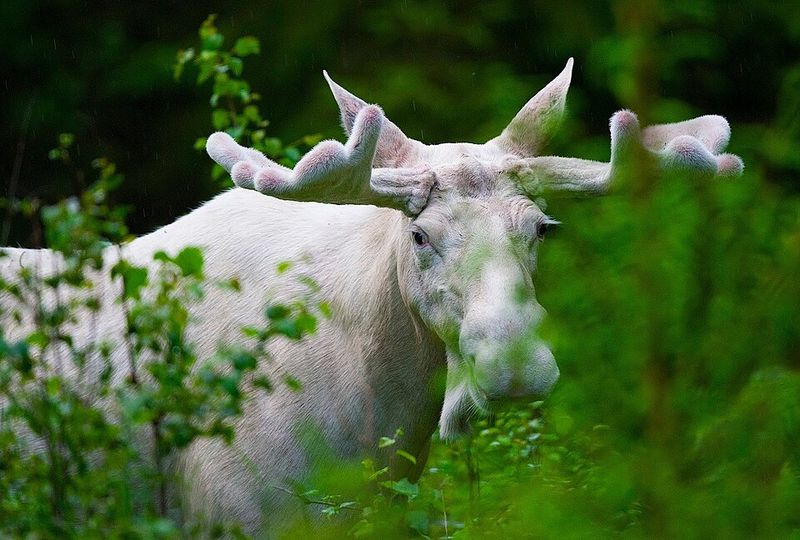
Image Credit: Lasse Dybdahl.
A moose can look oddly peaceful while nibbling willow leaves in a Montana marsh, which is exactly why people underestimate it. From behind, though, you are standing in the danger zone of an animal built like a wrecking ball on stilts.
Those long legs are not just for wading through ponds – they can fire out punishing kicks with shocking reach and force.
What makes a bad idea even worse is surprise. Moose often react hard when they feel crowded, annoyed, or suddenly approached, and cows with calves are on an entirely different level of defensive.
If you notice pinned ears, raised neck hair, lip smacking, or tossing of the head, you are already too close for comfort.
I would treat every moose like it has a personal bubble the size of a small parking lot. Give it room from every angle, not just the front, because a charging or kicking moose does not care that you only wanted a photo.
In Montana, backing off is always smarter than finding out how strong those hooves really are.
American Bison
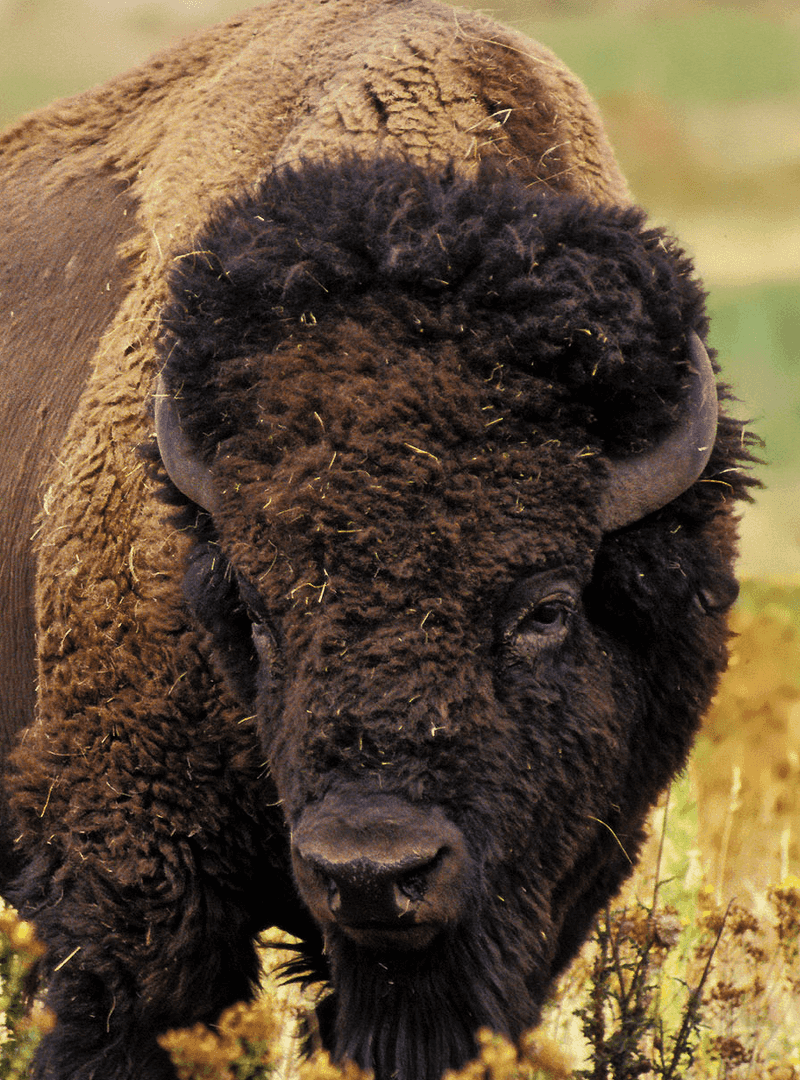
Image Credit: Jack Dykinga.
An American bison from behind looks like a walking haystack with legs, but that bulky shape hides absurd speed and power. These animals can weigh around a ton, pivot faster than most people expect, and explode into motion with a force that feels completely unfair.
If one gets startled from the rear, you are suddenly dealing with kicking hooves, spinning mass, and possibly a charge.
That is what makes bison so deceptive in Montana. They may seem calm while grazing, yet they can sprint up to highway speed in seconds and injure people who drift too close for a better look.
A bison does not need much space to make your day unforgettable in all the wrong ways.
I always think of them as giant animals with short patience and zero interest in your selfie plans. Standing behind one is especially foolish because it limits your reaction time if it wheels around.
Admire the size, admire the history, admire the shaggy outline – just do it from far enough away that the bison never has to acknowledge your existence.
Horse
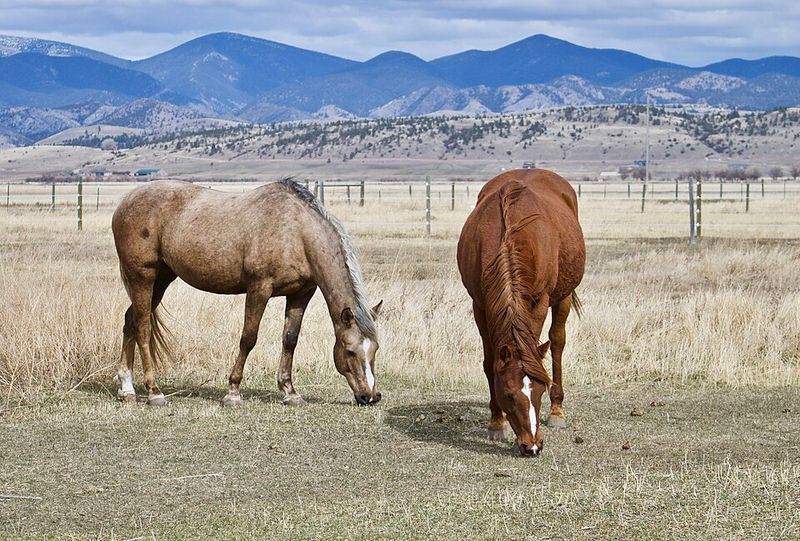
Image Credit: Montanabw.
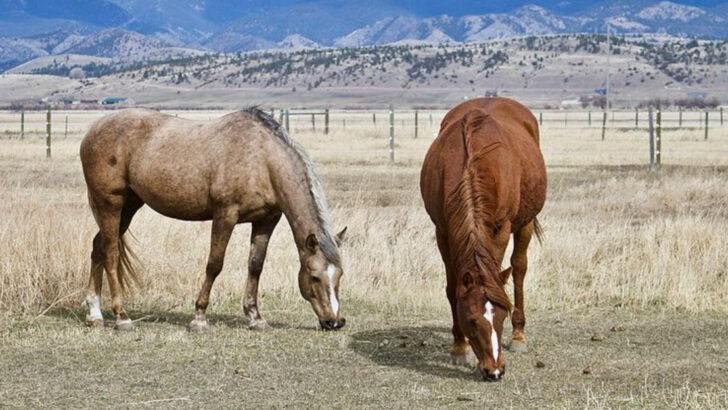
A domestic horse may be the most familiar animal on this list, which is exactly why people get careless around it. In Montana ranch country, horses are everywhere, and even calm, well-handled animals still have instincts wired straight from prey-animal survival.
Stand directly behind one and you step into a blind spot where a sudden movement can trigger a kick before the horse even thinks about it.
That reflex is powerful, fast, and not remotely personal. A startled horse can launch both hind legs with enough force to break bones, especially if it feels trapped, irritated, or in pain.
Experienced handlers know better than to drift quietly behind a horse without making their presence known.
If I am near a horse, I assume respect matters more than confidence. You talk to it, move where it can see you, and never trust calm body language as permission to stand in the firing line.
Montana horses may spend their days carrying riders, pulling work, and posing beautifully against big skies, but their back end still deserves the same caution you would give any serious kicking machine.
Mule Deer
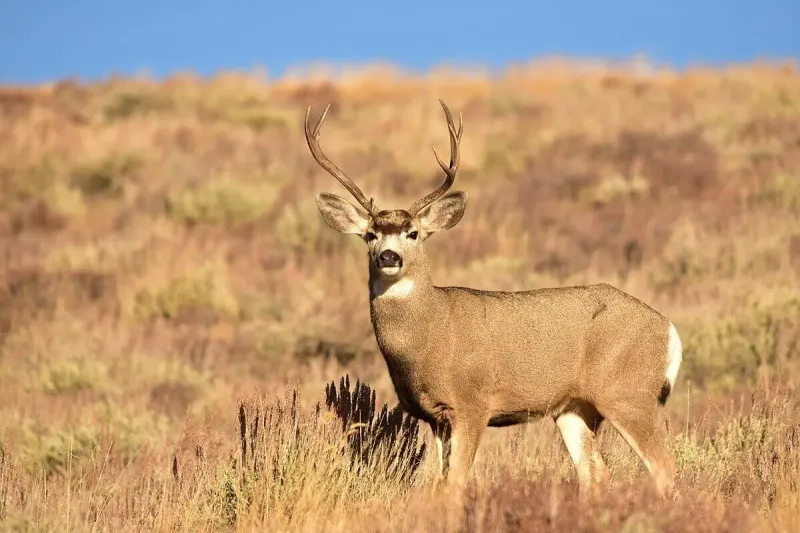
Image Credit: USFWS Mountain-Prairie.
Mule deer usually come across as nervous, gentle, and more interested in escaping than confronting anything. That relaxed impression changes fast if one gets cornered, tangled, or handled, because those hind legs can lash out with sharp, forceful kicks.
Standing behind a stressed mule deer is a great way to learn that even shy prey animals come equipped with a last-resort weapon.
In Montana, the fall rut adds another layer of unpredictability, especially with bucks. During that season they can become more territorial, less cautious, and more willing to act aggressively while focused on breeding.
A deer that normally bounds away might instead hold its ground just long enough to make your position a terrible one.
I think mule deer fool people because they look almost delicate in motion. Up close, though, they are tense, quick, and built to protect themselves when flight stops being an option.
If a mule deer cannot run, the rear legs become the argument, and you do not want to be the one hearing that argument at close range. In deer country, distance is always the polite decision.
Elk
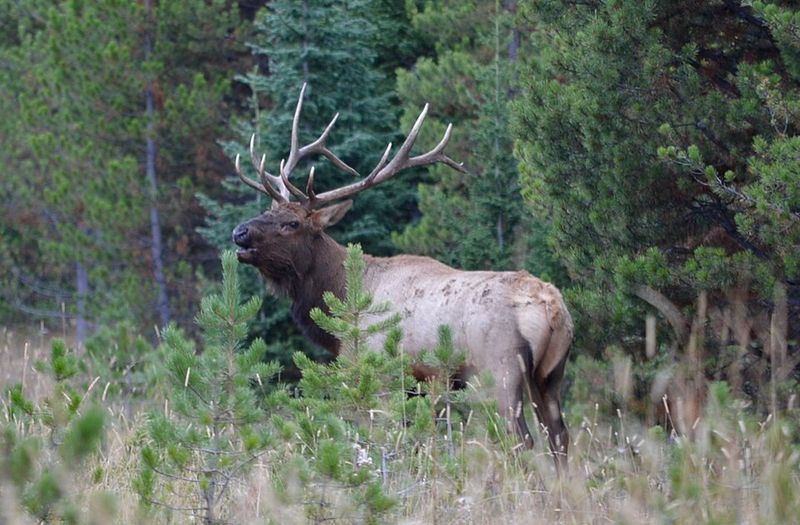
Image Credit: Venture West.
Bull elk get attention for their antlers, bugles, and dramatic autumn swagger, but the dangerous part is not limited to the front end. Those powerful hind legs can strike hard, and during the rut an elk may be wound tight with aggression, adrenaline, and zero tolerance for anything that feels threatening.
Standing behind one is a gamble against speed, strength, and a terrible sense of timing.
Montana’s elk become especially intense in fall, when bulls are competing, herding cows, and reacting to rivals or disturbances. They can run quickly, turn without warning, and charge even when people assume they are only showing off.
A rear approach is risky because you are close enough to trigger a reaction while still being out of the animal’s best line of sight.
I would never confuse a bugling bull with a scenic backdrop. The whole animal is a weapon when hormones are high, and the hindquarters deserve just as much respect as the antlers.
If you want a memorable elk encounter, keep binoculars handy and your body far away. That way the only thing hitting you is the sound of a bugle bouncing across the valley.
Mountain Lion
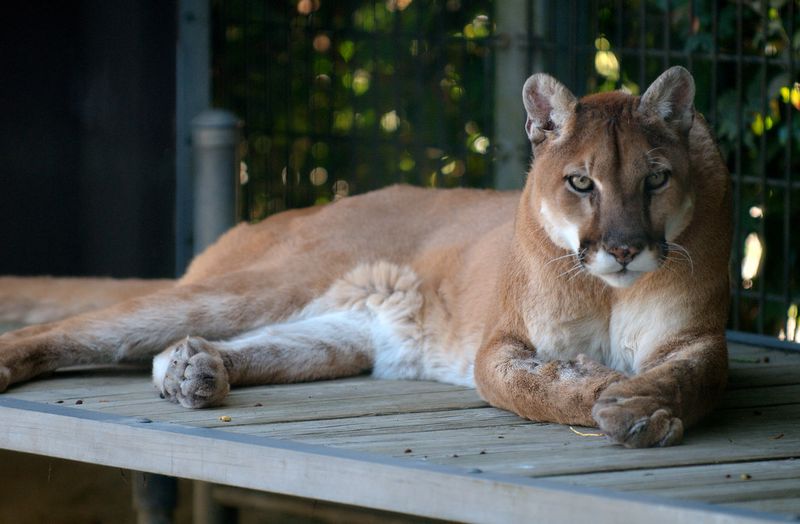
Image Credit: Chiara Coetzee.
A mountain lion does not belong on this list because it kicks backward like a horse, but because being behind one is still a spectacularly bad plan. These cats are built from flexible muscle, and they can pivot, spring, and cover distance with almost no visible effort.
If a lion feels cornered or threatened, its hindquarters become the launch system for a very fast problem.
In Montana, mountain lions usually avoid people, which can create a false sense of security. Their whole hunting style depends on stealth, explosive movement, and quick directional changes, so there is no safe comfort zone just because you are at the rear.
One instant of tension can turn into claws, teeth, and a blur of motion before you even step back.
I think the real lesson here is that position does not matter much when an apex predator can rotate and leap almost instantly. If you ever encounter one, you are better off facing it, appearing larger, and never running.
Behind a mountain lion is not safer than in front of it – it is just a different angle on the same deeply regrettable situation.
Pronghorn
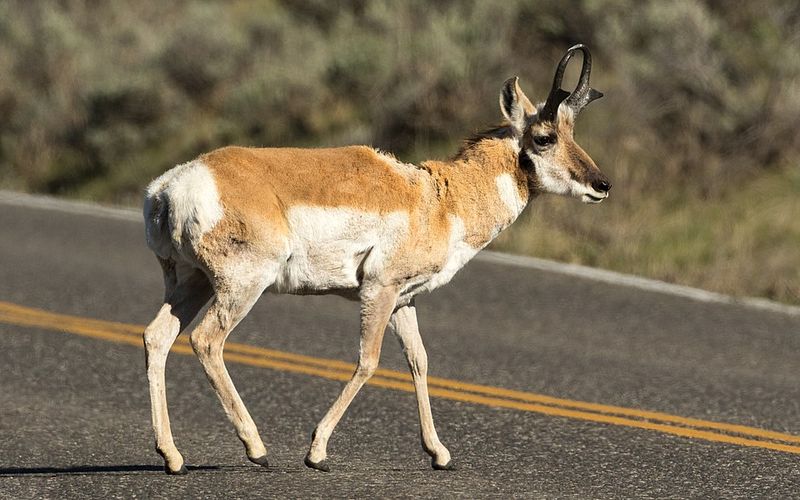
Image Credit: Frank Schulenburg.
Pronghorns are usually all about escape, not combat, and that makes them easy to underestimate. In Montana’s open country, they trust their eyesight and astonishing speed, often vanishing across the prairie before you feel remotely close.
But if one is trapped, tangled, or unable to run, those slim hind legs can deliver a surprisingly forceful kick.
That is what makes standing behind a pronghorn such a weirdly bad idea. People see an elegant, almost delicate animal and forget how much power is packed into a body designed for nonstop acceleration.
An animal that can hit incredible speeds is carrying serious strength in the exact place you do not want to be standing.
I love how pronghorn seem built by the wind itself, but I would never take that grace as weakness. Their first choice is always distance, and that is your best choice too.
Give them room to move, watch them through glass, and let them be what they do best – runners of the wide Montana plains. If you remove their exit, do not be shocked when the back legs become the backup plan.
Grizzly Bear
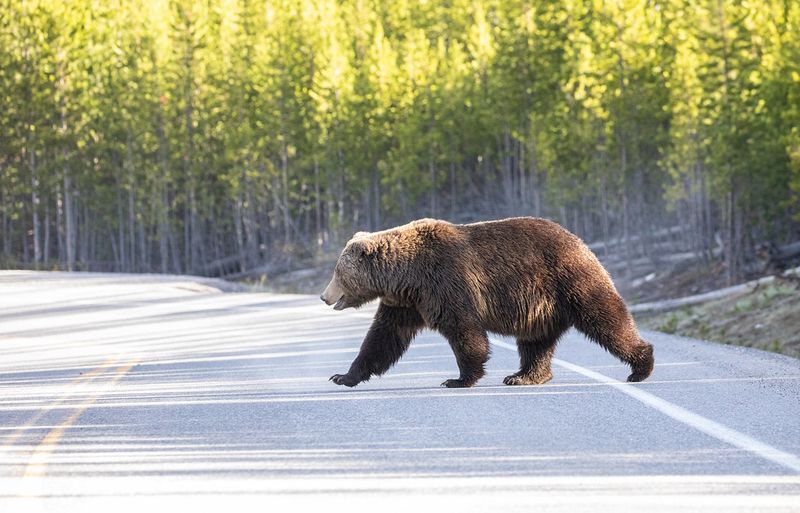
Image Credit: NPS/Jim Peaco.
A grizzly bear barely needs a specific dangerous angle, because every angle is the wrong angle when you are too close. Still, standing behind one is a special kind of foolish because grizzlies can turn, lunge, and react with astonishing speed for such massive animals.
If the bear is surprised, guarding food, or protecting cubs, the space behind it can become chaos instantly.
Montana grizzlies do not move like lumbering cartoon bears. They pivot fast, bluff charge, swat the ground, huff, and close distance in ways that make human reflexes feel painfully slow.
From the rear, you might think you are less threatening, but all you have really done is remove your own chance to read the bear’s face and body language clearly.
I treat grizzly country like a place where confidence should stay in the truck. Make noise, carry bear spray, keep your distance, and never creep in for a better angle.
A grizzly does not care what side you approached from if it decides you are a problem. Behind one is not hidden, harmless space – it is simply the part of the bear you see right before everything gets much too exciting.
Skunk
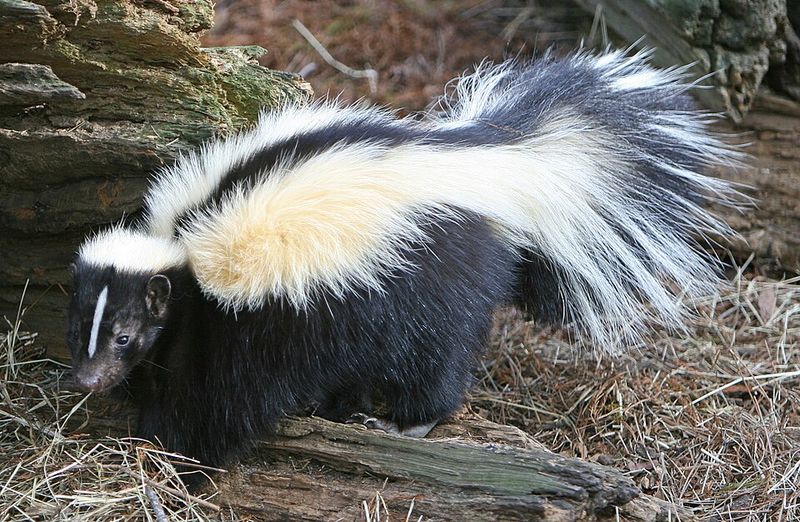
Image Credit: http://www.birdphotos.com.
The striped skunk is the smallest animal on this list, but it may be the one most guaranteed to ruin your day from behind. You do not need broken bones or trampling to regret your choices when a skunk can aim a foul defensive spray with rude accuracy.
If the tail goes up and the rear end points your direction, the situation has already become a countdown.
Skunks usually give fair warning first. They stamp their feet, fluff up, hiss, and twist into that unmistakable posture that says you still have a chance to make one smart decision.
Ignore that message, and you can end up wearing a chemical lesson that follows you into your car, clothes, home, and social life.
I respect skunks because they are honest communicators with terrible consequences. In Montana, they are not large or intimidating, which tricks people into laughing instead of leaving.
That is a mistake with a smell attached. If you ever catch sight of a raised tail from the wrong angle, do not test the range, do not negotiate, and absolutely do not stand still wondering if it is bluffing.
Wild Turkey
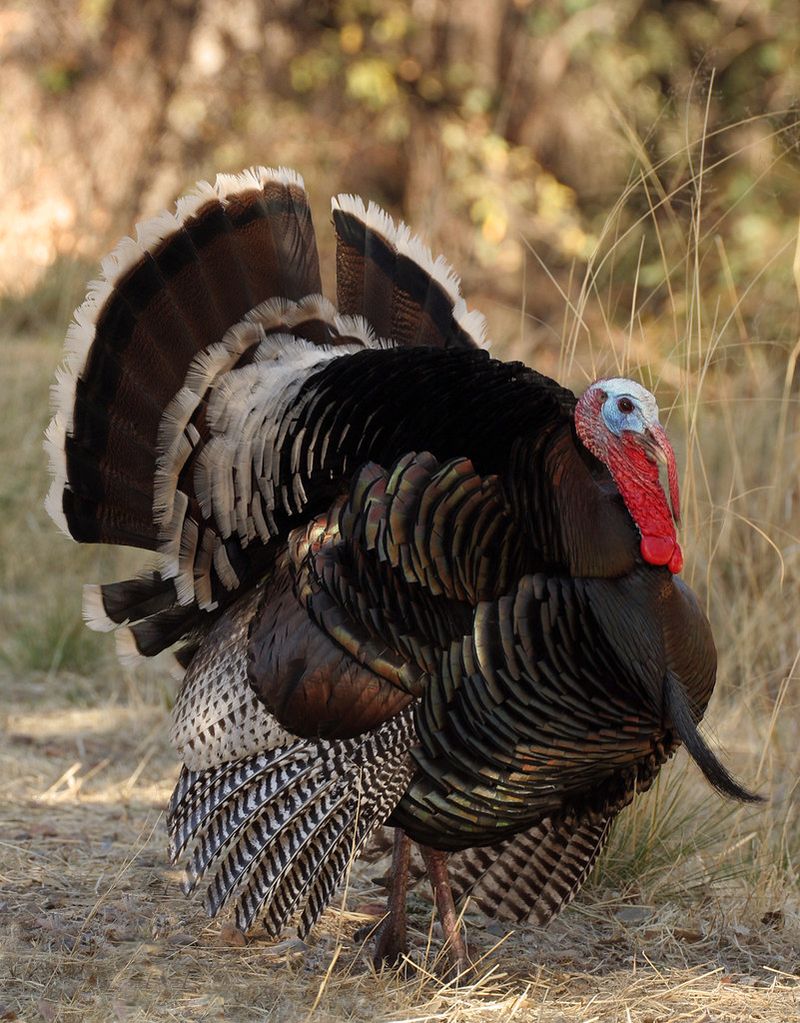
Image Credit: Wayne Dumbleton.
Wild turkeys look comedic right up until one decides you are part of the problem. In Montana, especially during breeding season, toms can become territorial, aggressive, and much bolder than most people expect from a large bird.
Standing behind one might sound ridiculous, but those strong legs, beating wings, and sharp spurs can make a close encounter surprisingly chaotic.
A startled or fired-up turkey can kick, flap, lunge, and spin around in a way that feels more street fight than barnyard scene. Males have been known to challenge reflections, vehicles, pets, and people, which tells you all you need to know about their seasonal confidence.
If one feels cornered or keyed up, the rear view is not the safe zone you hoped for.
I kind of admire the unreasonable nerve of a wild turkey, but I prefer to admire it from outside pecking distance. They may not match elk or bison for brute force, yet they absolutely deserve more respect than their goofy reputation suggests.
In spring especially, give them room, skip the teasing, and do not assume feathers mean harmless. Some bad decisions arrive gobbling.
Mountain Goat
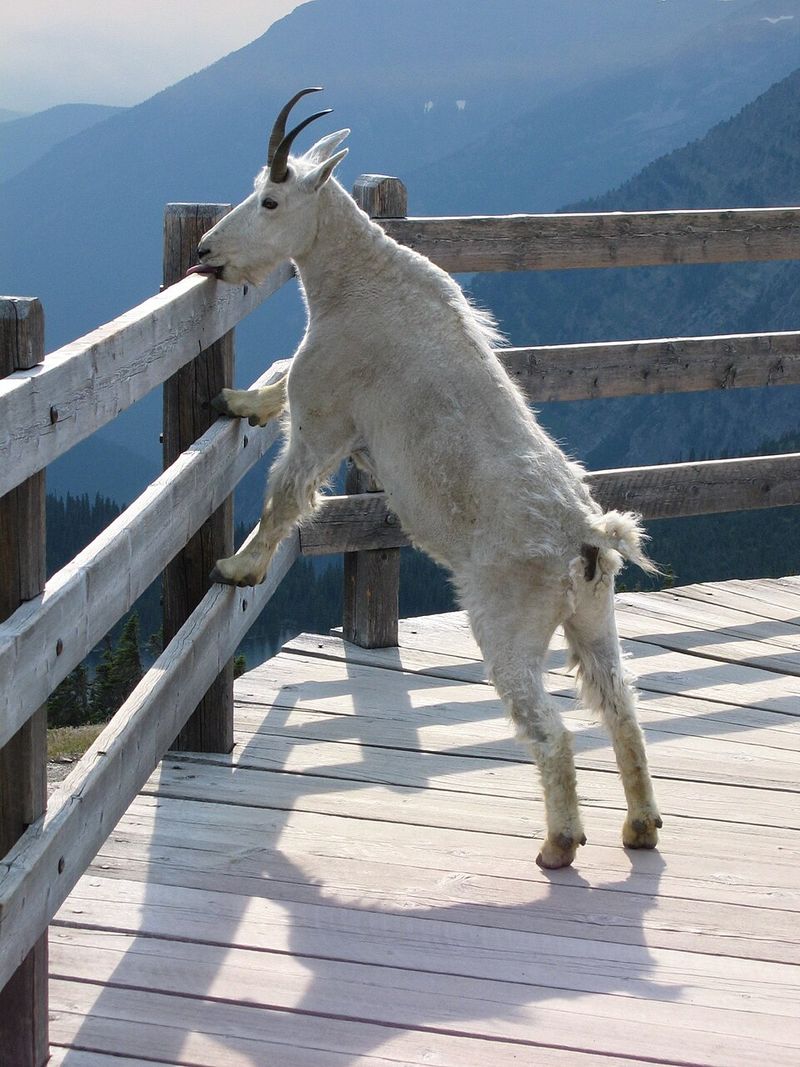
Image Credit: Avenue.
Mountain goats look like living symbols of balance, calm, and impossible cliff confidence, but that peaceful image hides a very capable defender. On steep Montana terrain, a goat that feels trapped can pivot quickly, drive with powerful legs, and use dagger-like horns with unnerving precision.
Standing behind one is risky not just because of the animal, but because the landscape itself leaves little margin for error.
Both males and females carry horns, and nannies protecting kids can be intensely defensive. Unlike animals that prefer immediate escape, mountain goats sometimes stand their ground, which changes the whole feel of an encounter.
When you are on a narrow slope or rocky ledge, even a sudden feint or kick can put you in a dangerous position.
I think mountain goats earn extra respect because they combine agility, attitude, and terrible terrain better than almost anything else in Montana. You are never just dealing with a goat – you are dealing with a goat on a mountainside, which feels like an unfair home-field advantage.
Give them plenty of space, never crowd them from behind, and let those white climbers keep the high ground without an audience in kicking range.