
Some Arkansas animals sound like they were named during a dare, not a field study. That is exactly what makes them so fun to learn about.
From giant salamanders hiding under river rocks to birds with tails like scissors, these creatures prove nature has a wild sense of style. If you love odd facts, memorable names, and a little local mystery, you are in the right place.
Hellbender
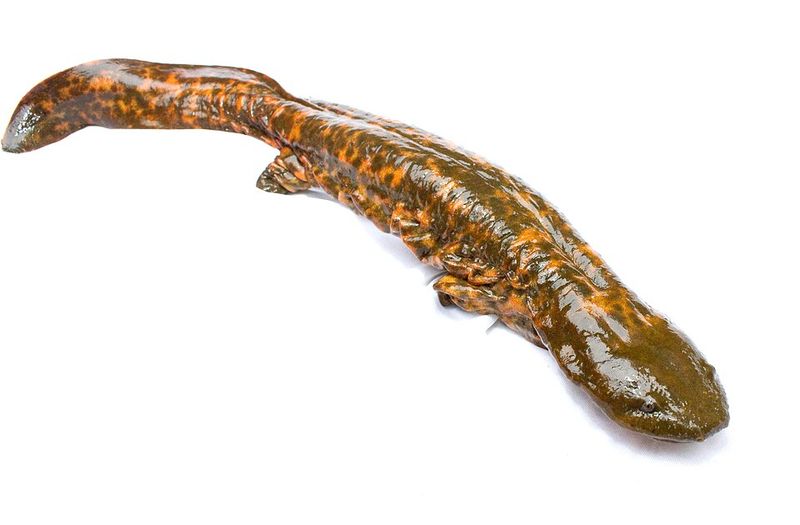
Image Credit: Brian Gratwicke.
If you heard the name hellbender without context, you would probably expect something fierce, fiery, or mythical. In Arkansas, though, this oddly named creature is a giant aquatic salamander that spends its life tucked beneath rocks in clean, fast-moving streams.
The Ozark hellbender is one of North America’s largest salamanders, and its wrinkled skin helps it absorb oxygen from the water.
You are most likely to find it in parts of the Ozark region, including stretches of the Spring River and other cold, rocky waterways. Its strange nickname may come from early settlers who thought it looked like something bent on crawling back to hell, which feels dramatic for such a secretive animal.
What really makes this species memorable is that its survival depends on healthy streams, so spotting one would mean the water around you is in remarkably good shape.
Chicken Turtle
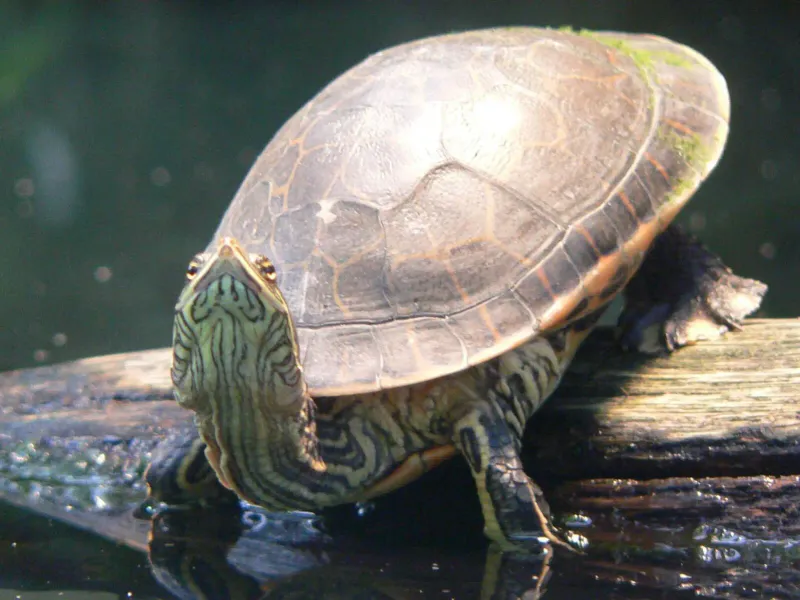
Image Credit: BS Thurner Hof.
The chicken turtle sounds like a prank name, but it belongs to a very real Arkansas reptile with a surprisingly elegant look. Early settlers reportedly gave it that name because they thought its meat tasted like chicken, which is not exactly flattering, but definitely unforgettable.
What you will notice first is its unusually long neck and neat, net-like shell pattern.
In Arkansas, this turtle turns up in shallow wetlands, marshes, swamps, and quiet ponds, especially where vegetation offers cover. It is more land-friendly than many people expect and may spend long stretches out of water, even burrowing when conditions get too dry.
That mix of odd name, adaptable habits, and gentle appearance makes the chicken turtle feel like one of those creatures you would assume was made up until you actually see it easing through the edge of a weedy pond.
Cottonmouth
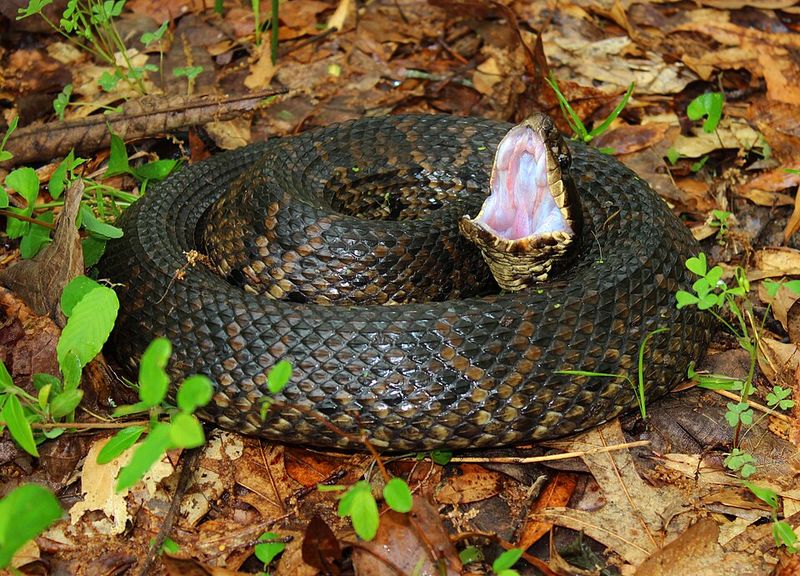
Image Credit: Peter Paplanus.
The cottonmouth has one of the most instantly recognizable names in Arkansas wildlife, and it comes from a warning display you do not forget. When threatened, this venomous snake may open its mouth wide to reveal a bright white interior that looks almost like a flash of cotton.
That dramatic gesture is meant to say back off, and honestly, the message is clear.
You will usually hear about cottonmouths around swamps, lakes, marshes, and slow-moving streams, where they blend into muddy banks and tangled vegetation. Their bodies are often olive, brown, or nearly black, and younger snakes can show stronger banding along with a yellowish tail tip used to lure prey.
The name may sound almost soft, but there is nothing cuddly about this reptile, which is why knowing how to identify it from a respectful distance is one of those Arkansas outdoor skills that can really matter.
Widow Skimmer
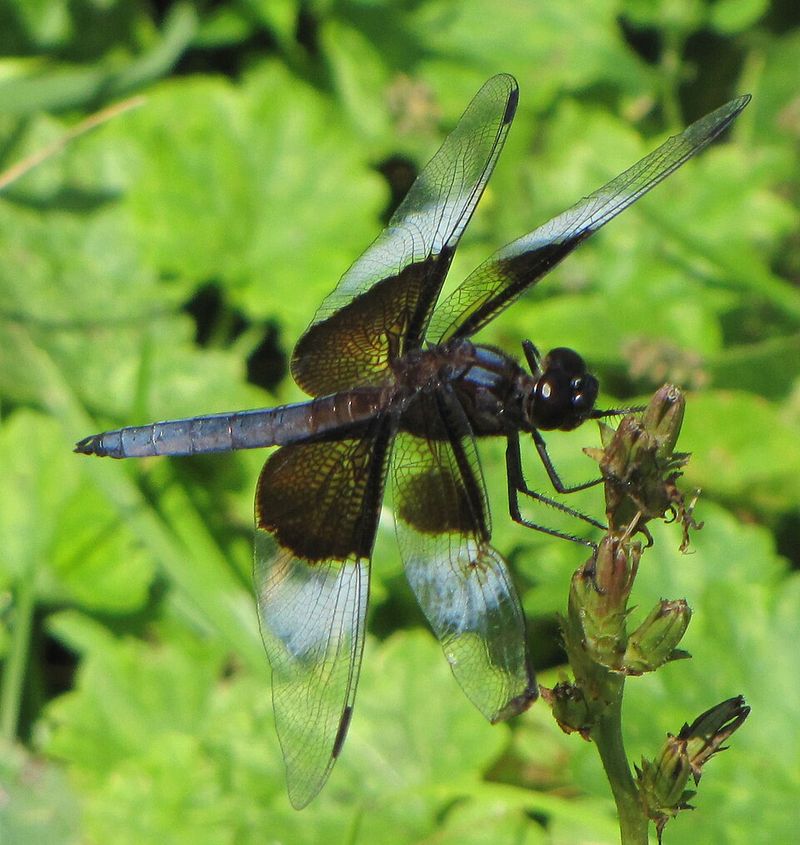
Image Credit: D. Gordon E.
Widow skimmer is the kind of name that sounds poetic, mysterious, and just a little gothic, which is impressive for a dragonfly. This insect gets its memorable title from the dark patches near the base of its wings, markings that reminded people of mourning clothes.
Once you know that detail, the name feels strangely perfect every time you see one gliding over still water.
Across Arkansas, widow skimmers are common around ponds, marshes, and wetland edges during warm weather, where they patrol the air with easy confidence. Males often show a powdery bluish body as they mature, creating a sharp contrast with those shadowy wing patches and making them stand out even from a distance.
If you pause near a quiet pond in summer, you might notice one landing on a twig between flights, looking less like a bug and more like a tiny stained-glass aircraft designed by somebody with a flair for drama.
Mudpuppy
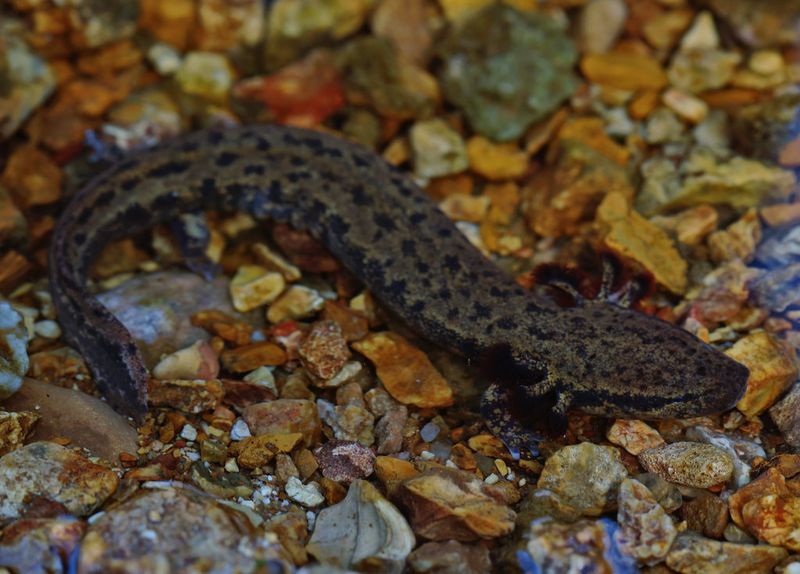
Image Credit: Peter Paplanus.
The mudpuppy sounds less like a salamander and more like a pet who tracked in after a rainstorm. In reality, it is a fully aquatic salamander that keeps its feathery external gills for life, giving it a look that feels ancient and a little otherworldly.
The odd name likely comes from the squeaking sounds it can make when handled, though it definitely does not bark.
In Arkansas, mudpuppies live in rivers, streams, and lakes, usually hiding under rocks, logs, or other cover during the day before becoming active at night. Their lives unfold almost entirely underwater, which means most people never realize they share the state with such a distinctive amphibian.
If you picture a salamander as a delicate woodland creature, the mudpuppy will completely reset that expectation, because this one is built for submerged life and looks like nature combined a fish, a lizard, and a secret all in one body.
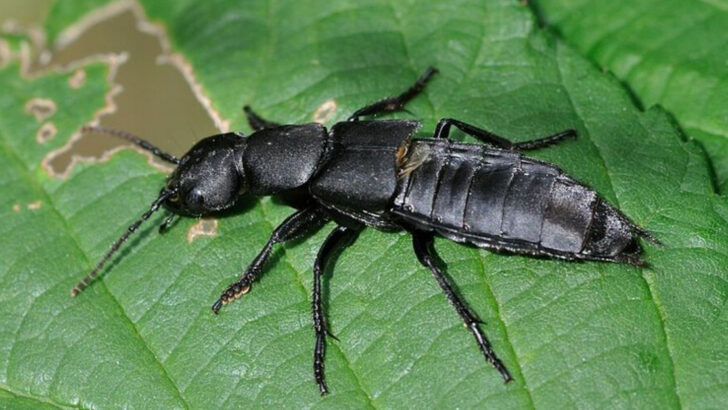
Devil’s Coach Horse Beetle
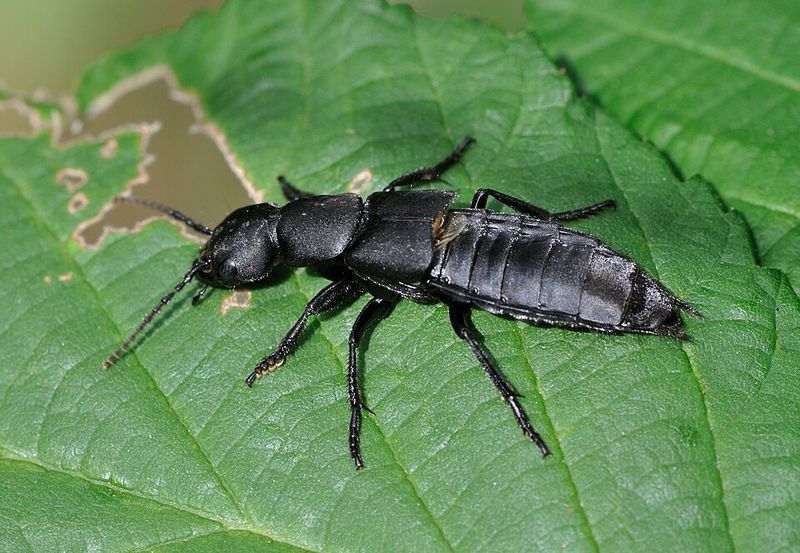
Image Credit: Quartl.
Few insects can compete with Devil’s coach horse beetle when it comes to sounding like a villain from an old folktale. The name goes back centuries and was tied to superstition, while the beetle’s habit of raising its abdomen like a tiny scorpion only adds to the menace.
If you spotted one without knowing better, you might assume it was trouble.
The funny part is that this fierce-looking beetle is actually a useful predator that feeds on other insects, larvae, and even slugs. It prefers damp places such as gardens, woodlands, and areas under logs or stones, where it moves quickly and hunts with purpose.
You probably will not see it featured on postcards or children’s stickers anytime soon, but this is exactly the kind of unconventional creature that deserves a second look, because beneath the dramatic posture and alarming name is an efficient little cleanup worker doing important jobs in the shadows.
Five-Lined Skink
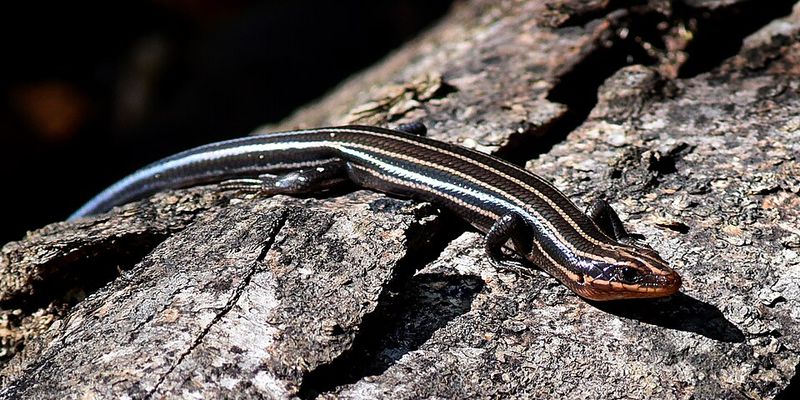
Image Credit: Wilafa.
Five-lined skink may sound straightforward compared with some of Arkansas’s stranger animal names, but this little lizard still earns a place on the list. Juveniles are especially eye-catching, with five pale stripes running down a dark body and a brilliant blue tail that almost looks painted on.
Once you see one dart across a log, it is hard to forget.
This species is common in Arkansas woodlands and partly wooded areas, especially where fallen logs, rocks, and sunny basking spots create a comfortable mix of shelter and warmth. It feeds on insects and other small invertebrates, so it is always on the move, quick enough to vanish before you fully register the color.
The name may be descriptive rather than bizarre, but there is still something oddly charming about a reptile that sounds half scientific, half cartoonish, then backs it up by looking like a tiny blue-tailed streak of electricity in the forest leaf litter.
Spiny Softshell Turtle
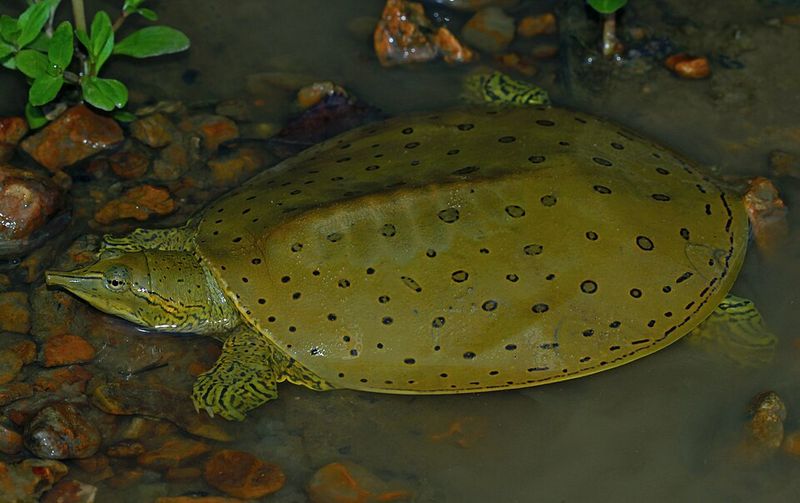
Image Credit: Peter Paplanus.
Spiny softshell turtle sounds like two animals were accidentally combined into one name, yet both parts are completely accurate. This unusual turtle has a soft, leathery shell instead of the hard dome many people picture, and small spines line the front edge of that shell.
Add in its flattened body and long snorkel-like snout, and you get one of Arkansas’s strangest-looking reptiles.
You can find it in rivers and streams across much of the state, especially where sandy or muddy bottoms make good habitat. It spends most of its life in the water, surfacing to breathe, basking when conditions are right, and slipping back under with surprising speed.
If a typical turtle looks armored and slow, the spiny softshell feels like the sleek experimental version, built low to the ground and optimized for aquatic life, which makes its contradictory name less confusing once you actually picture the animal attached to it.
Zebra Swallowtail
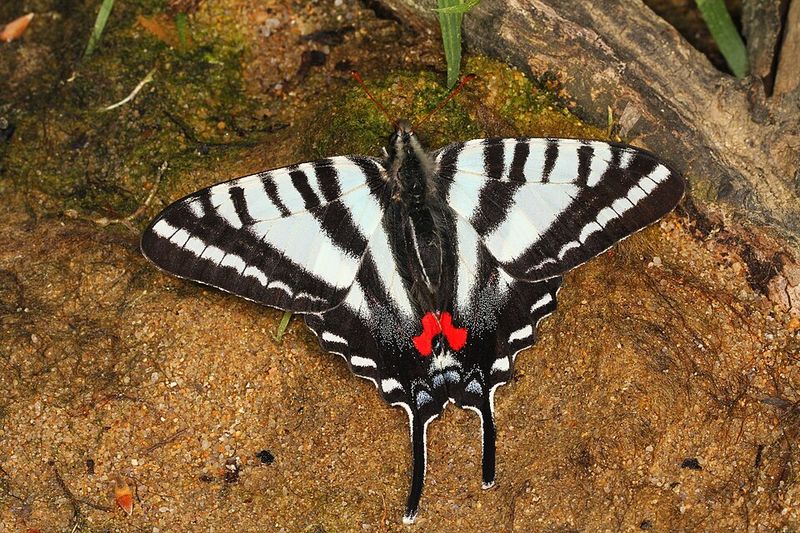
Image Credit: Judy Gallagher.
Zebra swallowtail is one of those names that tells you exactly what to look for while still sounding wonderfully extravagant. The butterfly’s black-and-white striped wings really do suggest a zebra pattern, and the long tail extensions create an extra flourish that makes it seem almost ribboned in flight.
It is bold, elegant, and impossible to confuse with something plain.
In Arkansas, this striking butterfly adds movement and contrast to the warm-season landscape, especially where host plants and nectar sources are available. Watching one drift through sunlight feels a little like seeing a paper cutout come alive, because the graphic pattern is so crisp and theatrical.
You do not need to be deeply into insects to appreciate why this name sticks, since it combines familiar imagery with a graceful species that already looks designed for admiration, proving that sometimes the weirdest-sounding wildlife names turn out to be the most visually fitting of all.
Eastern Hog-Nosed Snake
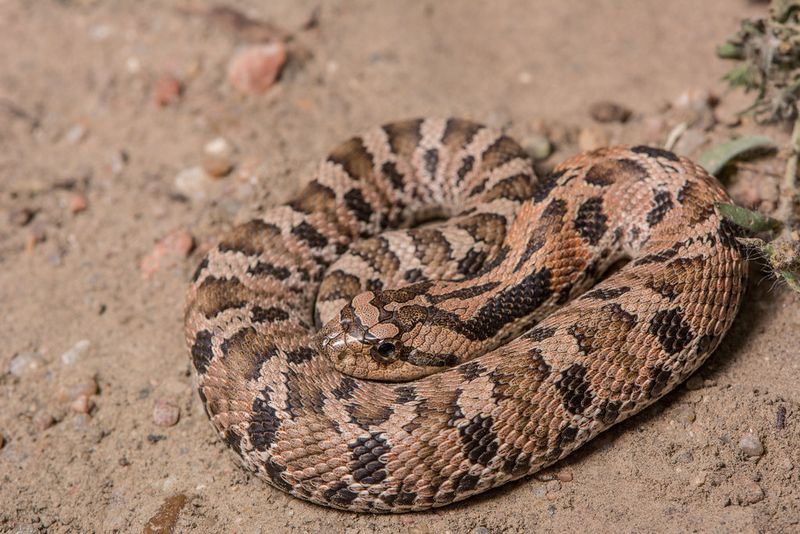
Image Credit: Andrew DuBois.
The eastern hog-nosed snake wins points immediately for having a face feature right there in the name. Its upturned snout really does resemble a pig’s nose, and that specialized shape helps it root through soil and leaf litter while searching for toads.
Even before it starts acting dramatic, it already feels like one of Arkansas’s most distinctive reptiles.
What makes this species unforgettable is its performance when threatened, because it may hiss loudly, flatten its neck, and sometimes even pretend to be dead. That theatrical defense can be startling if you are not expecting it, but it is more bluff than battle.
You might come across one in sandy or open habitats where it can forage effectively, and if you do, the best response is simply to admire the act from a distance, because this is one of those animals whose odd name and odd behavior fit together so perfectly it feels scripted.
Scissor-Tailed Flycatcher
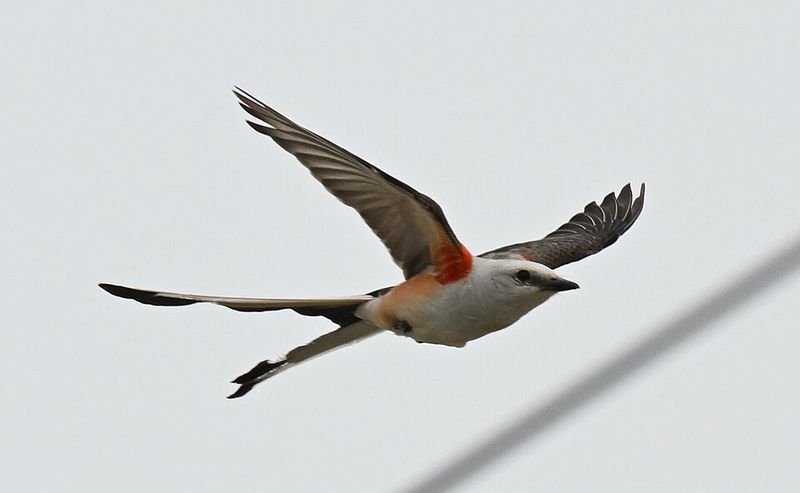
Image Credit: Andy Reago & Chrissy McClarren.
Scissor-tailed flycatcher sounds almost too stylish to be real, but this Arkansas bird absolutely lives up to the name. Its long, deeply forked tail looks like an open pair of scissors slicing through the air, especially when the bird twists during flight.
Once you notice that silhouette on a wire or fence line, you will understand why nobody bothered giving it a boring title.
In Arkansas, it is most often associated with open country, fields, grasslands, and places where scattered trees or roadside perches offer good hunting views. From those exposed spots, it launches into the air to catch insects with sharp, graceful movements that make the whole performance look effortless.
There is something almost animated about the way it flies, as if the tail was designed more for flair than function, yet that dramatic shape is part of what makes this species such a memorable presence across the state’s broad, bright landscapes.
Paddlefish
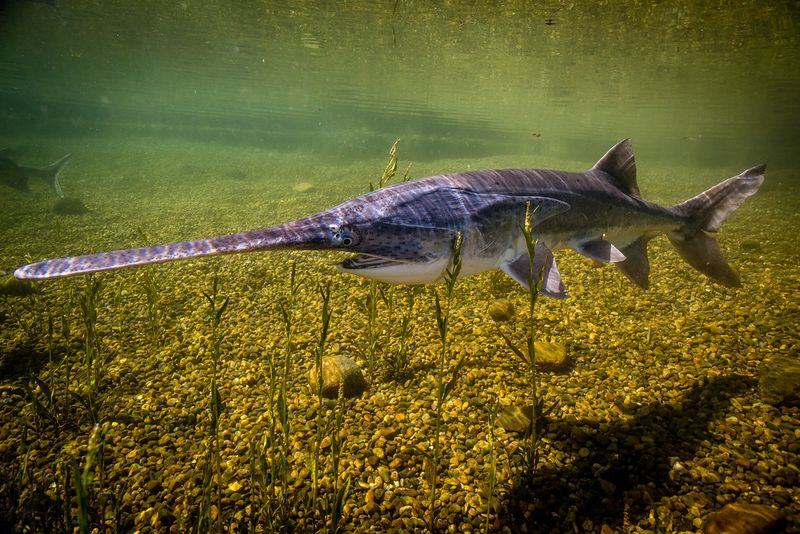
Image Credit: Ryan Hagerty.
Paddlefish is a wonderfully literal name, because one look at the snout tells you everything you need to know. This ancient fish carries a long, paddle-shaped rostrum that gives it one of the strangest profiles in Arkansas waters.
That structure is not just for show either, since it helps the animal detect tiny plankton and navigate its environment with specialized sensory abilities.
You are unlikely to mistake a paddlefish for anything else, which is part of its charm and part of why the name feels so satisfying. It has been around in some form for millions of years, making it seem less like an ordinary fish and more like a surviving blueprint from another age.
When you picture Arkansas wildlife, this might not be the first species that comes to mind, but it should be, because few creatures combine such unusual anatomy, deep evolutionary history, and such a perfectly blunt name in one remarkable package.
Belted Kingfisher
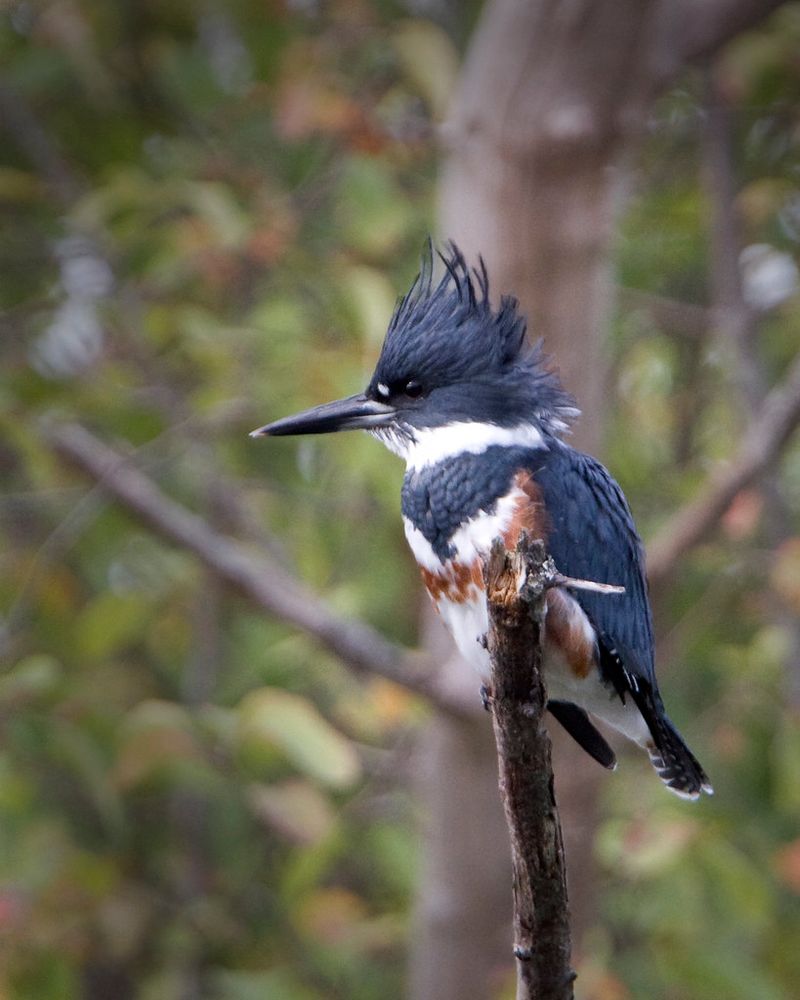
Image Credit: Rick Leche – Photography.
The name belted kingfisher sounds like something dressed for the occasion, but in Arkansas it belongs to a stocky bird with a shaggy crest and a sharp eye for water. The belt is the blue-gray band stretching across its chest, giving this river hunter its memorable name.
You will often notice one perched above a creek or lake, looking perfectly still until it suddenly dives.
That plunge is all about fish, which it grabs with impressive speed and accuracy. It is common near rivers, ponds, and backwaters across the state.
Once you hear its call and spot that silhouette, the name becomes hard to forget.