
Arizona does not just survive the desert – it perfects it. Across its blistering basins and cactus forests, animals have evolved clever ways to save water, dodge heat, and turn scarcity into an advantage.
Some hide underground for most of their lives, while others pull moisture from seeds, prey, or cactus pulp. If you think extreme dryness means limited wildlife, these remarkable desert specialists will completely change your mind.
Desert Tortoise
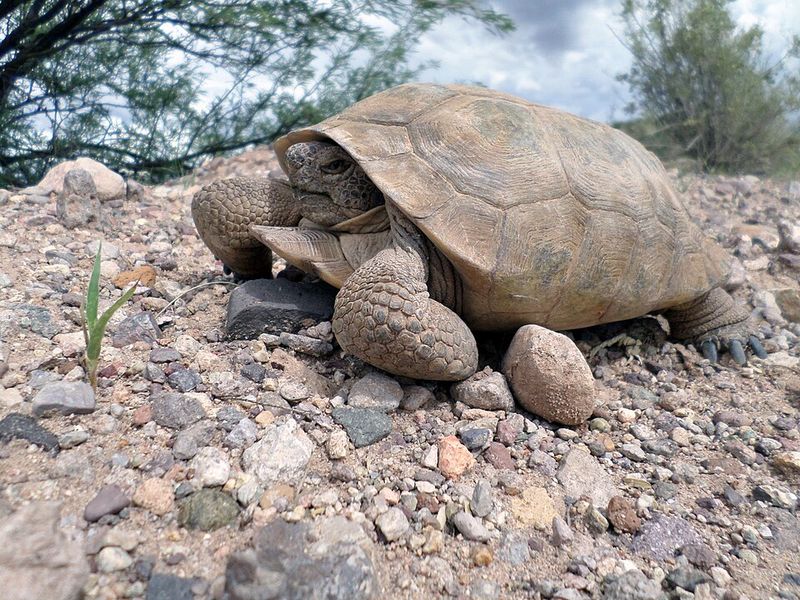
Image Credit: California Department of Fish and Wildlife from Sacramento, CA, USA.
The desert tortoise feels like Arizona’s ultimate water vault. It can store an astonishing amount of water in its bladder for months, then reabsorb that reserve when the landscape stays brutally dry.
That trick lets it survive stretches that would overwhelm many other animals.
It also avoids the harshest conditions by spending about 90 to 95 percent of its life underground. Those burrows work like natural climate control, staying cooler in summer, warmer in winter, and humid enough to slow water loss.
You could say the tortoise survives by building its own bunker.
When rain finally arrives, it may dig shallow basins that catch runoff for a quick drink. It gets moisture from grasses, flowers, and cacti too, which reduces the need to wander far.
In a desert where every drop matters, this reptile acts like a patient, armored strategist.
Gila Monster
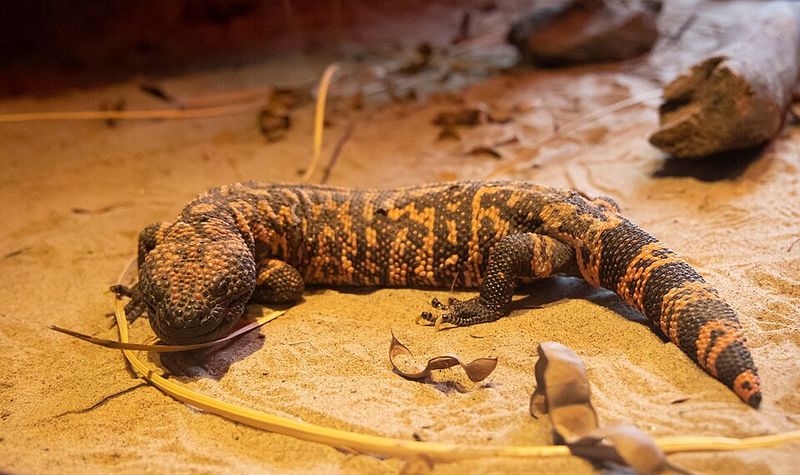
Image Credit: Theo Kruse / Burgers’ Zoo.
The Gila monster looks bold, but its real genius is restraint. This heavy-bodied lizard stores fat in its thick tail, giving it a built-in energy reserve that helps it endure long periods without eating.
In a dry environment, surviving on less is often the smartest adaptation of all.
It also avoids deadly heat by staying hidden most of the time. Roughly 90 percent of its life is spent in burrows or rocky shelters, where temperatures are far less punishing than the open desert surface.
Rather than racing the sun, it simply refuses to play that game.
Most activity happens during cooler hours, especially around dusk, dawn, or at night. That schedule helps it conserve moisture and avoid overheating while it searches for eggs, nestlings, or small prey.
For such a famous reptile, the Gila monster survives by being surprisingly secretive, deliberate, and energy efficient.
Greater Roadrunner
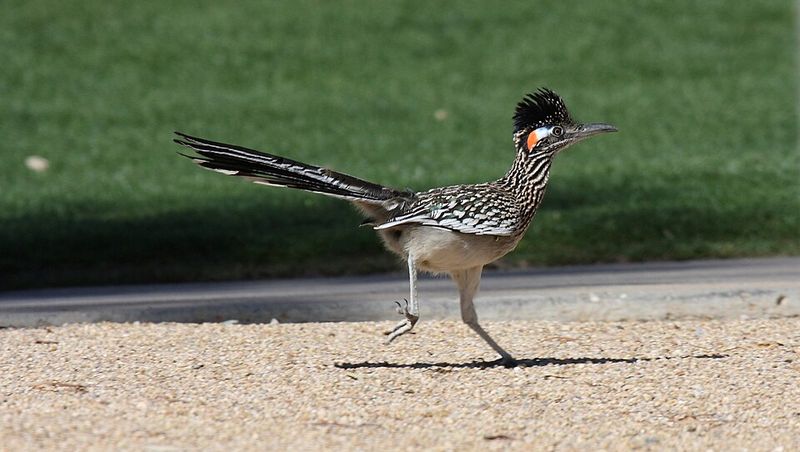
Image Credit: Dominic Sherony.
The greater roadrunner is more than a fast bird with attitude. It manages desert living with a set of clever physiological tricks, including a gland near its eyes that excretes excess salt.
That means it can avoid losing as much water through urination, which is a huge advantage in Arizona.
It also lets its body temperature drop at night, reducing the energy needed to stay warm until morning. Then it turns to a dark skin patch on its back to absorb solar heat efficiently after sunrise.
Instead of burning calories to warm up, it lets the desert do the work.
This bird hunts lizards, insects, and even small snakes while staying active during manageable hours. Its stride may get the attention, but its heat strategy is the real masterpiece.
You are looking at a desert bird that balances movement, temperature control, and water savings with almost comic confidence.
Kangaroo Rat
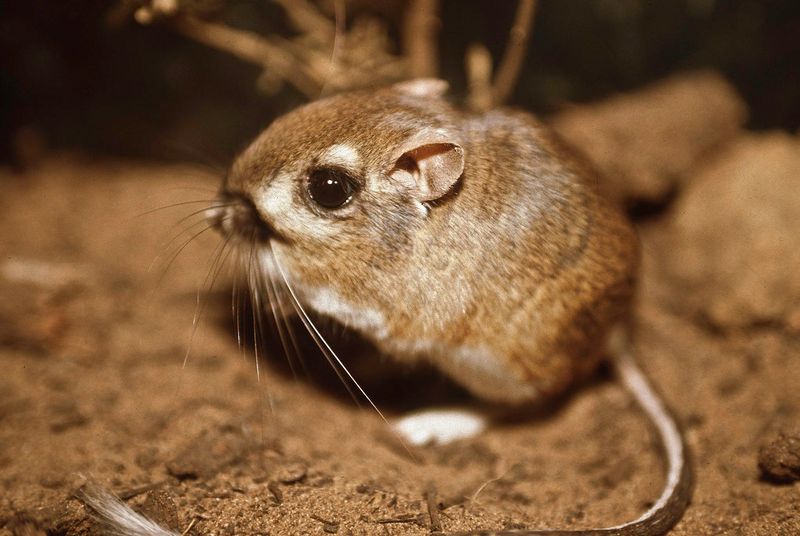
Image Credit: Moose Peterson.
The kangaroo rat might be Arizona’s most extreme desert minimalist. It gets nearly all the moisture it needs from dry seeds, thanks to metabolism and kidneys so efficient they produce almost no liquid waste.
That means it can live without ever needing a standing water source.
Its burrow is just as impressive as its body. During the day, it stays underground in a cool, humid chamber, often sealing the entrance to trap moisture inside and block heat outside.
In a landscape that steals water from everything, this tiny rodent turns architecture into survival.
At night it hops out to gather seeds, using its powerful hind legs to move quickly and avoid predators. Every part of its routine is about limiting exposure and conserving precious internal moisture.
You could call it a desert accountant, constantly balancing every grain of energy and every invisible drop of water.
Javelina
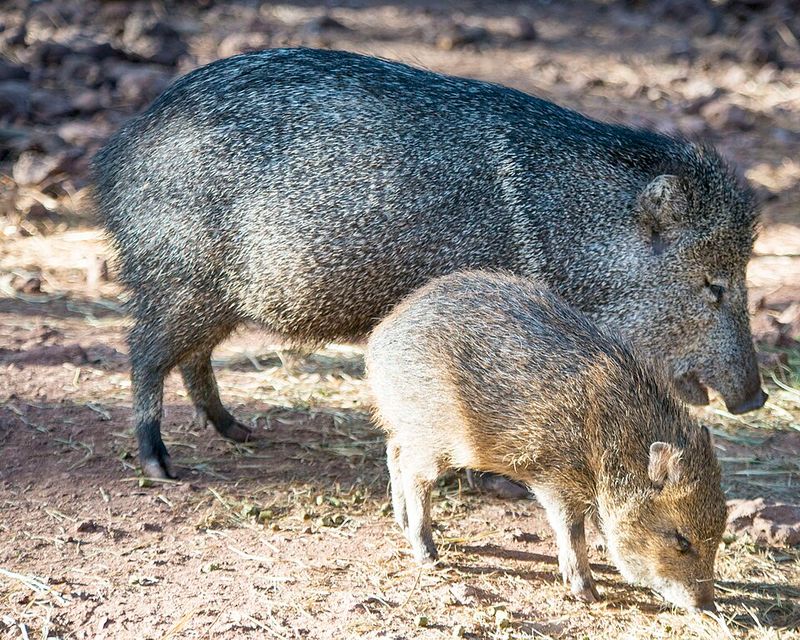
Image Credit: ed ouimette.
Javelinas thrive in Arizona by treating cactus like a hydration station. These tough collared peccaries eat prickly pear pads, fruit, and other moisture-rich desert plants, taking in both water and calories with the same bite.
It is a practical menu for a place where puddles are never guaranteed.
They also time their movements carefully, traveling and foraging mostly at dawn, dusk, or night. By avoiding the fiercest sun, they reduce heat stress and conserve body water without needing dramatic physical tricks.
Sometimes behavior is the best adaptation you can have.
Another strength is their tight social structure. Moving in herds helps them stay alert, navigate scrubby terrain, and find food more efficiently in difficult conditions.
They may look a little rough around the edges, but javelinas are excellent desert problem solvers, turning thorny plants and cooler hours into a reliable survival system.
Sidewinder Rattlesnake
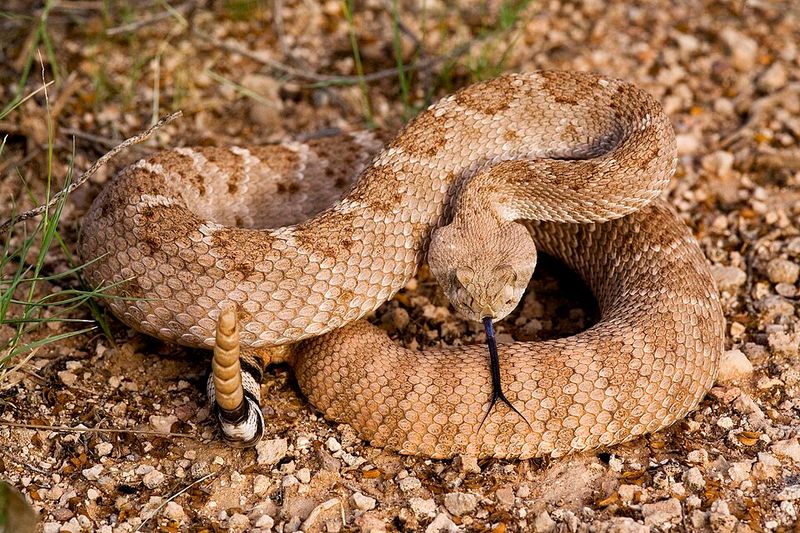
Image Credit: Patrick Alexander.
The sidewinder rattlesnake moves through Arizona’s hot sand with one of the strangest and smartest gaits in the animal world. Its sideways slither keeps only a small part of the body touching the ground at any moment.
That reduces contact with scorching surfaces that could otherwise overheat a snake fast.
It also knows when not to move at all. Sidewinders often bury themselves in loose sand, leaving just the eyes and top of the head exposed while they wait for prey.
Hidden like that, they stay cooler, conserve energy, and become almost invisible at the same time.
This ambush style fits desert life perfectly because chasing prey wastes moisture and effort. Instead, the snake lets the landscape do part of the work, blending into heat, texture, and silence.
You are seeing an animal designed for efficiency, where every motion and pause helps it survive punishing, water-starved terrain.
Gila Woodpecker
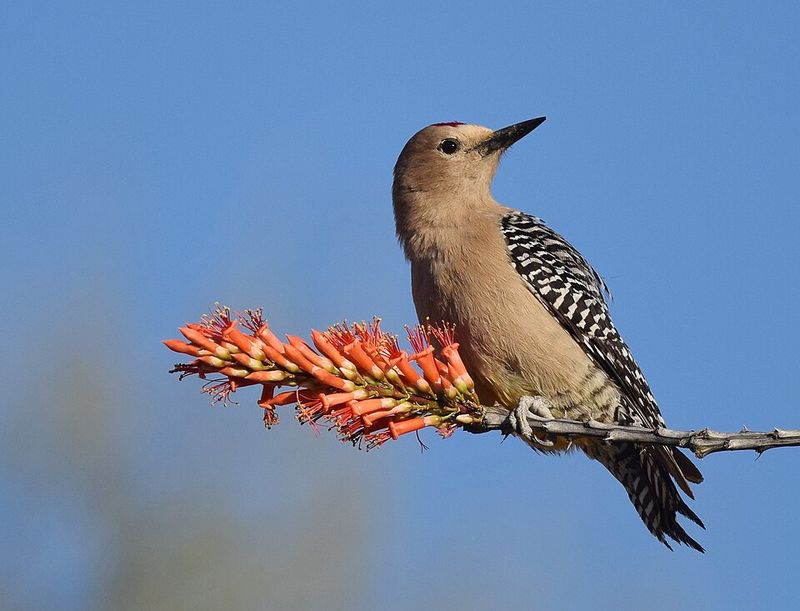
Image Credit: Andy Reago & Chrissy McClarren.
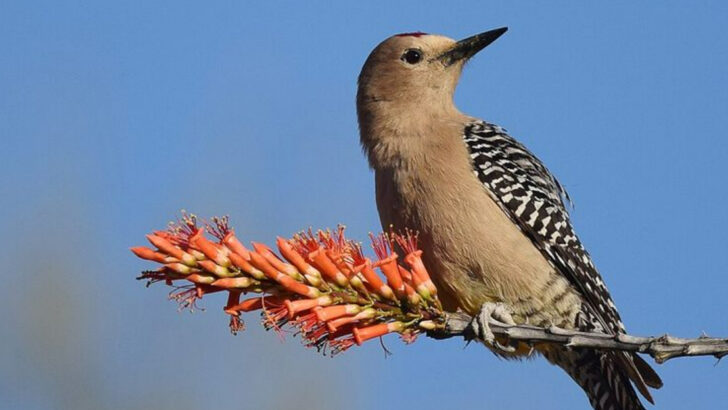
The Gila woodpecker survives Arizona heat by moving into one of the desert’s best natural apartments. It chisels nesting cavities into saguaros, where the interior stays cooler and more humid than the surrounding air.
In effect, this bird lives inside a giant, spiny evaporative shelter.
Even better, the cactus responds by forming tough scar tissue around the cavity. That woody lining, often called a boot, creates an insulated chamber that protects eggs and chicks from both temperature extremes and structural collapse.
It is a remarkable partnership between bird engineering and cactus biology.
Beyond nesting, the woodpecker benefits from timing and diet. It can forage during manageable parts of the day for insects, nectar, and fruit while retreating to its built-in refuge when conditions turn punishing.
You have to admire a bird that survives summer by literally carving out a cooler, safer microclimate inside a cactus.
Desert Bighorn Sheep
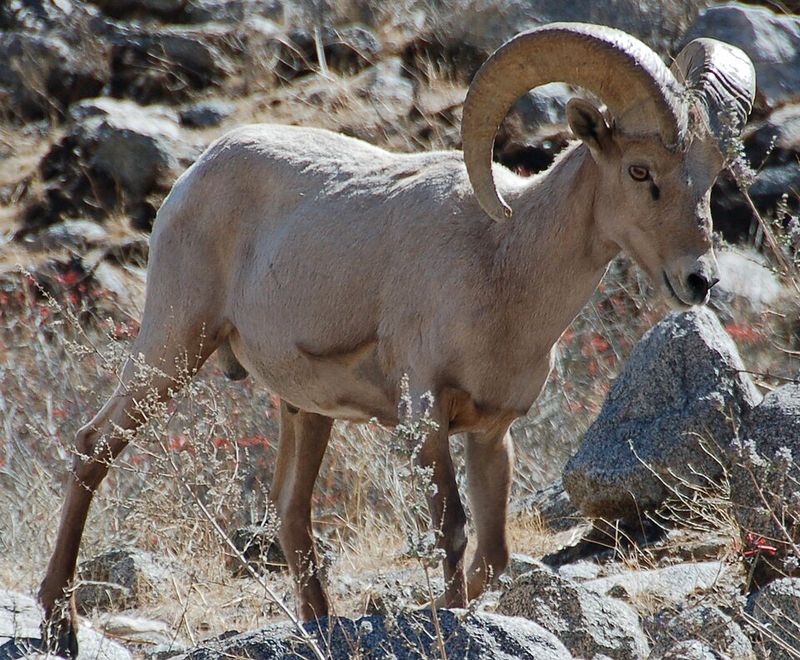
Image Credit: Andrew Barna.
Desert bighorn sheep handle Arizona’s dry country with a level of endurance that feels almost unreal. They can lose a large share of their body weight in water and still survive, then rehydrate quickly once they reach a dependable source.
That flexibility helps them live where water holes may be distant and unpredictable.
Their kidneys also play an important role by concentrating urine and reducing unnecessary water loss. Combined with powerful legs and excellent balance, that allows them to travel long distances across rugged cliffs and canyons between drinks.
They are built for both conservation and movement.
During cooler months, some bighorns can go days without drinking at all. They rely on timing, terrain knowledge, and physiological toughness to bridge the gap between scarce resources.
In Arizona, survival is often about knowing where the next drink is and being strong enough to reach it before the desert changes again.
Coyote
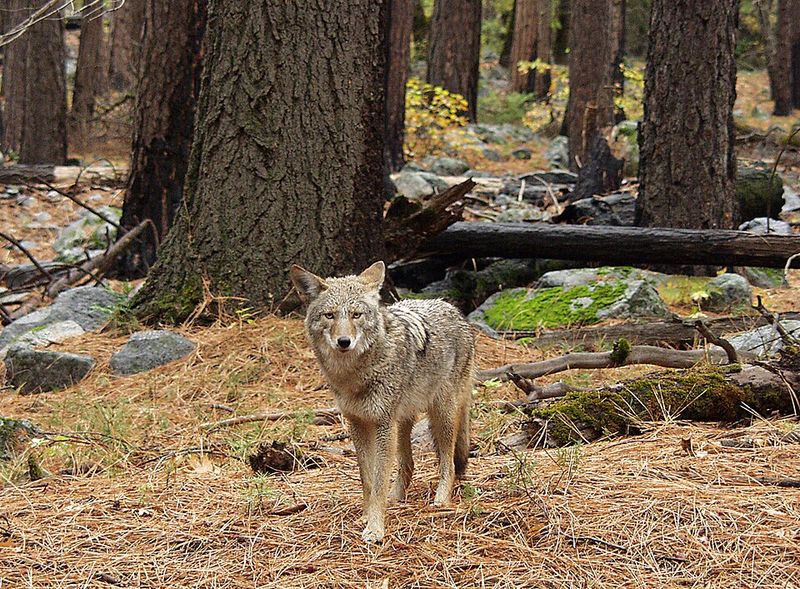
Image Credit: Christopher Bruno.
The coyote thrives in Arizona because it refuses to be limited by one rigid strategy. When summer turns brutal, it shifts most of its activity to dusk, night, and dawn, avoiding the hours when the desert is most punishing.
That change alone cuts heat stress and water loss dramatically.
Its menu helps too. Coyotes get moisture from the bodies of their prey and from desert foods like prickly pear fruit, so they do not always need to depend on open water.
In a dry landscape, eating and drinking can become the same act.
This adaptability extends to habitat, behavior, and movement. Coyotes can patrol washes, grasslands, rocky hills, and even edges of towns while adjusting their routines to whatever conditions demand.
You could call them desert opportunists, but that undersells the skill involved. They survive by staying flexible, observant, and ready to turn scarcity into a usable advantage.
Harris’s Hawk
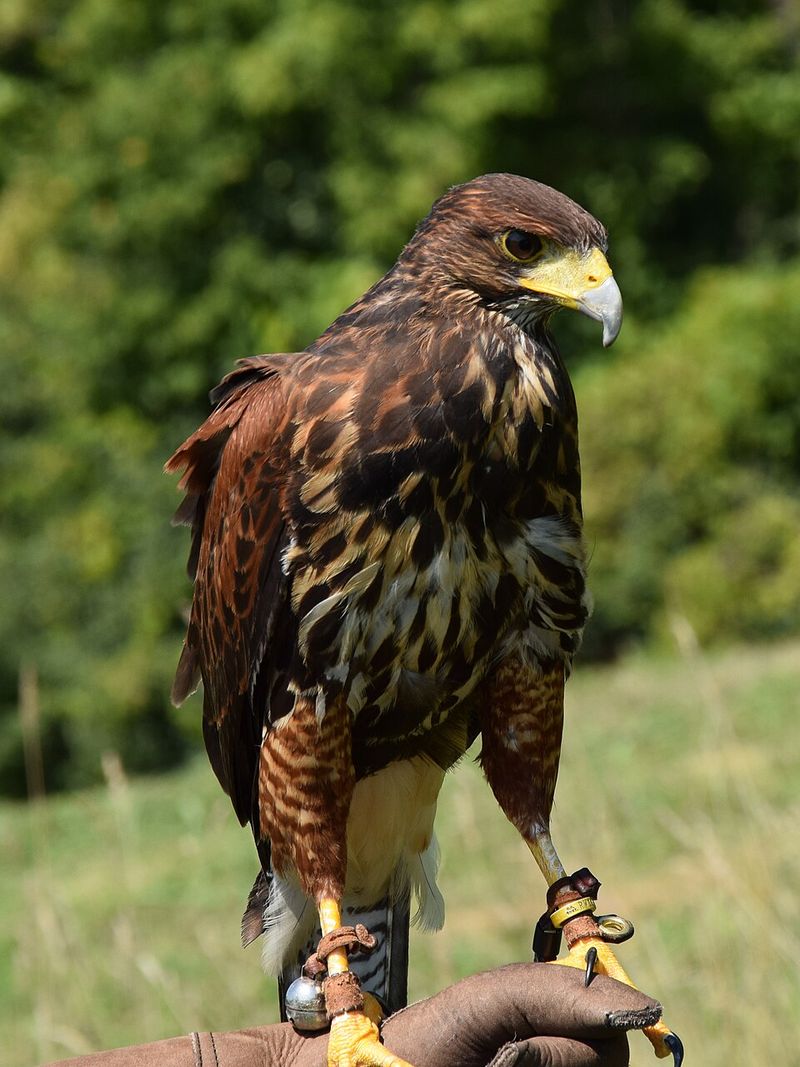
Image Credit: Вени Марковски | Veni Markovski.
Harris’s hawks stand out in Arizona because they solve desert scarcity with teamwork. Unlike most raptors, they often hunt cooperatively in family groups, taking turns flushing, chasing, and cornering prey.
That shared effort can reduce the energy each bird spends in a harsh environment where wasted calories matter.
Efficient hunting has a hidden benefit in dry country. If a hawk spends less energy securing food, it keeps more reserves available for coping with heat and limited water.
In other words, cooperation becomes a desert survival tool, not just a social quirk.
These hawks also use elevated perches like saguaros, poles, and mesquite to scan open ground with minimal effort. They can wait, watch, and strike intelligently rather than fly endlessly in punishing sun.
You are seeing a predator that survives the Arizona desert not just through sharp talons, but through planning, patience, and family-level coordination.
Black-tailed Jackrabbit
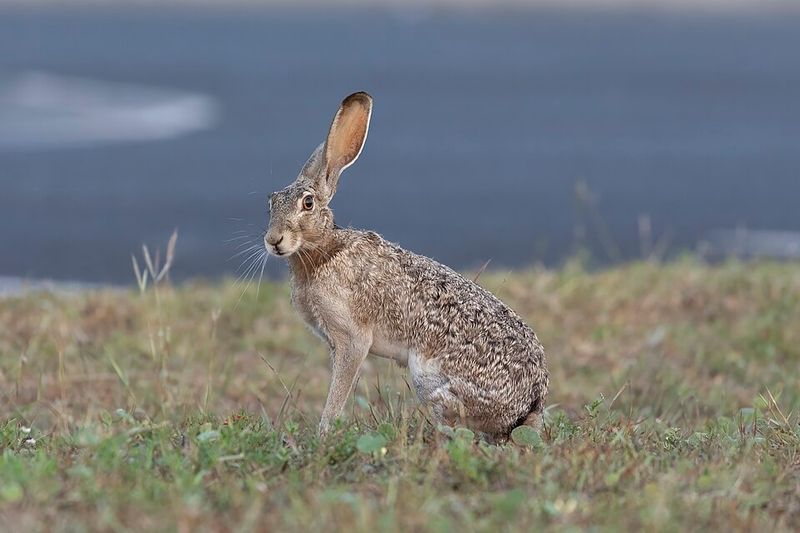
Image Credit: Chuck Homler.
The black-tailed jackrabbit looks almost exaggerated, and those giant ears are the reason. Packed with blood vessels close to the surface, they radiate excess body heat into the air, helping cool the animal without relying heavily on sweating or panting.
In Arizona, that means losing less precious water while staying active.
Its timing matters too. Jackrabbits often rest in shade during the hottest part of the day, then feed during cooler periods when plants are less desiccating and predators are easier to detect.
Even the simple act of staying still in the right spot can save energy and moisture.
Speed is another advantage, but not just for escape. Quick bursts of movement let a jackrabbit cross exposed ground efficiently and return to cover before heat builds too much.
You may notice the ears first, yet this animal’s real talent is balancing cooling, caution, and motion in a landscape that punishes waste.
Cactus Wren
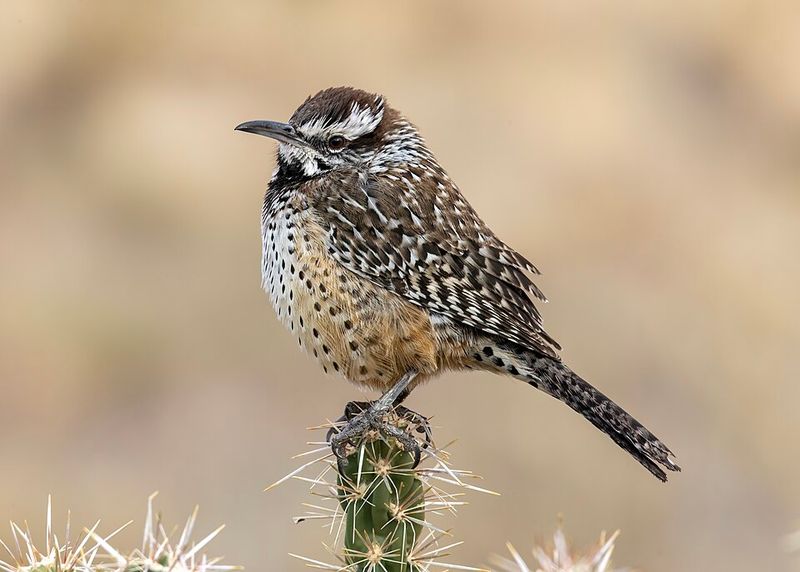
Image Credit: Polinova.
The cactus wren turns prickly plants into one of Arizona’s smartest nurseries. It builds bulky, insulated nests inside cholla or saguaro cacti, where spines deter predators and dense structure reduces direct sun exposure.
For eggs and chicks, that combination creates a safer and more temperature-stable home.
Water conservation comes through diet as much as shelter. Cactus wrens get much of the moisture they need from insects, fruit, and other food sources instead of depending on standing water.
That is a valuable strategy in a landscape where open water may vanish quickly.
Its daily routine also helps it manage heat, with activity focused around times when foraging costs less energy. The bird’s loud personality can make it seem carefree, but its survival plan is carefully tuned to desert reality.
You are hearing a bold singer, yet behind that chatter is an expert in thorny architecture and low-water living.
Desert Iguana
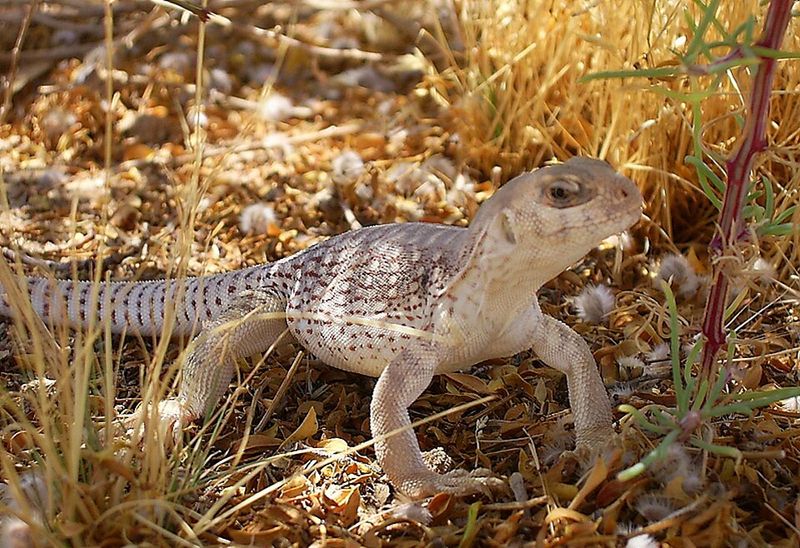
Image Credit: Ekeb.
The desert iguana handles heat that sends many other reptiles scrambling for cover. It can tolerate remarkably high body temperatures, allowing it to stay active on the surface when much of the desert has gone quiet.
That gives it access to food and space during hours others cannot use safely.
Of course, even a heat specialist has limits. When temperatures climb too far, the iguana retreats into rodent burrows or buries itself in sand, escaping the worst conditions with fast, practical shelter.
It survives by knowing exactly when to endure and when to disappear.
Its plant-based diet also fits desert living well, drawing moisture from flowers, leaves, and other vegetation when available. By combining thermal tolerance with strategic retreat, the desert iguana stretches the usable day farther than most neighbors.
You could think of it as Arizona’s midday specialist, comfortable on the edge of conditions others wisely avoid.
Ringtail
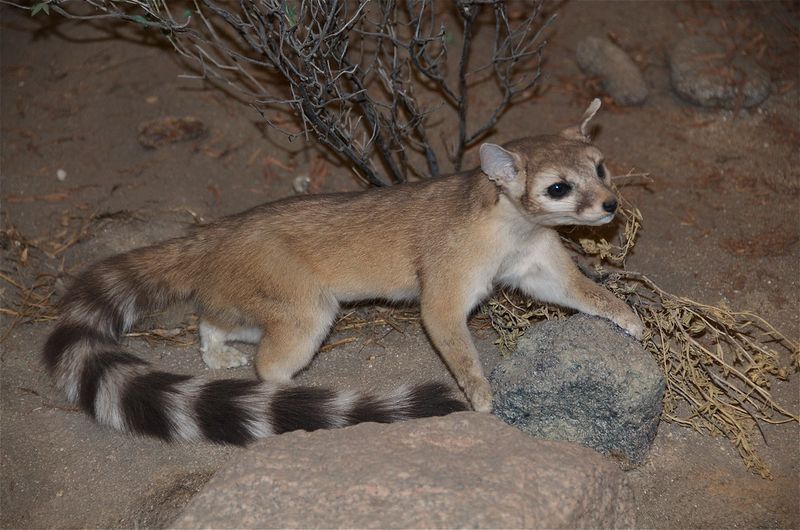
Image Credit: Jerry Kirkhart
The ringtail survives Arizona dryness mostly by refusing to meet the desert on its harshest terms. It is almost entirely nocturnal, moving through canyons, cliffs, and rocky slopes after dark when temperatures are far more forgiving.
That schedule sharply reduces water loss and heat exposure.
Its agility gives it an extra edge. A ringtail can rotate its hind feet nearly 180 degrees, allowing it to descend rock faces headfirst and reach crevices, ledges, and dens that many animals cannot use.
Those shaded shelters may also lead to hidden moisture or prey in cooler pockets.
As a relative of the raccoon, it has a curious, nimble reputation, but in desert country curiosity alone would not be enough. Precision movement and smart timing are what keep it going.
You are looking at a quiet specialist that survives by turning difficult terrain into protection, access, and nighttime opportunity.
Arizona Bark Scorpion
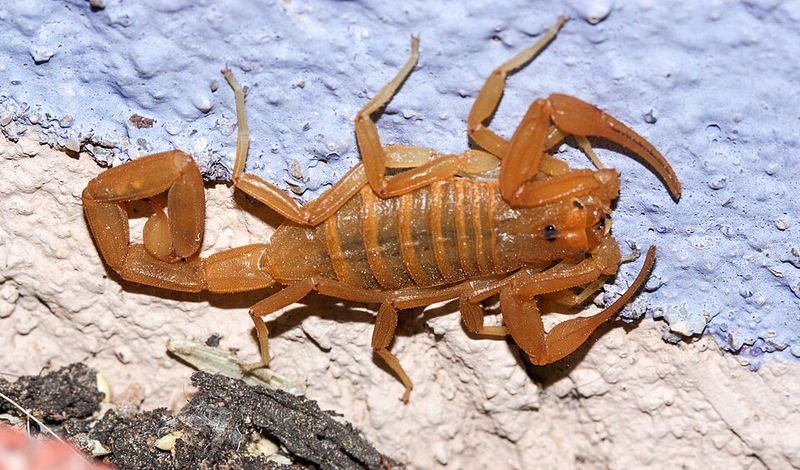
Image Credit: Andrew Meeds.
The Arizona bark scorpion is built for dry survival in ways that feel almost mechanical. Its exoskeleton is highly effective at limiting water loss, which helps it endure intense heat and prolonged scarcity with very little moisture.
That alone makes it one of the desert’s most efficient small predators.
During the day, it avoids lethal conditions by hiding in cracks, under bark, and inside cool crevices. These narrow shelters buffer temperature swings and reduce exposure to the open air that would quickly dry smaller animals out.
Staying hidden is not just caution here – it is hydration management.
It also survives on surprisingly little food, with some scorpions able to go many months between meals. That low-demand lifestyle fits a place where prey and water may both be unpredictable.
You may know it for its venom, but the real story is endurance: a compact animal designed to outlast the desert’s worst stretches.