
Alaska looks like the edge of the map, but for many animals it is only one stop on an astonishing commute. Some of these travelers cross oceans, some follow sea ice, and some return to the exact stream where life began.
If you think human road trips are impressive, these 13 species are about to completely reset your sense of distance.
Arctic Tern
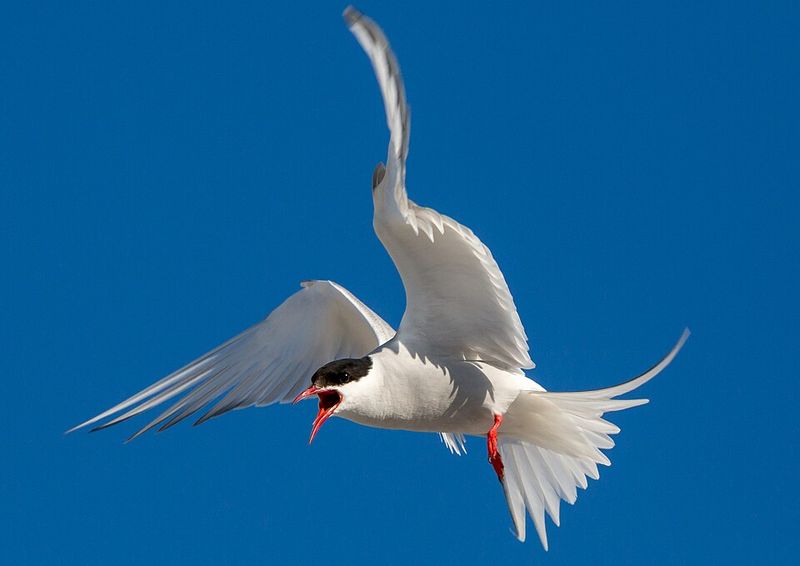
Image Credit: AWeith.
If you want a true champion of distance, the Arctic tern completely rewrites the scoreboard. Birds nesting in Alaska can travel from the far north to Antarctica and back, piling up roughly 44,000 to nearly 60,000 miles in a single year.
That means this slim seabird experiences more daylight than almost any creature on Earth, chasing summer from one end of the planet to the other. I love that something so lightweight can out-travel airplanes in spirit, using wind, coastlines, and rich feeding zones like a seasoned navigator.
Its journey is not one dramatic straight line, but a flexible route shaped by weather, food, and survival. When you picture Alaska as remote, the tern reminds you it is also connected to a global loop stretching all the way to the southern ice.
Bar-Tailed Godwit
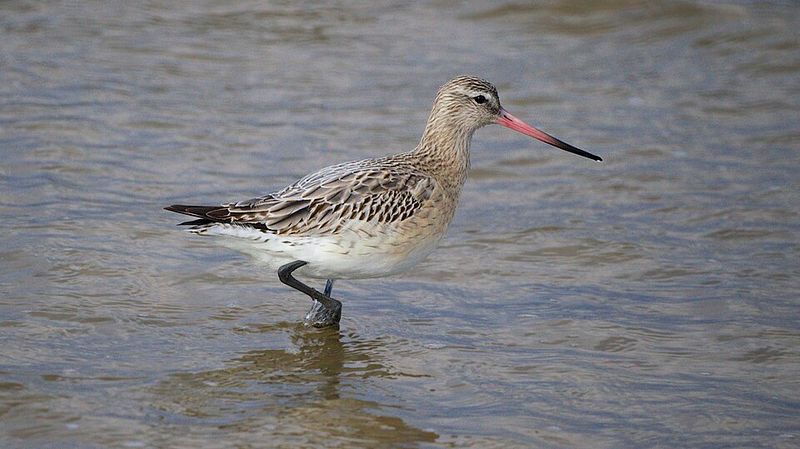
Image Credit: Ian Kirk.
The bar-tailed godwit looks understated at first, but its travel record is jaw dropping once you know the details. After breeding in western Alaska, some birds launch into a nonstop flight over the Pacific that can exceed 8,000 miles without a single landing.
One tracked juvenile flew about 8,425 miles from Alaska to Tasmania in just 11 days, which still feels unreal every time I read it. You are looking at a bird that essentially packs everything into one airborne gamble – fuel, timing, wind, and instinct all have to align.
Before departure, godwits bulk up dramatically, turning coastal feeding grounds into biological launchpads for one of Earth’s boldest movements. Their route makes Alaska feel less like a distant frontier and more like the top rung of an invisible ladder reaching deep into the South Pacific.
Humpback Whale
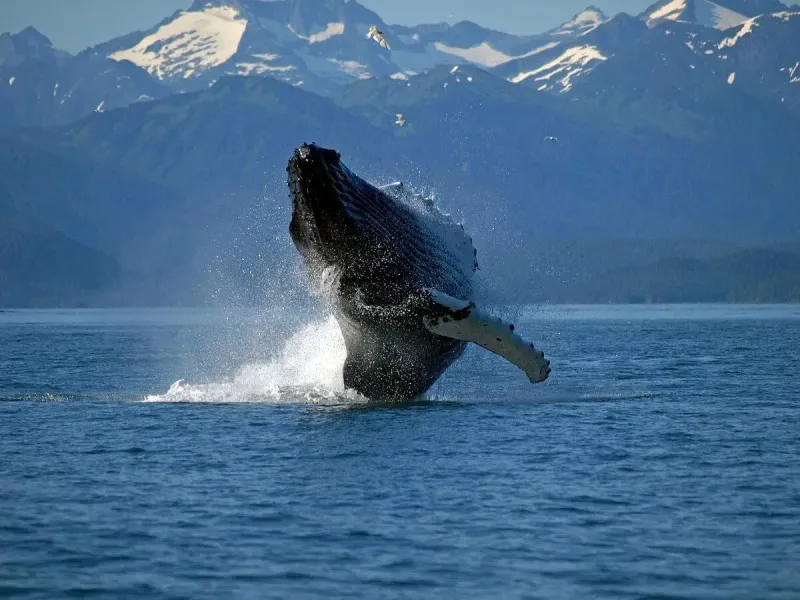
Image Credit: Gillfoto.
Humpback whales spend summer in Alaska’s food-rich waters, where long days help build the energy reserves they need for a major migration. Then many head toward breeding grounds in Hawaii, Mexico, or other tropical regions, turning a northern feast into a warm-water journey of thousands of miles.
Depending on the population, the round trip can top 6,000 miles and sometimes stretch closer to 10,000. What gets me is the contrast – one season they are lunging through cold Alaskan seas for krill and fish, and the next they are cruising toward calmer nurseries where calves are born.
You can almost imagine the route as a living thread stitched between glaciers and palm-lined horizons. Their migration proves Alaska is not just a destination at the top of the continent, but part of a much larger marine highway.
Caribou
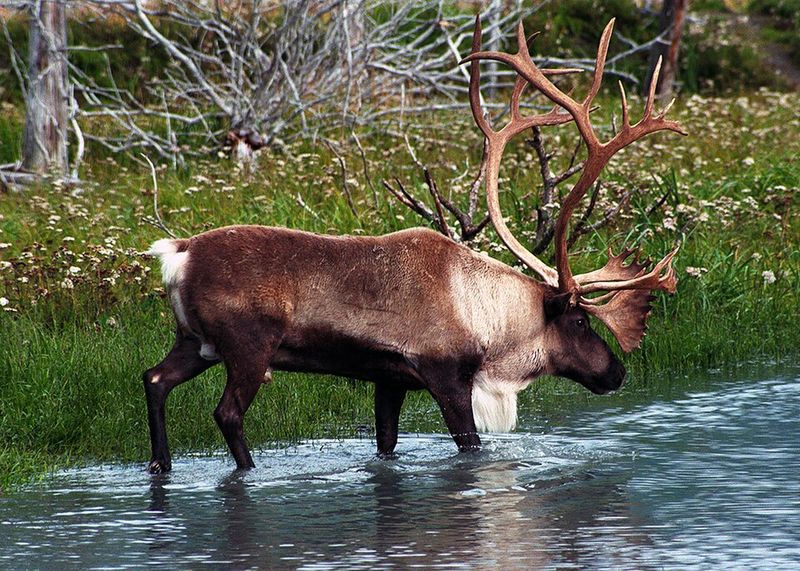
Image Credit: Paulhaberstroh.
Caribou do not need oceans to become legendary travelers, because Alaska gives them room to roam on an enormous scale. Several herds make some of the longest land migrations of any mammal, with yearly movements ranging from hundreds of miles to well over 1,000.
In some parts of northwest Alaska, individuals have been documented covering astonishing annual distances approaching 2,700 miles. You can picture the reason in layers – fresh forage, safer calving grounds, fewer predators, and even relief from relentless insects all help shape where these animals go.
What makes the migration feel especially wild is that it unfolds across tundra, river valleys, and mountain passes rather than neat lines on a road map. When you think of epic journeys, caribou deserve a place beside whales and birds, even if every mile happens on land.
Sockeye Salmon
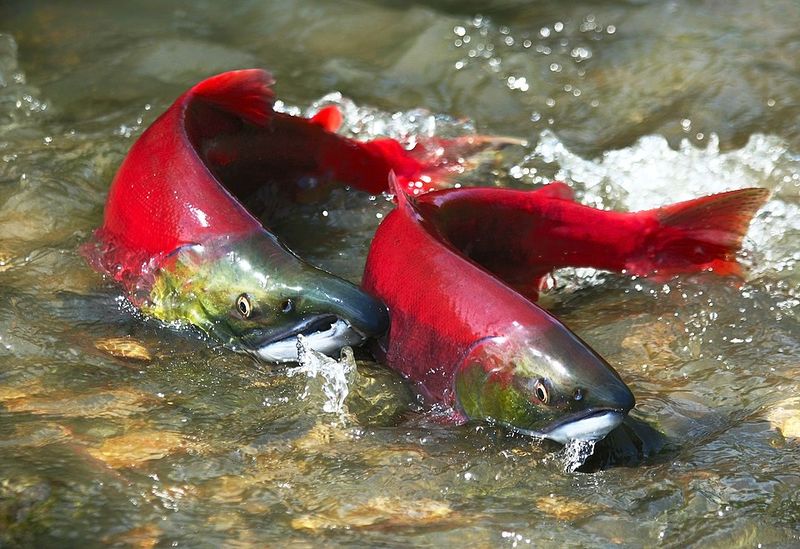
Image Credit: Maitegonza.
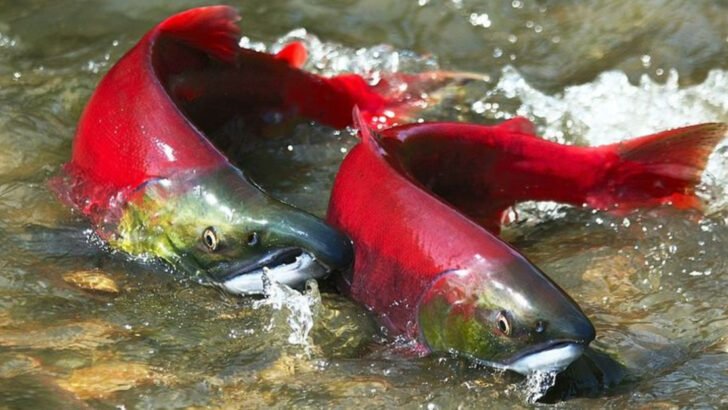
Sockeye salmon begin life in Alaska’s freshwater streams, head out into the North Pacific for years, then return to the exact waters where they were born. That homecoming can involve thousands of miles of ocean wandering followed by a punishing upstream run that feels almost mythical.
I think that is what makes salmon migration so gripping – it is not just about distance, but precision. You are watching a fish navigate from vast open water back to one specific drainage, guided by environmental cues and an internal map that scientists still study with fascination.
Along the way, salmon feed marine ecosystems, support bears and eagles, and sustain communities that have depended on their return for generations. Alaska looks different once you realize its rivers are not isolated lines on land, but doors connected to an immense and restless ocean circuit.
Gray Whale
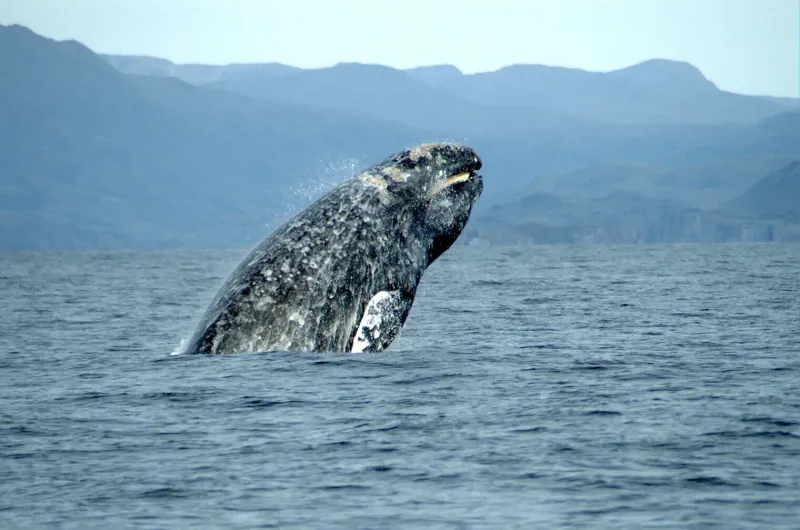
Image Credit: Merrill Gosho
Gray whales turn the Pacific coastline into one of the world’s great migration corridors, with Alaska as a key summer feeding destination. When winter approaches, they travel south to breeding lagoons in Mexico, creating a round trip that often falls between 10,000 and 14,000 miles.
That distance alone is impressive, but the route feels even bigger because it traces an entire continental edge. One tracked female completed nearly 14,000 miles in 172 days, a reminder that these whales are not drifting casually – they are following one of the most demanding annual schedules in the animal world.
You can imagine them moving past storms, shipping lanes, kelp forests, and changing temperatures, all while staying tied to ancient seasonal rhythms. Their migration makes Alaska part of a living coastline story that stretches from Arctic feeding areas to Mexican nursery waters.
Sandhill Crane
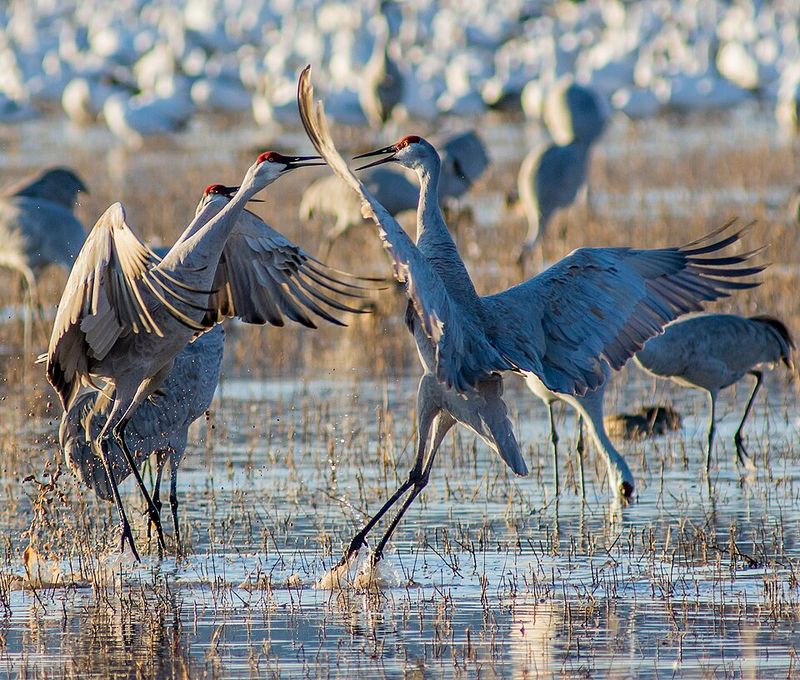
Image Credit: Eric Afyouni.
Sandhill cranes bring a different kind of drama to Alaska’s migration story, because their journeys feel both graceful and communal. Many that breed in Alaska spend winter in the southwestern United States or northern Mexico, covering several thousand miles with strategic stopovers along the way.
Those resting points matter as much as the flight itself, since cranes need reliable wetlands and fields to refuel before continuing south. If you have ever heard their rolling calls overhead, you already know how hauntingly purposeful they sound, like a flock announcing that the season is shifting whether you are ready or not.
I like that their migration is visible in a way ocean travelers often are not – you can watch formations moving across a huge sky. Alaska becomes the northern chapter of a flyway story linked to deserts, marshes, farms, and ancient instinct.
Northern Pintail
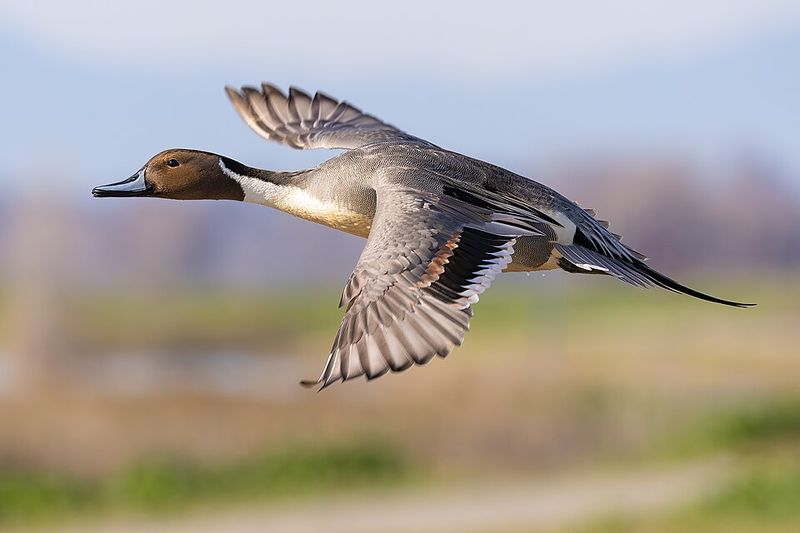
Image Credit: Frank Schulenburg.
Northern pintails are proof that adaptability can be just as impressive as raw distance. Birds nesting across Alaska migrate to wintering grounds that may lie in Mexico, Central America, or even parts of Asia, giving them a remarkably flexible map compared with many species.
That flexibility helps them respond to changing weather, ice conditions, and the unpredictable quality of wetlands across huge regions. You are not looking at a bird locked into one rigid route, but at a traveler that can adjust decisions midseason, almost like someone checking the forecast before choosing an interstate.
I find that kind of migration especially modern feeling, even though it is ancient biology at work. Pintails remind you Alaska sits at a crossroads between continents, where some departures angle south through the Americas while others bend westward toward the other side of the Pacific.
Short-Tailed Shearwater
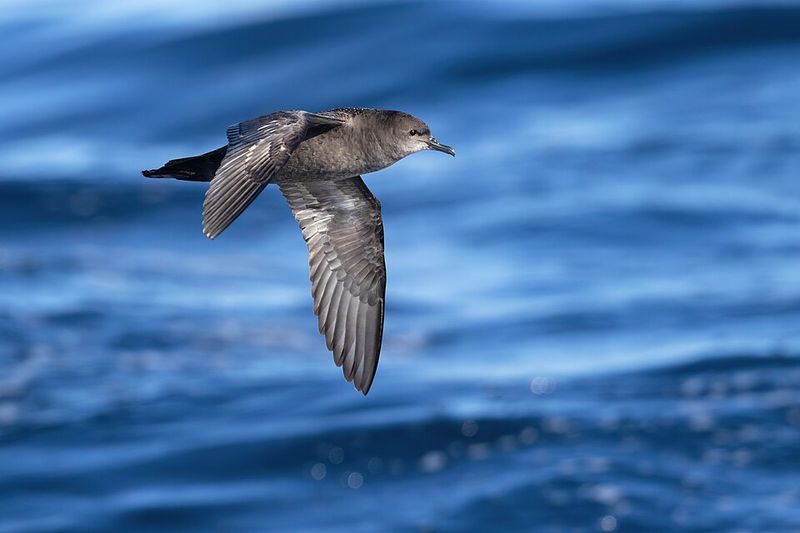
Image Credit: JJ Harrison.
Short-tailed shearwaters might be the most quietly outrageous travelers on this list, because their migration ties Australia to Alaska with a giant loop over the Pacific. These seabirds breed in Australia, then head north to feed in Alaskan waters, with annual journeys commonly topping 20,000 miles.
Some tracking studies suggest individuals may travel close to 40,000 miles in a year, which is enough to make your average vacation look laughably small. What I love is how effortlessly they seem built for it – long wings, low skimming flight, and a life spent reading winds and currents over open ocean.
Unlike species that migrate between obvious landmarks, shearwaters disappear into a watery emptiness that still somehow guides them with precision. Their presence in Alaska is a reminder that the state’s summer productivity attracts visitors from shockingly far beyond North America.
Western Sandpiper
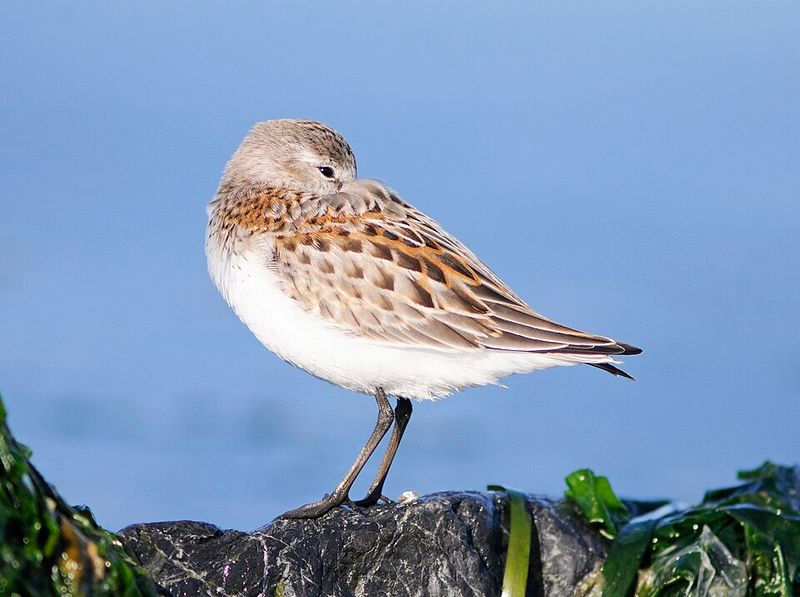
Image Credit: VJAnderson.
Western sandpipers may be small enough to fit in your hand, but their migration reaches from Alaska’s tundra to the Pacific coast of South America. After breeding in Alaska, they move south to wintering areas that can extend all the way to Peru.
Millions gather at coastal wetlands during migration, turning mudflats into crowded fueling stations where every tide matters. You really feel the scale when you realize these tiny birds depend on a chain of stopovers, and any weak link in that chain can ripple across an entire hemisphere of travel.
I think their size makes the story more impressive, not less, because every leg of the journey demands intense efficiency. Alaska is only the starting point of a route that threads through estuaries, bays, and shorelines all along the Pacific, stitched together by instinct and urgency.
Beluga Whale
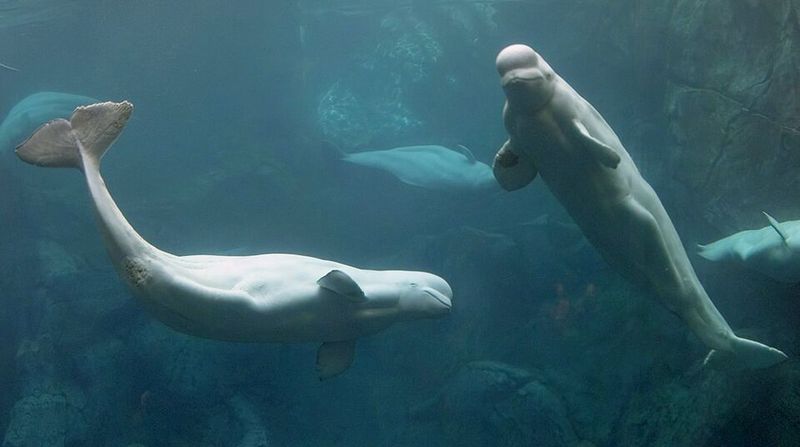
Image Credit: Diliff.
Beluga whales do not always chase the longest mileage, but their seasonal movements are still far bigger than many people expect. Several Alaska populations migrate between summer estuaries and winter sea-ice habitats, with some Bering Sea belugas traveling more than 1,500 miles.
They also do something that feels wonderfully unconventional for a whale – they can push far up rivers, with one documented beluga traveling about 830 miles up the Yukon. That detail alone changes the picture, because you stop imagining whales only in open water and start seeing them as travelers between marine and river worlds.
I like how their routes are shaped by ice, prey, and safe calving habitat rather than one simple north-south line. Alaska’s belugas remind you that migration is not always flashy or tropical; sometimes it is a pale whale following shifting Arctic conditions with remarkable precision.
Blackpoll Warbler
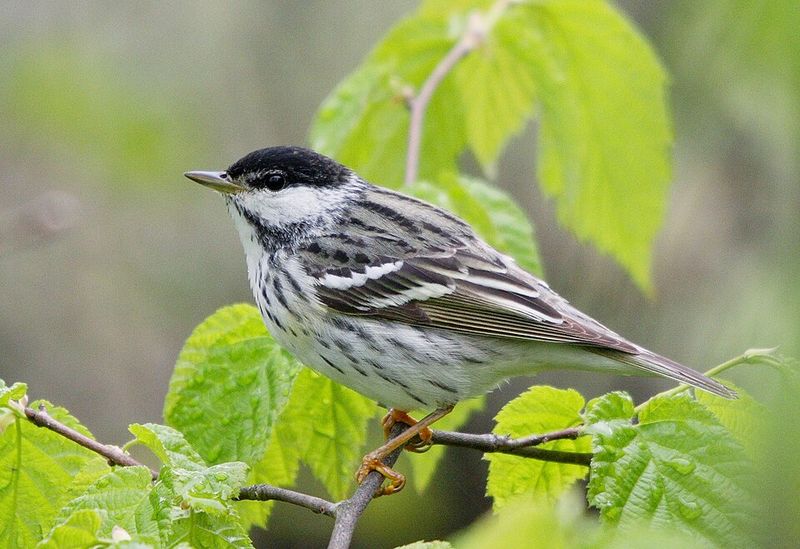
Image Credit: Cephas.
The blackpoll warbler is one of those birds that completely changes how you think about small songbirds. Individuals breeding in Alaska can make annual round trips exceeding 12,000 miles, eventually reaching South America through a migration that includes astonishing long nonstop flights.
Some populations cross large stretches of the Atlantic in two or three days, and birds linked to Nome have logged especially impressive total distances. You are basically looking at a tiny feathered engine that weighs less than an ounce yet manages feats of endurance that would sound extreme even for much larger animals.
What makes the journey so compelling is the contrast between appearance and ability – this is not a giant seabird or whale, but a modest forest migrant. Alaska becomes the launching point for a transcontinental and transoceanic itinerary that feels almost impossible until you realize nature does it every year.
Bowhead Whale
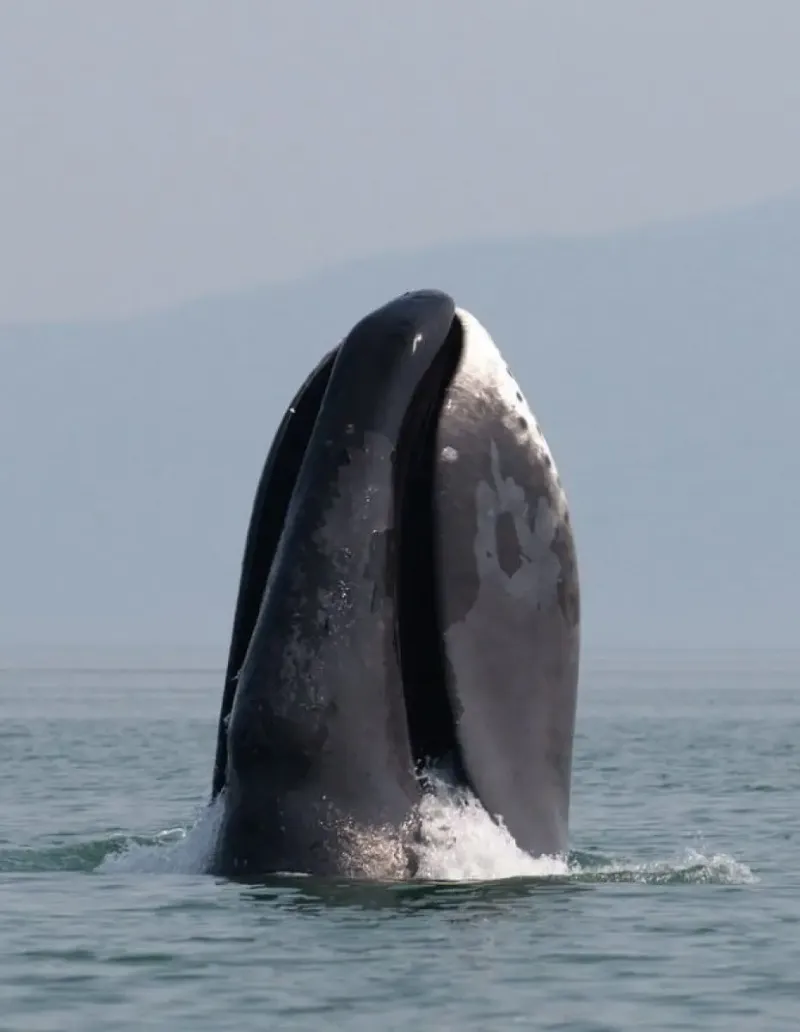
Image Credit: Olga Shpak
Bowhead whales show that a migration does not need beaches and tropical breeding lagoons to be extraordinary. These Arctic specialists travel with the seasonal advance and retreat of sea ice, moving between Alaska, Canada, and neighboring polar waters across annual routes that can exceed 3,000 miles.
The remarkable part is that they accomplish all this while staying inside a world many animals would find unforgiving year round. If you picture migration as a search for warmth, bowheads offer a different model – one centered on openings in the ice, productive feeding areas, and ancient pathways through a frozen ocean.
I find their persistence especially compelling because the journey unfolds in a landscape that can look nearly static from a distance. In reality, the Arctic is constantly shifting, and bowheads are reading those changes like seasoned navigators moving through a living, icy map.