
Utah is full of animals that can make you do a double take, especially when sunlight, dust, and distance add a little drama. Some have armor, some stalk like tiny raptors, and some glide overhead with the kind of silhouette that feels lifted from deep time.
If you have ever wanted a prehistoric safari without leaving the state, these creatures make it surprisingly easy. Here are ten Utah animals that look like they wandered straight out of the age of dinosaurs.
Common Snapping Turtle
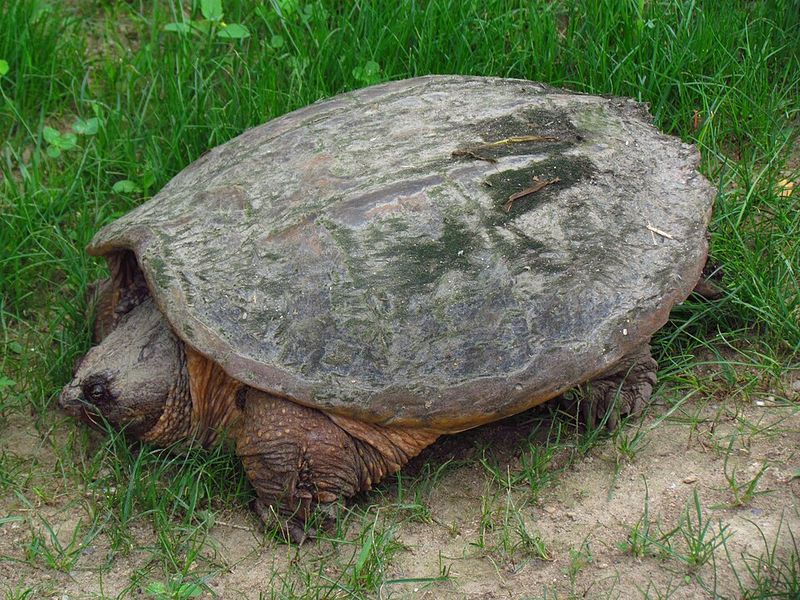
Image Credit: D. Gordon E.
If you spotted a common snapping turtle in a murky Utah pond, you could easily mistake it for a baby tank from the Mesozoic. Its hooked beak, rugged shell, and thick tail lined with jagged ridges give it the look of a miniature ankylosaur waiting in the shallows.
I think the illusion gets even stronger when it plants itself in the mud and stares at you like it has seen a few extinction events already.
In Utah, this turtle shows up mostly in northern waters and a few scattered places farther south, even though it is considered non-native here. The snapping turtle family evolved in North America roughly 90 million years ago, and that ancient blueprint still shows in every blunt movement and defensive pose.
If you want a living fossil with attitude, this one absolutely delivers, especially when it lifts that armored tail and reminds you that survival sometimes looks rough, stubborn, and wonderfully unchanged.
Northern Alligator Lizard
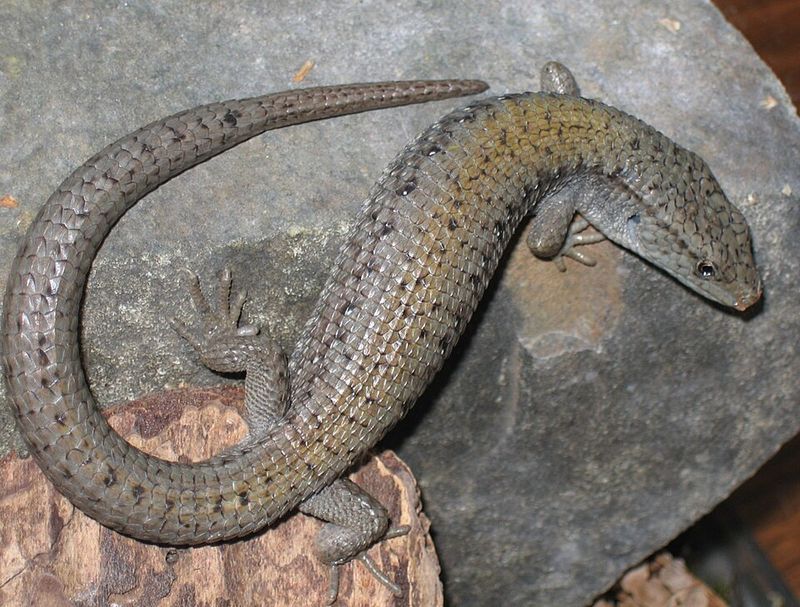
Image Credit: Meggar.
The northern alligator lizard looks like something a dinosaur sketched after shrinking itself to fit under a log. Its long body, short legs, armored rectangular scales, and slow deliberate movements create a wonderfully ancient vibe that feels out of place in modern mountain forests.
When you see one threading through leaf litter or basking on a rock, it is hard not to picture a pocket-sized reptile from another era.
You can find this species in Utah’s wooded hills, conifer forests, and streamside habitats, where it blends into the landscape with quiet confidence. Those keeled scales are reinforced with bony plates called osteoderms, which is exactly the kind of detail that makes you think of armor rather than skin.
It also uses tail shedding, or autotomy, to escape predators, and that trick feels delightfully primeval, like a survival strategy perfected long before people were around to name it. If any Utah lizard earns the word dinosaur-ish, this one absolutely does.
Greater Roadrunner
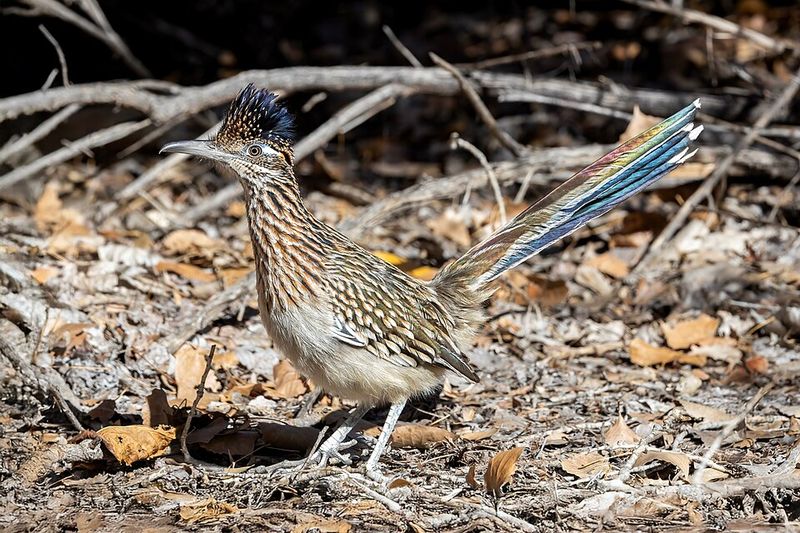
Image Credit: Polinova.
A greater roadrunner is technically a bird, but if you watch one sprint across Utah desert scrub, labels stop mattering for a second. Its long legs, balancing tail, sharp profile, and quick ground-hugging movements feel uncannily close to how many people imagine a small theropod dinosaur.
You do not need much imagination when one zips past at impressive speed and vanishes between sagebrush and stone.
Roadrunners live year-round in Utah’s deserts, brushlands, and grasslands, and they are built for motion, often running around 20 miles per hour and capable of even faster bursts. Birds evolved from theropod dinosaurs, so the resemblance is not just visual flair, it is family history showing through in plain sight.
I love that this connection becomes obvious the moment you notice the bird’s posture, its intent stare, and the way its tail stays straight behind it like a counterweight. If Utah has a feathered time machine on two legs, this is probably it.
Turkey Vulture
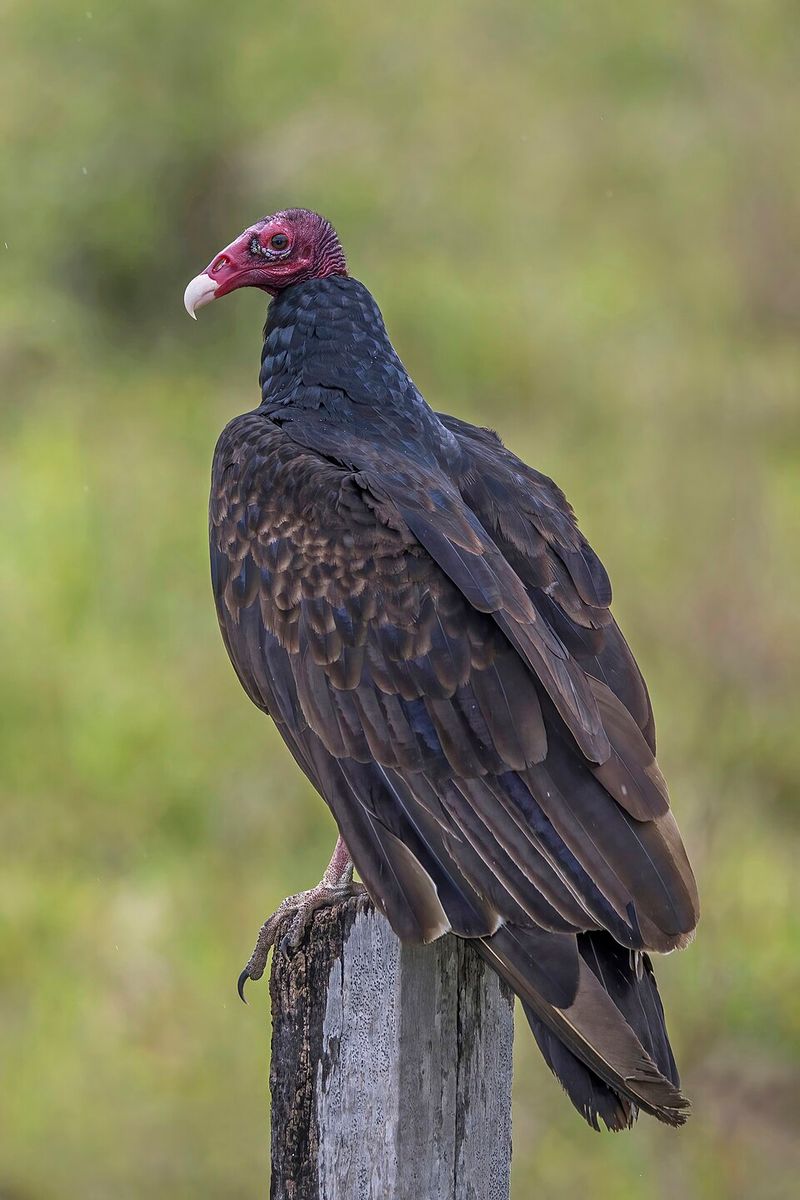
Image Credit: Charles J. Sharp.
Few birds look more prehistoric in flight than a turkey vulture drifting over Utah’s canyons on a hot afternoon. From below, its long wings, teetering glide, and dark silhouette can make it seem like some scavenging reptile has taken to the sky again.
The bald head only adds to the effect, especially when you catch one on the ground looking severe and utterly unconcerned with your opinion.
Turkey vultures spend spring, summer, and early fall in Utah before migrating south, and you can often spot them soaring over open country, wetlands, and desert edges. Their wingspan can stretch to about seventy inches, and they hold those wings in a shallow V that gives them a distinct, slightly eerie shape overhead.
That featherless red head is not just for drama, it helps keep them clean while feeding on carrion, which makes their lifestyle feel as ancient as their look. If you want a true canyon-era scavenger, this bird absolutely owns the part.
Desert Iguana
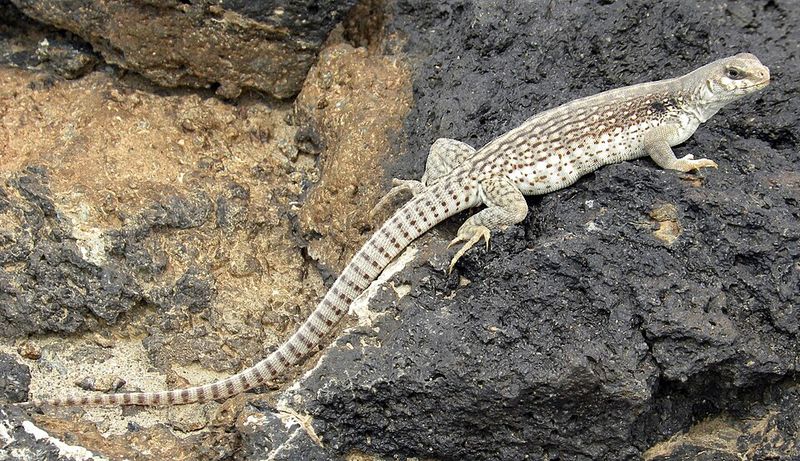
Image Credit: Wilson44691.
The desert iguana looks like a tiny survivor from a much hotter chapter of Earth’s history, which feels fitting in Utah’s sun-baked Mojave corner. Its rough scales, blunt head, long whip-like tail, and slightly spiky back create the kind of reptilian profile that instantly reads prehistoric.
If you see one basking near creosote in shimmering heat, it can feel like the modern world has quietly stepped aside.
This lizard lives in Washington County’s hottest sandy habitats, and its presence in Utah was re-confirmed recently, which makes each sighting feel even more special. Most individuals measure around ten to sixteen inches long, but they carry themselves with the alert confidence of something much larger.
What really sells the dinosaur comparison is how well they tolerate extreme heat, as if blazing temperatures are not a challenge but an inherited memory. I think that mix of toughness, texture, and stillness makes the desert iguana one of Utah’s most convincing miniature throwbacks to deep prehistory.
Great Blue Heron
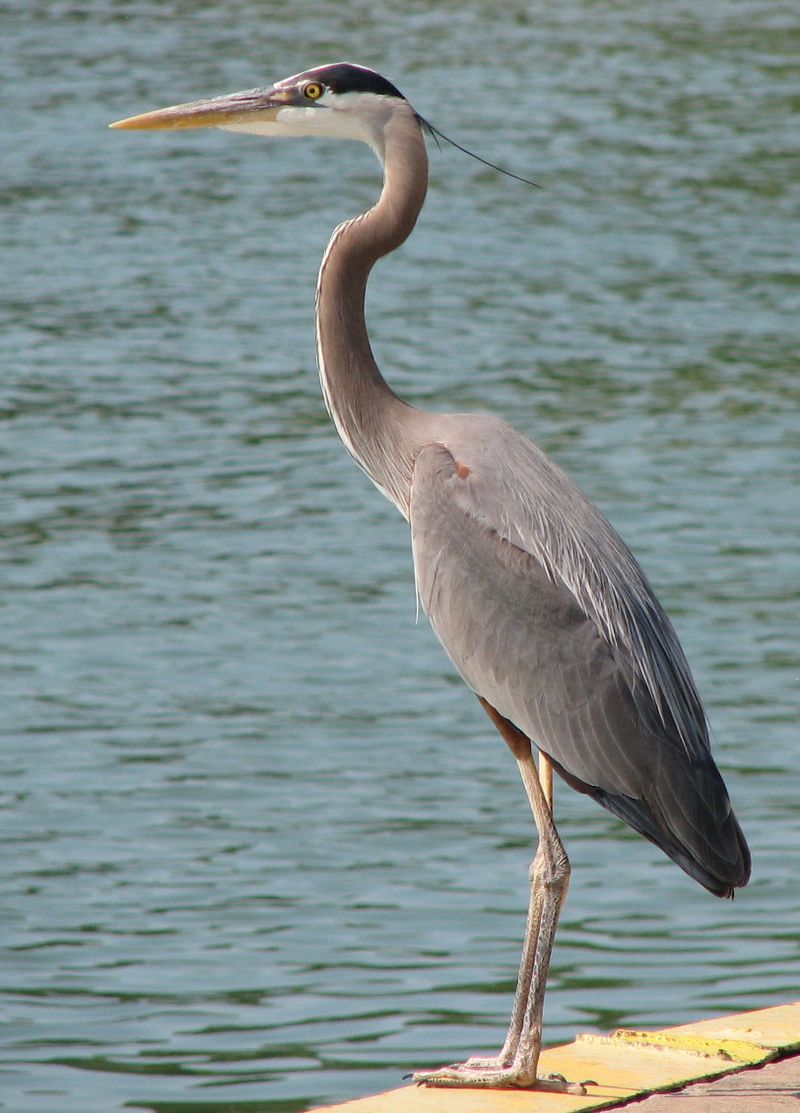
Image Credit: James St. John.
A great blue heron can make an ordinary Utah wetland feel like the edge of another epoch. Standing around four feet tall with a dagger-like bill, coiled neck, and impossibly patient stride, it looks eerily close to an artist’s reconstruction of a slender predatory dinosaur.
When one freezes beside the reeds and then strikes with lightning precision, you can almost hear your brain whispering, that is definitely a raptor in disguise.
This is Utah’s most commonly seen heron, found around lakes, marshes, rivers, and other wetlands across the state. Its wingspan often reaches six to seven feet, but the real magic happens on the ground, where every measured step feels ancient and deliberate.
Great blue herons mainly hunt fish, yet they also take amphibians, reptiles, small mammals, and birds, which only adds to their formidable reputation. If you want a dinosaur vibe without leaving the boardwalk, watching one stalk the shallows is about as convincing as modern wildlife gets.
Gila Monster
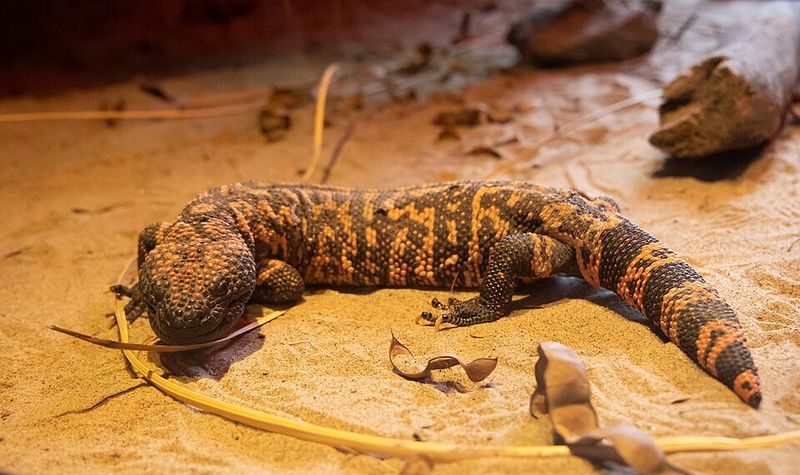
Image Credit: Theo Kruse / Burgers’ Zoo.
The Gila monster looks less like a modern lizard and more like a relic that refused to update. Its heavy body, thick tail, broad head, and bead-like scales in bold black and orange give it the unmistakable look of a creature designed in a much older world.
If you met one on a warm trail in southwestern Utah, you would probably slow down, stare, and immediately understand why prehistoric is the first word people reach for.
In Utah, it lives only in the extreme southwestern part of Washington County, including Mojave Desert habitats near places like Snow Canyon and the Red Cliffs area. It is one of only two venomous lizards in North America, and while its bite is rarely fatal to humans, it is famously painful, which somehow makes it feel even more primeval.
Utah also recognizes it as the official state reptile, a title this armored oddity wears well. You really do not need fossils when an animal like this still patrols the rocks.
American White Pelican
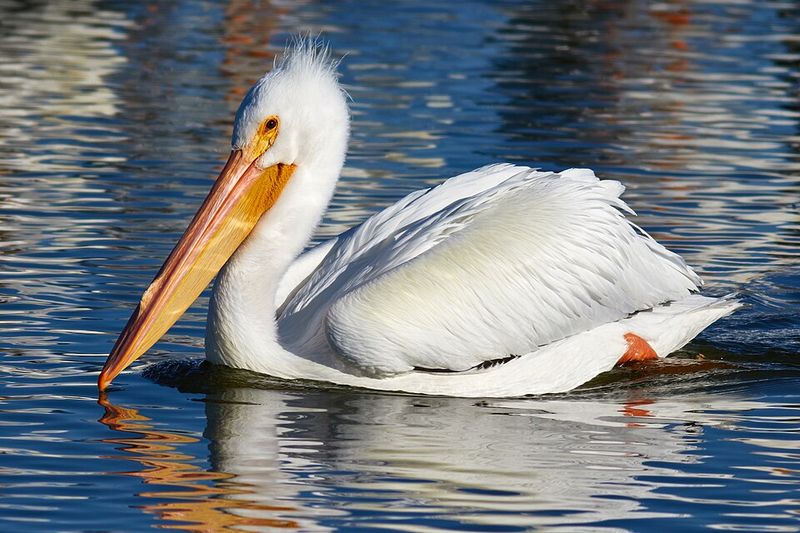
Image Credit: Frank Schulenburg.
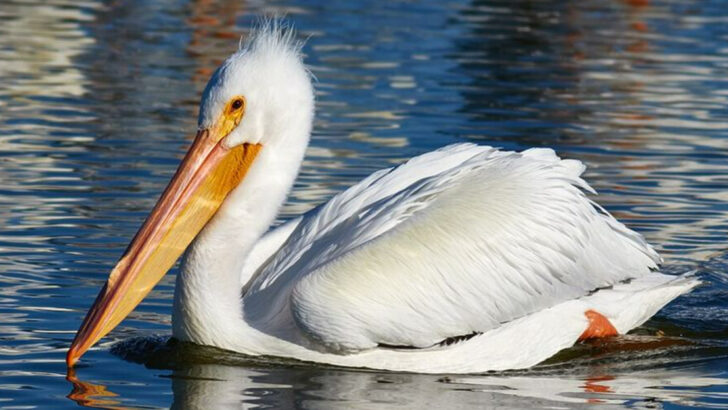
An American white pelican looks so oversized and dramatic that it barely seems real when it glides over a Utah marsh. With a wingspan that can approach ten feet and a massive bill fitted with an expandable throat pouch, it has the grand, improbable profile of something from a lost world.
I think the effect is strongest when one banks in bright light and suddenly reveals those black flight feathers against all that white.
In Utah, you are most likely to see this species in northern wetlands and waterways, including places like the Bear River Migratory Bird Refuge and Farmington Bay. It is among the largest flying birds in North America, and during breeding season adults even develop a temporary horn-like plate on the bill, which sounds almost too weird to be true.
That extra flourish makes an already unusual bird look even more Jurassic to the casual observer. If any waterbird seems built to impress both fish and paleontologists, this one easily wins.
Prairie Rattlesnake
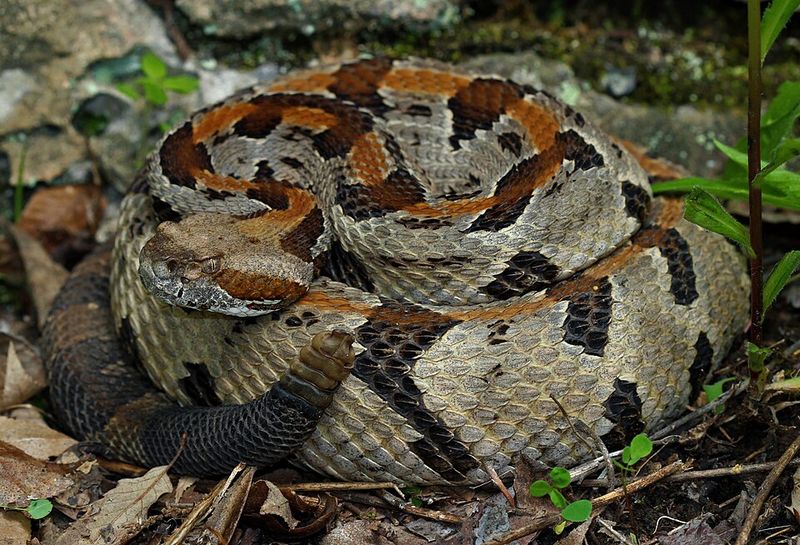
Image Credit: Peter Paplanus.
The prairie rattlesnake has the kind of ancient face that makes you step back before your brain finishes identifying it. Its muscular body, triangular head, rough heavily keeled scales, and blunt tail tipped with a warning rattle give it a look that feels older than the landscape around it.
When you imagine a reptile perfectly engineered for harsh country, this is exactly the silhouette that comes to mind.
In Utah, this species is especially associated with the eastern half of the state and the Colorado Plateau, where it lives in grasslands and semi-desert shrublands below about 8,000 feet. Most are three to four feet long, though some get larger, and their patterned browns and grays help them disappear into the terrain until the last possible second.
Heat-sensitive pits let them detect prey with remarkable efficiency, which adds another layer to their already formidable design. If survival had a soundtrack, the dry buzz of this snake’s rattle would be a very convincing prehistoric warning.
Sandhill Crane
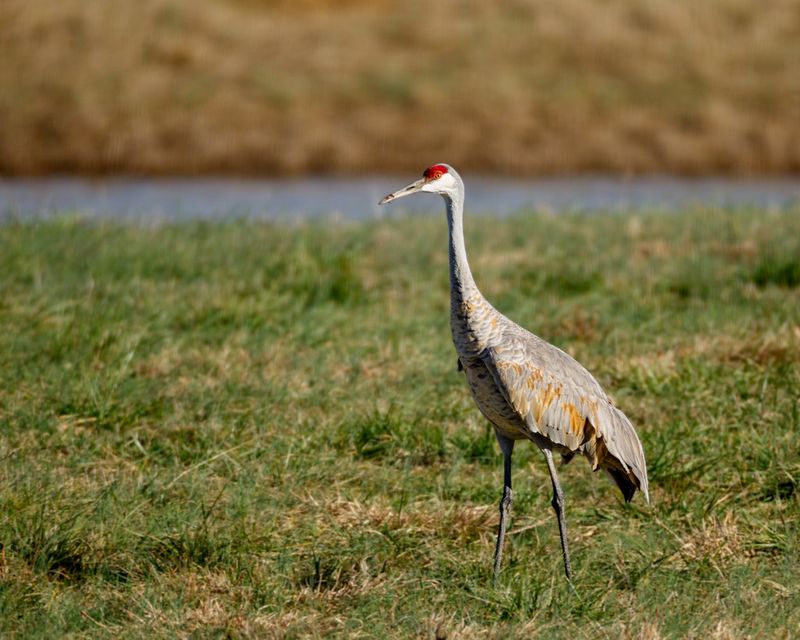
Image Credit: Tim Lumley
Sandhill cranes do not need scales or teeth to feel ancient, because their age is written in posture, voice, and presence. Tall, long-legged, and unforgettable, they move across Utah wetlands and fields with a stately confidence that can make the whole scene feel older than it is.
Then they call, and that loud resonant sound carries so far that you half expect a flock of pterosaurs to answer back.
These birds pass through Utah during migration, and seeing them overhead in spring or fall is one of the state’s most stirring wildlife moments. Depending on the subspecies, they can stand well over three feet tall and spread their wings more than seven feet, which gives them impressive stage presence even before you factor in their age.
Sandhill cranes belong to one of the oldest surviving bird lineages, with fossil evidence reaching back millions of years. If you want a living reminder that birds are the modern face of deep prehistory, few animals make that point more beautifully.