
Alaska feels built for giants, and its wild residents prove it at every turn. From mountain ledges to icy seas, some of the biggest animals on the planet not only survive here, they absolutely flourish.
If you love creatures that seem almost prehistoric in scale, this lineup is going to pull you in fast. Here are 12 enormous animals that make Alaska feel even bigger than it already is.
Brown Bear
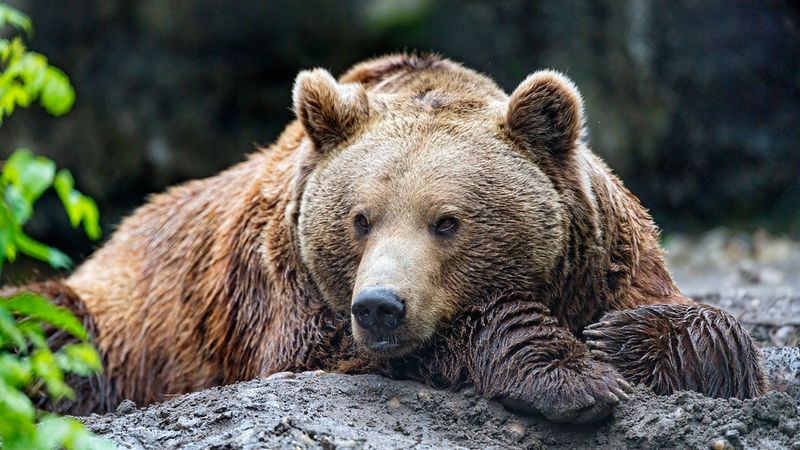
Image Credit: Tambako The Jaguar.
If you want a true symbol of oversized Alaska wildlife, the brown bear easily claims the spotlight. Coastal bears can grow astonishingly large because rich food sources, especially spawning salmon, help them pile on weight before winter.
Some males push far beyond what most people imagine a land carnivore should weigh, and that sheer bulk feels almost unreal in person.
What fascinates me most is how seasonal their lives are. In summer, many gather along rushing rivers, scanning the water for fish while also eating berries, grasses, roots, and whatever else the landscape offers.
That flexible, opportunistic diet is a big reason they thrive across such varied Alaskan habitats.
Despite their heavy frame, brown bears can move with startling speed and confidence. You might picture them as lumbering giants, but they are powerful, alert, and remarkably efficient hunters and foragers.
In Alaska, they are not just surviving at the top of the food web – they are dominating it with size, adaptability, and raw presence.
Moose
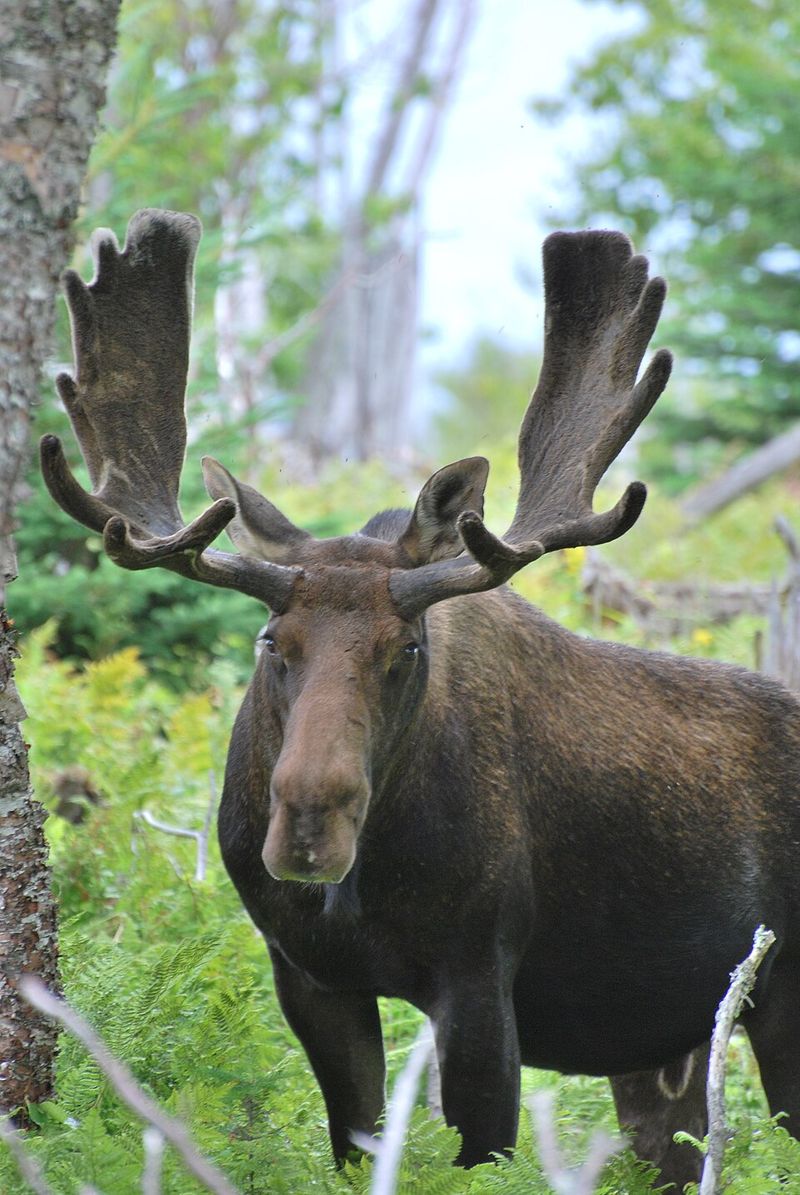
Image Credit: Gérald Tapp.
The Alaska moose has a way of making everything around it look smaller, including trees, trails, and occasionally parked vehicles. It is the largest moose subspecies in the world, and mature bulls can tower over six feet at the shoulder with antlers that spread like living chandeliers.
When you picture a northern giant built for cold country, this is exactly the animal that comes to mind.
What surprises many people is how well this heavyweight handles water. Moose are excellent swimmers, and they often wade into ponds and lakes to feed on aquatic plants while also browsing willow, birch, and aspen on land.
That mix of strength, reach, and mobility helps them use habitats that other large herbivores cannot exploit as effectively.
During the rut, bulls look especially dramatic, carrying huge antlers that can weigh dozens of pounds before shedding them each year. Even then, their long legs, deep chest, and oddly elegant stride give them an unmistakable presence.
In Alaska, the moose feels less like a deer and more like a moving monument.
American Bison
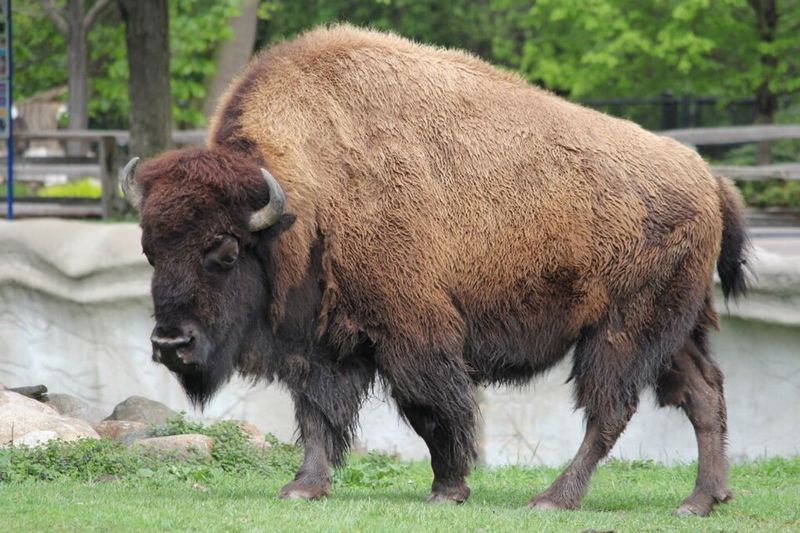
Image Credit: RedGazelle123.
American bison look like they were designed by a landscape that values toughness above everything else. In Alaska, wood bison reintroduction has given parts of the state a massive grazer that seems perfectly matched to open country, bitter wind, and long winters.
Mature bulls can approach truly staggering weights, and their heavy front end gives them an almost engine-like power.
I think what makes them so compelling is the combination of bulk and resilience. Their thick coats help trap warmth, while their muscular build lets them plow through snow and endure conditions that would challenge many other large mammals.
They may not be widespread across Alaska, but where they are established, they bring a prehistoric feeling to the landscape.
Unlike predators that depend on timing and stealth, bison thrive through endurance, herd behavior, and efficient grazing. Watching a huge bull stand still in blowing snow tells you a lot about why this species has survived so much.
In Alaska, bison represent not only size, but also the stubborn strength needed to hold ground in a severe climate.
Musk Ox
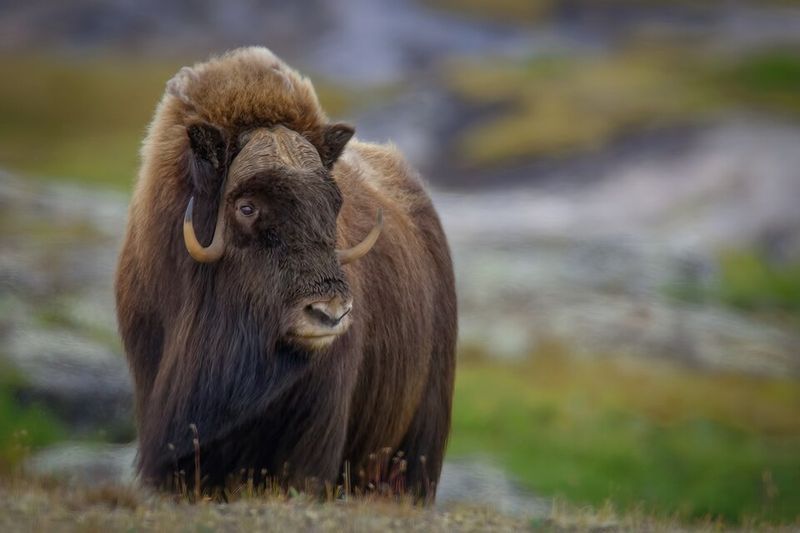
Image Credit: Alan D. Wilson.
Musk oxen look like they wandered straight out of the Ice Age and never found a reason to leave. Their massive bodies, sweeping horns, and shaggy outer coat make them one of Alaska’s most unforgettable Arctic animals.
Beneath that rough exterior lies qiviut, an extraordinarily warm undercoat that helps them endure brutal cold with impressive efficiency.
What I admire most is how their survival strategy is both simple and brilliant. When danger approaches, adults often form a defensive ring around calves, presenting a wall of horns and muscle to wolves or other predators.
That behavior turns a loose group into a living fortress, and it suits an ancient-looking species perfectly.
They are large without being flashy, powerful without seeming frantic, and perfectly shaped by one of the harshest climates on the continent. Adults can weigh several hundred pounds, yet they move steadily across open tundra with a confidence that feels earned over thousands of years.
In Alaska, musk oxen thrive because they are built for cold, caution, and persistence.
Dall Sheep
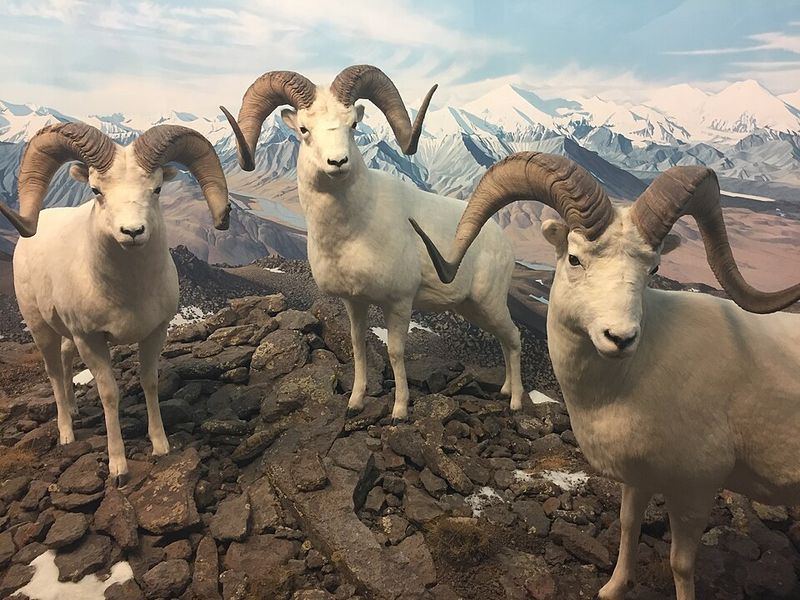
Image Credit: Avrand6.
Dall sheep might seem like an unusual choice on a list of enormous animals, but big is not only about body weight. Mature rams carry thick curling horns that can weigh more than many people expect, and when you see one standing on a cliff edge, the whole animal feels monumental.
In Alaska’s mountain country, they are giants of vertical space rather than sheer bulk.
Their greatest trick is agility in places that look almost impossible to cross. These sheep live among steep ridges, alpine meadows, and rugged escape terrain where a single misstep would be disastrous for most animals.
Yet they move with calm precision, using elevation as protection from wolves, bears, and other threats.
I find their look unforgettable: bright white coat, compact muscular body, and those dramatic horns spiraling with age and status. Rams are not the heaviest creatures in Alaska, but they command attention in a way many larger animals do not.
Thriving here means mastering cliffs, weather, and exposure, and Dall sheep do all three with remarkable style.
Steller Sea Lion
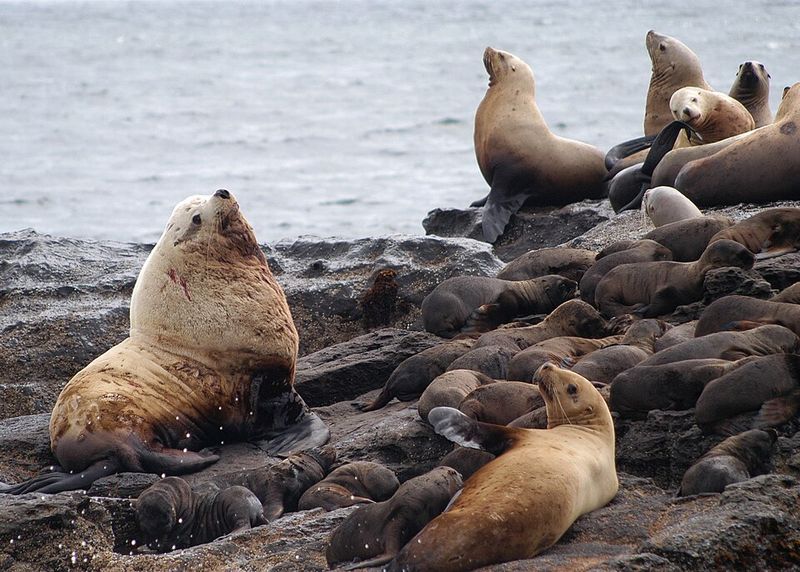
Image Credit: Oregon Department of Fish & Wildlife.
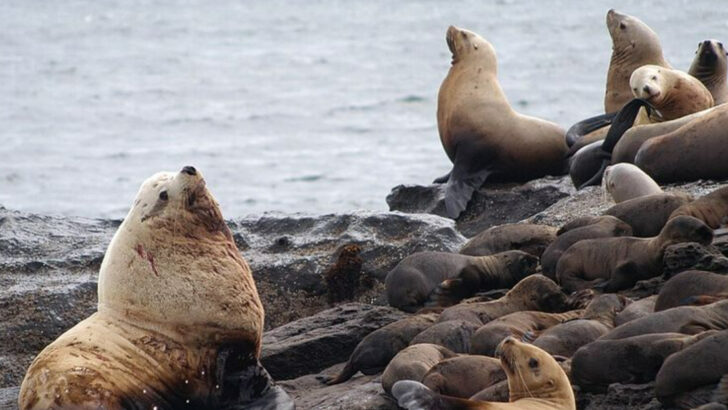
Steller sea lions are the kind of coastal giants that make rocks look small and surf look decorative. Adult males can exceed 2,000 pounds and stretch to impressive lengths, making them the largest members of the eared seal family.
When a big bull hauls out onshore, the scene feels less like a beach and more like a throne room.
During breeding season, the drama only grows. Dominant males defend territories on rocky islands and shorelines, roaring, posturing, and shoving rivals while females gather nearby.
That social intensity adds to their oversized reputation, because these animals are not just large – they are loud, visible, and impossible to ignore.
In the water, they are far more graceful than their bulk suggests. They feed on fish, squid, and octopus, moving through Alaska’s productive coastal ecosystems with surprising agility.
I think that contrast is what makes them so memorable: on land they seem heavy and imposing, while at sea they become efficient predators. Alaska suits them perfectly because it offers rugged haul-outs, abundant food, and cold waters built for marine giants.
Pacific Walrus
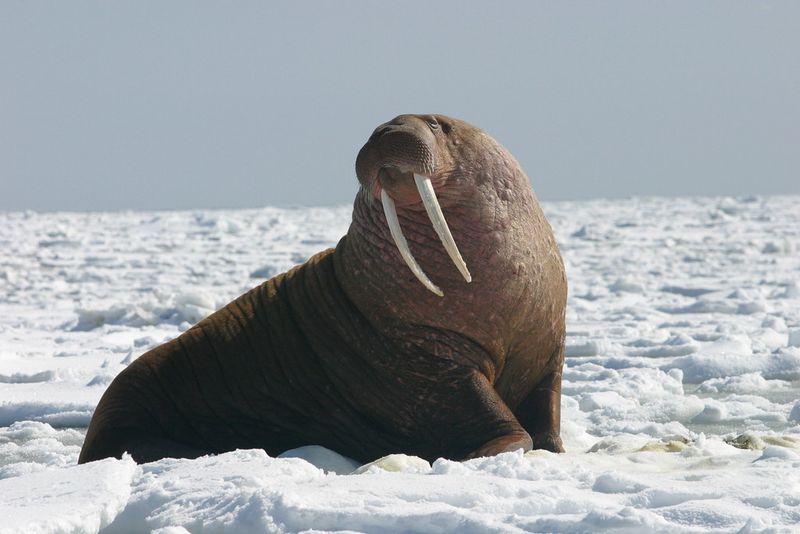
Image Credit: USFWS/Joel Garlich-Miller.
The Pacific walrus looks almost mythic, as if a sculptor combined tusks, whiskers, and sheer mass into one Arctic powerhouse. Adult males commonly weigh more than 3,000 pounds, and their long ivory tusks make them even more imposing.
In Alaska’s northern waters, they are among the most distinctive giant mammals you could ever hope to see.
What really sets them apart is how specialized they are for life between sea and ice. Their sensitive whiskers help them locate clams and other bottom-dwelling prey, turning muddy seafloors into feeding grounds that support enormous bodies.
Sea ice acts like a floating rest stop, giving them a place to recover between dives and travel across shifting Arctic habitat.
I cannot think of many animals that look tougher and stranger at the same time. Walruses seem built for pressure, cold, and crowding, whether they are packed together on ice or resting along remote coasts.
Alaska helps them thrive because it still offers the cold marine environment their lifestyle depends on. They are huge, specialized, and unforgettable in every possible way.
Killer Whale (Orca)
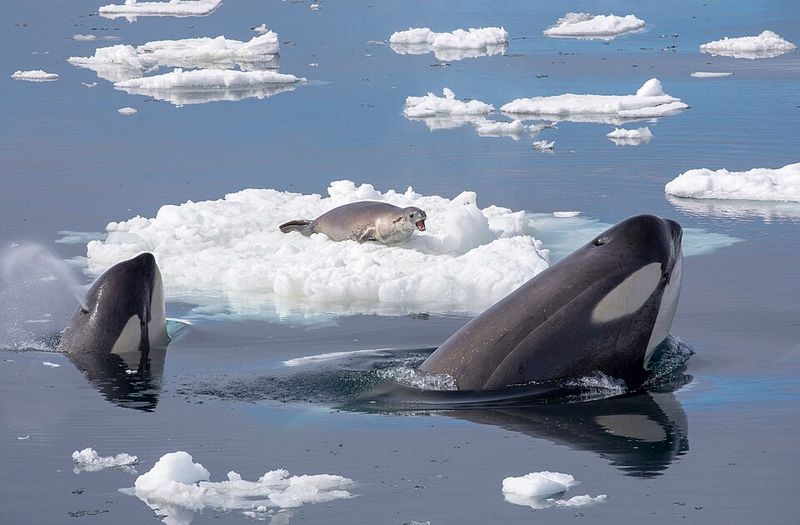
Image Credit: Callan Carpenter.
Orcas bring a different kind of enormity to Alaska – one measured in muscle, intelligence, and absolute control of the ocean around them. Adult males can reach remarkable lengths and weigh several tons, with tall dorsal fins that make them instantly recognizable even from far away.
When a pod surfaces in cold coastal water, it feels like the sea itself is announcing a top predator.
What fascinates me most is that not all orcas live the same way. Some Alaskan populations focus mainly on fish such as salmon, while others hunt seals, sea lions, and even whales.
That dietary specialization shows just how adaptable and socially complex these animals are, especially within tight family groups called pods.
They thrive here because Alaska provides rich feeding grounds, intricate coastlines, and a food web robust enough to support elite hunters. For you as an observer, the experience is unforgettable: black-and-white bodies slicing through gray water, synchronized breaths, sudden dives.
Orcas are enormous, yes, but their true scale comes from how completely they dominate the environments they inhabit.
Humpback Whale
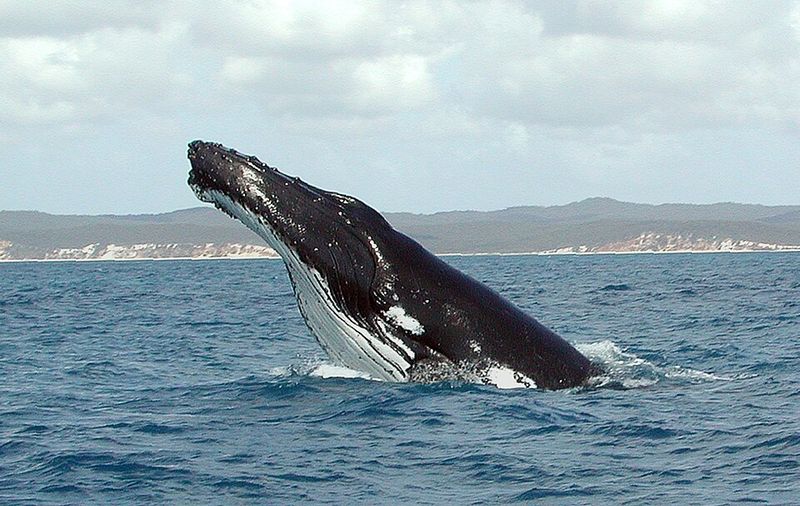
Image Credit: Fritz Geller-Grimm.
Humpback whales turn Alaska’s summer waters into a stage for some of the most spectacular wildlife moments on Earth. These giants migrate thousands of miles to reach nutrient-rich feeding areas, where adults can grow to around 60 feet and weigh tens of tons.
When one breaches, the sight is so dramatic that it almost feels choreographed for anyone lucky enough to be watching.
What makes humpbacks especially captivating is that their size never cancels out their elegance. They lunge, dive, lift their flukes, and sometimes cooperate in bubble-net feeding, creating circles of rising bubbles that help trap fish.
That mix of intelligence, coordination, and physical power gives them an energy that feels far bigger than their already immense bodies.
I think people connect with humpbacks because they seem both colossal and expressive. You can watch one surface, hear the exhale, and immediately understand that Alaska is feeding a true marine giant at the height of summer abundance.
These whales thrive here because the food is rich, the waters are productive, and their seasonal arrival is perfectly timed for maximum reward.
Bowhead Whale
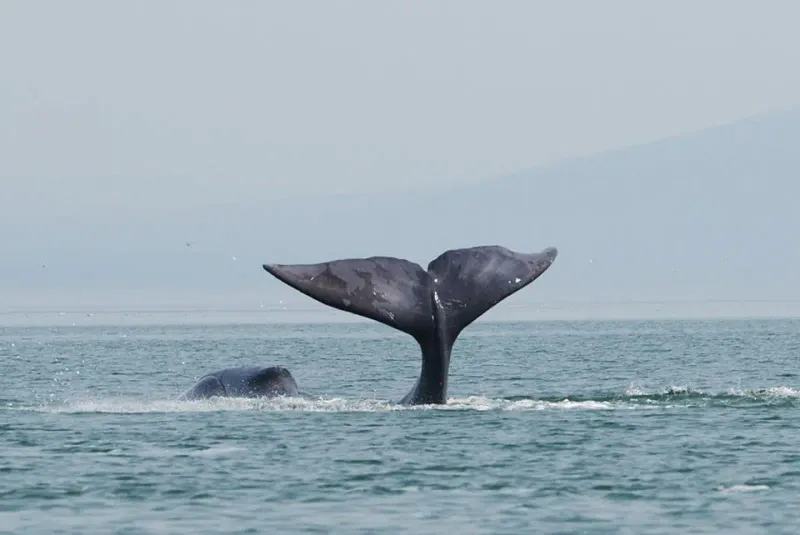
Image Credit: Olga Shpak.
Bowhead whales are Arctic giants in the purest sense, built not just to live in cold water but to challenge the ice itself. They can reach around 60 feet in length and weigh up to 100 tons, with an immense skull capable of breaking through sea ice to open breathing holes.
In Alaska’s far north, that ability alone makes them seem almost legendary.
What really amazes me is how completely their bodies reflect the demands of their environment. Thick blubber insulates them in frigid seas, and their lives unfold in habitats that many other whales would find too harsh or inaccessible.
They are also among the longest-lived mammals known, with some individuals believed to survive for more than two centuries.
That combination of mass, endurance, and time gives bowheads a presence unlike anything else in Alaska. They are not flashy in the way humpbacks can be, but they feel ancient, steady, and profoundly well adapted.
If survival in the Arctic is the ultimate test, bowhead whales pass it by turning cold, darkness, and ice into ordinary parts of daily life.
Fin Whale
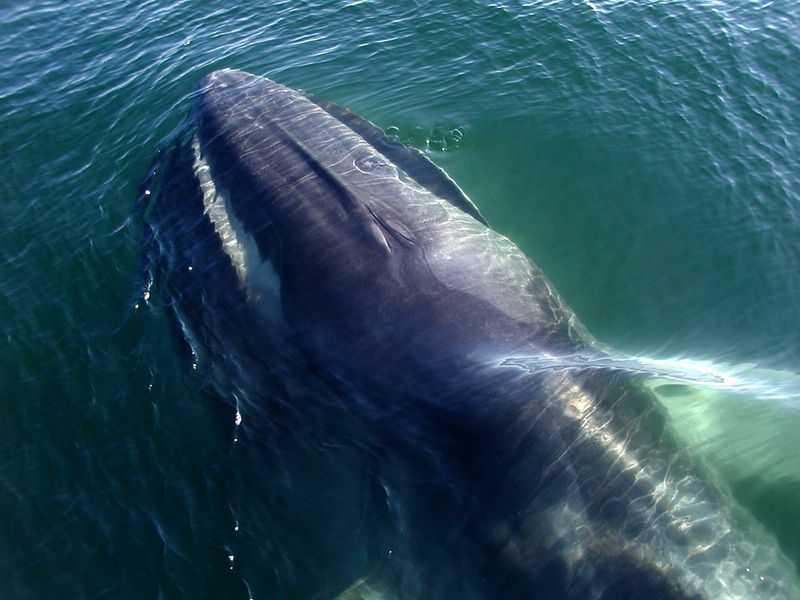
Image Credit: chris buelow.
Fin whales do not always get the same spotlight as some other giants, but their size is astonishing. As the second-largest animal on Earth after the blue whale, they can exceed 80 feet in length and weigh up to 80 tons, which is hard to grasp until you imagine that much animal moving with speed and grace.
In Alaska, they are among the most impressive residents of productive coastal waters.
Unlike bulkier-looking whales, fin whales have a streamlined shape that gives them an almost engineered elegance. They are fast swimmers, and that sleek form helps them cover water efficiently while feeding on krill and small schooling fish.
I love that contrast: a creature of immense mass behaving with the fluid ease of something much smaller.
They thrive in Alaska because these northern seas can be incredibly rich during feeding season. Abundant prey supports their huge energy needs, while broad marine habitats give them room to move.
Fin whales remind you that bigness does not have to look awkward. Sometimes, in Alaska, one of the largest animals on the planet appears as a long, swift shadow passing just beneath the surface.
Giant Pacific Octopus
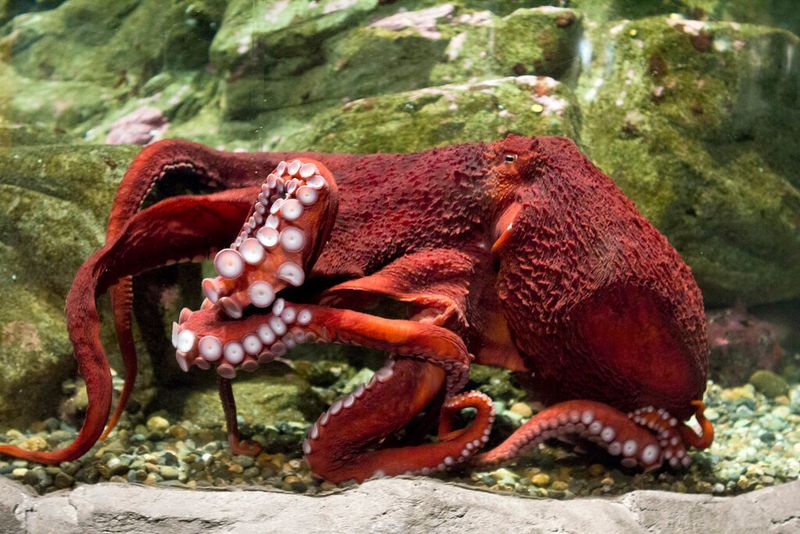
Image Credit: canopic.
The giant Pacific octopus earns its place on this list by proving that enormous Alaska animals are not limited to fur, hooves, or blubber. This is the world’s largest octopus species, and exceptional individuals can weigh more than 100 pounds with arms stretching astonishing distances.
In dark coastal waters and rocky reefs, that size becomes even more impressive because it appears attached to a body built almost entirely from intelligence and flexibility.
What grabs me most is how strange their greatness feels. They can camouflage themselves by changing color and texture, squeeze into spaces that seem impossibly small, and use sharp problem-solving skills to hunt crabs, shellfish, and fish.
Even their anatomy sounds dramatic, with three hearts and a body that seems designed for escape, ambush, and exploration.
Alaska’s cold, food-rich marine habitats suit them beautifully. Rocky structure provides dens, prey stays abundant, and the dim underwater world rewards animals that can think as well as hide.
If the whales on this list represent giant scale in the open, the giant Pacific octopus represents giant mystery in the shadows below.